
Have you ever wondered what keeps your bathroom smelling fresh? The secret lies beneath your sink! It’s called a P-trap. This simple plumbing piece does a lot of important jobs. Let’s uncover the basics of P-trap and see why it’s so vital.
Imagine you’re brushing your teeth. As the water flows down the drain, the P-trap makes sure that bad smells don’t come back up. It also catches small items you might drop. Curious to know more? Dive into the basics of P-trap with us!
Key Takeaways
- The P-trap prevents sewer gases from entering homes.
- It holds a small amount of water at all times.
- Basics of P-trap include its shape and function.
- A P-trap can catch accidentally dropped items.
- Commonly used under sinks in bathrooms and kitchens.
Understanding the Basics of P-trap
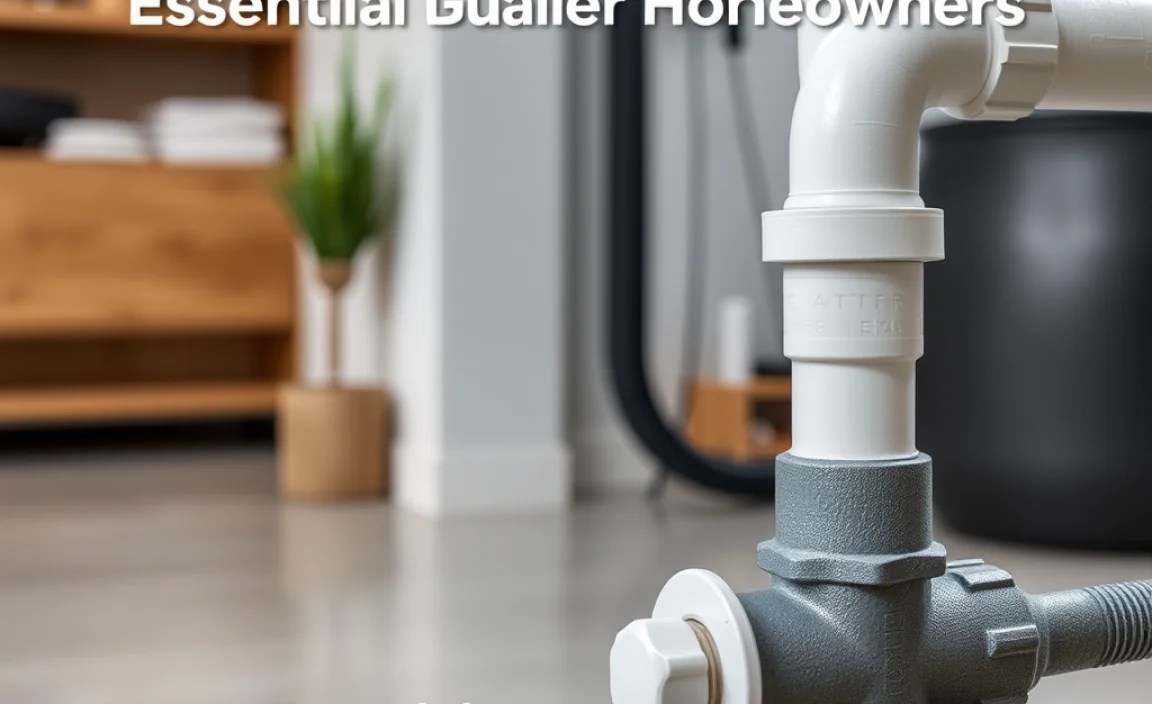
The P-trap is a U-shaped pipe under your sink. It holds water, creating a seal. This seal stops smelly sewer gases from coming into your home. Without this, bad odors could fill your rooms. The P-trap also catches small items, like rings, that may fall into the drain.
- Keeps sewer smells out.
- Traps small items you drop.
- Easy to clean and maintain.
- Essential in every household sink.
- Comes in different materials.
The P-trap is a simple yet crucial part of plumbing. It keeps our homes fresh and clean. Every sink, whether in the bathroom or kitchen, likely has one. Knowing these basics of P-trap helps you understand why they’re so important.
Fun Fact or Stats: Most P-traps hold about two cups of water.
Parts That Make Up a P-trap
To understand the basics of P-trap, let’s look at its parts. The P-trap consists of three main pieces. The first part is the curved pipe, which looks like the letter “U”. The second part is a straight pipe that connects to your sink drain. The third part links the P-trap to the wall drain, completing the setup.
- Curved pipe holds water.
- Straight pipe connects sink.
- Wall fitting links to drain.
- Materials include metal and plastic.
- Sizes vary based on sink type.
These parts work together to block bad smells from the sewer. They also let water flow smoothly through the pipes. The setup is simple, yet it plays a big role in keeping indoor air fresh. Understanding these parts is key to grasping the basics of P-trap.
Fun Fact or Stats: P-traps were first used in the 19th century!
How a P-trap Works
Can you imagine how this simple device works? The P-trap uses gravity to do its job. When water flows through the sink, it fills the U-shaped section. This trapped water acts like a stopper, blocking gases from coming back up. The curve in the P-trap also lets water flow fast, preventing clogs.
- Water creates a seal.
- Stops sewer gas smells.
- Uses gravity to function.
- Prevents clogs effectively.
- Makes cleaning easier.
This simple method makes the P-trap very effective. It uses water as a natural barrier. As long as the trap has water, it keeps working well. This is a key concept in the basics of P-trap, making your home smell fresh every day.
Fun Fact or Stats: A P-trap can handle up to 7 gallons of water per minute!
Common Materials for P-traps
P-traps come in different materials. Each has its own benefits. Metal P-traps, like chrome or brass, are strong and shiny. They last long and look nice under the sink. Plastic P-traps, like PVC, are light and won’t rust. They’re cheap and easy to install. Knowing the material helps in choosing the right P-trap for your needs.
- Metal traps: strong and shiny.
- Plastic traps: light and cheap.
- Brass lasts the longest.
- PVC is easy to cut.
- Choose based on need and budget.
The choice of material depends on where you’ll use it. If you need it for a hidden area, plastic works well. For visible areas, metal looks better. Understanding this helps in grasping the basics of P-trap.
Fun Fact or Stats: PVC P-traps can last over 25 years!
Installation and Maintenance of P-traps

Installing a P-trap might seem hard, but it’s not. Start by fitting the U-shaped pipe to the sink drain. Tighten it with a nut to keep it in place. Then, attach the straight pipe to the wall drain. Make sure there are no leaks by running water through the sink. Regular cleaning keeps the P-trap working well.
- Fit U-pipe to sink drain.
- Tighten with nuts.
- Check for leaks regularly.
- Clean to prevent clogs.
- Replace if damaged.
Once installed, the P-trap needs little care. Just check for leaks now and then. Cleaning it will prevent clogging. This ensures the P-trap keeps blocking bad odors and catching small items efficiently.
Fun Fact or Stats: The average installation time is about 30 minutes!
Comparing Metal and Plastic P-traps
Choosing between metal and plastic P-traps can be confusing. Let’s compare them. Metal P-traps, like brass or chrome, are durable and look nice. They resist heat and last long. Plastic P-traps, like PVC, are lightweight and affordable. They won’t rust and are easy to install. Both have their own uses, so pick based on your needs and budget.
| Feature | Metal P-trap | Plastic P-trap |
|---|---|---|
| Durability | High | Moderate |
| Cost | More expensive | Less expensive |
| Weight | Heavier | Lighter |
| Rust | Doesn’t rust | Doesn’t rust |
- Metal: durable and heat resistant.
- Plastic: light and easy to install.
- Choose based on budget.
- Both prevent sewer gas.
- Consider visible vs. hidden areas.
Both types of P-traps serve the same purpose, but each has unique advantages. Metal might be better for places you can see, while plastic is ideal for hidden spots.
Fun Fact or Stats: Plastic P-traps are 50% lighter than metal ones!
Conclusion
The P-trap is a small but important part of plumbing. It keeps your home free of bad smells and catches small lost items. Knowing the basics of P-trap helps you understand its role in the home. Whether metal or plastic, the P-trap keeps your sink working smoothly and your air fresh.
FAQs
Question: What is a P-trap?
Answer: A P-trap is a U-shaped pipe under sinks. It holds water to block sewer gases. It also catches small items like rings.
Question: How does a P-trap work?
Answer: A P-trap works by holding water in its curve. This creates a seal that blocks smells from the sewer. It also allows smooth water flow to prevent clogs.
Question: Why is the P-trap important?
Answer: The P-trap is important for keeping bad smells out of your home. It prevents sewer gases from entering. It also catches small objects that fall down the drain.
Question: What are the basics of P-trap materials?
Answer: Basics of P-trap materials include metal and plastic. Metal P-traps are durable and look nice. Plastic P-traps are lightweight and affordable. Choose based on where you’ll use it and your budget.
Question: How often should I check my P-trap?
Answer: You should check your P-trap regularly for leaks. It’s also good to clean it occasionally to prevent clogs. This ensures it keeps working well and stops bad odors.
Question: Can I install a P-trap myself?
Answer: Yes, you can install a P-trap yourself. It’s not too hard. Follow instructions and check for leaks. Regular maintenance will keep it working fine.
