
This guide demystifies common bathroom construction terms. Learn what words like “rough-in,” “subfloor,” and “flashing” mean so you can confidently communicate with contractors and understand your bathroom renovation project.
Ever felt lost in translation when talking about your bathroom renovation? One minute you’re discussing tile color, the next you’re hearing about “P-traps” and “vent stacks.” It’s enough to make anyone feel out of their depth! But don’t worry, understanding bathroom construction jargon is easier than it sounds. This guide will break down those confusing terms into simple, everyday language. Get ready to speak the lingo and feel confident about your next bathroom project.
We’ll cover everything from the initial framing to the final finishes. You’ll learn what contractors mean by “rough-in,” understand the importance of “waterproofing,” and discover the secrets behind a perfectly installed shower drain. By the end, you’ll be ready to chat with your plumber or contractor like a pro.
Let’s dive in and make sense of the world of bathroom construction vocabulary!
Why Understanding Bathroom Jargon Matters

When undertaking a bathroom renovation or even just a simple repair, clear communication is key. If you don’t understand the terms being used, it’s easy to feel confused, frustrated, or even taken advantage of. Knowing the basic bathroom jargon helps you:
- Communicate Effectively: You can clearly explain what you want to your contractor and understand their explanations and recommendations.
- Make Informed Decisions: When you understand the technical aspects, you can make better choices about materials, methods, and budget.
- Spot Potential Issues: Recognizing common terms can help you identify potential problems early on, saving you time and money down the line.
- Feel More Confident: Empowerment comes from knowledge. Knowing the lingo will boost your confidence throughout the project.
- Avoid Misunderstandings: This is perhaps the most crucial point. Misunderstandings can lead to costly mistakes and delays.
Think of it like learning a new language. The more words you know, the easier it is to navigate conversations and understand the world around you. Bathroom construction is no different. We’re here to give you your beginner’s phrasebook.
The Building Blocks: From Framing to Rough-In

Before any paint or fixtures go in, a significant amount of work happens behind the walls. This is the “bones” of your bathroom. Understanding these early stages is crucial because they set the foundation for everything else.
Framing

This is the skeleton of your bathroom. Framing involves building the structure with lumber or metal studs, creating the walls, doorways, and any other structural elements. It defines the space and where plumbing and electrical work will be installed.
Rough-In

The “rough-in” stage happens after the framing is complete but before insulation and drywall go up. This is when electricians, plumbers, and HVAC technicians run all the necessary pipes, wires, and ductwork through the walls and floors. They aren’t connecting everything yet, but all the essential components are put in place. Think of it as laying the groundwork for all your bathroom’s utilities.
- Plumbing Rough-In: This includes running water supply lines (hot and cold) to the sink, toilet, and shower/tub, as well as installing drain and vent pipes.
- Electrical Rough-In: This involves installing electrical boxes for outlets, switches, and light fixtures, and running wires to these points.
- HVAC Rough-In: If your bathroom has its own heating or cooling system, this is when the ducts are installed.
Subfloor

The subfloor is the layer of material, typically plywood or oriented strand board (OSB), that sits directly on top of the floor joists. It provides a stable, flat surface for the finished flooring (like tile or vinyl) to be installed over. A strong subfloor is essential for preventing squeaks and ensuring your flooring lasts.
Wall Sheathing

Similar to the subfloor, wall sheathing (often plywood or OSB) is attached to the exterior of the wall studs. It adds structural integrity to the walls and provides a surface to attach siding or other exterior finishes. In bathrooms, you’ll often see a damp-rated or cement board used for shower and tub walls as a base for waterproofing and tile.
Plumbing Essentials: Keeping Water Flowing (and Drying!)

Water is central to any bathroom, and plumbing terms are often the most confusing. Here’s a breakdown of the essential plumbing components you might hear about.
Drain Pipes

These pipes carry wastewater away from your fixtures (sinks, toilets, showers) to the main sewer line. They are typically larger in diameter than supply pipes and slope downwards to allow gravity to do the work.
Vent Pipes

Vent pipes are a crucial, yet often overlooked, part of your plumbing system. They connect to the drain pipes and run up through the roof. Their job is to allow air into the drainage system. This prevents a vacuum from forming, which would otherwise cause water to be siphoned out of the fixture traps, allowing sewer gases to enter your home. You can learn more about how plumbing vents work on the EPA’s website.
P-Trap

You’ve likely seen a P-trap. It’s that U-shaped section of pipe located under sinks and as part of shower drains. Its purpose is to hold a small amount of water, creating a seal that prevents unpleasant sewer gases from coming up through the drain and into your bathroom. If you ever have a gurgling drain, it might be related to the P-trap.
Shut-off Valve

These valves allow you to isolate a specific fixture (like a toilet or sink) for repairs or maintenance without shutting off the water supply to your entire house. They are usually located behind the toilet or under the sink. Knowing how to find and use them can be a lifesaver!
Water Supply Lines

These pipes bring clean, fresh water to your fixtures. They are typically made of copper, PEX (cross-linked polyethylene), or CPVC (chlorinated polyvinyl chloride) and are smaller in diameter than drain pipes. They operate under pressure from your home’s water system.
Stub-Out

A stub-out is the portion of a pipe (water supply or drain) that extends from the wall or floor, ready to be connected to a fixture like a faucet or toilet. It’s the visible end of the rough-in plumbing.
| Plumbing Term | What it is | Why it matters |
|---|---|---|
| Drain Pipes | Carry wastewater away. | Essential for hygiene and preventing clogs. |
| Vent Pipes | Allow air into drain lines. | Prevents sewer gases entering your home and ensures proper drainage. |
| P-Trap | U-shaped pipe under fixtures. | Holds water to block sewer odors. |
| Shut-off Valve | Controls water to a single fixture. | Allows for localized repairs without turning off all water. |
| Water Supply Lines | Bring fresh water to fixtures. | Provide hot and cold water where you need it. |
| Stub-Out | The pipe end ready for fixture connection. | The connection point for your faucets, toilets, etc. |
Waterproofing and Finishing Touches

Once the plumbing and electrical are in place, the focus shifts to protecting your bathroom from moisture and making it look good. This is where waterproofing and finishing steps come into play.
Waterproofing
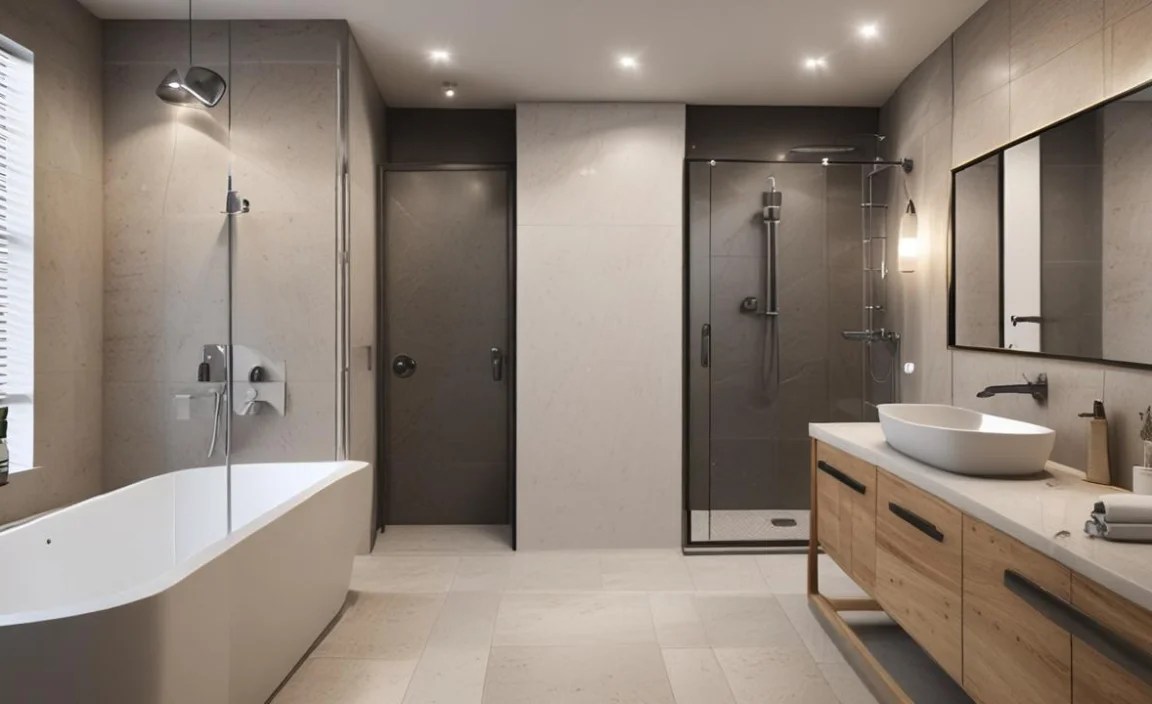
This is a critical step, especially in wet areas like showers and around tubs. Waterproofing involves applying a membrane or liquid barrier to the surfaces (walls and floors) beneath the tile. Its purpose is to prevent water from seeping into the walls and causing mold, rot, and structural damage. Common materials include liquid membranes, sheet membranes, and cementitious coatings. A properly waterproofed bathroom is a long-lasting bathroom.
Backer Board

Also known as cement board or tile backer board, this is a rigid sheet material often made of cement and reinforcing fibers. It’s installed over the wall studs (after waterproofing has been applied) and provides a stable, moisture-resistant surface for tile installation. It’s often used in shower areas and around bathtubs.
Grout

Grout is a CEMENTITIOUS material (or sometimes epoxy-based) used to fill the gaps between tiles. It not only holds tiles together but also prevents water and dirt from getting into those spaces. The type of grout used can affect its durability, water resistance, and maintenance needs.
Caulk

Caulk is a flexible, waterproof sealant used to fill smaller gaps and joints, typically where a wall meets a fixture (like around a tub or sink) or at corners. It provides a watertight seal and accommodates slight movement between materials, preventing cracks. For bathrooms, mildew-resistant silicone caulk is commonly used.
Flashing

While often associated with roofs, flashing is also essential in bathrooms around tub and shower surrounds. It’s a thin material (metal, plastic, or rubber) used to prevent water from seeping into vulnerable areas, such as where the shower base meets the wall or around window frames within the shower area. It redirects water away from problematic joints.
Tile Underlayment

This is a layer installed over the subfloor before the tile. It can be cement board, a flexible membrane, or other specialized material. Its purpose is to provide a stable, consistent surface for tiling and sometimes to add a layer of decoupling or crack isolation, preventing tiles from cracking due to the subfloor moving.
Common Fixtures and Their Parts

Let’s look at some of the key fixtures and their associated jargon:
Toilet Components

- Tank: The upper part of the toilet that holds water for flushing.
- Bowl: The lower part where waste collects before flushing.
- Flapper: A rubber seal inside the tank that lifts to let water into the bowl during a flush and then seals the tank afterward.
- Flush Valve: The mechanism that the flapper is part of, controlling the release of water from the tank.
- Fill Valve (or Ballcock): Replaces the water in the tank after a flush.
- Water Line: The flexible hose connecting the shut-off valve to the toilet tank.
- Wax Ring: A crucial seal between the toilet base and the drainpipe on the floor, preventing leaks and odors. It’s replaced every time a toilet is uninstalled.
Shower and Tub Components

- Shower Head: The fixture that delivers water for showering.
- Spout: If it’s a tub/shower combo, the spout delivers water to the tub.
- Valve Control (or Trim Kit): The handle(s) you use to turn the water on/off and control temperature and flow. This is the visible part of the shower/tub valve.
- Shower Valve (Rough-In): This is the often-hidden valve body behind the wall that controls water flow and temperature to the showerhead and spout.
- Drain Assembly: The entire unit that collects water from the shower floor or tub and directs it to the drainpipe, including the drain cover and the trap.
- Shower Pan/Base: The waterproof receptacle at the bottom of the shower onto which you stand.
- Threshold/Dam: The raised lip at the front of a shower base designed to keep water inside the shower stall.
Sink/Vanity Components
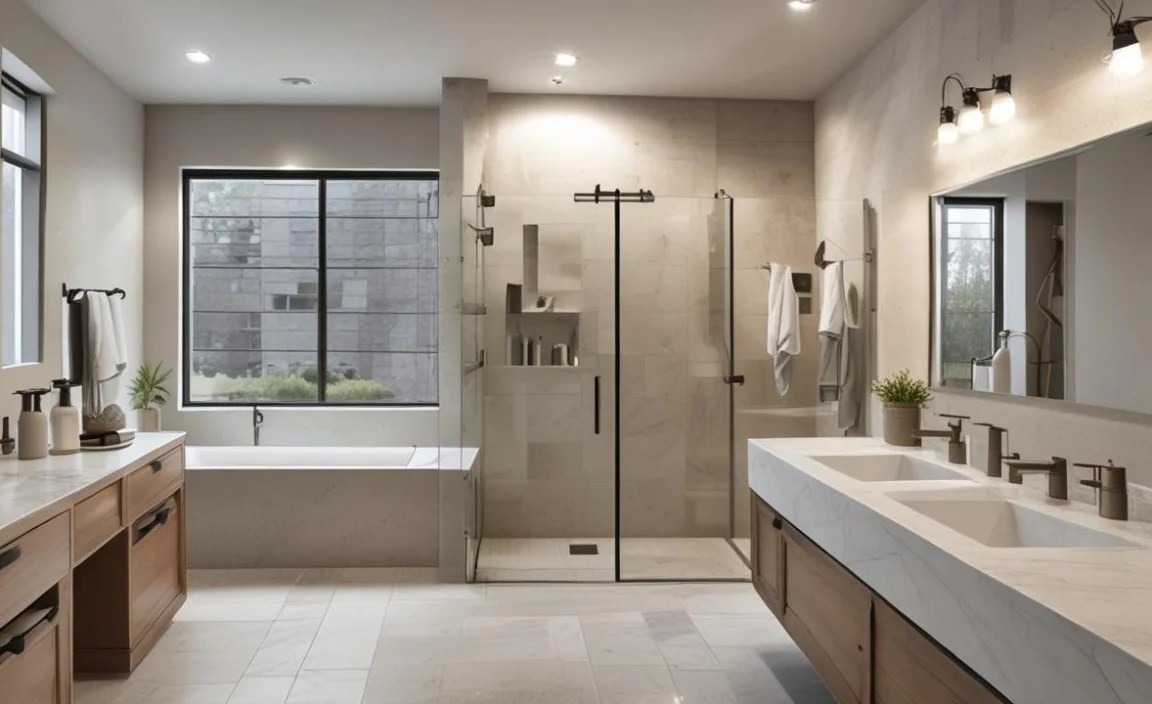
- Faucet: The fixture that controls the flow of hot and cold water to the sink.
- Drain Stopper: The mechanism used to block or open the sink drain.
- Pop-Up Drain Assembly: A common type of drain stopper controlled by a lever behind the faucet.
- Vanity: The cabinet or furniture that supports the sink and provides storage.
- Countertop: The surface of the vanity, which can be made of various materials like granite, quartz, laminate, or solid surface.
- Mounting: How the sink is installed to the countertop (undermount, drop-in, vessel).
Tools and Techniques You Might Encounter

As a DIYer, you might be using some of these tools or hear contractors discussing them.
- Putty Knife: A flexible metal blade with a handle, used for applying putty, sealant, or spreading adhesives, as well as scraping old caulk.
- Utility Knife: A sharp, retractable blade knife used for cutting drywall, plastic, flooring, and other materials.
- Caulking Gun: A tool used to dispense caulk from a tube smoothly and evenly. Essential for sealing gaps.
- Plasterer’s Trowel: A flat, rectangular steel tool used for applying and smoothing plasters or cementitious materials.
- Level: A tool used to determine if a surface is perfectly horizontal (level) or vertical (plumb). Crucial for hanging cabinets, installing fixtures, and tiling.
- Pipe Wrench: A heavy-duty wrench designed to grip and turn pipes.
- Stud Finder: An electronic device used to locate wooden or metal studs behind drywall.
- Reciprocating Saw (Recip Saw): A versatile power saw with a blade that moves back and forth, useful for cutting through various materials, including pipes and wood studs.
For a deeper dive into essential DIY tools, check out resources from organizations like This Old House, a trusted source for home improvement knowledge.
Tips for Talking to Your Contractor

Now that you speak a little more of the language, here are some tips for your next conversation:
- Ask Questions: If you don’t understand something, ask for clarification. A good contractor will be happy to explain.
- Be Specific: The more detail you can provide about what you want, the better they can meet your expectations.
- Get it in Writing: Ensure major decisions, material choices, and costs are documented in your contract.
- Understand the Schedule: Ask about the expected timeline for different phases of the project (e.g., rough-in, tiling, fixture installation).
- Listen to Their Expertise: Contractors have experience. While your vision is important, be open to their professional advice on best practices and material suitability.
Frequently Asked Questions About Bathroom Jargon
What does “water hammer” mean in plumbing?

Water hammer is a loud banging or thumping noise that can occur when a valve is suddenly closed, causing a shockwave in the water pipes. It’s caused by the momentum of the water.
What’s the difference between a tile and a mosaic?

A tile is a single piece of material used for covering surfaces. A mosaic is an arrangement of small pieces of tile, glass, stone, or other materials to create a decorative pattern or image.
What is a GFCI outlet, and why is it important in a bathroom?

GFCI stands for Ground Fault Circuit Interrupter. It’s an electrical outlet designed to shut off power instantly if it detects an imbalance in electrical current, which can happen if electricity starts flowing to a person. Bathrooms have a high risk of water and electricity coming into contact, so GFCI outlets are a crucial safety requirement.
If my contractor says they need to check the “vent stack,” what are they referring to?

The vent stack is the large vertical pipe that is part of your home’s plumbing system, usually extending through the roof. Its primary job is to allow sewer gases to escape outside and, more importantly, to allow air into the drain system so that water can flow freely without creating a siphoning effect.
What is “tile decoupling” and do I need it?
Tile decoupling refers to installing a membrane between the tile and the subfloor. This membrane absorbs the stress and movement between the two layers, preventing tiles from cracking due to subfloor expansion, contraction, or minor shifts. It’s highly recommended for certain types of subflooring or in areas prone to movement.
My contractor mentioned “pitch” for the drain. What does that mean?
Pitch refers to the slope or angle of a drainpipe. For proper drainage, pipes need a specific downward slope (often ¼ inch per foot) to ensure water flows away effectively and doesn’t pool, which can lead to clogs and mold.
Conclusion
Navigating bathroom construction terms doesn’t have to be intimidating. By understanding these essential pieces of jargon, you’re now better equipped to communicate with your
