
Quick Summary: Wet rooms offer a sleek, accessible, and spacious shower experience, ideal for modern bathrooms. However, they require careful waterproofing and can be costly. Alternatives like standard shower enclosures or walk-in showers provide simpler installations and varied aesthetics, often at a lower price point. Choosing the right option depends on your budget, space, and desired look.
Wet Room vs. Alternative: Making the Right Choice for Your Bathroom

Are you dreaming of a bathroom upgrade? Perhaps you’ve heard about luxurious “wet rooms” and are wondering if they’re the right fit for your home. Or maybe you’re just looking for a way to make your shower area more functional and stylish. It’s easy to feel a bit lost with all the different options out there. Don’t worry! We’re here to break down exactly what a wet room is, compare it to other popular bathroom styles, and help you decide what’s best for you. Let’s dive in and make your dream bathroom a reality, step by step. We’ll cover everything you need to know to make an informed decision.
What Exactly is a Wet Room?
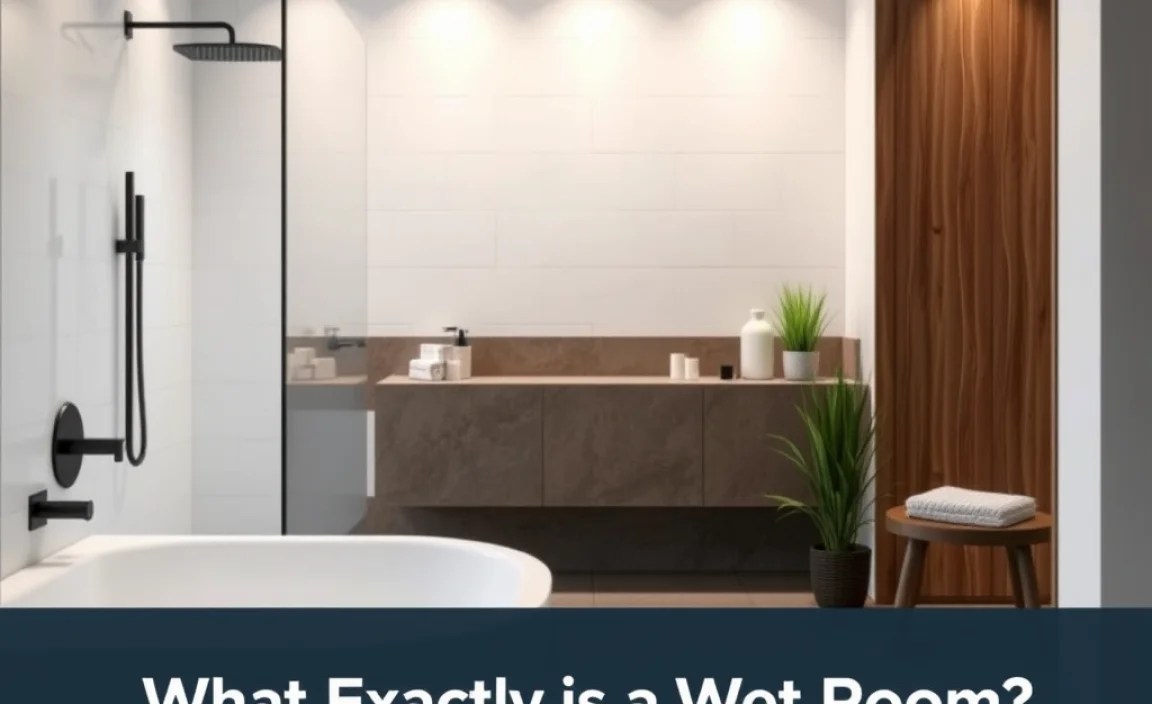
A wet room is essentially a bathroom, or a section of one, that is fully waterproofed and designed to be completely wet. Unlike a traditional bathroom with a separate shower cubicle or a bathtub, a wet room has a shower area that’s open and integrated directly into the room. Think of it as one large, waterproofed space.
Here’s what defines a wet room:
No Shower Tray or Cubicle: The floor itself is engineered to drain water directly, usually through a discreet floor drain.
Waterproofed Throughout: The walls, floor, and even parts of the ceiling are treated with specialized membranes to prevent water damage.
Open-Plan Shower Area: There are no doors or screens enclosing the shower space in the traditional sense. Sometimes, a single glass panel might be used to deflect water, but the entire area is designed to get wet.
Drainage System: A crucial element is a sloped floor that directs water towards a built-in drain. This is typically a linear drain for a more seamless look or a circular point drain.
Why Consider a Wet Room? The Appeal Explained
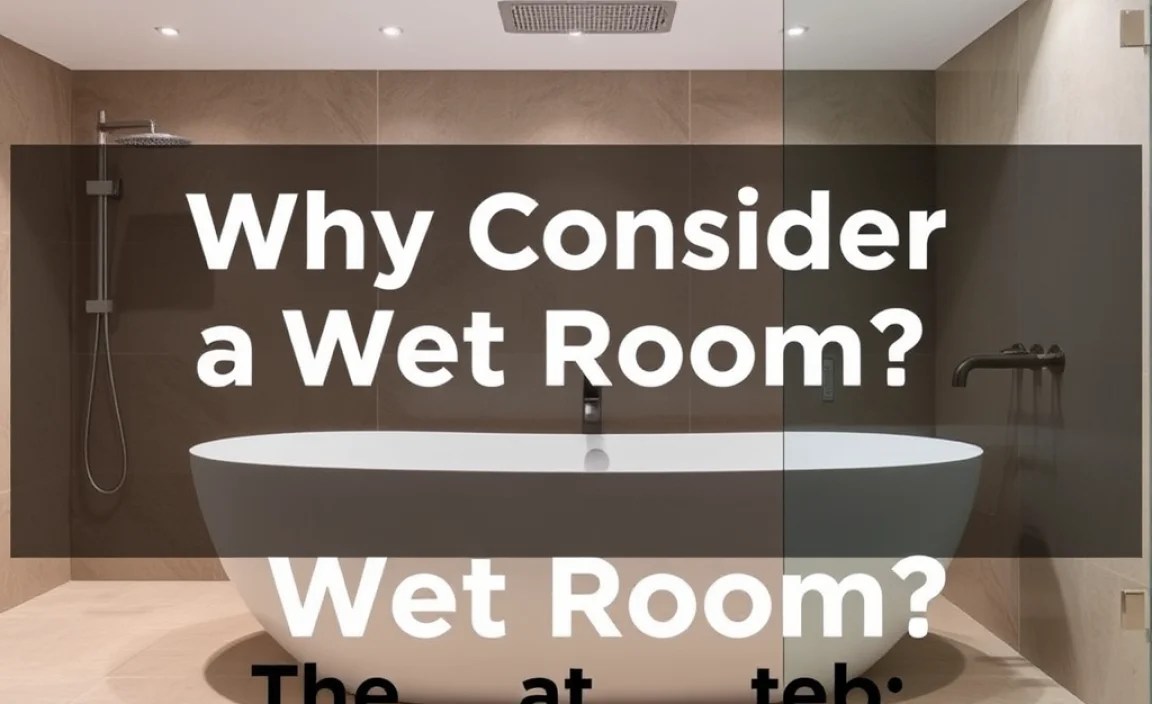
Wet rooms have gained popularity for several good reasons. They offer a contemporary look and a sense of spaciousness that can transform even a small bathroom.
Here are some of the main benefits:
Modern Aesthetics: Wet rooms offer a minimalist and spa-like feel, with clean lines and an uncluttered appearance. They can make a bathroom feel larger and more luxurious.
Accessibility: With no curbs or steps to navigate, wet rooms are incredibly accessible. They are an excellent choice for elderly individuals, people with mobility issues, or families with young children, as they reduce trip hazards. The Americans with Disabilities Act (ADA) often has specific guidelines for accessible bathrooms that wet rooms can easily meet.
Easy Cleaning: Without a shower tray to scrub and grout lines to clean, a wet room can be simpler to maintain. A quick squeegee of the glass and walls, and a sweep of the floor, can keep it looking its best.
Space-Saving (Potentially): In some cases, removing bulky shower enclosures can actually create a sense of more space in a smaller bathroom.
Flexibility in Design: They allow for creative layout possibilities, especially in awkward-shaped rooms.
Popular Alternatives to Wet Rooms

While wet rooms are fantastic, they aren’t the only game in town. Many homeowners opt for more traditional or slightly modified shower setups.
1. Standard Shower Enclosure
This is the most common type of shower found in many homes.
What it is: A self-contained unit typically with a pre-fabricated shower tray and glass doors or curtains.
Pros:
Relatively easy and quick to install.
Wide range of styles, sizes, and price points.
Contain water effectively with proper sealing.
Less complex waterproofing requirements for the surrounding bathroom.
Cons:
Can make a small bathroom feel more cramped.
Shower trays and doors can be difficult to clean.
Entry can involve a lip or step, posing a minor accessibility challenge for some.
Less of a luxury, spa-like feel compared to a wet room.
2. Walk-In Shower (Partial Enclosure)
A walk-in shower is a step up from a standard enclosure, offering a more open feel while still managing water.
What it is: Usually features a level-access or very low-profile shower tray and a fixed glass panel or a single glass door. There’s no enclosure on three sides.
Pros:
More accessible than a standard enclosure due to minimal or no step.
Creates a more open and spacious feel than a fully enclosed shower.
Still effectively contains water with the glass panel.
Looks modern and stylish.
Cons:
Requires good ventilation to prevent moisture buildup.
The glass panel needs regular cleaning.
May require more precise installation to ensure water containment.
Still has a defined shower area, unlike a true wet room.
3. Shower Over Bathtub
A classic space-saving solution, especially in smaller bathrooms.
What it is: A shower head installed above a bathtub, usually with a bath screen or shower curtain.
Pros:
Combines two bathroom functions in one space, saving significant room.
Typically the most budget-friendly option.
Simple to install and maintain.
Cons:
Can be awkward to shower in, especially for taller individuals.
Requires careful use of curtains or screens to prevent water from splashing out.
Less luxurious or spa-like experience.
Stepping into and out of the bath can be a hazard.
Wet Room vs. Alternatives: A Feature Comparison

To help you visualize the differences, here’s a table breaking down key aspects:
| Feature | Wet Room | Standard Shower Enclosure | Walk-In Shower (Partial) | Shower Over Bathtub |
|---|---|---|---|---|
| Waterproofing Requirement | Full room waterproofing is essential. | Primarily around the tray and wall area. | Around the tray/drain and adjacent walls. | Mainly around the tub edge and shower area. |
| Accessibility | Excellent (no steps/curbs). | Good, but typically has a step. | Very Good (low or no step). | Fair (requires stepping over tub edge). |
| Aesthetics | Modern, spa-like, spacious, minimalist. | Functional, diverse styles, can be space-consuming. | Modern, open, spacious. | Classic, functional, space-saving. |
| Installation Complexity | High (professional waterproofing is key). | Moderate. | Moderate to High. | Low to Moderate. |
| Cost (Installation) | Potentially High (due to waterproofing and drainage). | Moderate. | Moderate to High. | Low to Moderate. |
| Maintenance/Cleaning | Can be simpler (fewer nooks), but requires diligent drying. | Tray and doors/curtains require regular cleaning. | Glass panel needs regular cleaning. | Curtains/screens can get mildew; tub requires cleaning. |
| Space Efficiency | Can create a sense of space, but requires dedicating an area. | Defines a specific shower area. | More open feel than enclosure, defines an area. | Very efficient for combining functions. |
Key Considerations Before You Choose
Deciding between a wet room and an alternative involves looking at more than just looks. Here are the crucial factors to ponder:
1. Homeowner’s Insurance and Building Regulations
This is incredibly important. If you’re planning a significant bathroom renovation, especially involving waterproofing for a wet room, it’s wise to check with your homeowner’s insurance provider and local building authorities. Properly executed waterproofing is paramount. In the UK, for example, detailed guidance on wet room construction is available from sources like the Building Research Establishment (BRE), which can inform best practices. Incorrect installation can lead to serious water damage and potential insurance claims issues.
2. Budget: The Real Cost Breakdown
Wet rooms can be the most expensive option due to the extensive waterproofing materials and labor involved.
Wet Room Costs: Factor in specialized waterproof membranes, tanking kits, gravity-fed or pumped drain systems, a sloped subfloor, and skilled labor for installation.
Alternative Costs: Standard enclosures might have lower upfront material costs but can still add up with high-end glass doors and trays. Walk-in showers fall somewhere in between.
It’s essential to get detailed quotes that clearly outline all materials and labor for each option you consider.
3. Space and Layout
Small Bathrooms: A wet room might seem counterintuitive for a tiny space, but a well-designed one can make it feel larger. However, if space is extremely limited, a good shower over the bath might be the most practical solution.
Large Bathrooms: You have more freedom to design a spacious wet room or a generous walk-in shower. You might even have room for a separate bathtub.
Awkward Layouts: Wet rooms can be ideal for fitting a shower into an angled or irregular space that wouldn’t work well for a standard cubicle.
4. Installation and Waterproofing Expertise
This cannot be stressed enough. Installing a wet room is not a DIY job for the faint of heart or the inexperienced.
Professional Installation is Key: You absolutely need a professional who understands bathroom waterproofing. This involves tanking the entire wet room area – walls, floor, and even around the shower drain – with specialized membranes.
Consequences of Poor Waterproofing: Leaks can cause significant structural damage, mold growth, and costly repairs to floors, walls, and ceilings in adjacent rooms.
Alternatives: Standard enclosures and showers over baths are generally less dependent on extensive, room-wide waterproofing, making them more manageable for DIYers or installations by general plumbers/bathroom fitters.
5. Maintenance and Cleaning Habits
Consider your lifestyle.
Wet Room Maintenance: While there are fewer nooks, you’ll want to squeegee down glass panels and walls after showering to prevent water spots and soap scum buildup. Regular floor cleaning is also necessary.
Enclosure/Tub Maintenance: You’ll be cleaning shower trays, scrubbing grout, and washing shower curtains or wiping down glass doors.
How to Install (or Prepare for) a Wet Room: A Simplified Overview
Given the complexity, a full DIY guide for a wet room is extensive. However, understanding the general process helps when discussing with professionals.
Step 1: Planning and Design
Location: Mark out the shower area.
Slope: Plan the floor slope towards the drain – typically a gradient of 1:40 (2.5cm drop per meter).
Drainage: Choose your drain type (linear or point).
Step 2: Subfloor Preparation
Waterproof Boarding: Install waterproof backer boards on the floor and walls that will be within the wet zone.
Create the Slope: This may involve a screed layer or specialized sloping boards.
Step 3: Waterproofing (The Crucial Step)
Tanking: Apply a liquid waterproofing membrane (often several coats) to the entire floor and up the walls (at least 1.2m high, or to the ceiling in a full wet room). Pay extra attention to corners and joints using reinforcement tape.
Seal the Drain: Ensure the drain outlet is perfectly sealed with the membrane.
Step 4: Tiling and Finishing
Tile Selection: Choose waterproof, non-slip tiles for the floor and lower walls.
Grouting: Use waterproof grout.
Sealing: Seal all tile edges and around fittings.
Step 5: Installing Fixtures
Shower Head: Mount your chosen shower head.
* Glass Panel (if used): Install any fixed glass screens securely, ensuring they are also sealed properly.
External Link: For in-depth technical details on waterproofing and wet room construction, consult resources like the ANSI standard for cementitious water-resistant coatings, which illustrates the rigorous standards that professional waterproofing systems aim to meet.
How to Choose and Install an Alternative (Simpler Options)
For standard shower enclosures and walk-in showers, the process typically involves installing a shower tray and then fitting the cubicle or glass panels.
For a Standard Shower Enclosure:
1. Prepare the Area: Ensure the floor is level and the wall area is ready for tiling or boarding.
2. Install Shower Tray: Securely fix the shower tray to the subfloor, ensuring it’s level and has adequate support. Connect the waste pipe.
3. Waterproof Walls: Apply waterproofing to the walls around the tray, especially if tiling.
4. Install Enclosure: Follow the manufacturer’s instructions to assemble and fix the shower doors and panels to the tray and walls. Seal all edges.
5. Fit Shower Controls: Install the shower mixer and head.
For a Walk-In Shower (with a fixed panel):
1. Prepare and Install Tray/Drain: Similar to above, install a level access tray or prepare for a wet room-style drain with a sloped subfloor.
2. Waterproof Area: Tank the area around the drain or tray and up the walls.
3. Fix Glass Panel: Securely install the fixed glass panel to the floor or a low wall and potentially to the wall with brackets. Seal all edges meticulously.
4. Install Shower Controls: Fit the shower mixer and head.
Conclusion: Your Bathroom, Your Choice
Choosing between a wet room and its many alternatives is a big decision, but it doesn’t have to be overwhelming. If you’re looking for that ultimate spa-like luxury, a sleek, modern aesthetic, and superb accessibility, a wet room could be your dream come true. Just be prepared for a more involved and often pricier installation that absolutely requires expert waterproofing.
On the other hand, if you prefer a simpler, more budget-friendly installation, or if space is a very tight constraint, a standard shower enclosure or a walk-in shower with a partial enclosure offers excellent functionality and style. A shower over a bathtub remains the champion for space-saving and budget.
Ultimately, the “essential” choice here is the one that best fits your lifestyle, budget, and home. Do your research, get professional advice, and weigh the pros and cons. Whichever path you choose, a well-planned and expertly executed ba
