
An exhaust fan removes stale air and moisture from a room, improving air quality. Alternatives like range hoods, whole-house fans, or even simply opening windows offer different solutions for ventilation, each with unique benefits and best uses to consider for your home.
Dealing with stuffy, humid rooms can be a real pain. You might notice condensation on your windows, lingering cooking smells, or just a general feeling of stale air. It’s common to wonder what’s the best way to fix this. Many homes benefit greatly from improved air circulation, and understanding your options is the first step. Don’t worry, it’s simpler than it sounds! We’ll explore what an exhaust fan is and look at some smart alternatives to help you breathe easier and keep your home feeling fresh and comfortable.
What is an Exhaust Fan? Your Home’s Air Exorcist

Think of an exhaust fan as a silent guardian for your home’s air quality. Its main job is to pull stale, humid, or smelly air out of a specific space and vent it outside your house. This is super important for several reasons, especially in areas prone to moisture like bathrooms and kitchens. By removing this air, exhaust fans help prevent a whole host of problems.
Why are Exhaust Fans So Important?
Constantly trapping humid air inside can lead to:
- Mold and Mildew Growth: These can damage your home’s surfaces and are bad for your health.
- Lingering Odors: Say goodbye to lingering smells from cooking, pets, or bathrooms.
- Excess Moisture: This can create a breeding ground for dust mites and allergens.
- Damage to Surfaces: Persistent moisture can cause paint to peel and wood to warp.
Exhaust fans are designed to tackle these issues directly, creating a healthier and more comfortable living environment. They are typically installed in the ceiling or wall of a room and connected to ductwork that leads to the outside.
Common Places for Exhaust Fans
You’ll most often find exhaust fans in:
- Bathrooms: To clear out steam from showers and baths, preventing mold.
- Kitchens: To remove cooking smoke, grease, and odors, often integrated into a range hood.
- Laundry Rooms: To vent out lint and moisture from dryers.
- Garages or Workshops: To remove fumes from tools or stored chemicals.
Understanding How Exhaust Fans Work
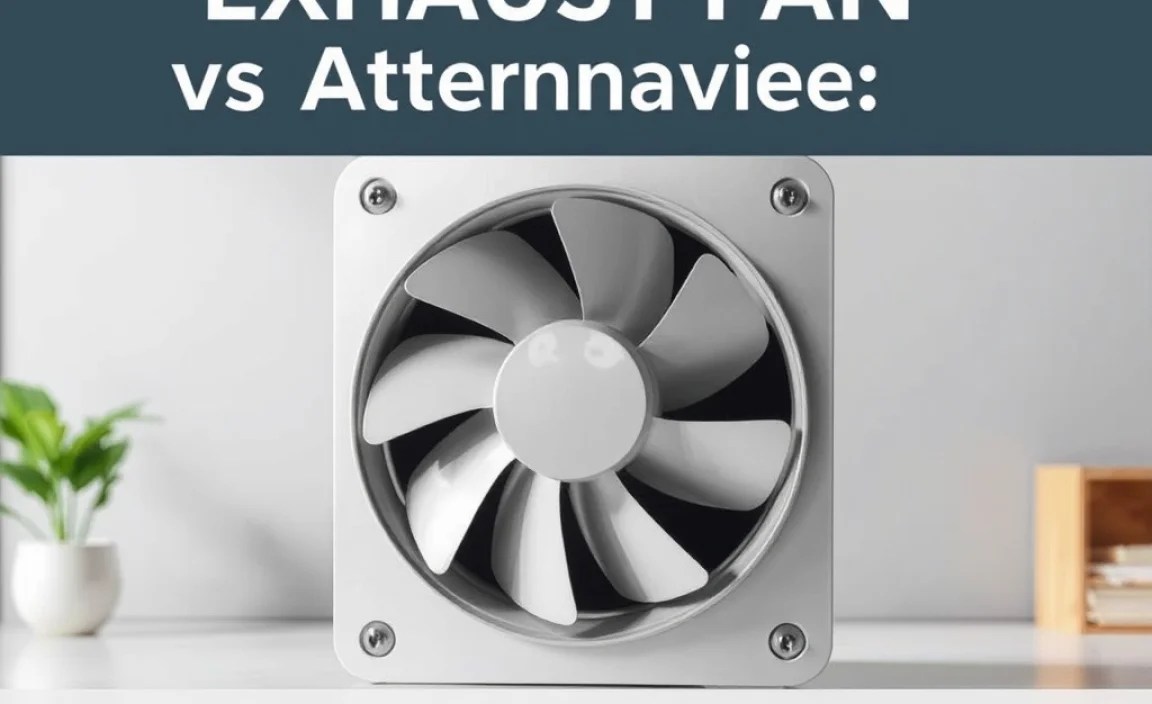
It’s a pretty straightforward process, but understanding it helps you appreciate their value. At its core, an exhaust fan has a motor, a fan blade, and a grille. When you turn it on, the motor spins the fan blades, which then suck air from inside the room. This air is then pushed through a duct or vent and expelled outside your home.
The effectiveness of an exhaust fan is often measured in Cubic Feet per Minute (CFM). A higher CFM means the fan can move more air, more quickly. For bathrooms, the general recommendation is at least 1 CFM per square foot of bathroom space, but for more robust ventilation, especially in larger or more humid bathrooms, aiming for 80-110 CFM is a good bet.
Key Components of an Exhaust Fan System
- The Fan Unit: This is the visible part, usually with a grille covering it. It houses the motor and fan.
- Ductwork: This is the tube or pipe that carries the air from the fan to the outside of your home. Proper ducting is crucial for efficient operation.
- Exterior Vent Cap: This is the cover on the outside of your house where the air is released. It often has a flap to prevent drafts from coming back in.
Types of Exhaust Fans
While the basic function is the same, exhaust fans come in different forms:
- Ceiling Mounted: The most common type, installed flush with the ceiling.
- Wall Mounted: Less common, but useful in specific situations.
- Inline Fans: The fan motor is located in the ductwork, often in the attic or crawl space, with just a grille visible in the room. These tend to be quieter.
- Through-the-Wall Fans: These are often used in kitchens or laundry rooms and vent directly through an external wall.
Exhaust Fan vs. Alternative: Exploring Your Ventilation Options
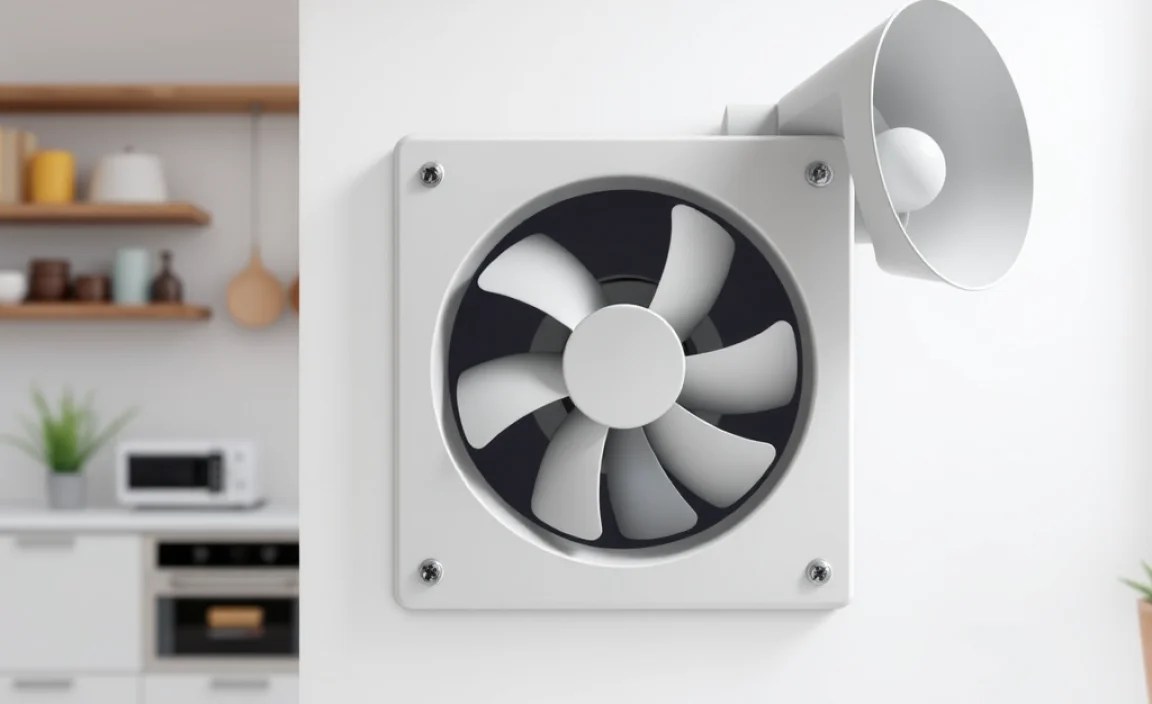
While exhaust fans are excellent for targeted air removal, the world of home ventilation is diverse! Sometimes, an exhaust fan might not be the perfect fit, or you might want to supplement its function. Let’s explore some common alternatives and how they stack up.
1. Range Hoods: The Kitchen Specialist
A range hood is essentially a specialized exhaust fan designed for your kitchen. It’s mounted above your stovetop or oven and its primary purpose is to capture and remove smoke, grease, heat, and odors that come from cooking. Many range hoods also include lights to illuminate your cooking area.
How Range Hoods Work
When you cook, especially on the stovetop, fumes and particles rise. A range hood has a large opening directly above the heat source to capture these efficiently. The air is then either:
- Vented Externally: This is the most effective method, where the air is pulled through a duct and expelled outside your home.
- Recirculated: Some range hoods don’t have external ducting and instead filter the air through grease filters and often a charcoal filter to remove odors before blowing it back into the kitchen. These are less effective at removing moisture and heat compared to vented hoods.
Pros of Range Hoods
- Excellent at capturing cooking odors and grease.
- Improves kitchen air quality significantly.
- Often includes lighting.
- Can reduce the heat and steam in the kitchen.
Cons of Range Hoods
- Requires installation directly above the cooking surface.
- External venting requires ductwork, which can be an involved installation.
- Recirculating models are less effective at removing all pollutants.
- Can be noisy.
2. Whole-House Fans: The Big Breather
A whole-house fan is a powerful ventilation system designed to exchange the air in your entire home quickly. Unlike a central air conditioning system that cools and circulates air within the house, a whole-house fan pulls air from the house and expels it outside, usually through vents in the attic. This creates a strong airflow that can cool your home down naturally when the outdoor air is cooler than the indoor air.
How Whole-House Fans Work
Typically installed in the ceiling of the top floor (often in a hallway), a whole-house fan uses strong blades to draw air up from open windows and doors throughout the house. This air is then pushed into the attic space, which is usually vented. This process replaces warmer indoor air with the cooler, fresher outdoor air.
Pros of Whole-House Fans
- Efficiently ventilates the entire home.
- Excellent for cooling the house when outdoor temperatures are pleasant.
- Can significantly reduce reliance on air conditioning, saving energy costs.
- Provides fresh air throughout the entire living space.
Cons of Whole-House Fans
- Requires significant attic ventilation.
- Can be noisy if not properly installed or insulated.
- Not effective for ventilation when outdoor air is hot or humid; can conversely draw in unwanted elements if not used correctly.
- Takes up considerable space in the attic.
- Needs to be used with open windows and doors to be effective.
For more on ventilation, the U.S. Department of Energy’s Energy Saver site offers detailed insights into home ventilation systems.
3. Ceiling Fans: Not for Air Exchange
It’s important to understand that ceiling fans are not ventilation devices. Their primary function is to create a cooling breeze by circulating the air within a room. They don’t remove stale air or introduce fresh air from outside.
How Ceiling Fans Work
Ceiling fans have blades that rotate, pushing air downwards. This movement creates a wind-chill effect on your skin, making you feel cooler. They don’t actually lower the temperature of the air itself.
Pros of Ceiling Fans
- Provide a cooling sensation, allowing for higher thermostat settings.
- Improve air circulation within a room.
- Usually energy-efficient.
- Can be aesthetically pleasing.
Cons of Ceiling Fans
- Do not remove odors, moisture, or pollutants.
- Do not bring in fresh outside air.
- Can be noisy if unbalanced.
- Require proper installation for safety and effectiveness.
4. Window Fans: Simple, Portable Solution
Window fans are a simple and often inexpensive way to create airflow. They are typically square or rectangular units that fit into an open window. You can set them up to either pull fresh air in or push stale air out.
How Window Fans Work
When placed in a window, a window fan acts like a portable exhaust fan or an intake fan. If you open another window in the room or house, you can create a cross-breeze. For example, placing a fan in one window to blow air outside, and opening a window on the opposite side of the house to draw air in, can efficiently exchange air.
Pros of Window Fans
- Inexpensive and easy to purchase.
- Simple to install and remove.
- Provide immediate air movement and can help ventilate a single room.
- Good for creating temporary cross-ventilation.
Cons of Window Fans
- Only effective when windows are open.
- Can allow dust, pollen, and insects to enter the home.
- May not be aesthetically pleasing.
- Can be noisy.
- Limited effectiveness for significant odor or moisture removal compared to dedicated exhaust systems.
5. Opening Windows and Doors: The Natural Approach
The most basic form of ventilation is simply opening your windows and doors. This creates natural airflow, allowing fresh air to enter while stale air escapes. It’s an effective method, especially on pleasant days.
How Opening Windows Works
When you open windows, especially on opposite sides of your house (creating cross-ventilation), air naturally moves from areas of higher pressure to lower pressure. This exchange of air brings in oxygen and removes carbon dioxide, moisture, and odors.
Pros of Opening Windows
- Free and readily available.
- Brings in fresh air and natural light.
- Can cool your home naturally.
- Simple and requires no installation.
Cons of Opening Windows
- Relies on weather conditions (not ideal when it’s too hot, cold, rainy, or humid outside).
- Can compromise home security.
- Allows in outdoor pollutants like pollen, dust, and allergens.
- Can increase energy bills if used when heating or cooling systems are running.
- Not a solution for constant ventilation needs like in bathrooms after a shower.
Comparison Table: Exhaust Fan vs. Alternatives
To help you decide which option is best for your needs, here’s a quick comparison of exhaust fans and their common alternatives. This table highlights key features and suitability.
| Feature | Exhaust Fan (Bathroom/Kitchen) | Range Hood | Whole-House Fan | Window Fan | Opening Windows |
|---|---|---|---|---|---|
| Primary Function | Remove moisture, odors, and stale air from specific rooms. | Remove cooking fumes, grease, and odors from the kitchen. | Exchange entire-house air; assist cooling. | Create localized airflow, assist ventilation. | Natural air exchange, cooling. |
| Area of Effect | Specific room (e.g., bathroom, kitchen). | Area above stovetop/oven. | Entire house. | Single room or localized area. | Affected rooms depending on window placement. |
| Best For | Preventing mold, removing bathroom humidity, kitchen steam. | Effective kitchen ventilation for cooking. | Cooling and airing out the whole house when outdoor air is pleasant. | Temporary ventilation, cross-breeze creation. | Pleasant weather days, general fresh air. |
| Installation Required? | Yes, usually permanent installation. | Yes, permanent installation above cooktop. | Yes, significant installation in ceiling/attic. | No, portable. | No. |
| Cost (Initial) | Moderate to high (fan + installation). | Moderate to high (hood + installation). | High (fan + installation). | Low. | Free. |
| Ongoing Costs | Minimal (electricity). | Minimal (electricity). | Moderate (electricity) if used often for cooling. | Minimal (electricity). | None (but can impact HVAC costs). |
| Air Quality Impact | High for targeted areas by removing pollutants. | High for kitchen by removing cooking byproducts. | High for whole-house air exchange. | Moderate, aids in circulation. | Moderate, brings in outdoor air. |
| Seasonality/Weather Dependent? | No, designed for year-round use. | No, designed for year-round use. | Yes, most effective in moderate temperatures. | No, but effectiveness depends on open windows. | Yes, best in mild weather. |
Choosing the Right Solution for Your Home
Deciding between an exhaust fan and an alternative depends on where you need ventilation, what you want to achieve, and your budget. Here’s a breakdown to guide your choice:
When to Choose a Dedicated Exhaust Fan:
- For Bathrooms: If you have issues with steam, condensation, mold, or mildew in your bathroom, a properly sized bathroom exhaust fan is essential. It’s designed to run for short periods after showers or baths to quickly remove moisture.
- For Laundry Rooms: To vent out lint and moisture from dryers, especially if your dryer doesn’t have an effective built-in vent.
- For Specific Odor Control: If you have a particular area that consistently smells bad and you want to actively remove that air.
When installing a bathroom exhaust fan, ensure it’s correctly ducted to the outside. For guidance on proper ventilation in homes, the U.S. Environmental Protection Agency (EPA) offers excellent resources on indoor air quality.
When to Consider Alternatives:
- For Kitchen Cooking Odors and Grease: A range hood is almost always the best choice directly above your cooktop. It’s specifically designed for this high-moisture, high-grease environment.
- For General Home Cooling and Air Freshing on Pleasant Days: If you want to air out your whole house and take advantage of cooler outdoor air, a whole-house fan or simply opening windows can be highly effective and energy-saving.
- For Temporary or Budget-Friendly Solutions: Window fans are great for adding airflow in a specific room or helping with cross-ventilation when you don’t want a permanent installation. Opening windows is the most budget-friendly, natural approach.
- For Comfort Cooling (Not Ventilation): If you just want to feel cooler in a room without changing the air, a ceiling fan is your go-to.
Key Considerations for Installation and Use:
- Sizing: Ensure any fan (exhaust, range hood, whole-house) is properly sized for the space it needs to ventilate. Too small, and it won’t be effective; too large, and it can be noisy and inefficient.
- Ducting: For exhaust fans and vented range hoods, proper, well-sealed ducting that leads directly outdoors is crucial. Avoid long, constricted ducts, as they reduce fan efficiency.
- Noise Level: Fans are rated in “sones.” Lower sone ratings mean quieter operation. This is especially important for bathrooms and living areas.
- Maintenance: Regularly clean fan grilles and/or filters to ensure optimal performance. For range hoods, clean.
