
A faucet is a valve that controls the flow of liquid, most commonly water, from a pipe or reservoir. Essential for everyday tasks like washing and cooking, understanding faucet types and their basic functions helps any homeowner tackle repairs and upgrades with confidence.
Ever stand in your kitchen, staring at a dripping tap, and wonder, “What exactly IS this thing called a faucet?” You’re not alone! These everyday heroes are vital for bringing clean water into our homes, but their technical names and workings can seem a bit mysterious. But don’t let that stop you from becoming the master of your domain. Understanding the simple definition of a faucet and its components is the first step to feeling more in control of your home’s plumbing. We’ll demystify faucets, from their basic job to the different kinds you’ll find, making your next DIY project feel a whole lot easier.
What is a Faucet? The Simple Definition
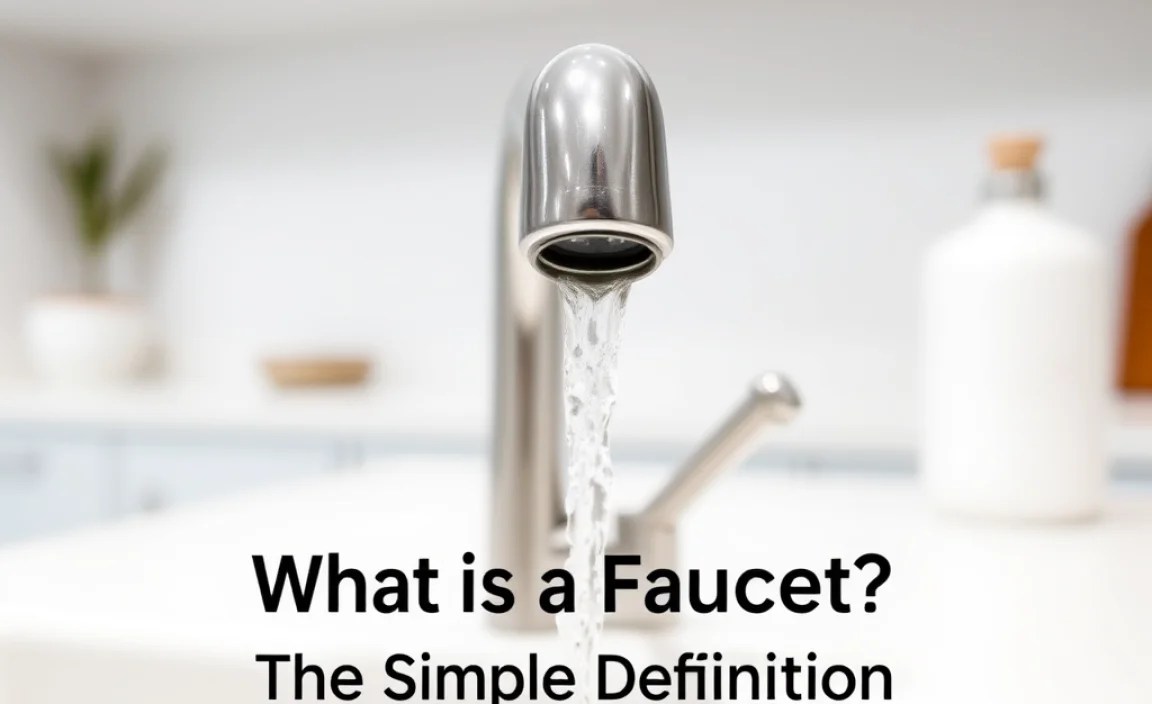
At its core, a faucet, sometimes called a tap, is a device that controls the flow of a liquid. Think of it as the gatekeeper for your water supply. When you turn the handle or lever, you’re opening a valve that allows water to come out of the spout. When you turn it off, you’re closing that valve, stopping the flow.
This simple act of turning water on and off is fundamental to our daily lives. From brushing our teeth in the morning to washing dishes after dinner, faucets are constantly in use. They are crucial components in kitchens, bathrooms, laundry rooms, and even outdoor spaces, ensuring we have easy access to water when we need it.
The Basic Anatomy of a Faucet
While faucets come in many shapes and sizes, most share a similar basic structure. Understanding these parts can help you diagnose problems or plan for replacements:
- Spout: This is the part where the water actually comes out. It’s where you see the stream of water emerging. Spouts can be fixed or swivel to direct water flow.
- Handle(s): These are what you interact with to turn the water on and off, and often to adjust the temperature. They can be levers, knobs, or even touch-sensitive controls.
- Valve Mechanism: This is the hidden heart of the faucet. It’s the component that opens and closes to regulate water flow and mix hot and cold water. This is usually inside the faucet body.
- Aerator: Located at the tip of the spout, an aerator mixes air into the water stream. This creates a smoother, more splash-free flow and can also save water.
- Body: This is the main, often decorative, housing of the faucet that connects all the components and attaches to your sink or countertop.
These fundamental parts work together to provide a controlled stream of water. For example, when you lift a handle on a modern faucet, you’re engaging the valve mechanism to open the waterway. Simultaneously, the aerator at the spout’s end ensures the water flows out in a pleasant, usable manner.
Why Understanding Faucets Matters for Homeowners
As Bryan Lee, your DIY guide, I can tell you that a little knowledge goes a long way. Knowing the definition of a faucet and its parts isn’t just about trivia; it’s about practical home management:
- Easier Maintenance: When a faucet leaks or has a problem, knowing the terminology helps you communicate with a plumber more effectively or even tackle simple repairs yourself.
- Informed Purchases: When you go to buy a new faucet, you’ll understand the different types and features available, helping you choose the best fit for your needs and style.
- Water Conservation: Newer faucet designs often incorporate features for water saving, and understanding how they work can help you make more eco-friendly choices.
- Preventing Costly Damage: A small leak can waste water and, over time, cause water damage to your cabinets or subflooring. Identifying and fixing faucet issues promptly saves money and hassle.
Think of it like this: if your car starts making a funny noise, knowing the difference between the brake pedal and the gas pedal helps you communicate the problem. Similarly, knowing a faucet is made of a spout, handle, and a valve helps you describe an issue clearly. This knowledge empowers you to handle common household plumbing tasks with less stress and more success.
Types of Faucets: A Beginner’s Guide
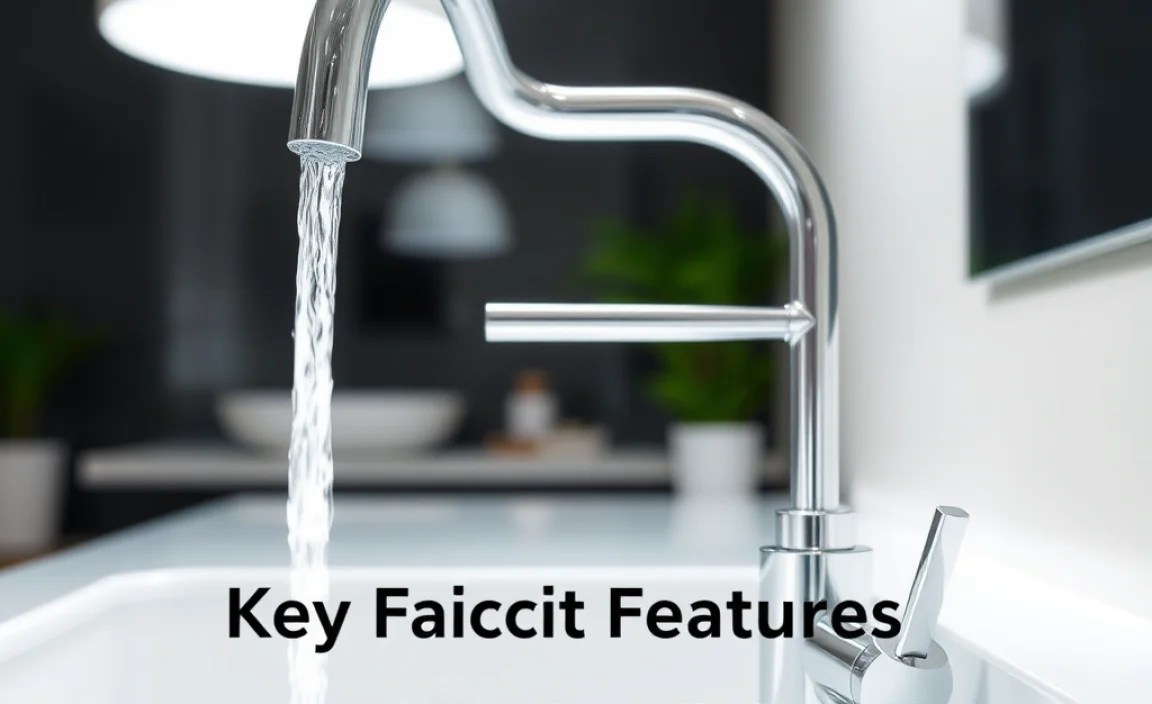
Faucets aren’t one-size-fits-all. They are designed with different mechanisms to control water flow and temperature. Here are the most common types you’ll encounter:
1. Compression Faucets
These are some of the oldest and simplest faucet designs. They use rubber washers to seal the valve seat and stop water flow. To operate, you turn the handle, which screws down a stem and compresses the washer against the valve seat.
How they work:
Turning the handle lowers a threaded stem. At the bottom of the stem is a rubber washer. When the washer is pressed against a valve seat inside the faucet body, it creates a watertight seal. To turn the water on, you reverse this process, lifting the stem and washer away from the seat, allowing water to flow around it.
Pros:
- Simple to understand and operate.
- Washers are inexpensive and easy to replace, making repairs straightforward.
- Affordable to purchase.
Cons:
- Washers can wear out and need frequent replacement due to friction.
- Can be prone to leaks if washers are old or not seated properly.
- Turning them off requires tightening until snug, which can lead to overtightening and wear.
2. Ball Faucets
Found primarily in kitchens, ball faucets are known for their single-handle operation. They use a slotted metal or plastic ball to control water flow and temperature. The handle moves a cam mechanism that aligns slots in the ball with openings in the faucet body.
How they work:
A single handle moves over a rounded cap. Inside, a rotating ball with cutouts sits in a socket. As the handle moves, it rotates the ball. When the ball’s slots align with the hot and cold water inlets and the spout outlet, water flows. Moving the handle adjusts the position of the ball to control flow rate and temperature mixture. Hot and cold water are mixed inside the faucet body.
Pros:
- Single-handle operation is convenient for turning on/off and adjusting temperature.
- Relatively easy to install and maintain.
- Can be very durable if well-made.
Cons:
- Can have many small parts, making repairs sometimes complex.
- The ball mechanism can wear out, leading to leaks.
- Can sometimes feel less precise in temperature control than other types.
3. Cartridge Faucets
Cartridge faucets are very common in both kitchens and bathrooms. They operate using a movable stem cartridge that controls water flow and temperature. This cartridge is a self-contained unit that slides up and down (or rotates) within the faucet body.
How they work:
A single handle is attached to a stem, which moves a cartridge up and down or rotates it. The cartridge contains ports that align with the hot and cold water supplies and the spout. Moving the handle repositions the cartridge to control the volume and temperature of the water that flows through.
Pros:
- Smooth operation and good control over water flow and temperature.
- Durable and less prone to leaks than compression faucets.
- When they do fail, the entire cartridge can often be replaced as a single unit.
Cons:
- Replacement cartridges can sometimes be specific to the brand and model, making them harder to find.
- Can be more expensive than compression faucets.
There are two main sub-types of cartridge faucets:
- Single-handle cartridge: The most common, operated by one lever.
- Two-handle cartridge: Each handle operates its own cartridge, allowing for separate hot and cold water control.
4. Ceramic Disc Faucets
Considered the most durable and reliable type, ceramic disc faucets use two highly polished ceramic discs that slide over each other to control water flow. They are incredibly smooth to operate and virtually leak-proof when new.
How they work:
Inside the faucet body are two ceramic discs. One disc is stationary, while the other moves when the handle is operated. Both discs have holes. When the holes align, water flows. When they don’t align, the flow is stopped. The ceramic material is extremely hard and creates a perfect seal, resisting mineral buildup and wear.
Pros:
- Extremely durable and long-lasting.
- Smooth handle operation.
- Excellent resistance to leaks and corrosion.
- Require very little maintenance.
Cons:
- Typically the most expensive type of faucet to purchase.
- If a ceramic disc does break (very rare), the entire cartridge unit usually needs replacement, which can be costly.
Key Faucet Features and Technologies
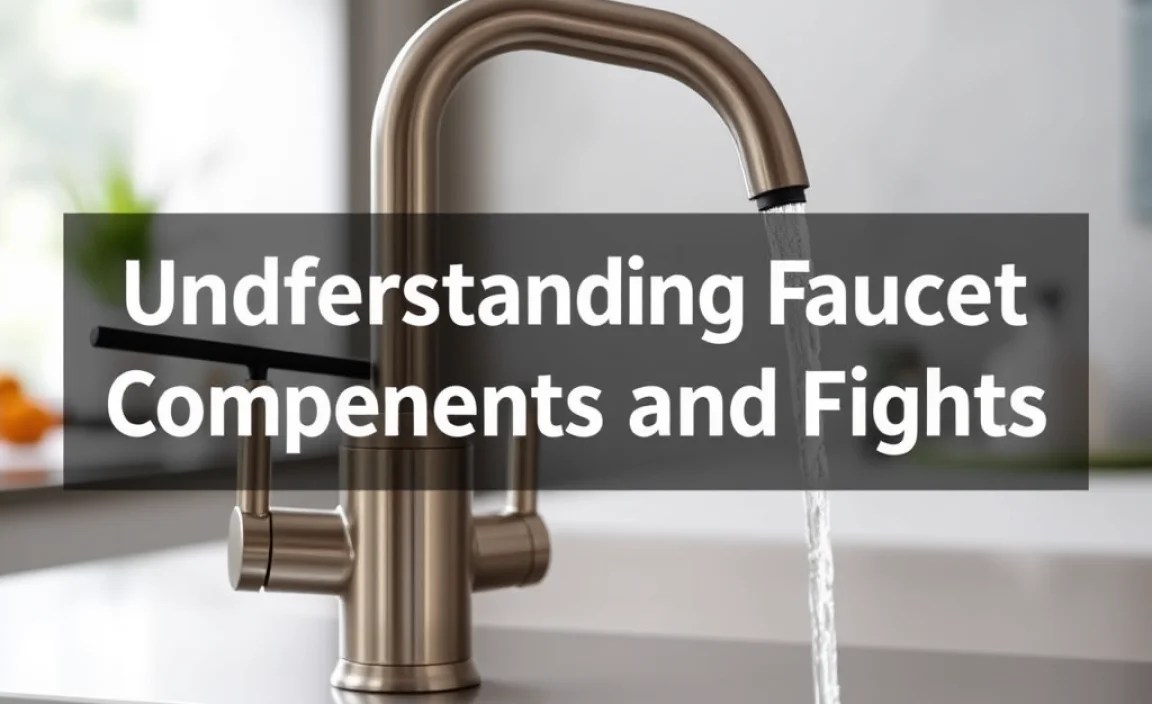
Beyond the basic types, modern faucets offer features that enhance convenience, efficiency, and style. Here’s a look at some important ones:
1. Handle Configurations
This refers to the number of handles and how they operate:
- Single-handle: One lever controls both water flow and temperature. Common in kitchens and showers, offering ease of use.
- Two-handle: Separate handles for hot and cold water. Provides precise temperature control and is common in bathrooms and kitchens.
- Three-hole: Typically a two-handle setup with a separate spout, often seen on older or more traditional sinks.
- Wall-mounted: Faucets installed directly on the wall, often above a freestanding tub or sink, providing a minimalist look.
2. Spout Styles
The spout is a prominent visual element and its style can significantly impact a faucet’s functionality:
- Arc (or High-arc): A curved, tall spout that offers more clearance, ideal for filling large pots or washing bulky items.
- Pull-down/Pull-out: The spout head detaches and extends, offering flexibility for rinsing sinks or washing produce.
- Standard: A straight or gently curved spout that is the most common and functional for everyday use.
- Swivel: Spouts that can rotate from side to side, useful for double sinks or when you need to direct water flow.
3. Valve Types
We touched on these earlier, but it’s worth remembering the internal mechanisms:
- Washerless: This category includes ball, cartridge, and ceramic disc faucets, all of which avoid the traditional screw-down washer.
- Ball: Uses a slotted ball.
- Cartridge: Uses a sleeve or cylinder.
- Ceramic Disc: Uses two hard ceramic discs.
4. Finishes
The finish protects the faucet and contributes to your bathroom or kitchen’s aesthetic. Common finishes include:
- Chrome: Highly reflective, durable, and resistant to corrosion. A very popular and affordable choice.
- Brushed Nickel: Offers a softer, matte look and is good at hiding water spots and fingerprints.
- Stainless Steel: Durable, corrosion-resistant, and matches other stainless steel appliances well.
- Bronze (Oil-Rubbed or Venetian): Provides a warmer, antique look. Can be more susceptible to wear but offers unique beauty.
- Matte Black: A modern and bold choice that can add a dramatic flair to a space.
When choosing a faucet, consider not just its look but also its material and finish. Some finishes are easier to clean and maintain than others. For instance, brushed nickel is often more forgiving with water spots than polished chrome.
Understanding Faucet Components and Flow
Let’s dive a little deeper into how water moves through a faucet. This understanding is key to troubleshooting.
The Journey of Water into Your Sink
Water doesn’t magically appear. It travels from your home’s main water supply line, through pipes, to the faucet. Here’s a simplified path:
1. Water Supply Lines: Flexible hoses or rigid pipes connect your hot and cold water lines under the sink to the faucet body.
2. Faucet Body: This is where the hot and cold water meet and are controlled.
3. Valve Mechanism: This is the crucial part that opens or closes the waterway. In a single-handle faucet, moving the handle adjusts this mechanism to mix hot and cold water and control the flow rate.
4. Spout: The water travels up from the valve to the spout and out through the aerator.
The Role of Aeration
An often-overlooked hero of the faucet is the aerator. It’s a small, screw-on device at the very tip of the spout. Its primary job is to mix air into the water stream. Why is this important?
- Splash Reduction: By introducing air, the water comes out as a softer, more cohesive stream, reducing splashing around the sink.
- Water Conservation: Aerators reduce the flow rate without you noticing a difference in water pressure. A standard faucet might flow at 2.2 gallons per minute (GPM), but an aerated faucet can achieve a similar feel at 1.5 GPM or even less. The U.S. Environmental Protection Agency (EPA) promotes WaterSense labeled products, which often use aerators to meet water efficiency standards. (Learn more about WaterSense).
- Comfort: The softer stream is generally more comfortable for washing hands or dishes.
If your faucet seems to be spitting water or not flowing as smoothly, the aerator is often the culprit. It can become clogged with mineral deposits from hard water. Fortunately, cleaning or replacing an aerator is usually a very simple DIY task.
Table: Common Faucet Problems and Basic Solutions
Here’s a quick reference for some common issues you might encounter with your faucets:
| Problem | Possible Cause(s) | Beginner Solution |
|---|---|---|
| Dripping from spout | Worn-out washer (compression faucet) or O-ring, damaged valve seat, or worn cartridge/disc. | For compression faucets, unscrew handle, replace washer and check valve seat. For cartridge/disc, try replacing the entire cartridge or disc assembly. Ensure handles are fully closed. |
| Leaking from handle base | Loose packing nut, worn O-ring, or damaged valve stem/cartridge. | Try tightening the packing nut (carefully). If still leaking, you may need to replace the O-ring or the cartridge/stem assembly. |
| Low water pressure | Clogged aerator, kinked supply line, or issues further back in plumbing. | Unscrew and clean the aerator. Check that supply lines aren’t kinked. If the problem persists, it might require professional diagnosis. |
| Difficult handle operation | Mineral buildup, worn internal parts, or a damaged cartridge. | Try applying a vinegar solution to loosen mineral deposits. If that doesn’t work, the internal mechanism may need cleaning or replacement. |
| Noise (e.g., squealing, buzzing) | Loose parts, worn washer, high water pressure, or loose aerator. | Tighten loose parts. Ensure washers are properly seated. Check water pressure with a gauge (Example pressure gauge at Home Depot) and consider a pressure-reducing valve if too high. Ensure aerator is secure. |
DIY: Simple Faucet Maintenance and Replacement Steps
As your go-to DIY expert, I want to empower you. Many common faucet issues are fixable without calling a plumber. Safety first – always!
Essential Safety Steps Before You Start
- Turn off the Water Supply: This is critical! Look for the shut-off valves under the sink for both hot and cold water. Turn them clockwise until they stop. If you can’t find or use these, you’ll need to turn off the main water supply to your house.
- Relieve Pressure: Open the faucet handles you’ll be working on to drain any remaining water in the lines and relieve pressure.
- Protect Your Sink: Place a towel or rag in the sink drain to prevent small parts from falling down. You might also want to wear safety glasses.
