
Understanding exhaust fan types is crucial for maintaining a healthy and comfortable home. This guide breaks down various options, their uses, and what makes them suitable for kitchens, bathrooms, and other areas, helping you choose the best fit for ventilation needs. Get ready to breathe easier with the right fan!
Is your home feeling a bit stuffy? Do you notice lingering odors after cooking, or is moisture a constant problem in your bathroom? You’re not alone! Proper ventilation is key to a fresh, healthy living space, and exhaust fans are your best allies in this fight. But with so many options out there, it can feel overwhelming to pick the right one.
Don’t worry! This guide will walk you through the different types of exhaust fans, explaining what they do and where they work best. We’ll break down the technical stuff into simple terms so you can feel confident making the best choice for your home. Let’s get started on creating a fresher, more comfortable environment for you and your family.
Why Exhaust Fans Matter: More Than Just Air Circulation

Exhaust fans are workhorses for your home’s air quality. They’re designed to pull out stale, moist, or odor-filled air from a specific area and vent it outside. This isn’t just about making your bathroom smell better after a shower; it’s vital for a healthy home. Moisture buildup from showers and cooking can lead to mold and mildew, which are bad for your health and can damage your home’s structure. Stale air can feel stuffy and may contain pollutants. An effective exhaust fan removes these issues, keeping your air fresh, reducing humidity, and even helping to prevent structural damage.
Key Features to Look For in an Exhaust Fan

Before we dive into the different types of fans, let’s quickly cover some important features that apply to most of them. Knowing these will help you compare options:
- CFM (Cubic Feet per Minute): This measures how much air the fan can move. Higher CFM means more air is moved, which is great for larger rooms or areas with high moisture/odor production. For bathrooms, a general rule is 1 CFM per square foot of room area. For kitchens, you’ll typically need a higher CFM, especially with powerful stoves. The U.S. Department of Energy offers great advice on home ventilation.
- Sones: This measures how noisy the fan is. A lower sone rating means a quieter fan. For bathrooms, you’ll want a fan with a low sone rating, especially if it’s near a living area or you prefer a peaceful environment. Ratings typically range from 0.3 (nearly silent) to 4.0 (noticeably loud).
- Energy Efficiency: Look for ENERGY STAR® certified fans. These use less electricity, saving you money on your utility bills and being better for the environment.
- Ducting: Most exhaust fans need to be connected to a duct that vents air outside. The type and size of ducting can affect performance.
- Built-in Features: Some fans come with lights, heaters, humidity sensors (which turn the fan on automatically when moisture is detected), or timers.
Types of Exhaust Fans Explained
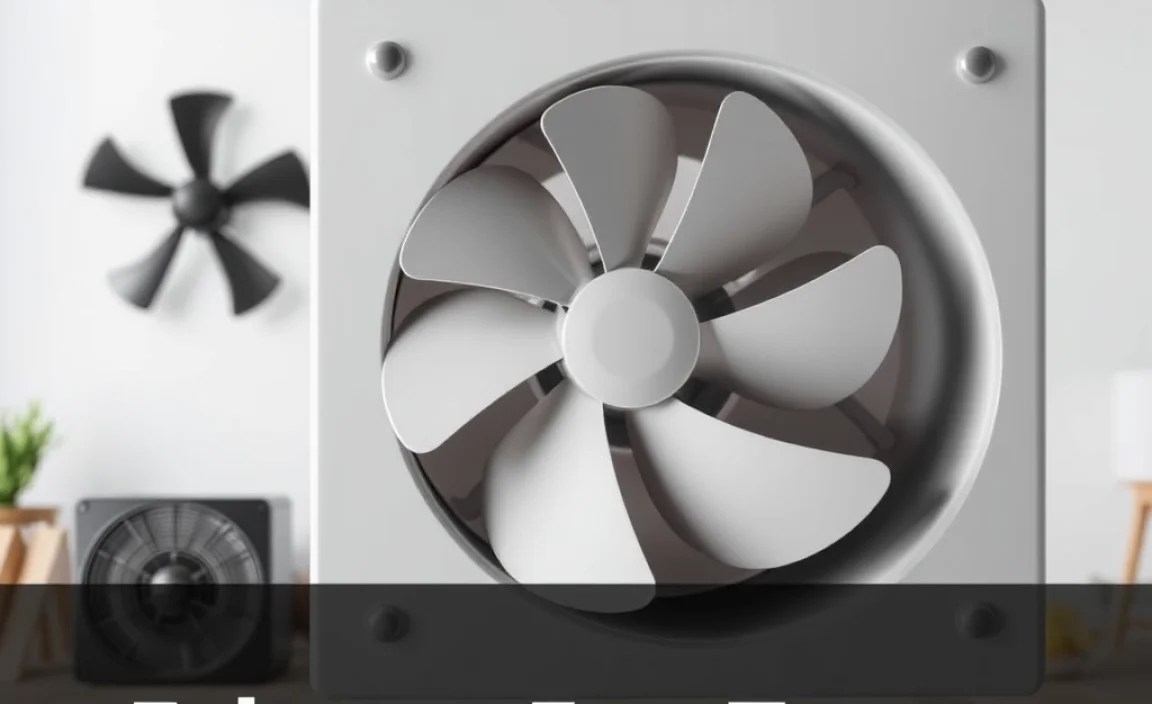
Exhaust fans come in various forms, each suited for different applications. Understanding these distinctions will empower you to make the best choice for your specific needs. We’ll explore the most common types found in homes.
1. Ceiling-Mounted Exhaust Fans (The Most Common Type)
These are the workhorses you’ll find in most bathrooms and some kitchens. They are installed directly into the ceiling and are typically ducted through the attic to the outside.
How They Work:
A motor draws air from the room through a grille, expels it through ductwork, and vents it outdoors. They are designed to remove moisture, odors, and pollutants efficiently.
Common Uses:
- Bathrooms (primary use)
- Small kitchens or over cooktops (if designed for it)
- Laundry rooms
- Powder rooms
Pros:
- Highly effective at removing moisture and odors.
- Relatively quiet operation, especially newer models.
- Comes in a wide range of CFM and sone ratings to fit different room sizes.
- Many models offer combination features like lights or heaters.
Cons:
- Requires proper ducting to the outside for effective ventilation.
- Installation can be more involved, sometimes requiring access to the attic.
- If not properly sealed, can allow air drafts from the attic.
When choosing a ceiling-mounted fan, ensure it has adequate CFM for the room size. For a standard 8’x8’ bathroom, a 50-80 CFM fan is usually sufficient. Always check the manufacturer’s recommendations for your specific room dimensions.
2. Range Hoods (Kitchen Exhaust Fans)
These are specifically designed for kitchens, mounted above the stove or cooktop. Their primary job is to capture and remove cooking fumes, grease, and smoke. Some can also filter and recirculate air if venting outdoors isn’t possible.
How They Work:
Range hoods use a fan to pull air, along with grease and smoke particles, through filters. If vented, the air is pushed outside. If not, it’s filtered and returned to the kitchen. The filters are crucial for capturing grease and preventing it from buildup in the fan and ductwork.
Common Uses:
- Above stoves and cooktops in kitchens.
Pros:
- Captures cooking odors, smoke, and grease effectively.
- Filters help maintain indoor air quality and reduce grease buildup on surfaces.
- Many models include lighting to illuminate the cooking area.
- Available in various styles (under-cabinet, wall-mount, island) to match kitchen aesthetics.
Cons:
- Can be noisy, especially older or less expensive models.
- Filters need regular cleaning or replacement to maintain effectiveness.
- Vented models require ductwork installation.
- Recirculating (ductless) models are less effective at removing moisture and odors compared to vented ones.
For effective ventilation, the CFM of a range hood should generally be at least 100 CFM for every linear foot of cooktop space. For a standard 30-inch cooktop, a hood with 250-400 CFM is recommended. For more information on kitchen ventilation, resources from the HGTV Kitchen Design section often provide practical tips.
3. Inline Exhaust Fans
These fans are installed within the ductwork itself, often in attics or crawl spaces. They are ideal when you need to exhaust air from a remote location or when a traditional ceiling-mount fan isn’t feasible.
How They Work:
An inline fan is connected to ducts on both sides. It pulls air from one duct (e.g., a bathroom vent) and pushes it through the other duct to the outside. Because they are outside the main living space, they can be more powerful and quieter than integrated units.
Common Uses:
- Ventilating multiple bathrooms with a single duct run and fan.
- Creating ventilation in areas without direct exterior access (e.g., basement rooms).
- Whole-house ventilation systems.
- Boats and RVs.
Pros:
- Very quiet operation as the motor is located away from the room.
- Flexible installation options, suitable for complex ductwork.
- Can be used for longer duct runs.
- Often more powerful than standard ceiling fans.
Cons:
- Installation can be more complex and may require professional help.
- Requires access to the space where the fan will be installed (attic, crawl space).
- Maintenance access can be challenging depending on placement.
4. Wall-Mounted Exhaust Fans
These fans are mounted directly into an exterior wall, providing a more direct path for venting air without needing extensive ductwork through the attic. They are often used in basements, garages, or older homes where running ducts is difficult.
How They Work:
A fan unit is installed through an opening in an exterior wall. A shutter on the outside opens when the fan is on and closes when it’s off to prevent drafts. Some models also have a pull-cord or switch inside the room.
Common Uses:
- Garages or workshops with fumes.
- Basements or utility rooms.
- Bathrooms or kitchens in older homes where running ceiling ducts is impractical.
Pros:
- Simpler installation than ceiling-mounted fans, as it doesn’t require attic access or long duct runs.
- Direct venting is very efficient.
- Can be a good solution for rooms without easy access to the attic.
Cons:
- Requires an exterior wall.
- Can be noisier than ceiling or inline fans.
- Exterior shutters can sometimes be damaged by weather or wildlife.
- May allow more air leakage around the unit compared to well-sealed ceiling fans.
5. Window Exhaust Fans
These fans are designed to fit into a window frame. They are often used for spot cooling or ventilation in a single room, such as a kitchen or a garage, and are easily removable.
How They Work:
The fan unit is placed in a window opening and secured. It can often be set to intake fresh air or exhaust stale air. Many have reversible fans for this purpose.
Common Uses:
- Kitchen windows to clear cooking fumes.
- Garages.
- Temporary ventilation needs.
Pros:
- Easy to install and remove.
- No permanent alteration to your home is usually required.
- Can be used to bring in fresh air or exhaust air.
- Relatively inexpensive.
Cons:
- Can be noisy.
- Not as efficient as permanently installed ceiling or wall fans.
- May not provide a secure seal, leading to drafts or security concerns.
- Requires a window to be open, which can be impractical in bad weather.
Choosing the Right Exhaust Fan for Your Needs

Selecting the perfect exhaust fan involves considering a few key factors specific to the room and your lifestyle. Let’s break down how to match the fan type to the job.
For Bathrooms: Battling Moisture
The primary goal in a bathroom is to remove moisture to prevent mold, mildew, and damage. Ceiling-mounted fans are the standard here.
- CFM: Aim for at least 1 CFM per square foot of bathroom space. For an 8’x10’ bathroom (80 sq ft), a fan around 80 CFM is a good start. Larger bathrooms or those with separate shower enclosures may need more.
- Sones: This is where low sones (0.3 to 1.5) really shine. You want a quiet fan that you can run continuously or automatically without it being annoying.
- Features: Consider a fan with a built-in humidity sensor that automatically activates when moisture levels rise. Models with lights or heaters can also be convenient.
For Kitchens: Tackling Grease and Odors
Kitchens require robust ventilation to handle cooking fumes, smoke, and grease. Range hoods are the primary solution.
- CFM: This is critical. Higher-CFM hoods are needed for powerful stoves. A common guideline is 100 CFM per linear foot of cooktop. For gas stoves, you might need even more due to higher levels of combustion byproducts.
- Type: Decide between ducted (vents outside, most effective) or ductless (recirculates air through filters). If ducting is an option, go for it.
- Filters: Ensure the filters are easy to access, clean, or replace. Mesh filters are common for grease, while charcoal filters are used in ductless systems for odor control.
- Noise: Range hoods can be noisy. Look for models with lower sone ratings, though higher CFM often means more noise.
Other Areas: Versatility is Key
For other areas like laundry rooms, garages, or basements, the choice depends on the specific pollutants and moisture levels.
- Laundry Rooms: Moisture from dryers and general humidity are concerns. A ceiling-mounted fan or even a wall-mounted fan can work well.
- Garages/Workshops: If you’re dealing with fumes from cars, paints, or solvents, a wall-mounted or window fan with a higher CFM might be necessary. Ensure it’s rated for the type of fumes you’re dealing with.
- Basements: Basements can be prone to dampness and stale air. A ceiling-mounted fan, especially if ducted to the outside, can significantly improve air quality. Inline fans are also excellent for basement ventilation, especially if there’s no direct exterior wall access.
A helpful resource for understanding ventilation needs in different home areas can be found in guides from organizations like the Environmental Protection Agency (EPA), which offers extensive information on indoor air quality.
Installation Considerations: A DIYer’s Perspective
While some exhaust fan installations are straightforward, others can be more complex. Here’s a general idea of what to expect:
DIY vs. Professional Installation
DIY-Friendly: Replacing an existing fan of the same type, or installing a simple window fan, is often a manageable DIY project. Wall-mounted fans can also be DIY if you’re comfortable cutting into an exterior wall and basic wiring.
Professional Recommended: Installing a new ceiling-mounted fan that requires running new ductwork through the attic, or installing a range hood that needs complex ducting and electrical work, is often best left to a qualified electrician or HVAC professional. This ensures proper and safe installation, especially regarding electrical connections and ventilation integrity.
Essential Tools (May Vary by Fan Type)
- Screwdriver set (Phillips and flathead)
- Wire strippers and cutters
- Voltage tester
- Pliers
- Utility knife
- Measuring tape
- Drill with appropriate bits
- Drywall saw (for cutting ceiling openings)
- Caulking gun and sealant
- Ladder
Basic Installation Steps (Ceiling-Mounted Fan Example)
- Safety First: Turn off power to the circuit at your breaker box.
- Remove Old Fan: Carefully detach the old fan housing, disconnect wiring, and remove the unit.
- Prepare Opening: If installing a new fan where none existed, you’ll need to cut an opening in the ceiling drywall and install a new fan housing box. Ensure it’s adequately supported.
- Connect Ductwork: Attach the appropriate ducting to the fan housing and run it to your exterior vent location. Ensure all connections are sealed with tape or clamps.
- Wire the Fan: Connect the fan’s wiring to your home’s electrical supply, following the manufacturer’s instructions and local building codes. If you’re unsure, hire an electrician.
- Mount the Fan: Secure the fan housing to the ceiling joists or fan box.
- Install Grille/Cover: Attach the decorative grille or cover.
- Test: Restore power and test the fan to ensure it operates correctly and vents outside.
Always refer to the specific installation manual provided with your exhaust fan. Building codes can vary, so it’s wise to consult resources like your local building department or reliable home improvement guides from sites like This Old House for best practices.
Comparing Exhaust Fan Types: A Quick Overview
To help you visualize the differences, here’s a table summarizing the main types:
| Fan Type | Typical Location | Primary Function | Key Considerations |
|---|---|---|---|
| Ceiling-Mounted | Bathrooms, Laundry Rooms | Moisture & Odor Removal | CFM for room size, Low Sones, Ducting |
| Range Hood | Kitchens (above stovetop) | Smoke, Grease, Odor Control | High CFM, Ducting vs. Ductless, Filter Maintenance |
| Inline | Attics, Crawl Spaces (in ductwork) | Remote Ventilation, Quieter Operation | Flexible installation |
