
A vanity, often called a bathroom cabinet or sink vanity, is a bathroom furniture piece that holds a sink and provides storage. It’s crucial for bathroom organization and aesthetics, combining practical function with style. Understanding its parts and purpose is key to choosing and maintaining yours effectively.
Is your bathroom feeling a bit cluttered, or perhaps you’re looking to refresh its style? The vanity might be the star player you’re overlooking. Often described as a bathroom cabinet or sink vanity, this essential piece of furniture does more than just hold your sink. It’s your bathroom’s command center for hygiene and storage, neatly tucking away toiletries and adding a touch of personal flair.
If the thought of bathroom upkeep feels a little daunting, don’t worry! We’re here to break down everything you need to know about vanities in a way that’s simple and straightforward. Get ready to transform your bathroom with essential knowledge delivered step-by-step, making maintenance a breeze.
What Exactly is a Vanity?

At its core, a vanity is a piece of furniture designed specifically for the bathroom. It typically includes a countertop, a basin (the sink itself), and storage space, all integrated into one unit. Think of it as a vanity table crossed with a cabinet, but built for wet environments. It’s where you brush your teeth, wash your face, and often store a multitude of items needed for your daily routines.
The term “vanity” itself comes from the old French word “vanity,” meaning “emptiness” or “futility,” which historically related to ornate dressing tables used for adornment. While the modern bathroom vanity still serves a similar purpose of personal grooming, its practical storage function has become paramount. Today’s vanities are engineered to be durable, water-resistant, and aesthetically pleasing, fitting seamlessly into various bathroom designs.
Key Components of a Bathroom Vanity
To truly understand a vanity, it’s important to know its different parts. Each component plays a vital role in its function and appearance:
- Countertop: This is the flat surface that sits atop the vanity cabinet. It supports the sink and provides extra space for toiletries. Countertops come in various materials, each with its own look, feel, and durability.
- Sink/Basin: This is the bowl that holds water. It can be undermounted (hidden beneath the countertop), drop-in (resting on top), vessel (sitting entirely on top), or rectangular. The style of sink significantly impacts the vanity’s overall look.
- Cabinet/Base: This is the main body of the vanity, housing drawers and cabinets for storage. The design of the cabinet—whether it’s a pedestal, wall-mounted, or floor-standing unit—affects the bathroom’s perceived space and style.
- Hardware: These are the functional and decorative elements like knobs, pulls, hinges, and drawer slides. They not only allow you to open doors and drawers but also contribute to the vanity’s aesthetic.
- Faucet: While not strictly part of the vanity unit itself, the faucet is designed to work with the sink and countertop and is an integral part of the vanity’s functional composition.
Types of Vanities and Their Benefits

When you’re shopping for a vanity, you’ll encounter several styles. Choosing the right type depends on your bathroom size, storage needs, and design preferences.
Freestanding Vanities
These are the most traditional type. Freestanding vanities sit on the floor, much like a piece of furniture. They are usually a single, cohesive unit that includes the cabinet, countertop, and sink (or is designed for a specific sink type).
- Pros:
- Easy to install, as they don’t require complex mounting.
- Can be a focal point of the bathroom design.
- Offers a classic and substantial look.
- Relatively easy to replace if damaged or if you want a change.
- Cons:
- Can take up more floor space compared to wall-mounted options.
- May not be ideal for very small bathrooms.
- Might leave a small gap between the wall and the vanity, which can collect dust.
Wall-Mounted (Floating) Vanities
These vanities are attached directly to the wall, leaving the floor underneath clear. This creates a modern, minimalist look and can make a small bathroom feel more spacious.
- Pros:
- Maximizes floor space, making small bathrooms feel larger and easier to clean.
- Offers a sleek, contemporary aesthetic.
- Easy to clean underneath, reducing dust accumulation.
- Cons:
- Installation can be more complex, requiring sturdy wall anchors.
- Weight capacity needs careful consideration to avoid damaging the wall or fixture.
- Plumbing access might be more challenging during installation or maintenance.
Pedestal Sinks
A pedestal sink is essentially a sink basin supported by a single pedestal base. It’s a classic choice, often seen in older homes or smaller bathrooms where storage is less of a priority.
- Pros:
- Takes up very little floor space, ideal for powder rooms.
- Simple, elegant design.
- Easy to clean around.
- Cons:
- Virtually no storage space underneath.
- Can be less stable than other vanity types.
- Installation requires anchoring to the wall.
Corner Vanities
Designed to fit into a corner, these vanities are excellent space-savers, especially in oddly shaped or small bathrooms. They often have a triangular or curved countertop.
- Pros:
- Excellent for making use of awkward corner spaces.
- Can free up central floor space.
- Good for very compact bathrooms.
- Cons:
- Storage space can be limited or unusually shaped.
- Can sometimes feel less integrated into the overall bathroom design.
- Plumbing might be more complex to route into a corner.
Choosing the Right Vanity: What to Consider

Selecting a vanity involves balancing practicality with aesthetics. Here’s a guide to help you make the best choice for your home:
1. Measure Your Space Carefully
This is the most critical step. Before you even look at styles, measure the exact dimensions of the area where the vanity will go. Note the width, depth, and height, and also consider the placement of doors, windows, and other fixtures. Remember to account for clearance needed for opening drawers and doors.
A good rule of thumb for clearance is to ensure at least 18-24 inches of clear space in front of the vanity for comfortable use. For a comprehensive guide to bathroom measuring and planning, the National Association of Home Builders (NAHB) offers excellent resources on space planning.
2. Assess Your Storage Needs
How much stuff do you need to store? If you have a large family or like to keep a lot of toiletries and cleaning supplies on hand, you’ll need a vanity with ample drawer and cabinet space. If you prefer a minimalist approach and only need space for essentials, a smaller vanity or even a statement pedestal sink might suffice.
3. Consider the Material
Vanity countertops and cabinets are made from a variety of materials, each with its own performance characteristics and appearance:
Countertop Materials:
The countertop is a major visual element and needs to withstand moisture and daily use.
| Material | Pros | Cons | Typical Cost |
|---|---|---|---|
| Granite | Durable, heat-resistant, wide variety of colors, unique patterns. | Requires regular sealing to prevent staining and etching, can be porous if not sealed properly. | $$$ |
| Marble | Luxurious look, classic elegance, unique veining. | Soft and porous, prone to staining and etching from acidic substances (like toothpaste or lemon juice), requires frequent sealing. | $$$$ |
| Quartz (Engineered Stone) | Non-porous, extremely durable, stain-resistant, low maintenance, consistent patterns. | Can be sensitive to high heat, less unique than natural stone. | $$$ |
| Laminate | Affordable, wide range of colors and patterns, easy to clean. | Less durable than stone, can chip or scratch, not heat-resistant, can look less high-end. | $ |
| Solid Surface (e.g., Corian) | Non-porous, repairs easily by sanding out scratches, integrates seamlessly with sinks. | Can scratch and stain more easily than quartz, not as heat-resistant as granite. | $$ |
Cabinet Materials:
The cabinet provides the structure and storage. It’s important for it to be sturdy and resistant to moisture.
- Solid Wood: Durable and classic, but can be susceptible to warping or swelling in high humidity if not properly sealed.
- Plywood: A more stable option than solid wood, less prone to expansion and contraction. High-quality plywood is an excellent choice for bathroom cabinets.
- MDF (Medium-Density Fiberboard) / Particle Board: These are engineered wood products. They are cost-effective but can swell and degrade significantly if exposed to prolonged moisture. Often coated with veneer or paint for protection.
4. Match Your Style
The vanity is a central element of your bathroom’s design. Consider the overall aesthetic you’re aiming for:
- Modern/Contemporary: Look for clean lines, minimalist hardware, and materials like quartz or solid surfaces. Floating vanities often fit this style perfectly.
- Traditional/Classic: Ornate detailing, raised panel doors, and materials like granite or marble with classic hardware can create this look. Freestanding vanities are common here.
- Farmhouse/Rustic: Consider distressed finishes, darker wood tones, and simpler hardware.
- Transitional: A blend of modern and traditional elements, offering versatility.
5. Plumbing Considerations
Existing plumbing can influence your choice. If you’re replacing an old vanity, a new one with the same sink and plumbing configuration will be easiest to install. If you’re doing a full remodel, you have more flexibility, but plumbing work adds to the cost and complexity. Always ensure the new vanity’s drain and water supply lines will align with your existing rough-in plumbing, or be prepared for adjustments.
Installation Basics for Vanities
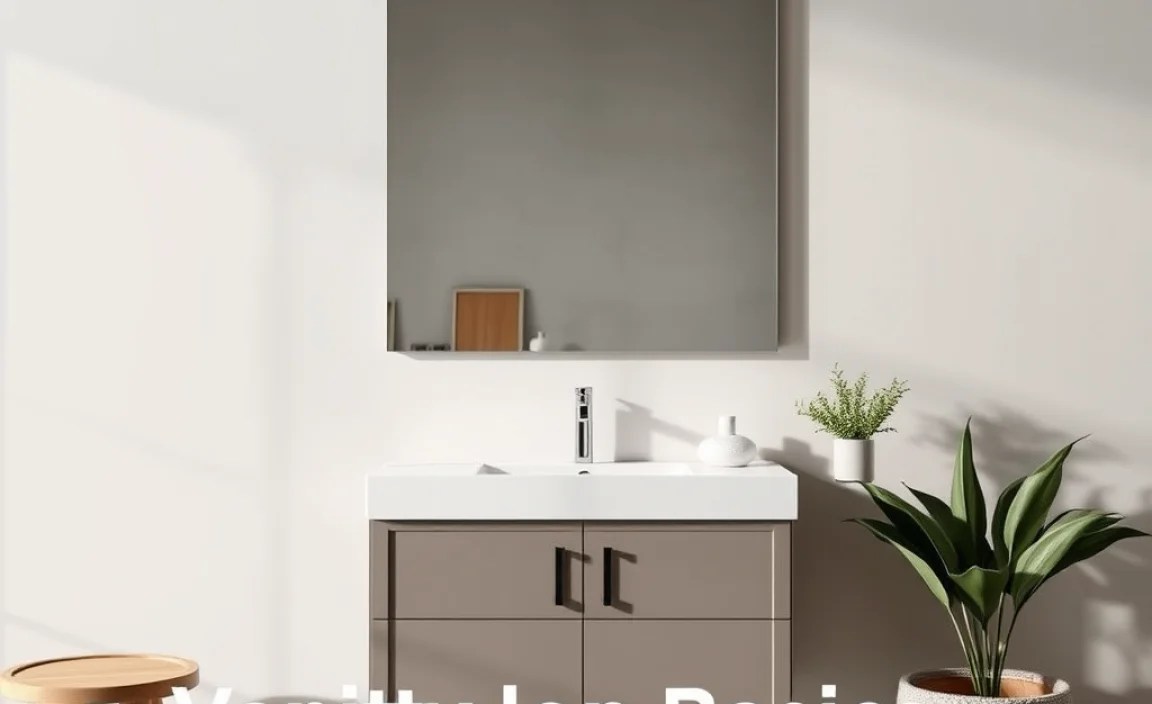
Installing a vanity can be a DIY project, but it requires basic plumbing and carpentry skills. If you’re unsure, hiring a professional is always a wise choice. Here’s a general overview:
Tools You Might Need:
- Tape measure
- Level
- Screwdriver set
- Adjustable wrench
- Plumber’s putty
- Caulk gun and caulk
- Drill and drill bits
- Safety glasses
- Pliers
- Saw (if you need to cut for plumbing access)
Step-by-Step Installation Overview (General):
Please note: This is a simplified guide. Always refer to the manufacturer’s specific instructions for your vanity and consult local building codes.
- Prepare the Area: Turn off the main water supply to the bathroom. Disconnect the old plumbing (water supply lines, P-trap). Remove the old vanity if applicable. Ensure the floor and walls are clean and level.
- Position the New Vanity: Carefully place the new vanity in its intended location. For freestanding vanities, ensure it’s level and stable. For wall-mounted vanities, locate wall studs and use appropriate anchors for secure mounting. For a guide on finding wall studs, the This Old House website provides clear instructions.
- Install the Sink (if not pre-attached): If your vanity comes with a separate sink, follow the manufacturer’s instructions. Typically, this involves applying plumber’s putty around the drain opening, inserting the drain assembly, and securing it. For undermount sinks, they are usually attached to the underside of the countertop with adhesive and clips before the countertop is affixed to the cabinet.
- Attach the Countertop: If your vanity has a separate countertop, secure it to the cabinet base. Cabinets often have pre-drilled holes, or you might need to use adhesives or screws from underneath. Ensure it’s perfectly level.
- Connect Plumbing: Reconnect the water supply lines to the new faucet and the hot/cold water valves. Attach the P-trap from the sink drain to the wall drainpipe. Hand-tighten connections first, then use a wrench for a snug fit, being careful not to overtighten.
- Test for Leaks: Turn the main water supply back on slowly. Turn on the faucet and let water run into the sink. Check all connections (faucet supply lines, drain trap) for any signs of leaks.
- Caulk and Finish: Apply a bead of bathroom-grade caulk around the edge where the countertop meets the wall to prevent water damage.
Vanity Maintenance and Care

Proper care will extend the life and beauty of your vanity. The specific maintenance will depend on your chosen materials.
General Cleaning Tips:
- Wipe down the countertop and sink daily with a soft, damp cloth.
- For tougher spots, use a mild, non-abrasive cleaner specific to your countertop material.
- Avoid harsh chemicals, abrasive scrubbers, or excessive water, which can damage finishes and materials.
- Dry surfaces thoroughly after cleaning to prevent water spots and potential damage.
Specific Material Care:
- Natural Stone (Granite, Marble): Re-seal periodically (e.g., annually) as recommended for your specific stone to maintain its stain resistance. Use pH-neutral cleaners.
- Quartz: Easy to maintain. Generally, mild soap and water or a glass cleaner is enough. Avoid harsh solvents and abrasive pads.
- Laminate: Wipe clean with a damp cloth and mild soap. Avoid heat and sharp objects.
- Solid Wood Cabinets: Dust regularly. For cleaning, use a wood cleaner appropriate for the finish. Address spills immediately to prevent moisture absorption.
Frequently Asked Questions (FAQ) on Vanities
Q1: What is the standard height for a bathroom vanity?
A1: The standard ADA-compliant height for a bathroom vanity countertop is typically 34 inches from the floor. However, standard residential vanities are commonly 30-32 inches tall. Taller “executive” heights of 36 inches are also popular.
Q2: How much space should I leave around a vanity?
A2: It’s recommended to have at least 18-24 inches of clear space in front of the vanity for comfortable use. Leave a few inches between the vanity and any side walls for ease of cleaning and access, though this can be adjusted based on space.
Q3: Can I install a vanity myself?
A3: Yes, if you have basic plumbing and carpentry skills. However, it involves working with water and ensuring secure mounting, so if you’re uncomfortable with any part of the process, it’s best to hire a professional plumber or contractor.
Q4: What is the difference between a drop-in sink and an undermount sink?
A4: A drop-in sink (or top-mount) has a rim that rests on top of the countertop. An undermount sink is installed from beneath the countertop, creating a sleek look with no rim and making cleaning the countertop easier.
Q5: How do I choose the right size vanity for my bathroom?
A5: Measure the available wall space where the vanity will go, noting the width, depth, and height. Also, consider door swings and pathways to ensure adequate clearance. Match the vanity size to your bathroom’s overall dimensions and your storage needs.
