
Have you ever wondered how a simple faucet works? It’s more than just a tap! Faucets come in all shapes and sizes. Each one has a special purpose. This faucet guide will help you understand them better. By the end, you’ll know how to choose the right one for you.
Key Takeaways
- Faucets control water flow with simple mechanisms.
- Diverse faucets fit different needs and styles.
- Understanding parts makes faucet repair easier.
- Read this faucet guide to identify faucet types.
- Proper maintenance extends faucet life.
Faucet Types Explained
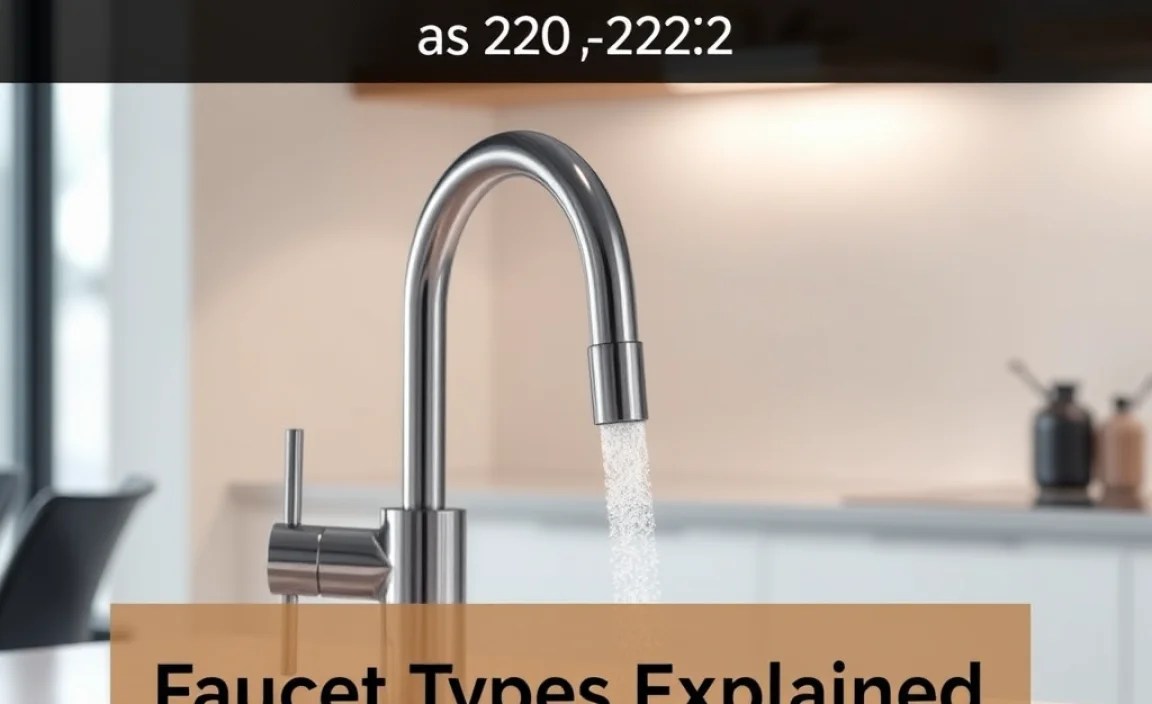
Faucets come in many types, each serving a unique purpose. There are kitchen faucets, bathroom faucets, and utility faucets too. Some have one handle, while others have two. The most common ones are compression, ball, cartridge, and disk faucets. Each type has a different mechanism to control water flow. Understanding these types helps you choose the right one for your needs.
- Compression faucets are common and affordable.
- Ball faucets have a rotating ball for water control.
- Cartridge faucets offer smooth water flow.
- Disk faucets are durable and drip-free.
- Find faucets in various materials and finishes.
When selecting a faucet, consider where you will use it. Kitchen faucets might need a sprayer, while bathroom faucets focus on style. Utility faucets are more about function than looks. Each type has its own pros and cons. Understanding these can save you time and money. You can avoid buying a faucet that doesn’t fit your needs.
Fun Fact or Stats : The first indoor faucet was invented over 2,000 years ago!
Why Choose a Ball Faucet?
Have you ever seen a faucet that swivels? That might be a ball faucet. Ball faucets have a ball-shaped cap inside. This ball controls the flow and temperature of the water. They were the first type of washerless faucet. They’re popular because they’re easy to use. Ball faucets are often found in kitchens. They are great for quick water adjustments. If you want something simple, this might be the one!
Exploring Compression Faucets
Do you like old-fashioned things? Then a compression faucet could be for you. These faucets have two handles, one for hot and one for cold water. You turn them to control the flow. They’re usually the least expensive type. Compression faucets are common in older homes. They might drip if the washers wear out, but they’re easy to fix. These faucets give a classic touch to bathrooms and older-style kitchens.
The Benefits of Cartridge Faucets
Have you used a faucet that moves smoothly? That’s probably a cartridge faucet. Cartridge faucets have a cylinder inside. They control the water flow more easily than other types. These faucets are reliable and require less maintenance. They come in single or double handle styles. Cartridge faucets are great for those who want smooth operation. They’re often used in both kitchens and bathrooms. They provide consistent performance over time.
Understanding Faucet Parts

Faucets may seem simple, but they have many parts. Knowing these parts helps you fix leaks or replace old faucets. Common parts include aerators, spouts, and handles. Faucets also have washers, O-rings, and valves. Each part plays a role in controlling water flow. Understanding these parts makes troubleshooting easier. You’ll know what to look for when something goes wrong.
- Handles control water flow and temperature.
- Spouts direct the water.
- Aerators mix air with water to reduce splash.
- Valves control water flow within the faucet.
- Washers and O-rings prevent leaks.
Familiarizing yourself with faucet parts is useful. You’ll save time and money by doing small repairs yourself. This knowledge can also help you make informed buying decisions. Choosing a faucet with quality parts ensures long-term satisfaction. Always consider the material and design of the parts. This can impact how long your faucet will last.
Fun Fact or Stats : The average faucet has over 500 different parts!
How Do Aerators Work?
Have you noticed the mesh screen on your faucet’s tip? That’s an aerator. Aerators reduce water waste by mixing air with water. This creates a steady, smooth stream. Installing an aerator can save water and reduce your bills. They are easy to screw on or off. Aerators also help filter debris from the water. This keeps your flow clean and gentle. They’re a small but important part of every faucet.
The Role of Faucet Valves
Have you ever wondered what stops your faucet from leaking? It’s the valve! Faucet valves are crucial. They control the water flow inside the tap. Valves can be made of metal, plastic, or ceramic. Ceramic valves are popular because they’re durable and drip-free. If your faucet leaks, the valve might need replacing. Fixing it is usually simple and quick. Knowing about valves can help you maintain your faucet effectively.
Types of Faucet Spouts
Have you ever chosen a faucet by its spout? Spouts are more than just a water outlet. They come in many designs. The straight spout is simple and classic. Gooseneck spouts are higher, giving more space. Articulating spouts have arms for better movement. Each type has a different purpose and aesthetic. Choosing the right spout can enhance your faucet’s functionality and style. It’s important to match it with your sink and usage needs.
Faucet Installation Made Easy

Installing a faucet might seem tricky, but it can be simple with guidance. First, gather the right tools. You’ll need a wrench, screwdriver, and plumber’s tape. Make sure to turn off the water supply before beginning. Remove the old faucet carefully. Follow the instructions for your new faucet closely. If you feel unsure, ask an adult for help. Proper installation ensures your faucet works well and looks great.
- Turn off the water supply before starting.
- Gather all necessary tools and materials.
- Remove the old faucet with care.
- Follow the new faucet’s installation instructions.
- Check for leaks after installation.
Once installed, test the faucet. Ensure that both hot and cold water flow correctly. Check for any leaks around the base. Tighten connections if needed. A well-installed faucet can last many years. It makes a significant difference in the appearance and function of your sink. Installing a faucet can be a fun learning experience!
Fun Fact or Stats : Around 20% of household leaks are due to improper installation!
Choosing the Right Tools
Have you ever tried fixing something without the right tools? It can be frustrating. The correct tools make faucet installation easy. A wrench helps tighten connections. A screwdriver assists with securing handles and valves. Plumber’s tape ensures a leak-proof seal. Having these tools ready saves time. It also prevents damage to your new faucet. Always check the installation instructions for any special tools needed. Being prepared makes the process smooth and successful.
The Importance of Plumber’s Tape
Have you heard of plumber’s tape? It’s a thin, white tape that seals pipe threads. When installing a faucet, plumber’s tape prevents leaks. Wrap it around the threads of any fittings. This creates a tight seal. It’s easy to use and very effective. Plumber’s tape is an essential tool for any plumbing task. It’s available at most hardware stores. Always keep some handy when working with faucets.
Dealing with Tight Spaces
Have you ever tried working under a sink? It can be cramped and tricky. Installing a faucet in tight spaces takes patience. Use a flashlight to see better. Flexible wrenches can help in narrow areas. Take your time and don’t rush. Ensure all connections are tight. Ask for help if needed. Tight spaces might be challenging, but practice makes perfect. You’ll become more confident with each installation.
Faucet Maintenance Tips
Maintaining your faucet is key to keeping it working well. Regular checks prevent leaks and costly repairs. Start by cleaning the aerator. Unscrew it and rinse under water. Check for leaks around the faucet base and handles. Tighten connections if necessary. Keep the surface clean to prevent buildup. By following these simple steps, you’ll extend your faucet’s life and keep it looking new.
- Regularly clean the aerator for smooth flow.
- Check for leaks and tighten connections.
- Keep the faucet surface clean and shiny.
- Inspect washers and O-rings for wear.
- Replace worn-out parts immediately.
Maintaining your faucet isn’t hard. With regular care, you avoid major problems. Small issues like drips or reduced flow can be fixed quickly. This saves money in the long run. Pay attention to any changes in performance. Addressing them early is important. A well-maintained faucet enhances your home’s appearance and function.
Fun Fact or Stats : Proper maintenance can double a faucet’s lifespan!
How Often to Check for Leaks
Do you know how often you should check for leaks? Checking every few months is a good idea. Leaks waste water and money. They can also cause damage over time. Inspect your faucets regularly. Look for drips or water pooling. Ensure washers and O-rings are in good condition. Catching leaks early saves you from bigger problems later. Regular checks keep your faucet working efficiently.
Keeping Your Faucet Shiny
Do you want your faucet to always look brand new? Regular cleaning helps. Use a soft cloth and mild soap to wipe the surface. Avoid harsh chemicals which can damage the finish. Polish with a towel to keep it shiny. A clean faucet looks better and works better too. It makes your kitchen or bathroom look inviting. Taking a little time to clean it pays off in the long run.
Replacing Worn-Out Parts
Have you noticed your faucet not working right? Worn-out parts might be the cause. Replacing them isn’t hard. Check the valve, washers, and O-rings. These parts often wear out first. Having spare parts handy can be helpful. Follow the instructions to change them out. This will restore your faucet’s function. Regularly replacing worn parts keeps your faucet in top condition.
Conclusion
Choosing and caring for faucets is fun and useful. This faucet guide showed you the different types and parts. You learned about installation, maintenance, and repairs. With this knowledge, you can make informed choices. Enjoy exploring the world of faucets, and keep yours in great shape!
FAQs
Question: What is a faucet guide?
Answer: A faucet guide helps you understand and choose the right faucet. It teaches about different types, parts, and maintenance. Knowing about faucets can save you time and money.
Question: How many types of faucets are there?
Answer: There are several types of faucets. The main ones are compression, ball, cartridge, and disk. Each type has its own mechanism for controlling water flow.
Question: What parts does a faucet have?
Answer: Faucets have several key parts. These include handles, spouts, aerators, valves, and washers. Each part plays a role in controlling and directing water flow.
Question: How do I maintain my faucet?
Answer: Regular maintenance is important. Clean the aerator, check for leaks, and tighten connections. Keep the surface clean. Replace worn parts when needed. This keeps your faucet working well.
Question: Why is my faucet leaking?
Answer: Leaks can happen for several reasons. Worn washers, O-rings, or valves are common causes. Checking and replacing these parts can stop the leak. Proper installation and maintenance also help prevent leaks.
Question: Can I install a faucet myself?
Answer: Yes, you can install a faucet yourself. Make sure to have the right tools. Follow the instructions carefully. Turn off the water supply before starting. If you’re unsure, ask an adult or professional for help.
