
Get your leaky faucet fixed quickly and easily with this beginner-friendly DIY guide. You’ll learn simple steps to stop drips, save water, and avoid expensive plumber calls. This guide provides clear instructions, tool lists, and safety tips for a successful faucet repair. Read on to master this common home maintenance task and enjoy a drip-free home!
Drips, drips, everywhere! A leaky faucet might seem like a small annoyance, but that constant dripping can waste a surprising amount of water. It’s also just plain irritating, disrupting your peace and quiet. The good news is that most faucet leaks are surprisingly simple to fix yourself. You don’t need to be a plumbing expert to tackle this common household issue.
With just a few basic tools and this straightforward guide, you can confidently repair your faucet. We’ll walk you through identifying the problem and fixing it, step by simple step. Get ready to save water, save money, and gain a real sense of accomplishment. Let’s get started on your effortless faucet repair!
The Common Culprits: What’s Causing That Drip?

Understanding why your faucet is leaking is the first step to fixing it. Faucets are relatively simple machines, but wear and tear eventually affect their parts. The most common reasons for leaks come down to a few key components.
Think of your faucet like a tiny water gatekeeper. When its seals or internal parts get worn out, that gatekeeper can’t hold back the water anymore, and you get a leak. Identifying which part is failing will make the repair process much smoother.
Worn-Out Washers and Seals
This is by far the most frequent cause of faucet leaks, especially in older compression faucets. Washers are small rubber or neoprene rings that create a seal when the faucet handle is turned off. Over time, these can harden, crack, or wear down, allowing water to seep through.
Similar to washers, other seals and O-rings within the faucet handle and stem can also degrade. These also play a crucial role in preventing water from escaping where it shouldn’t.
Corroded Valve Seats
The valve seat is where the faucet stem rests when it’s turned off, and it’s where the washer makes contact to stop the water flow. If mineral deposits from hard water build up or if the metal seat corrodes, it can create an uneven surface. This unevenness prevents the washer from creating a tight seal, leading to leaks around the spout.
Loose Parts
Sometimes, the simplest explanation is the right one. A handle that’s not secured properly or a packing nut that’s come loose can allow water to drip from the handle area or stem. This is usually a quick fix once identified.
Cartridge Issues (in Single-Handle Faucets)
For faucets with a single handle (like many modern kitchens and bathrooms), the core component is often a cartridge. This cartridge controls both water flow and temperature. If the O-rings within the cartridge are worn, or if the cartridge itself is damaged due to mineral buildup or age, it will need to be replaced.
Gather Your Tools: Be Prepared!
Having the right tools makes any DIY project smoother and safer. For most faucet repairs, you won’t need a whole toolbox. Here’s a list of common items you’ll likely need. It’s always better to be a little over-prepared than to have to stop halfway through because you’re missing a crucial item.
Essential Tools
- Adjustable Wrench: This is your go-to tool for loosening and tightening nuts and bolts of various sizes.
- Pliers: A good pair of slip-joint pliers or needle-nose pliers can be helpful for gripping small parts or maneuvering them.
- Screwdrivers: You’ll likely need both Phillips head and flathead screwdrivers. Having a few sizes of each is useful.
- Allen Wrench Set: Many faucet handles are secured with small set screws that require Allen wrenches.
- Plumber’s Grease (Silicone Grease): This is essential for lubricating O-rings and threads, making reassembly easier and ensuring a good seal.
- Rag or Towel: For wiping up water and keeping your workspace clean.
- Bucket: To catch any residual water when you disconnect parts.
- Penetrating Oil (Optional): If parts are stuck due to corrosion or mineral buildup, a little penetrating oil can help loosen them.
- Old Toothbrush or Small Brush: For cleaning mineral deposits.
Replacement Parts
The specific parts you need will depend on your faucet type and the problem. It’s often best to disassemble the faucet first to identify the exact part needed.
- Washers: If you have a compression faucet.
- O-Rings: Small rubber rings that create seals.
- Cartridge: For single-handle faucets.
- Valve Seat: If yours is corroded and removable.
- Faucet Repair Kit: Many manufacturers offer kits tailored to specific faucet models, which can be a convenient option.
Tip: Before you start, try to identify your faucet’s brand and model. You can often find this information stamped on the faucet base or in your home’s documentation. This will help immensely if you need to buy a specific repair kit. If not, taking the old part to the hardware store is a foolproof way to get a match.
Step-by-Step Guide to Fixing Your Faucet
Let’s dive into the repair process. We’ll cover the most common types of leaks and how to address them. Remember, safety first! Always shut off the water supply before you begin.
Step 1: Shut Off the Water Supply
This is the most critical step. You don’t want water spraying everywhere! Look for the shut-off valves located underneath your sink, typically behind the pipes leading to the faucet. There will usually be two valves, one for hot water and one for cold.
- Turn both valves clockwise until they are hand-tight.
- Turn on the faucet you are working on to drain any remaining water and confirm that the supply is indeed off. No water should come out, or only a trickle.
If you don’t have individual shut-off valves under the sink, you’ll need to shut off the main water supply to your house. This valve is usually located in the basement, garage, or near your water meter.
Step 2: Disassemble the Faucet
This process varies slightly depending on your faucet type (single-handle vs. double-handle, compression vs. cartridge). Here’s a general approach for the most common types:
For Compression Faucets (Double Handle):
- Remove the Decorative Cap: Many faucet handles have a small decorative cap (often marked H or C for hot/cold) that can be pried off with a flathead screwdriver or a utility knife.
- Remove the Handle Screw: Beneath the cap, you’ll find a screw. Use the appropriate screwdriver to remove it.
- Pull Off the Handle: Gently wiggle and pull the handle straight up or off. If it’s stuck, try a bit of penetrating oil or a special handle puller.
- Remove the Packing Nut: You’ll see a hexagonal nut, called the packing nut, around the stem. Use an adjustable wrench to loosen and remove it by turning counter-clockwise.
- Remove the Stem: Once the packing nut is off, you should be able to unscrew or pull out the faucet stem. This part contains the washer.
For Cartridge Faucets (Single Handle):
Cartridge faucets can vary more in design. Here’s a common method:
- Locate the Set Screw: Look for a small set screw on the underside, side, or back of the handle. It might be hidden under a decorative cover. You’ll likely need an Allen wrench to loosen and remove this screw.
- Remove the Handle: Once the set screw is out, the handle should pull straight up or off.
- Identify and Remove the Retaining Clip or Nut: There’s usually a retaining clip or a threaded bonnet nut holding the cartridge in place. Remove any decorative cap or shroud if present. Use pliers or a wrench to carefully remove the clip or unscrew the nut.
- Pull Out the Cartridge: The cartridge should now be accessible. You might need pliers to gently grip and wiggle it out. Note its orientation so you can install the new one correctly.
Step 3: Inspect and Replace Worn Parts
Now that you have the faucet disassembled, it’s time to find the culprit.
On Compression Faucets:
- Examine the Washer: Look at the rubber washer at the bottom of the stem. Is it cracked, brittle, or flattened? If so, it needs replacing.
- Replace the Washer: Use a screwdriver to remove the old washer (it might be held by a screw). Install a new washer of the exact same size and type.
- Check the O-Ring: There’s usually a small O-ring around the stem. If it looks worn or damaged, replace it. Lubricate the new O-ring with plumber’s grease before installing.
- Inspect the Valve Seat: Look down into the faucet body where the stem was. The valve seat is the brass ring at the bottom. Feel it with your finger for any roughness or corrosion. If it’s pitted or damaged, you might need a valve seat wrench to remove and replace it, or you can try grinding it smooth with a valve seat dresser tool. For many DIYers, replacing the entire faucet might be more practical if the seat is severely damaged.
On Cartridge Faucets:
- Inspect the Cartridge: Look closely at the rubber seals and O-rings on the cartridge. Are they cracked, brittle, or compressed?
- Replace the Cartridge: If the cartridge itself appears damaged, or if the seals look worn, it’s best to replace the entire cartridge. Make sure to get an exact duplicate. Lubricate any O-rings on the new cartridge with plumber’s grease.
- Check for Debris: Sometimes, debris can get caught around the cartridge. Clean this area gently.
Step 4: Re-assemble the Faucet
Put everything back together in the reverse order you took it apart.
- Insert the Stem/Cartridge: Carefully place the repaired stem back into the faucet body, or insert the new cartridge, ensuring it’s oriented correctly.
- Reinstall Packing Nut/Bonnet Nut: Screw the packing nut or bonnet nut back on. Tighten it snugly with your wrench, but don’t overtighten, as this can make the handle stiff or damage the parts.
- Replace the Handle: Put the handle back on and secure it with the handle screw. Replace the decorative cap.
Step 5: Turn On the Water and Test
This is the moment of truth!
- Slowly Turn On Water: Go back to the shut-off valves under the sink (or the main shut-off) and turn them counter-clockwise to slowly restore the water supply.
- Check for Leaks: Watch carefully around the faucet body, handle, and spout. Are there any new drips?
- Test the Faucet: Turn the faucet on and off several times, checking both hot and cold water, to ensure it’s working properly and not leaking.
If you still have a leak, don’t despair. Double-check that all connections are snug and that you’ve replaced the correct parts. You might need to disassemble again to ensure everything is seated properly, or the valve seat might be the issue (as noted in Step 3).
Common Faucet Types and Their Fixes
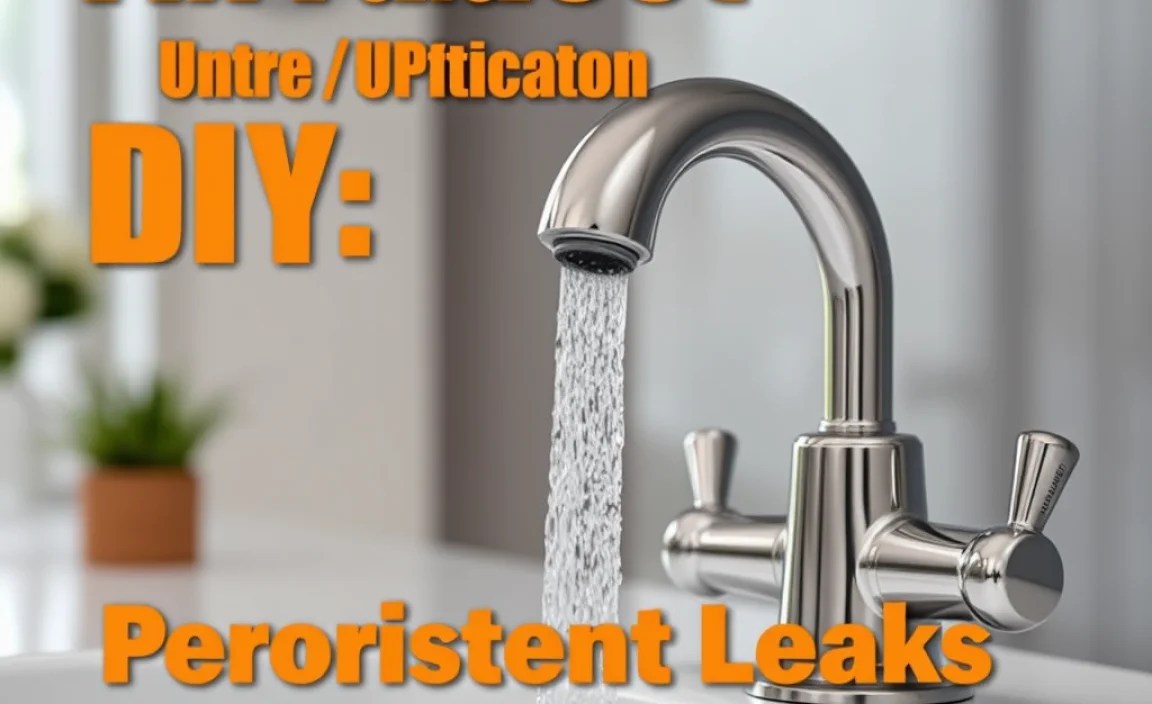
Faucets come in many shapes and sizes, but they generally fall into a few main categories. Knowing your faucet type can help you troubleshoot more effectively.
Compression Faucets
How they work: These are the oldest type, typically with two separate handles for hot and cold. Turning a handle lowers a rubber washer onto a valve seat, stopping water flow.
Common problems: Leaks from the spout are usually due to a worn washer or a damaged valve seat. Leaks from the handle might indicate a worn O-ring.
Ball Faucets
How they work: Common in kitchens, these use a single handle that moves over a rounded cap. Inside, a slotted metal or plastic ball rotates to control water flow and temperature. They have several O-rings and spring-loaded rubber seats.
Common problems: Leaks from the spout usually mean worn-out inlet seals and springs. Handle leaks often point to a worn O-ring on the ball itself.
Cartridge Faucets
How they work: Available in single or double-handle designs, these use a movable stem cartridge that controls water flow. The cartridge itself contains all the valve mechanisms.
Common problems: Leaks are almost always due to a worn-out cartridge or its O-rings.
Ceramic Disc Faucets
How they work: These are very durable, using two ceramic discs that slide against each other to control water. They are known for their longevity and smooth operation.
Common problems: Leaks are rare but usually caused by debris caught between the discs or a damaged seal at the base of the cartridge.
Here’s a quick comparison table:
| Faucet Type | Primary Moving Part | Common Leak Source | Typical Repair |
|---|---|---|---|
| Compression | Washer on a screw | Worn washer, valve seat, O-ring | Replace washer, O-ring, or valve seat |
| Ball | Slotted Ball | Inlet seals, springs, O-rings on ball | Replace springs, seals, and O-rings (often in a kit) |
| Cartridge | Cartridge | Cartridge seals, O-rings | Replace cartridge |
| Ceramic Disc | Two Ceramic Discs | Seals at cartridge base; rarely disc damage | Replace seals or entire cartridge |
Troubleshooting Persistent Leaks
Even after a repair, sometimes a leak persists. Don’t get discouraged! This often means a deeper issue or something was overlooked. Here are common reasons and solutions:
Incorrect Part Replacement
Even a slight difference in a washer’s thickness or an O-ring’s size can prevent a proper seal. Always try to get an exact match. If you couldn’t identify the brand, bring the old part to the store to match it. Manufactured by the U.S. Environmental Protection Agency (EPA) suggests choosing efficient faucets, but even the best can wear. If parts aren’t a perfect match, your repair might fail.
Damaged Valve Seat
As mentioned, if the valve seat in a compression faucet is corroded or pitted, a new washer won’t be able to create a watertight seal. You can try to repair it.
