
Have you ever looked in a mirror and wondered how it works? Mirrors are fascinating! They help you see yourself and the world around you. But do you know the pros and cons of mirrors? Let’s dive into the magic of mirrors and discover their secrets!
Key Takeaways
- Mirrors reflect light to show images.
- Their pros and cons can affect daily life.
- Mirrors can make rooms look bigger.
- Too many mirrors might confuse animals.
- Understanding mirrors helps in decoration and safety.
How Mirrors Reflect Light
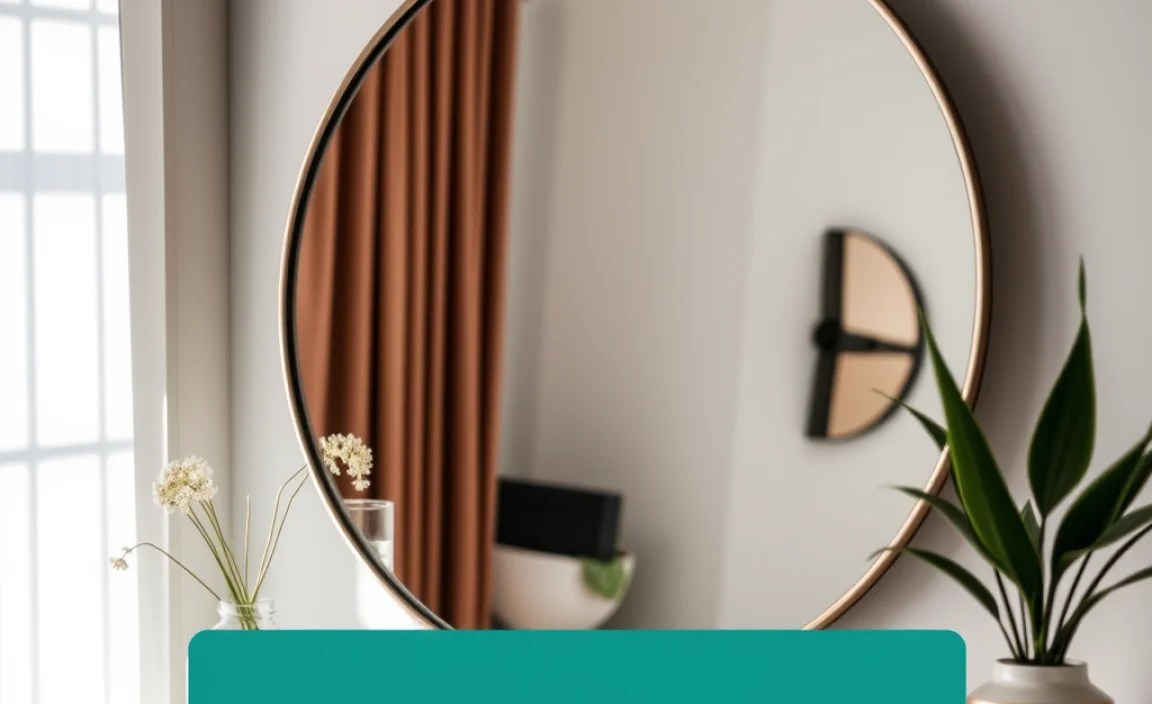
Have you ever wondered how mirrors let you see yourself? Mirrors work by reflecting light. When light hits a mirror, it bounces back. This reflection creates an image of whatever is in front of the mirror. The surface of the mirror is very smooth. This smoothness helps in bouncing the light back in an organized way. The image you see is a result of this reflection process.
- Reflects light smoothly.
- Creates clear images.
- Works best with flat surfaces.
- Can show colors accurately.
- Used in many everyday items.
Mirrors play a big role in our lives, from checking your hair to making sure you’re safe while driving. They are essential tools in our homes, cars, and even in science labs. By understanding how light reflection works, we can use mirrors more effectively. So next time you look at your reflection, remember the magic of light bouncing back!
Fun Fact or Stats: Mirrors were first made from polished stones over 8,000 years ago!
Why Does a Mirror Need to Be Smooth?
A mirror needs to be smooth to reflect light properly. Imagine looking at a wrinkled piece of foil. You’d see a distorted reflection, right? Smooth surfaces help light bounce back evenly. This creates a clear and accurate image. So, the next time you see a mirror, think about its smoothness. It makes all the difference in showing clear reflections!
Can Mirrors Reflect All Colors?
Mirrors can reflect most colors, but not all perfectly. They work best with light in the visible spectrum. This includes red, blue, green, and other colors we see every day. However, some special mirrors can reflect invisible light like ultraviolet. Isn’t it cool how mirrors can handle a rainbow of colors? Imagine how different the world would look without colorful reflections!
What Happens When Light Hits a Rough Surface?
When light hits a rough surface, it scatters in many directions. This is why rough surfaces don’t show clear reflections. Instead of a smooth image, you’d see a blurry one. Picture a pebble thrown into a calm pond. The ripples distort the water’s surface, just like how roughness affects light reflection. That’s why smooth mirrors are important for clear images!
Advantages of Using Mirrors

Mirrors are more than just tools for reflection. They offer many advantages. One big advantage is that they make spaces look bigger. When you place a mirror in a room, it creates an illusion of more space. This is great for small rooms or apartments. Mirrors also enhance lighting. They can reflect natural or artificial light, brightening up dark areas. Furthermore, mirrors are essential for safety. In cars, they help drivers see behind and to the sides. This prevents accidents and ensures safe driving.
- Make rooms appear larger.
- Enhance lighting in spaces.
- Help in personal grooming.
- Essential for safe driving.
- Used in scientific experiments.
Understanding these advantages can help you use mirrors more effectively at home and in daily life. Whether you’re decorating a small apartment or ensuring safety on the road, mirrors play a crucial role. They are versatile and helpful in many situations, making them a valuable tool in both personal and professional settings.
Fun Fact or Stats: Mirrors can reflect up to 95% of light!
How Do Mirrors Make Rooms Look Bigger?
Mirrors create an illusion of space by reflecting light and images. When you place a mirror on a wall, it reflects the room, making it seem larger. It’s like seeing double! This trick is especially useful in small spaces. Imagine your tiny living room feeling twice its size just by adding a mirror. It’s a simple yet effective way to enhance any room’s appearance!
Why Are Mirrors Important for Safety?
Mirrors play a vital role in safety, especially in vehicles. Rearview and side mirrors help drivers see their surroundings. They allow drivers to spot cars, pedestrians, and obstacles. This visibility helps prevent accidents. Imagine driving without seeing what’s behind you! Mirrors ensure a safer journey by providing a clear view, making them essential in transportation.
How Do Mirrors Enhance Lighting?
Mirrors can brighten up a room by reflecting light. When placed near a light source, they spread the light across the room. This makes spaces feel warmer and more inviting. Picture a dark hallway suddenly feeling cozy with the help of a mirror. By understanding how mirrors work with light, you can transform your home’s ambiance with ease.
Disadvantages of Mirrors

While mirrors have many advantages, they also come with some disadvantages. One issue is that they can confuse animals. Birds might see their reflection and think it’s another bird, leading to accidents. Additionally, too many mirrors can create a dizzying effect. In some cases, mirrors can make a space feel cluttered. Furthermore, mirrors require regular cleaning. Dust and fingerprints can ruin their appearance. Lastly, mirrors can reflect unwanted light, creating glare. This can be annoying or even harmful in certain settings.
- Can confuse animals, like birds.
- Need regular cleaning and maintenance.
- Too many can cause overwhelming visuals.
- Can create glare with unwanted light.
- Fragile and can break easily.
Understanding these disadvantages can help you use mirrors wisely. While they can enhance spaces, it’s important to balance their use. By considering both the pros and cons, you can make informed choices about where and how to use mirrors in your life.
Fun Fact or Stats: Birds often mistake mirrors for open skies, leading to accidents.
Why Do Mirrors Confuse Animals?
Animals, like birds, might not understand reflections. A bird sees its reflection and thinks it’s another bird. This can lead to confusion or accidents. Imagine a bird flying into a window because of its reflection. It’s important to place mirrors carefully, especially outdoors. Understanding this helps prevent harm to our feathered friends.
How Can Too Many Mirrors Overwhelm a Space?
Too many mirrors can create a dizzying effect. They reflect images and light from every direction. This can make a room feel cluttered or chaotic. Picture a room where every wall has a mirror. It might feel confusing instead of cozy. Balancing mirror use ensures a harmonious and pleasant environment.
Why Is Mirror Maintenance Important?
Mirrors require regular cleaning to maintain their shine. Dust and fingerprints can obscure reflections. This affects their effectiveness and appearance. Imagine looking in a dirty mirror and struggling to see clearly. Regular cleaning keeps mirrors bright and useful. It’s a simple task that makes a big difference in your space.
Applications of Mirrors in Science

Mirrors aren’t just for looking at yourself. They have many scientific applications too. In telescopes, mirrors help us see distant stars and planets. They gather and focus light, providing clear images of space. Mirrors are also used in lasers. They reflect light to amplify it, creating powerful beams. In medicine, mirrors are part of devices that examine our bodies. Dentists use small mirrors to check your teeth! These examples show how mirrors play a crucial role in science and technology.
- Used in telescopes to view space.
- Essential in laser technology.
- Help in medical examinations.
- Used in solar energy collection.
- Part of optical instruments and devices.
The use of mirrors in science demonstrates their versatility. They help us explore the universe, improve health, and harness energy. Understanding how mirrors work in these applications can inspire curiosity and innovation. Mirrors are more than just household items; they are tools of discovery and advancement.
Fun Fact or Stats: The Hubble Space Telescope uses a 2.4-meter mirror to capture images of space!
How Do Mirrors Work in Telescopes?
Telescopes use mirrors to gather and focus light from distant objects. A large mirror collects light and reflects it to a point. This creates a clear image of stars and planets. Imagine looking through a telescope at the night sky, seeing stars up close. Mirrors make this possible by enhancing our view of the universe.
What Role Do Mirrors Play in Lasers?
Mirrors are crucial in laser technology. They reflect light back and forth inside the laser. This amplifies the light, creating a powerful beam. Lasers are used in many fields, from medicine to manufacturing. Picture a laser cutting through metal with precision. Mirrors help create the intense light needed for lasers to work effectively.
Why Are Mirrors Important in Medicine?
Mirrors are vital in medical tools and devices. They help doctors and dentists examine hard-to-see areas. A dentist uses a small mirror to check the back of your teeth. Doctors use mirrors in instruments like endoscopes. These tools allow for detailed examinations. Mirrors enhance visibility, aiding in accurate diagnoses and treatments.
| Application | Use | Benefit | Example |
|---|---|---|---|
| Telescope | Gather light | View distant objects | Hubble Telescope |
| Laser | Amplify light | Create powerful beams | Laser surgery |
| Medicine | Reflect light | Enhance examination | Dentist’s mirror |
| Solar Energy | Concentrate sunlight | Generate power | Solar panels |
Conclusion
Mirrors are amazing tools that reflect light, create illusions, and have many uses. They have pros and cons. Mirrors make rooms look bigger and enhance lighting. But they can also confuse animals and require cleaning. Understanding how mirrors work helps us use them wisely in our lives. Whether for decoration, safety, or science, mirrors play an important role.
FAQs
Question: How do mirrors reflect images?
Answer: Mirrors reflect images by bouncing back light that hits them. The smooth surface of a mirror helps in reflecting light evenly. This creates a clear image of whatever is in front of the mirror. Understanding how it works of mirror pros and cons is important in daily use.
Question: What are the advantages of using mirrors?
Answer: Mirrors have many advantages. They make spaces appear larger and enhance lighting. They help in personal grooming and are essential for safe driving. Mirrors are also used in scientific experiments. Knowing how it works of mirror pros and cons helps use them better.
Question: Can mirrors confuse animals?
Answer: Yes, mirrors can confuse animals like birds. Animals may mistake their reflection for another animal. This can lead to accidents or confusion. Understanding how it works of mirror pros and cons helps in preventing such issues.
Question: Why do mirrors need regular cleaning?
Answer: Mirrors need regular cleaning to maintain their reflective quality. Dust and fingerprints can obscure reflections, making them less effective. Regular maintenance ensures that mirrors remain clear and useful for various applications.
Question: How do mirrors enhance room lighting?
Answer: Mirrors enhance room lighting by reflecting and spreading light. When placed near a light source, they help distribute light evenly across a space. This makes rooms feel brighter and more welcoming, improving the overall ambiance.
Question: What role do mirrors play in science?
Answer: Mirrors play a significant role in science. They are used in telescopes, lasers, and medical devices. Mirrors help gather and focus light, creating clearer images and powerful beams. They are essential in many scientific and technological applications.
