
Learn how to install a new faucet quickly and easily with this step-by-step guide! We’ll walk you through everything, from shutting off the water to tightening the last nut, ensuring a leak-free, professional-looking finish. Tackle this DIY project with confidence using simple tools and clear instructions suitable for any beginner.
A leaky or outdated faucet can be more than just an annoyance; it can waste water and make your kitchen or bathroom feel less functional. Many homeowners put off replacing a faucet, thinking it’s a complicated plumbing job best left to the pros. But what if I told you that installing a new faucet could be a straightforward, even “fast,” DIY project?
With the right preparation and a little guidance, you can confidently swap out that old fixture for a shiny new one. This guide is designed to make the process simple, safe, and surprisingly quick. We’ll cover everything you need to know, so you can get that new faucet installed without the stress. Ready to transform your sink?
Why Replacing Your Faucet is a Great DIY Project

Replacing a faucet might sound intimidating, but it’s actually one of the most rewarding and accessible home improvement tasks for beginners. You don’t need to be a master plumber to achieve excellent results. Think about it: a new faucet can dramatically update the look of your kitchen or bathroom, improve water flow, and even help you save money on your water bill by eliminating leaks. Plus, the satisfaction of completing a project yourself is a huge bonus!
The key to a fast and easy faucet installation is preparation. Knowing what tools you’ll need and understanding each step before you start can save you a lot of time and potential headaches. We’re here to break it all down into bite-sized, actionable advice. So, let’s get your new faucet installed!
Essential Tools and Materials for Faucet Installation
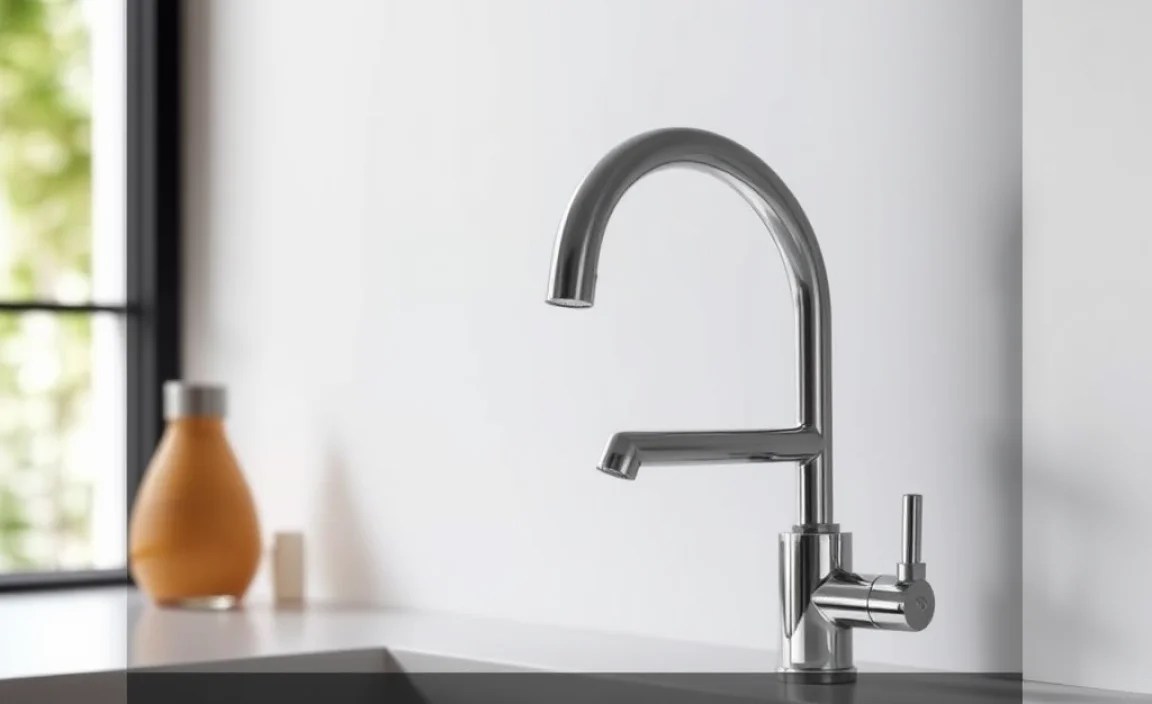
Before you begin, gather all your necessary tools and materials. Having everything within reach will make the process much smoother and faster. Don’t worry if some of these sound unfamiliar; we’ll explain their use as we go.
Tools You’ll Need:
- Adjustable Wrench: This is your go-to tool for loosening and tightening nuts and bolts of various sizes.
- Basin Wrench: This specialized tool is a lifesaver for reaching nuts in tight spaces under the sink where a regular wrench can’t fit.
- Plumber’s Tape (Teflon Tape): Used to create a watertight seal around threaded pipe connections.
- Bucket: Essential for catching any residual water that might drip from the pipes.
- Rags or Towels: For wiping up spills and keeping your workspace clean.
- Safety Glasses: Always protect your eyes, especially when working overhead.
- Optional: Plumber’s Putty: Some faucet designs use plumber’s putty instead of a gasket for sealing. Check your faucet’s manual.
- Optional: Utility Knife: Might be needed to cut old caulk or silicone sealant.
Materials Included with Your New Faucet:
- The new faucet assembly.
- Mounting hardware (nuts, washers, gaskets).
- Supply lines (sometimes included, sometimes sold separately. Ensure they are the correct length and connector type for your setup).
Step-by-Step Guide to Installing Your New Faucet

Let’s dive into the installation process. Each step is designed to be clear and easy to follow, so you can install your faucet with confidence.
Step 1: Shut Off the Water Supply
This is the most critical first step for safety and to prevent a mess. Look under your sink for two shut-off valves – one for hot water and one for cold. They usually have small, oval-shaped handles. Turn these handles clockwise until they are snug. Do not overtighten. Once the valves are closed, turn on your old faucet to drain any remaining water in the lines and to confirm that the water is indeed shut off.
Step 2: Disconnect the Old Faucet
Now that the water is off, it’s time to disconnect the old faucet. You’ll need your bucket and rags handy for this part. Under the sink, you’ll see two water supply lines connected to the faucet’s tailpieces. Use your adjustable wrench to loosen the nuts connecting these lines to the shut-off valves. Let any trapped water drain into your bucket. Next, locate the mounting nuts that hold the faucet to the sink or countertop. These can be tricky to reach. This is where your basin wrench is invaluable. Use it to loosen and remove these nuts. Once all connections are undone, you should be able to lift the old faucet straight up and out from the top of the sink.
Pro Tip: If your shut-off valves under the sink are old or leaky, it might be a good time to replace them. You can find new ones at any hardware store. This is a slightly more advanced step but can prevent future problems.
Step 3: Clean the Sink Surface
With the old faucet removed, you’ll likely see some old caulk, grime, or mineral deposits around the faucet holes. This is the perfect opportunity to clean up the area thoroughly. Use a rag and a mild cleaning solution to wipe away any debris. If there’s stubborn gunk, a plastic scraper or a utility knife (used carefully!) can help. A clean, smooth surface ensures a good seal for your new faucet.
Step 4: Install the New Faucet
Your new faucet likely comes with a gasket or uses plumber’s putty to create a seal between the faucet base and the sink. If your faucet has a gasket, simply position it according to the manufacturer’s instructions. If it requires plumber’s putty, roll a snake of putty into a rope and place it around the underside of the faucet base. Gently press the faucet into the mounting holes from the top of the sink. Make sure it’s aligned correctly. From underneath, install any supplied washers and mounting nuts. Hand-tighten them first, then use your basin wrench or adjustable wrench to snug them up. Be careful not to overtighten, as this can damage the sink or faucet.
Important Note: Always refer to the manufacturer’s installation manual for your specific faucet model. Designs can vary, and the manual will provide detailed instructions tailored to your fixture.
Step 5: Connect the Water Supply Lines
Now, connect the new water supply lines to your faucet’s tailpieces. These are the threaded pipes extending from the base of the faucet. Hand-tighten the nuts onto the tailpieces. Then, use your adjustable wrench to tighten them about a quarter to a half turn past hand-tight. Do not overtighten. Next, connect the other end of the supply lines to the corresponding hot and cold shut-off valves under the sink. Again, hand-tighten first, then give them a snug turn with the adjustable wrench.
For a good seal, you might need to wrap the threads of the shut-off valves with plumber’s tape before connecting the supply lines. Wrap the tape clockwise around the threads about 2-3 times. This ensures the tape doesn’t unravel when you tighten the fitting.
Step 6: Turn on the Water and Check for Leaks
This is the moment of truth! Slowly turn the hot and cold shut-off valves counter-clockwise to turn the water back on. Check all connections immediately for any drips or leaks. Pay close attention to where the supply lines connect to the valves and to the faucet tailpieces. Also, look for any leaks around the base of the faucet on top of the sink. If you see any leaks, gently tighten the connections slightly. Often, a quarter-turn is all that’s needed.
Once you’ve confirmed no leaks, turn on the faucet to test its operation. Run both hot and cold water. Let it run for a minute or two to flush out any debris that might have entered the lines during installation. Check the water flow and ensure the handles operate smoothly.
Step 7: Clean Up and Enjoy!
Wipe away any stray water or putty. Ensure your workspace is clean. Congratulations! You have successfully installed your new faucet. Step back and admire your work. You’ve saved money and gained a valuable DIY skill.
Understanding Faucet Terminology

We want to make sure you feel completely comfortable with the process. Here’s a quick rundown of some common faucet terms you might encounter:
- Aerator: The small screen at the tip of the faucet spout that mixes air with water to create a smooth, splash-free stream and reduce water consumption.
- Cartridge: The valve mechanism inside single-handle faucets that controls water flow and temperature.
- Ceramic Disc: A modern type of valve found in many faucets, using two durable ceramic discs to control water flow. They are very long-lasting and rarely leak.
- Compression Valve: An older type of valve, typically found in two-handle faucets, that uses a rubber washer to stop water flow when the handle is turned. These can wear out over time.
- Escutcheon: A decorative plate or flange used to cover the hole where the faucet passes through the sink or wall.
- Spout: The part of the faucet from which water flows.
- Tailpiece: The threaded pipe extending down from the faucet body that connects to the water supply lines.
- Washer: A rubber or silicone ring that creates a seal to prevent leaks, often used in compression valves or around mounting hardware.
Faucet Types and Considerations
When choosing a new faucet, or even if you’re just replacing an old one, understanding the different types can help. Most modern faucets fall into a few main categories based on their design and operation.
Common Faucet Configurations:
When you’re ready to install, you’ll see these types most often:
- Single-Handle Faucets: These use one handle to control both water flow and temperature. They are convenient and great for kitchens where you might have your hands full.
- Two-Handle Faucets: These have separate handles for hot and cold water. They offer precise temperature control and are often seen in bathrooms and kitchens.
- Wall-Mounted Faucets: Installed directly on the wall behind the sink, these are common in older homes or for a specific aesthetic.
- Centerset Faucets: These are common in bathrooms and have all parts (spout and handles) mounted on a single base plate, typically covering three holes.
- Widespread Faucets: These have separate components for the spout and eachhandle, requiring three or four holes on the sink or countertop. They offer more design flexibility.
When selecting a new faucet, consider the number of holes already in your sink or countertop. Faucets are designed for specific hole configurations. You can often use a “deck plate” or “escutcheon plate” to cover unused holes if your new faucet requires fewer holes than your sink has.
Troubleshooting Common Faucet Installation Issues
Even with careful planning, you might encounter a snag. Here are some common issues and how to fix them to ensure your faucet installation is truly “fast” and successful.
Table: Common Faucet Installation Problems & Solutions
| Problem | Possible Cause(s) | Solution |
|---|---|---|
| Leaking from supply line connections | Loose fitting; Damaged washer; Improperly applied plumber’s tape | Tighten connection slightly; Ensure washer is present and undamaged; Reapply plumber’s tape clockwise, ensuring firm contact. |
| Leaking around the base of the faucet | Improper seal (gasket or putty); Overtightened mounting nuts | Ensure gasket is correctly seated or plumber’s putty is evenly applied; Loosen mounting nuts slightly and then retighten firmly but not excessively. |
| Low water pressure | Aerator is clogged; Shut-off valves not fully open; Debris in new lines | Unscrew and clean the aerator; Ensure valves are fully open; Run water for several minutes to clear debris. |
| Faucet is wobbly | Mounting nuts are not tight enough | Use a basin wrench or adjustable wrench to securely tighten the mounting nuts from underneath. |
| Difficulty reaching nuts under the sink | Limited space; Obstructions | Use a basin wrench; Remove P-trap temporarily if space is extremely limited (ensure you reassemble correctly). |
For more in-depth plumbing advice and best practices, you can refer to resources like those provided by the EPA’s WaterSense program on fixing leaks, which offers valuable tips applicable to faucet maintenance and installation.
Safety First: Important Precautions
Safety should always be your top priority when undertaking any DIY project, especially those involving water. Here are a few key precautions to keep in mind:
- Always shut off the water supply before starting any work on your existing faucet.
- Wear safety glasses to protect your eyes from debris or potential water spray.
- Ensure the work area is well-lit. This helps prevent accidents and makes it easier to see what you’re doing.
- Support your back and knees when working in cramped spaces under the sink.
- Turn off the power to any garbage disposal if it’s located beneath the sink, just as an extra precaution.
- If you encounter any issues that make you uncomfortable or feel beyond your skill level, don’t hesitate to call a qualified plumber. It’s better to be safe than sorry.
Maintaining Your New Faucet
Once your new faucet is installed, a little ongoing care will keep it looking and functioning at its best. Regular maintenance not only extends the life of your faucet but also prevents future leaks and clogs.
Daily/Weekly:
- Wipe down the faucet with a soft, damp cloth after use to prevent water spots and mineral buildup.
- Use a mild soap and water solution for cleaning. Avoid abrasive cleaners that can scratch the finish.
Monthly:
- Check the aerator for any debris or mineral deposits. Many aerators can be unscrewed by hand or with a wrench (use a cloth to protect the finish). Rinse it thoroughly and screw it back in.
- Give a quick visual inspection to all connections under the sink for any signs of moisture or leaks.
As Needed:
- If you notice reduced water flow, it’s likely time to clean the aerator.
- Address any drips immediately by checking the faucet’s internal components (cartridge, O-rings, washers) or consulting your faucet’s manual for specific repair instructions.
For more detailed maintenance and repair guides specific to faucet brands and types, many manufacturers offer excellent online resources. For instance, a general guide to plumbing maintenance can be found at sites like This Old House, a reputable source for home improvement advice.
Frequently Asked Questions (FAQ)
Q1: How long does it typically take to install a faucet?
A1: With the right tools and preparation, installing a basic faucet can often be done in 1-2 hours. The most time-consuming parts are usually disconnecting the old faucet and cleaning the sink surface.
Q2: Do I need to shut off the main water supply to my house?
A2: Typically, no. Most faucets have individual shut-off valves located directly below the sink for both hot and cold water. If your home doesn’t have these valves, or if they don’t work, then you would need to shut off the main water supply.
Q3: What’s the difference between plumber’s tape and plumber’s putty?
A3: Plumber’s tape (Teflon/PTFE tape) is used to seal threaded pipe connections. Plumber’s putty is a soft, pliable compound used as a sealant between a fixture (like a faucet base) and a non-porous surface (like a sink) to prevent leaks.
Q4: Can I replace just the faucet handles or spout?
A4: In some cases, yes. Many faucets are designed with replaceable parts like cartridges, handles, or spouts. However, it’s often more cost-effective and efficient in the long run to replace the entire faucet assembly, especially if the existing unit is old or showing signs of significant wear.
Q5: My new faucet came with a deck plate. When do I need it?
A5: A deck plate (also called an escutcheon plate) is used to cover extra holes in your sink or countertop when your new faucet has fewer mounting holes than the old one.
