
Have you ever wondered how a mirror works? Mirrors are fascinating! They show us our reflections every day. It feels almost like magic. But there’s a cool science behind this everyday object. Let’s explore the world of mirrors and understand how they work. Get ready for some amazing facts and fun stories!
Key Takeaways
- Mirrors reflect light to show images.
- The back of a mirror is coated with metal.
- Understanding mirror how it works involves light and angles.
- Mirrors can be flat, concave, or convex.
- Mirrors have many uses, from homes to telescopes.
Mirror: How It Reflects Light
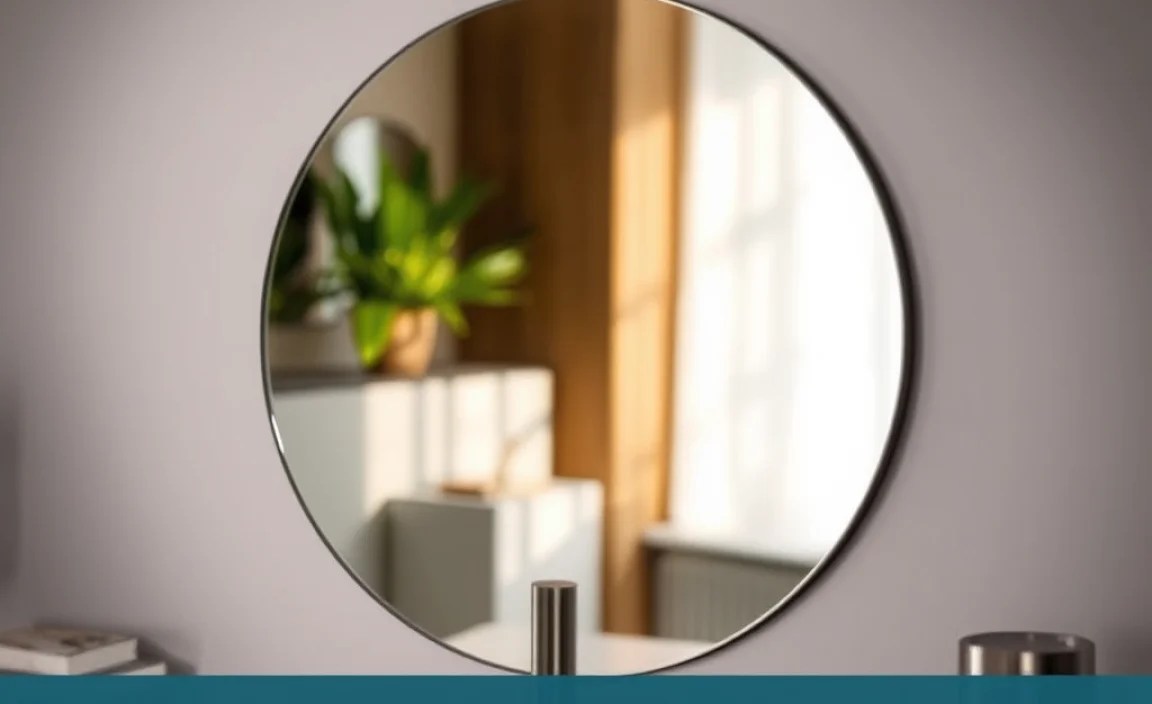
Mirrors are special because they reflect light. When light hits a mirror, it bounces back. This bouncing of light is called reflection. The surface of a mirror is very smooth. This smoothness helps it reflect light perfectly. When you stand in front of a mirror, you see yourself. That’s because light from you hits the mirror and comes back to your eyes. This is the basic way a mirror works.
- Mirrors have a smooth surface.
- They reflect light back to our eyes.
- Light travels in straight lines.
- Reflection involves bouncing light.
- Mirrors help us see our reflection.
- Light from our body hits the mirror.
- Reflected light returns to our eyes.
Now you know how light plays a big role in mirrors. Without light, mirrors wouldn’t work. The smooth surface of mirrors ensures clear reflections. This process is simple yet magical! Next time you look in a mirror, remember the light’s journey. It’s amazing how a simple object like a mirror can show us so much.
Fun Fact: Did you know the first mirrors were made from polished stones?
Why Light Is Key for Mirrors
Have you ever tried using a mirror in the dark? It doesn’t work, right? That’s because mirrors need light to show reflections. Light travels in straight lines. When it hits a mirror, it bounces back. This is how we see images in mirrors. Without light, our eyes can’t see anything. Mirrors are like magic only when there’s light around.
The Journey of Light on Mirrors
Imagine light as little travelers. They start from an object, like you, and move towards the mirror. When they hit the mirror, they bounce back. This bouncing is called reflection. The light then reaches your eyes. That’s when you see an image. This journey happens super fast. It’s all about light’s quick travels and bounces!
The Role of Smoothness in Reflection
Have you ever tried reflecting light on a bumpy surface? It scatters everywhere! Smooth surfaces, like mirrors, keep light tidy. That’s why mirrors show clear images. The smoothness allows light to reflect back in a straight line. This makes the images perfect and clear. It’s like looking into a calm pond versus a wavy lake.
Types of Mirrors and Their Uses

Mirrors come in different shapes. Each type of mirror has a unique use. The most common is the flat mirror. We use it in bathrooms to see our faces. Then there are concave mirrors. They curve inward. Dentists use them to see inside mouths. Convex mirrors curve outward. They help drivers see more area behind their cars. Each mirror type reflects light differently. This gives them special purposes.
- Flat mirrors show clear reflections.
- Concave mirrors magnify images.
- Convex mirrors provide a wider view.
- Dentists use concave mirrors.
- Convex mirrors help in parking lots.
- Flat mirrors are in homes and salons.
- Each mirror has a special job.
These different mirror types are useful in many ways. They make life easier and safer. Next time you see a different mirror, think about its job. Mirrors are like superheroes with unique powers. They show us the world in their special way.
Fun Fact: Convex mirrors are often called “fish-eye” mirrors!
Flat Mirrors in Everyday Life
Have you ever noticed how often you use flat mirrors? We use them every day! They help us get ready in the morning. We check our hair or brush our teeth. They’re in bedrooms, bathrooms, and even cars. Flat mirrors give clear reflections. They’re the simplest type of mirror. But they have a big job in our daily routine.
Concave Mirrors for Close-Ups
Why do dentists love concave mirrors? These mirrors make things look bigger. Dentists can see teeth clearly. Concave mirrors focus light on a point. This makes images appear larger. They are also used in makeup mirrors. They help us see small details. Concave mirrors are great for close-up tasks!
Convex Mirrors for Wider Views
Have you noticed mirrors on the sides of cars? Those are convex mirrors. They curve outwards. This shape lets drivers see more area. It reduces blind spots. Convex mirrors are also in stores for security. They help see all around. With their wide view, they keep us safe. They’re like having extra eyes!
How a Mirror’s Surface Changes Reflection
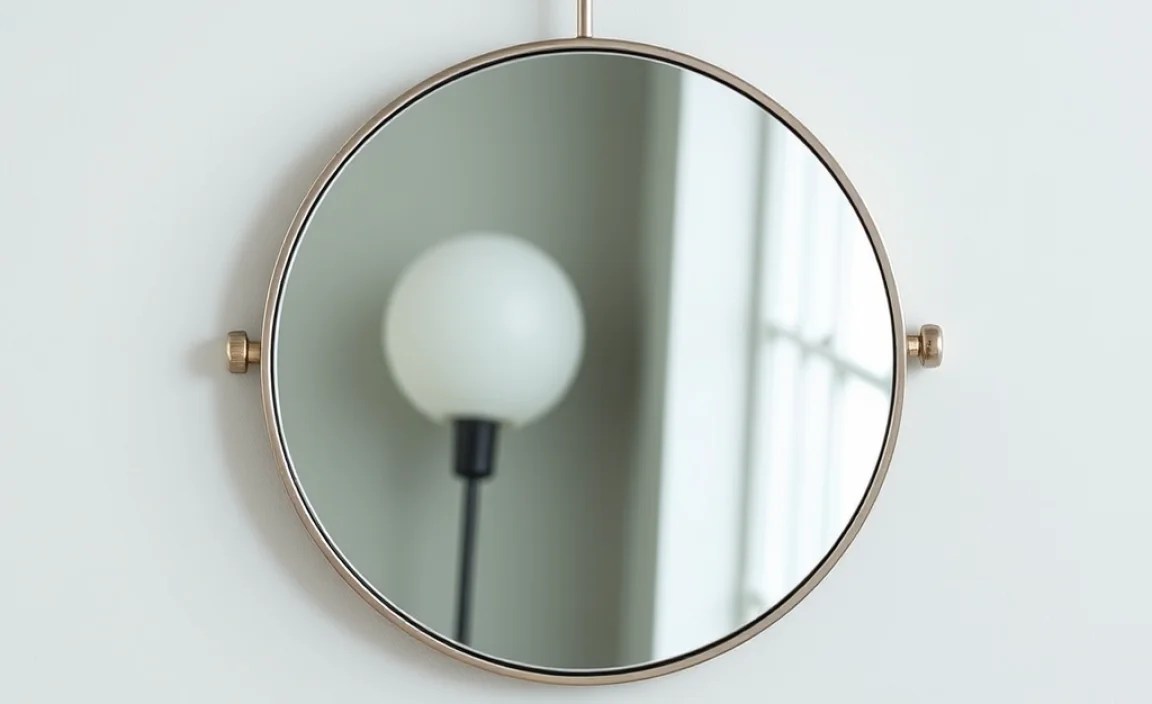
The type of surface changes how a mirror reflects light. A smooth surface gives a clear reflection. If the surface is rough, the light scatters. This makes the image unclear. Most mirrors have a glass surface with a metal coating. The metal, often silver, helps reflect light. This special coating is thin but crucial. It ensures the mirror works well.
- Smooth surfaces reflect clearly.
- Rough surfaces scatter light.
- Metal coating enhances reflection.
- Silver is a common coating choice.
- Glass protects the metal layer.
- Surface quality affects image clarity.
- Thin coatings are very effective.
Mirrors are carefully made for the best reflection. The coating and surface work together. They ensure we see clear and sharp images. When looking in a mirror, you’re seeing the result of this teamwork. It’s amazing what a thin metal layer can do!
Fun Fact: Ancient mirrors used polished bronze!
The Importance of Smooth Surfaces
Why is a mirror’s surface so smooth? Smoothness directs light perfectly. If a mirror is rough, light scatters. This makes reflections blurry. Smooth surfaces keep light straight. This makes images clear and sharp. Mirrors are polished with care. They ensure every reflection is bright and perfect.
The Magic of Mirror Coatings
What makes mirrors shine? It’s their special coating! Behind the glass, there’s a metal layer. Silver is often used. This layer reflects light. It’s very thin but powerful. Without it, mirrors wouldn’t work well. The coating makes everything bright and clear. It’s like the secret ingredient of mirrors!
Glass and Metal: A Perfect Pair
Have you ever touched a mirror? It feels like glass. But there’s more! Behind the glass is metal. Glass protects the metal layer. It also keeps the mirror surface smooth. Together, glass and metal make mirrors strong and reflective. It’s the perfect match for showing clear images every time.
The Science of Mirror Angles
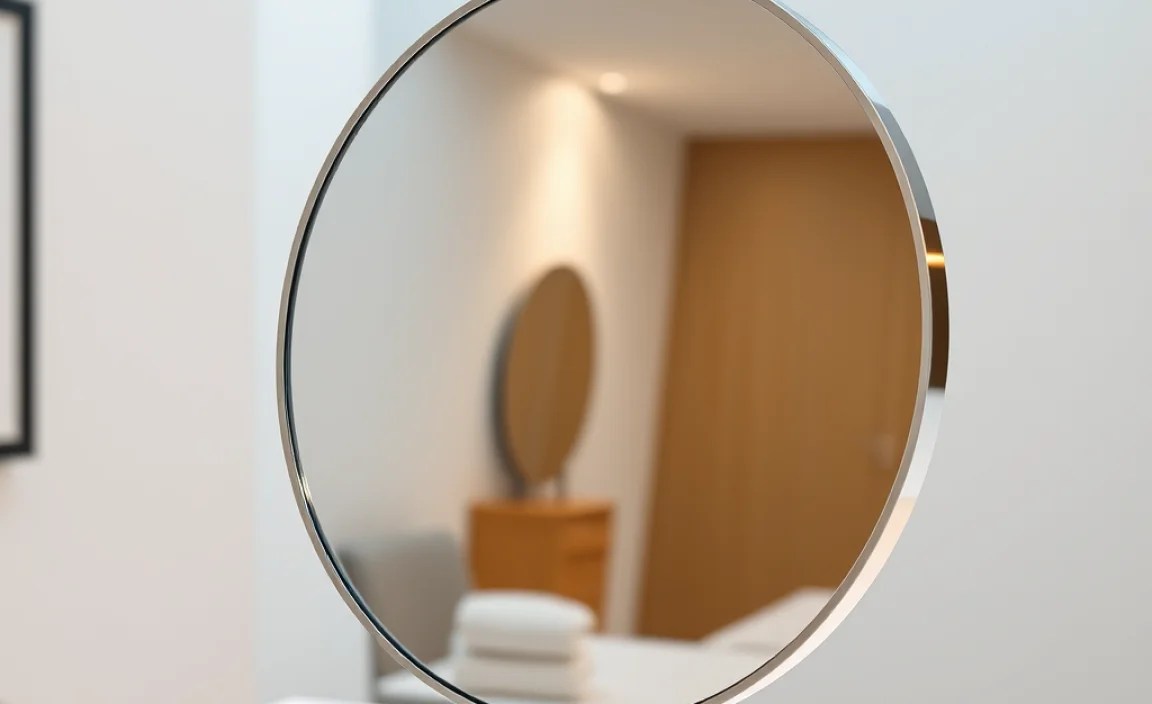
Mirrors work because of angles. When light hits a mirror, it bounces off at the same angle. This is called the angle of incidence and reflection. If the surface is flat, the light bounces straight back. If the surface is angled, the light changes direction. This is how mirrors guide light wherever needed. Angles help us use mirrors creatively.
- Angles guide light direction.
- Flat mirrors reflect straight back.
- Angled mirrors change light paths.
- Reflection depends on surface tilt.
- Angles make mirrors versatile.
- Light follows the angle rules.
- Angles allow creative mirror use.
Angles add flexibility to mirror use. They help us see things in new ways. Mirrors aren’t just flat; they can bend light! This makes them useful in many fields. Understanding angles is key to using mirrors effectively. It’s like playing a light game with rules to follow.
Fun Fact: Periscopes use mirrors at angles to see around corners!
Understanding Light’s Bouncing Points
Can you imagine light as tiny balls? When they hit a mirror, they bounce off. The angle they hit is the angle they leave. This is the rule of reflection. It makes light predictable. Knowing this, we use mirrors smartly. Mirrors help direct light where needed. It’s like playing billiards with light, using mirrors as the table!
Changing Directions with Angled Mirrors
Have you ever seen angled mirrors in museums? They make fun optical illusions. Angled mirrors change light’s path. Instead of coming straight back, light moves differently. This creates surprising images. Angled mirrors are like puzzle pieces. They show how angles can trick our eyes. They’re fun and tricky!
Angles and Creative Mirror Uses
Why are angles important for mirrors? They make mirrors versatile. Angles help mirrors reflect light in different directions. This lets us use mirrors for many things. From art installations to scientific tools, angles play a big role. They’re like hidden helpers making mirrors work in special ways!
Comparison of Mirror Types

Different mirrors have different properties. Let’s compare flat, concave, and convex mirrors. Each offers unique reflections. Understanding these differences helps in choosing the right mirror for the task. Mirrors are more than just tools to see ourselves. They’re designed for specific purposes, each with its strengths and quirks.
| Mirror Type | Shape | Image Effect | Common Use |
|---|---|---|---|
| Flat | Straight | True reflection | Bathrooms, houses |
| Concave | Inward curve | Magnified | Dentist tools, makeup |
| Convex | Outward curve | Wider view | Vehicle mirrors, security |
- Flat mirrors for everyday clarity.
- Concave mirrors magnify small details.
- Convex mirrors widen the field of view.
- Each type suits specific tasks.
- Shapes affect how images appear.
- Choosing the right mirror matters.
- Mirrors serve diverse purposes.
Mirrors are more than simple reflective surfaces. They come in different shapes with unique abilities. Knowing these differences ensures you choose the right one. Whether for personal grooming or safety, each mirror has a role. They’re like tools, each crafted for a specific job.
Fun Fact: Old telescopes used concave mirrors to see distant stars!
The Role of Flat Mirrors
Why do we use flat mirrors every day? They show true reflections. The image is clear and undistorted. Flat mirrors are perfect for checking appearances. They’re in bathrooms, bedrooms, and halls. They help us see ourselves just as we are. It’s like having a faithful friend who always tells the truth.
The Power of Concave Mirrors
Ever seen a dentist use a small round mirror? That’s a concave mirror. It makes teeth look bigger. Concave mirrors focus light, enlarging objects. They’re great for seeing small details. Make-up artists love them too. They help with precise tasks. Concave mirrors are like magnifying glasses made of glass!
The Benefits of Convex Mirrors
Have you noticed mirrors at store corners? Those are convex mirrors. They curve outwards, giving a wider view. They help see more with less space. Convex mirrors are also in parking lots and vehicles. They reduce blind spots and improve safety. It’s like having extra vision, covering more ground!
Conclusion
Mirrors are amazing, aren’t they? You’ve learned about mirror how it works, involving light and reflections. From smooth surfaces to unique shapes, mirrors do it all. They serve critical purposes, reflecting light to show images. Remember these insights when you next look into a mirror. It’s not just about vanity; it’s pure science!
FAQs
Question: How does a mirror work?
Answer: A mirror works by reflecting light. Light hits the mirror and bounces back to your eyes. This bouncing creates what we call a reflection. The surface of the mirror is smooth, which helps in perfect reflection. Mirrors use a thin metal coating to reflect light effectively.
Question: Why do concave mirrors make objects look bigger?
Answer: Concave mirrors curve inward. This shape focuses light on a point. When you look at objects in a concave mirror, they appear larger. This magnifying effect is why they’re used in makeup mirrors and by dentists. They help you see small details clearly.
Question: What are convex mirrors used for?
Answer: Convex mirrors provide a wider view. They curve outward, covering more area. This makes them perfect for car mirrors and security in stores. They help see more, reducing blind spots. Convex mirrors enhance safety by giving a broader perspective.
Question: Why are flat mirrors common in homes?
Answer: Flat mirrors give true reflections. They show images as they are, without distortion. This makes them ideal for daily use, like checking your appearance. They’re simple and effective, which is why they’re found in most homes.
Question: How does the surface affect a mirror’s reflection?
Answer: The smoothness of a mirror’s surface is crucial. A smooth surface reflects light perfectly, creating clear images. If a surface is rough, light scatters, resulting in blurry reflections. Mirrors are polished to ensure the best reflection quality.
Question: What materials are used to make mirrors?
Answer: Mirrors are made from glass and a thin metal coating. The glass provides a smooth surface, while the metal, often silver, reflects light. This combination creates clear reflections. Other metals like aluminum are also used for coatings.
