
Quick Summary:
Confused by tile names? This guide simplifies common tile types like ceramic, porcelain, natural stone, and glass, explaining their key features, uses, and benefits. Learn how to choose the right tile for your DIY project with confidence and ease.
Choosing and ordering tiles can feel like learning a new language. With terms like “porcelain,” “ceramic,” “subway,” and “mosaic” flying around, it’s easy to feel lost. You might wonder what makes one tile different from another, or which one is best for your kitchen backsplash versus your bathroom floor. This guide is here to clear up the confusion!
We’ll break down the most common tile names and what they actually mean. Understanding these basics will help you feel confident when you’re shopping, talking to professionals, or tackling your next tiling project. We’ll cover everything you need to know to pick the perfect tile for any space. Let’s get started!
Understanding Tile Basics: What’s In a Name?
Tiles are more than just pretty surfaces; they are functional materials designed for specific purposes. The “name” of a tile often tells you a lot about its composition, where it’s best used, and how it performs. For beginners, the two most fundamental categories to understand are ceramic and porcelain tiles, as they form the base for many other types.
Think of it like tools. A hammer is a hammer, but there are claw hammers, ball-peen hammers, and sledgehammers, each for a different job. Similarly, tiles have core types, and then variations that make them suitable for different conditions and aesthetics.
Core Tile Materials: Ceramic vs. Porcelain
The distinction between ceramic and porcelain tiles is crucial for DIYers. While both are made from clay and fired in a kiln, the process and ingredients create significant differences in durability, water resistance, and cost.
Ceramic Tiles
Ceramic tiles have been around for centuries. They are made from clay that is fired in a kiln at lower temperatures compared to porcelain. After firing, they are often glazed. This glaze provides color, pattern, and a protective surface.
- Composition: Made from finer, more processed clays than porcelain.
- Firing: Fired at lower temperatures (around 1000-1300°C or 1832-2372°F).
- Water Absorption: Generally higher than porcelain (can absorb more than 3% water, though some glazed tiles can be less).
- Durability: Durable for walls and light-traffic floors. Can chip or crack more easily than porcelain under heavy impact.
- Cost: Typically more affordable than porcelain.
- Installation: Easier to cut and work with due to their softer nature.
- Best Uses: Backsplashes, wall tiles in bathrooms and kitchens, low-traffic floor areas.
Porcelain Tiles
Porcelain tiles are a denser, harder, and less porous version of ceramic tile. They are made from a refined clay mixture that includes feldspar and quartz. They are fired at much higher temperatures than ceramic tiles.
- Composition: Made from a denser, finer clay that includes feldspar and quartz.
- Firing: Fired at very high temperatures (around 1200-1400°C or 2192-2552°F), which makes them vitrified.
- Water Absorption: Extremely low water absorption rate (less than 0.5%), making them highly resistant to moisture.
- Durability: Very hard and dense, making them resistant to chips, cracks, scratches, and stains.
- Cost: Generally more expensive than ceramic tiles, but the longevity often justifies the cost.
- Installation: Can be harder to cut due to their density.
- Best Uses: High-traffic floors, bathrooms, kitchens, outdoor areas, areas with potential for moisture or heavy use.
A key point of reference for tile water absorption is the TCNA (Tile Council of North America) standards. Porcelain tiles are classified as impervious, meaning they absorb less than 0.5% of their weight in water. Glazed ceramic tiles can vary, but unglazed tiles can absorb significantly more.
Common Tile Shapes and Styles
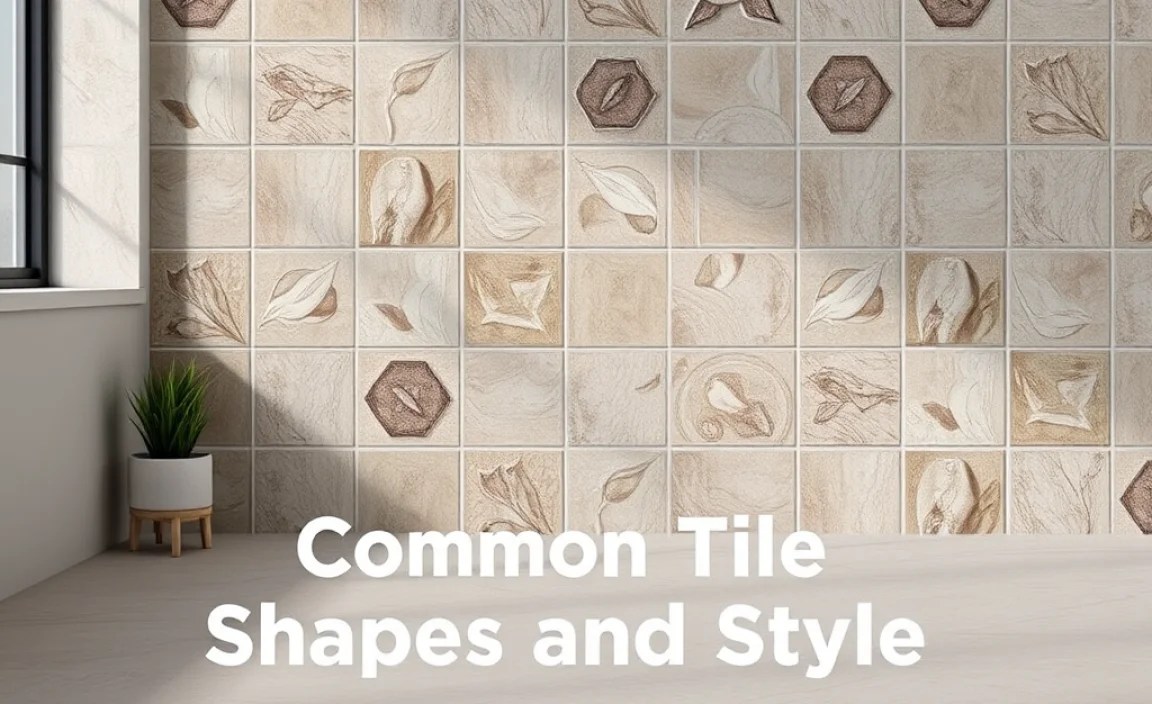
Beyond material, tiles are defined by their size, shape, and design. Understanding these terms will help you describe what you’re looking for and identify specific styles.
Square Tiles
The most classic and versatile shape. Available in a wide range of sizes from small mosaics to large format tiles.
- Sizes: 4×4 inch, 6×6 inch, 8×8 inch, 12×12 inch, 18×18 inch, 24×24 inch, and larger.
- Common Uses: Floors, walls, backsplashes, shower floors.
Rectangular Tiles
These are popular for creating different patterns and looks, especially when laid in specific arrangements.
- Subway Tiles: A very common style, typically 3×6 inches, originally used in New York City subways. They are often laid in a classic brick pattern. Can also be found in other sizes like 2×4, 4×12, or 6×24 inches.
- Linear Tiles: Longer, narrower rectangles, often used to create a modern, sleek look. Sizes can range from 3×12 inches to 6×24 inches and even longer.
- Common Uses: Backsplashes, shower walls, accent walls, modern flooring.
Mosaic Tiles
Mosaic tiles are small tiles, typically less than 2 inches in any dimension, mounted on a mesh backing to form a larger sheet. This makes them easier to install for intricate designs.
- Materials: Can be made from ceramic, porcelain, glass, natural stone, metal, or a combination.
- Common Forms: Hexagons, squares, rectangles, rounds, irregular shapes.
- Common Uses: Shower floors (for grip due to grout lines), kitchen backsplashes, accent walls, pools, intricate decorative features.
Hexagonal Tiles
Six-sided tiles that can be laid to form a honeycomb pattern. They come in various sizes, from small mosaic hexagons to larger format tiles.
- Sizes: 2-inch hexagons (mozaic), 4-inch, 6-inch, 8-inch, 10-inch, 12-inch.
- Common Uses: Floors, walls, backsplashes, adding a geometric touch.
Patterned & Decorative Tiles
These tiles feature designs, prints, or intricate patterns. They can be a single intricate design or a repeat pattern. They fall into categories like:
- Encaustic (Cement) Tiles: Traditionally made from cement with colored patterns pressed into them. Very durable but require sealing.
- Patterned Ceramic/Porcelain: Glazed tiles that mimic traditional patterns, often with a vintage or Mediterranean feel.
- Feature Tiles: Unique, single tiles meant to be focal points, often used in shower niches or as accents within a larger field of plain tile.
- Common Uses: Accent walls, fireplace surrounds, flooring in kitchens or entryways, statement backsplashes.
Natural Stone Tiles
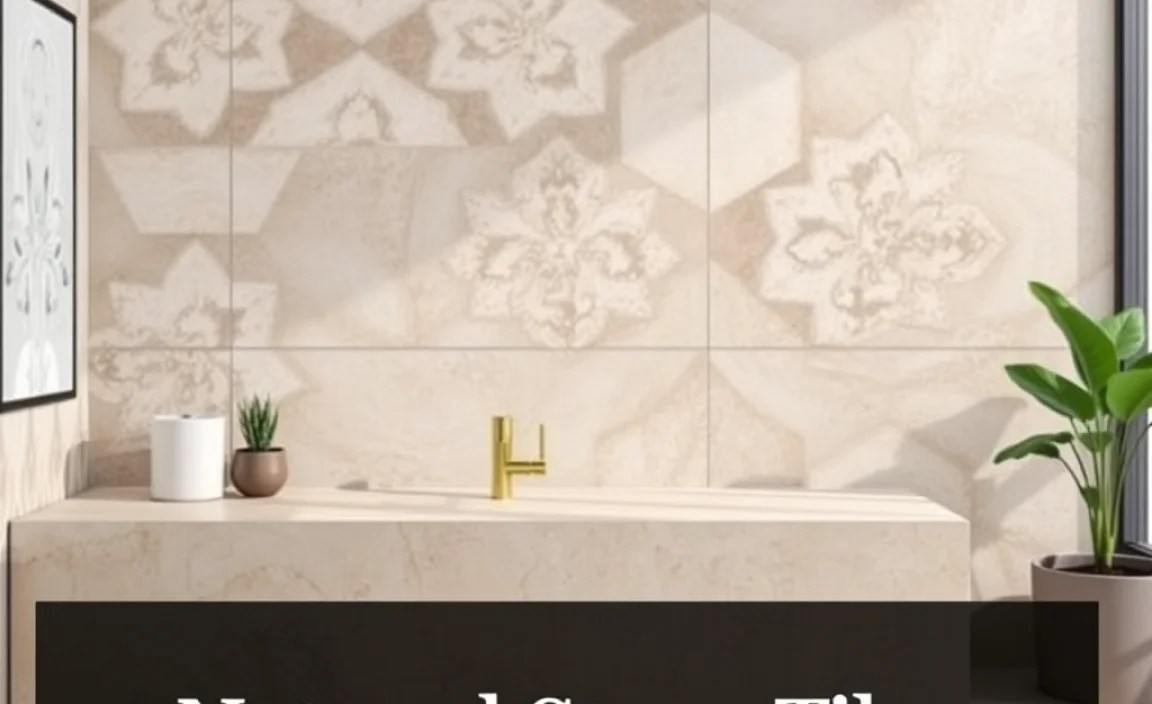
Natural stone tiles are quarried directly from the earth and offer unique beauty and durability. Each piece is one-of-a-kind. They require specific care and maintenance.
Marble Tiles
Known for its elegant veining and luxurious appearance. Marble is a relatively soft stone, making it prone to etching and staining.
- Appearance: Creamy white with distinct veins of gray, black, gold, or brown.
- Durability: Softer than granite or quartz. Porous and requires sealing.
- Care: Must be cleaned with pH-neutral cleaners. Avoid acidic products.
- Best Uses: Bathroom walls, shower floors, low-traffic floor areas, decorative accents. Not ideal for busy kitchens or high-moisture areas without extensive sealing and careful maintenance.
Granite Tiles
A very hard and durable natural stone that is highly resistant to scratches and heat.
- Appearance: Speckled appearance with a wide range of colors and patterns.
- Durability: Very hard, dense, and less porous than marble. Still benefits from sealing.
- Care: Relatively low maintenance, can be cleaned with mild soap and water.
- Best Uses: Kitchen countertops and backsplashes, high-traffic floors, bathrooms.
Travertine Tiles
A type of limestone formed by mineral springs, known for its earthy tones and natural pitted texture.
- Appearance: Beige, brown, ivory, and tan colors with natural holes and variations.
- Durability: Softer than granite. Porous; requires sealing. The natural holes can be filled or left open for a rustic look.
- Care: Needs sealing and cleaning with pH-neutral products.
- Best Uses: Floors (especially in drier climates), accent walls, fireplaces.
Slate Tiles
A fine-grained metamorphic rock that splits into thin, durable pieces. Known for its natural cleft surface and rich, variable colors.
- Appearance: Dark grays, blacks, greens, purples, and earthy reds. Naturally textured surface.
- Durability: Durable and water-resistant, though it can be porous and benefit from sealing.
- Care: Can be sensitive to acidic or alkaline cleaners.
- Best Uses: Floors, walls, backsplashes, outdoor patios.
Limestone & Sandstone Tiles
These are sedimentary rocks known for their natural, earthy appearance. They are softer and more porous than granite.
- Appearance: Natural muted tones, often with visible grains or fossils.
- Durability: Soft and porous, requiring regular sealing and careful cleaning.
- Care: Must use pH-neutral cleaners.
- Best Uses: Low-traffic floors, accent walls, feature areas where a natural, rustic look is desired.
When choosing natural stone, it’s essential to understand its porosity and maintenance requirements. For detailed care instructions, resources like the Stone and Tile Care Guide from a reputable stone care company can be invaluable.
Other Popular Tile Materials
Beyond ceramic, porcelain, and natural stone, other materials offer unique aesthetic and functional qualities.
Glass Tiles
Glass tiles offer a reflective, luminous look and come in a vast array of colors and finishes. They are non-porous and easy to clean.
- Appearance: Shiny, reflective, translucent or opaque, a huge spectrum of colors.
- Durability: Can chip or crack upon impact, especially thinner varieties. Not always recommended for floors.
- Water Absorption: Non-porous, making them excellent for wet areas.
- Best Uses: Backsplashes, shower walls, accent features, pools.
Metal Tiles
Often used for accent pieces or backsplashes, metal tiles provide a modern, industrial, or sleek look. They can be made from stainless steel, aluminum, bronze, or copper.
- Appearance: Brushed, polished, hammered finishes in metallic hues.
- Durability: Durable, but can scratch, dent, or discolor depending on the metal and finish.
- Care: Varies greatly by metal; some require specific cleaners to avoid damage.
- Best Uses: Kitchen backsplashes, accent walls, commercial spaces.
Encaustic Cement Tiles
These are not ceramic tiles but are made from cement, sand, and pigments. They are known for their decorative, often geometric or floral, patterns pressed into the tile’s surface.
- Appearance: Bold, rich colors and intricate designs. Matte finish.
- Durability: Very durable and long-lasting, but porous.
- Care: Require regular sealing to protect against stains and moisture. Clean with pH-neutral cleaners.
- Best Uses: Floors in low to moderate traffic areas, entryways, accent walls, backsplashes.
Understanding Tile Terms: Size, Finish, and Edge
Once you know the material, you’ll encounter terms related to size, how the surface is treated, and how the edges are finished.
Tile Size and Format
Tiles come in a huge range of sizes. Larger format tiles (typically 15 inches or more in any dimension) can make a space feel more expansive and have fewer grout lines.
- Small Format: Up to 6 inches (e.g., 4×4, 2×2 mosaic).
- Medium Format: 6 to 12 inches (e.g., 12×12, 3×12).
- Large Format: 15 inches and up (e.g., 18×18, 24×24, large custom slabs).
- Rectified Tiles: These tiles have perfectly straight, sharp edges. They can be installed with very thin grout lines (or even “grouted” with epoxy for a seamless look). They are ideal for modern designs.
- Non-Rectified Tiles: These have slightly rounded or pressed edges from the manufacturing process. They require wider grout lines.
Tile Finish (Surface Texture)
The finish affects the tile’s appearance, slip resistance, and maintenance.
- Glazed: A liquid glass-like coating applied to the tile surface before firing. Provides color, pattern, and a protective layer.
- Unglazed: The tile surface is the natural color and texture of the material without a coating.
- Polished: The surface is ground and buffed to a high shine. Creates a very sleek, reflective look but can be slippery when wet and show scratches more easily.
- Honed: A smooth, matte finish achieved by stopping the polishing process before a high shine is reached. Less reflective than polished and offers better slip resistance.
- Textured/Natural Split Face: The surface has a naturally rough, uneven texture. Often seen in stone tiles like slate or some porcelain mimicking natural stone. Excellent for slip resistance.
- Matte: A non-reflective, flat finish common on many ceramic and porcelain tiles. Offers good slip resistance.
Tile Edge Types
The edge of the tile is important for how it meets another tile or a surface.
- Rectified: As mentioned, these have perfectly straight, 90-degree edges.
- Cushioned (or Beveled): The edges are slightly rounded or beveled. This was more common with older tiles and allows for slightly larger grout lines and can hide minor imperfections in the wall or floor.
Choosing the Right Tile for Your Project
With so many options, how do you make the right choice? Use this quick reference table to guide your decision-making:
| Tile Type/Material | Best For | Pros | Cons | Maintenance Notes |
|---|---|---|---|---|
| Glazed Ceramic | Walls, backsplashes, low-traffic floors. | Affordable, easy to cut, wide variety of designs. | Can chip, less water-resistant than porcelain. | Easy to clean; check glaze rating for floor use. |
| Porcelain | High-traffic floors, bathrooms, kitchens, outdoors, showers. | Extremely durable, water-resistant, stain/fade resistant. | More expensive, harder to cut. | Low maintenance, can be slippery if not textured. |
| Natural Stone (e.g., Marble, Granite) | Floors, walls, countertops, accent features. | Unique beauty, durable (granite), adds value. | Porous, requires sealing, can be expensive, sensitive to acids (marble). | Requires specific cleaners, regular sealing. |
| Glass Tiles | Backsplashes, accent walls, shower walls. | Luminous, non-porous, easy to clean colors. |
