
Understanding the “parts of tiles” means knowing their components: the tile body, glaze, and finish. Each part affects durability, appearance, and water resistance. This guide explores their pros and cons, helping you choose the perfect tiles for your home with confidence.
Tiling a home project can feel a bit overwhelming, especially when you’re faced with all sorts of terms you’ve never heard before. What exactly are we talking about when we say “parts of tiles”? It’s not just a flat piece of ceramic; each tile has distinct components that play a big role in how it looks, how long it will last, and how well it performs in different areas of your home. Don’t worry, though! We’re here to break down each part of a tile in simple terms. This guide will walk you through the pros and cons of each component, so you can make informed decisions and feel great about your tiling choices. Let’s dive in and uncover the secrets behind your beautiful tile!
Demystifying the Anatomy of a Tile: From Base to Shine


When you look at a tile, you’re seeing the result of several layers cooperating to create something beautiful and functional. Think of it like building a sandwich – you have the main filling, the sauce, and perhaps some crunchy bits. For tiles, these layers are the tile body, the glaze, and the finish. Each one has a specific job, and understanding them helps you appreciate why some tiles are better suited for a steamy bathroom while others are perfect for a sunny living room floor. Let’s get to know these essential parts!
The Foundation: The Tile Body
The tile body, often called the bisque or the substrate, is the heart of the tile. It’s where everything else is built upon. The material used for the tile body significantly influences the tile’s strength, water absorption, and even its overall weight. For beginners, it’s helpful to know that different types of tile bodies exist, and they perform differently.
Types of Tile Bodies and Their Pros & Cons
You’ll typically encounter two main types of tile bodies: porcelain and ceramic. While both are made from clay fired at high temperatures, the clay composition and firing process make a big difference.
| Tile Body Type | Pros | Cons |
|---|---|---|
| Porcelain Tile Body |
|
|
| Ceramic Tile Body |
|
|
Tip for Beginners: When choosing between porcelain and ceramic, consider the location. For a kitchen backsplash or a decorative wall, ceramic is often a great, budget-friendly choice. For a shower floor or a busy entryway, porcelain’s durability and water resistance are worth the investment. You can find great resources on differences in tile materials from organizations like the Ceramic Tile Education Foundation (CTEF), which provides detailed technical specs.
The Protective & Decorative Layer: The Glaze
The glaze is a liquid glass-like coating applied to the surface of the tile body before firing. It’s what gives tiles their color, pattern, and sheen – from matte to high gloss. Beyond aesthetics, the glaze also provides a crucial protective barrier.
What the Glaze Does for Your Tile
The glaze is a critical component for several reasons:
- Water Resistance: A good glaze seals the porous tile body, preventing water and stains from seeping in. This is especially important for ceramic tiles, as their bodies are naturally more absorbent.
- Stain Resistance: The smooth, non-porous surface of a glazed tile makes it very easy to clean and resistant to most common household stains.
- Durability: While not as hard as the underlying tile body, the glaze adds a layer of resistance against wear and tear. However, the quality and thickness of the glaze vary greatly.
- Aesthetics: This is where the magic happens! Glazes are used to create all the colors, patterns, and textures you see on tiles. They can mimic natural materials like wood or stone, or offer vibrant, unique designs.
Glaze Types and Their Effects
The glaze’s finish significantly impacts both the look and the performance of the tile. Common types include:
- Glossy Glaze: Offers a shiny, reflective surface. It makes colors appear more vivid and can make small spaces feel larger.
- Pros: Easy to clean, visually brightens a space, shows off colors and details well.
- Cons: Can be very slippery when wet, shows water spots and smudges easily, can be prone to scratching over time, revealing the tile body underneath.
- Matte Glaze: Has a non-reflective, soft finish. It’s often preferred for a more natural, understated look.
- Pros: Better slip resistance than glossy tiles, hides water spots and smudges better, less prone to visible scratches.
- Cons: Can be slightly harder to clean than glossy tiles if very porous, colors might appear less vibrant.
- Satin/Eggshell Glaze: A middle ground between glossy and matte, offering a slight sheen without being overly reflective.
- Pros: Good balance of cleanability and slip resistance, offers a sophisticated look.
- Cons: Might not be as “wow” factor as glossy or as grippy as matte for some users.
- Textured Glaze: Designed to mimic natural materials like stone, wood, or fabric. The texture can add depth and visual interest.
- Pros: Highly realistic appearance, can add significant design flair, often offers good slip resistance due to the texture.
- Cons: The texture can trap dirt and be harder to clean, especially in grout lines or crevices.
Understanding Glaze Durability: Not all glazes are created equal. The PEI (Porcelain Enamel Institute) rating is a standard measure of durability for glazed ceramic and porcelain tiles. It indicates how well the glaze will resist abrasion from foot traffic. While not all tiles have this, it’s a good indicator if you can find it.
| PEI Rating | Traffic Level | Recommended Use |
|---|---|---|
| PEI 0 | No foot traffic | Wall tiles, decorative accents |
| PEI 1 | Very light foot traffic | Residential bathroom walls, very light residential floor traffic (e.g., barefoot or socked feet in a bedroom). |
| PEI 2 | Light foot traffic | Residential residential floors with normal footwear traffic (e.g., living rooms, bedrooms). Not recommended for kitchens or entryways. |
| PEI 3 | Moderate foot traffic | All residential floors except heavy-traffic areas like entryways and kitchens. Also suitable for light commercial use. |
| PEI 4 | Moderate to heavy foot traffic | All residential floors, including kitchens, entryways, and garages. Suitable for commercial use. |
| PEI 5 | Heavy to extra-heavy foot traffic | Heavy commercial and industrial applications (e.g., malls, airports, high-traffic public spaces). |
Pro Tip: For areas prone to moisture and heavy use, like a bathroom floor or kitchen backsplash, always look for a tile with a PEI rating of 3 or higher, and consider the glaze finish for slip resistance. A matte or textured finish is generally safer than a high-gloss one in wet areas.
The Surface Treatment: The Finish
The finish is the final touch applied to the tile’s surface. It’s closely related to the glaze and often refers to the post-firing treatment or the specific texture created by the glaze. Think of it as the polish or final buff. For a beginner, the finish is often the most noticeable part, dictating how the tile feels and looks underfoot and to the touch.
Exploring Different Tile Finishes
The finish can dramatically change how a tile performs and feels. Here’s a look at common finishes and what they mean for your project:
- Polished Finish: Achieved by grinding and buffing the tile surface until it’s extremely smooth and reflective. This is common for natural stones like granite and marble, but also available on porcelain.
- Pros: Creates a luxurious, high-end look; easily reflects light, making spaces feel brighter and larger.
- Cons: Very slippery when wet, shows scratches and smudges easily, often requires sealing to prevent staining (especially natural stone).
- Honed Finish: A smooth, matte-like finish achieved by stopping the polishing process before it becomes highly reflective. It offers a softer, more natural appearance.
- Pros: Less slippery than polished tiles, more forgiving with minor scratches, offers an elegant, understated look.
- Cons: Can still be somewhat slippery when wet, may require sealing depending on the material.
- Lappato Finish: A semi-polished or “semi-gloss” finish that’s partially polished. It offers a subtle sheen and is often a good compromise.
- Pros: Offers a sophisticated sheen without the extreme slipperiness of full polish, good balance of aesthetics and function.
- Cons: Can show water spots more than matte finishes.
- Textured/Structured Finish: This is where the surface has a raised or indented pattern. It can be designed to mimic wood grain, stone, or create a non-slip surface.
- Pros: Excellent for slip resistance, adds visual and tactile interest, can hide imperfections or dirt better than smooth surfaces.
- Cons: Can be difficult to clean due to nooks and crannies, may require specific grout cleaning tools.
- Natural/Unglazed Finish: Some tiles, especially terracotta and certain porcelain tiles, are left without a glaze or with a very minimal, matte-like surface treatment.
- Pros: Very natural and earthy look, often excellent slip resistance.
- Cons: Typically very porous and requires thorough sealing to make them water and stain-resistant.
Slip Resistance (Coefficient of Friction – COF): For flooring, slip resistance is paramount. Look for tiles with a higher COF rating. The U.S. Architectural and Transportation Barriers Compliance Board (Access Board) recommends a minimum COF of 0.6 for accessible walking surfaces, and 0.8 for ramps and accessible routes. For general use, a COF of 0.5 or higher is often considered adequate, but for bathrooms and kitchens, aiming higher is always better.
Putting It All Together: How Parts Affect Your Project
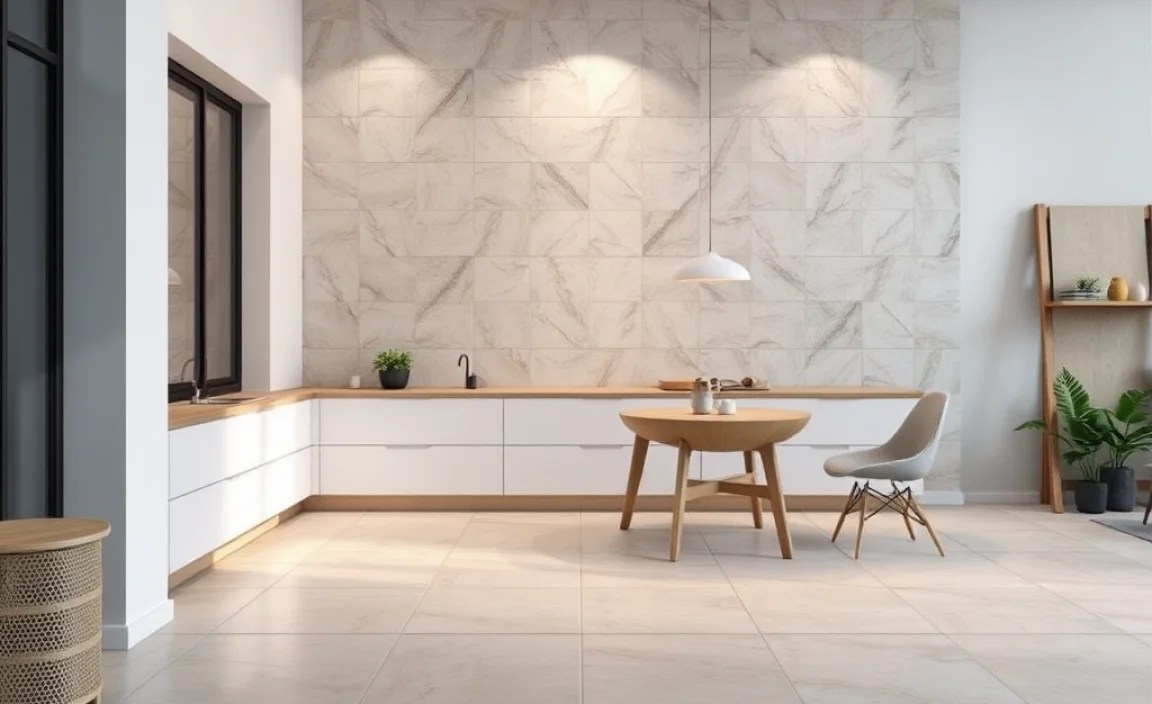
Now that you know the individual components, let’s see how they work together and influence your tiling decisions. The synergy between the tile body, glaze, and finish is what determines a tile’s suitability for different applications.
Matching Tile Parts to Your Space
Here’s a quick guide to help you match tile characteristics to common household areas:
Kitchens
- Floors: Look for a porcelain tile body with a PEI rating of 3 or higher. A textured, matte, or lappato finish is best for slip resistance. Glazes should be stain-resistant.
- Backsplashes: Ceramic or porcelain is fine. A glossy or satin glaze is popular for easy cleaning. Water absorption is less of a concern here than on the floor.
Bathrooms
- Floors: Porcelain is highly recommended due to its low water absorption. A matte or textured finish with a good COF is crucial for safety.
- Walls & Shower Enclosures: Porcelain or glazed ceramic. The glaze should be non-porous and water-resistant. Matte or satin finishes are generally preferred over high gloss for walls to reduce glare and improve grip.
Living Areas/Bedrooms
- Floors: Ceramic or porcelain. The PEI rating can be lower (PEI 2 or 3). Aesthetics are often a primary concern, so polished, honed, or satin finishes are popular.
Outdoor Areas
- Patios/Pool Decks: Porcelain tile with a high PEI rating (4 or 5) and a highly textured, slip-resistant finish is essential. It must be frost-proof.
Common Beginner Pitfalls to Avoid
As a DIY new-timer, it’s easy to get caught up in the look of a tile without considering its practical performance. Here are a few common mistakes:
- Choosing High-Gloss for Wet Areas: That beautiful, shiny tile looks amazing in the showroom, but can become a dangerous slip hazard in a steamy shower or a spill-prone kitchen.
- Underestimating Water Absorption: Using standard ceramic tiles in a frequently wet area like a shower surround can lead to water seeping into the tile body, causing mold, mildew, and potential damage to the subfloor over time.
- Ignoring PEI Ratings: Putting a PEI 1 tile in a high-traffic entryway is like using tissue paper as a doormat – it simply won’t last.
- Confusing Glaze with Finish: While related, the glaze is the coating, and the finish is how that surface is treated or textured. A glossy glaze can be polished to a high shine, while a matte glaze can have a slight texture.
Frequently Asked Questions (FAQ)
How do I know if a tile is good quality?
Quality can be gauged by the tile body material (porcelain is generally higher quality than standard ceramic for floors), the PEI rating (higher is better for traffic), and the consistency of the glaze and finish. Also, look for reputable brands known for durability.
Can I put glossy tiles on my bathroom floor?
While you technically can, it’s generally not recommended. Glossy finishes can be very slippery when wet, posing a safety risk. A matte, textured, or honed finish with a higher slip resistance (COF) is a much safer choice for bathroom floors.
What’s the difference between a natural stone tile and a porcelain tile that looks like stone?
Natural stone tiles (like marble, granite, travertine) are quarried minerals. They have unique veining and character but can be porous, require sealing, and be more expensive. Porcelain tiles that mimic stone are man-made, offering consistency, durability, and often lower maintenance, at a more accessible price point.
