
Removing cabinets fast is achievable with the right tools and a simple, step-by-step approach. This guide breaks down the process, making it easy for beginners to safely dismantle kitchen or built-in cabinets without damage, saving you time and frustration.
Ever stared at a stubborn cabinet, wondering how to get it down without a Herculean effort or a DIY disaster? It’s a common sight in home renovations or when you’re simply looking to update your kitchen or a built-in storage area. The good news is that “removing cabinets fast” doesn’t have to mean brute force or hours of struggle. With a little preparation and the right technique, you can make this task surprisingly straightforward and quick. We’ll walk you through everything you need to know, step-by-step, to conquer those cabinets confidently.
Why This Guide Will Make Cabinet Removal Simple

As your go-to for all things home DIY, I know how intimidating tasks like cabinet removal can seem. You might be worried about damaging your walls, the cabinets themselves, or even yourself. That’s perfectly normal! My goal is to demystify this process, turning a potentially frustrating job into a manageable one. I’ll break down the tools you need, the safety precautions, and each action you’ll take. By the end, you’ll feel equipped and ready to tackle cabinet removal with speed and ease, leaving you with a sense of accomplishment and a clear space for your next project.
Understanding Your Cabinets and the Removal Process
Before we dive into the “how-to,” let’s quickly touch on why cabinets are attached the way they are. Most standard kitchen and built-in cabinets (like those in a garage or laundry room) are secured to the wall using screws or sometimes nails. These fasteners go through the back of the cabinet frame directly into wall studs or blocking. This is crucial for stability and safety. Our goal in removing them is to reverse this process: locate, expose, and remove these fasteners.
The “fast” part of removing cabinets comes from being prepared and knowing exactly where to look for these connections. Rushing in without understanding the structure can indeed lead to damage. Therefore, our approach combines speed with careful observation. We’re aiming for efficiency, not recklessness.
Essential Tools for Fast Cabinet Removal
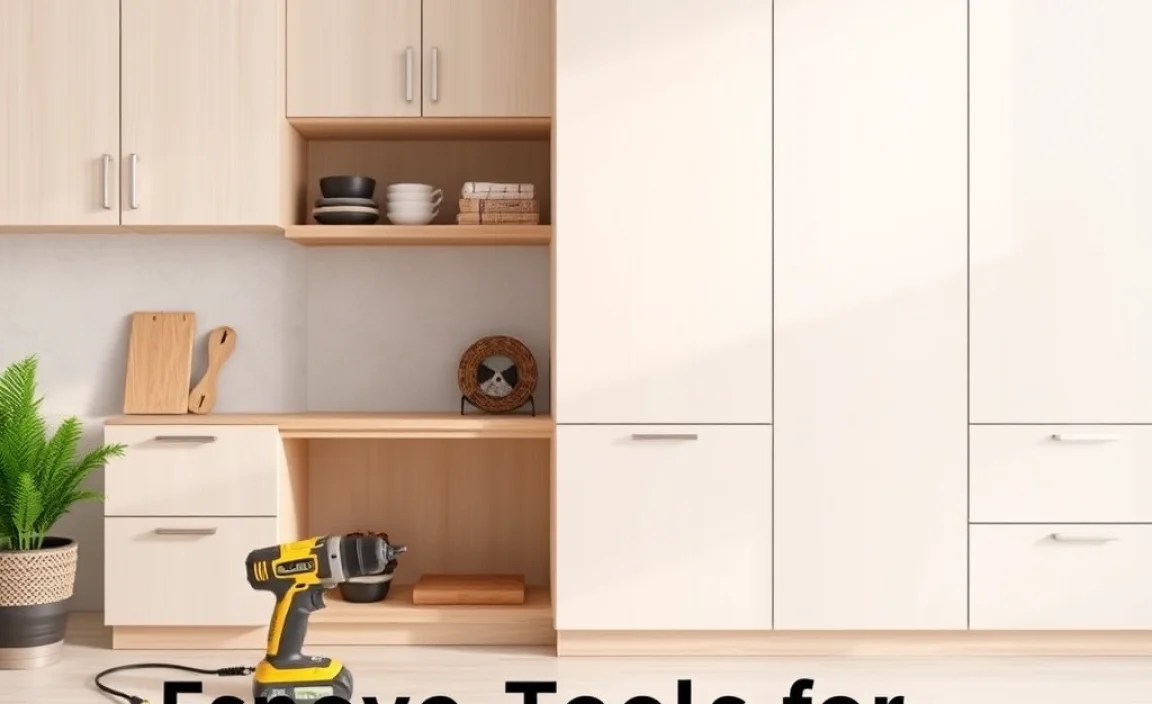
Having the right tools on hand is the biggest factor in making this process fast and effortless. Forget fumbling with makeshift solutions; investing in or gathering these items will make your life so much easier.
Safety First: What You Absolutely Need
- Safety Glasses: Protect your eyes from dust, debris, and potential falling objects. This is non-negotiable.
- Work Gloves: Protect your hands from splinters, sharp edges, and general wear and tear.
- Dust Mask: Especially important if the cabinets are old or you’re dealing with a lot of demolition debris.
Tools for Disconnecting and Removal
- Drill/Impact Driver: This is your primary tool. Cordless makes it portable. You’ll need a Phillips head bit for most screws. An impact driver can make removing stubborn screws much faster.
- Screwdriver Set: A good set of manual screwdrivers (Phillips and flathead) are handy for any screws that your drill can’t quite get to or for fine adjustments.
- Pry Bar Set (Small and Medium): Useful for gently separating cabinets from walls or adjacent cabinets if they’re stuck.
- Putty Knife or Thin Scraper: Excellent for carefully prying away any caulk or paint that seals the cabinet to the wall.
- Stud Finder: Essential for locating wall studs behind the drywall. This helps identify where cabinets are most likely fastened.
- Utility Knife: For cutting through caulk or paint lines along the edge of the cabinet.
- Measuring Tape: For noting cabinet dimensions and the space you’re working with.
- Bucket or Container: To collect screws and small hardware. Keeping these organized will save you headaches later.
- Drop Cloths or Tarps: To protect your floors from dust and potential scratches.
- Helper (Highly Recommended): Cabinet panels can be surprisingly heavy and awkward. Having an extra pair of hands makes removal safer, faster, and easier.
A quick note on drills and drivers: If you’re not familiar with them, think of a drill as a powered screwdriver. An impact driver is like a drill on steroids, delivering rotational force with concussive blows to loosen stubborn fasteners quickly. Both use interchangeable bits.
Step-by-Step Guide: How to Remove Cabinet Fast
Let’s get to it! Follow these steps meticulously. This method ensures you remove cabinets efficiently while minimizing damage to your surroundings.
Step 1: Preparation is Key to Speed
Before you touch a single cabinet, preparation is your best friend for a fast removal. This is where you avoid setbacks.
- Clear the Area: Remove everything from inside the cabinets. This lightens the load and prevents items from falling out. Place items in boxes or on a protected surface.
- Protect Your Space: Lay down drop cloths or tarps on the floor in front of the cabinets you plan to remove. This catches dust and debris and prevents scratching your floors.
- Shut Off Water (If Applicable): If you’re removing kitchen cabinets, it’s wise to shut off the water supply to the sink and dishwasher. You may need to disconnect plumbing, and nobody wants a surprise flood. Turn off the electricity to any garbage disposal unit at the breaker box.
- Cut Caulk and Paint Seals: Use your utility knife to score and cut any caulk or paint lines where the cabinet meets the wall, countertop, or adjacent cabinets. This frees the cabinet from its surface seal.
Step 2: Remove Cabinet Doors and Drawers
This step significantly reduces weight and makes accessing the cabinet box easier.
- Doors: Open each cabinet door. You’ll see hinges attached to the doors and the cabinet frame. Typically, there are two screws on each hinge plate attaching it to the cabinet. You can either unscrew these to remove the door, or sometimes there’s a quick-release mechanism on the hinge itself. For speed, if you’re not planning to reuse the doors, you can often remove the entire door by taking out the hinge screws. Be sure to have a helper if the doors are large or heavy.
- Drawers: Slides are usually attached to the drawer box and the cabinet frame. Most drawer slides have a small tab or lever that needs to be disengaged to pull the drawer out completely. Look carefully at the slide mechanism. Some older drawers might be held by screws driven through the cabinet sides into the drawer runners. Remove any visible screws, then carefully pull the drawer out. If it resists, check for hidden fasteners or a release lever.
Step 3: Locate and Remove Cabinet Mounting Screws
This is the core of the cabinet removal. Most cabinets are secured from the inside, either to the wall or to adjacent cabinets.
- Examine the Inside: Look at the interior top and bottom edges of the cabinet frame. You’ll often find screws driven from the side of one cabinet into the adjoining cabinet. Also, check the back panel, especially near the top and bottom, for screws that go into the wall.
- Use the Stud Finder: Cabinets are almost always screwed into wall studs for stability. Use your stud finder along the wall where the cabinets are mounted. Mark the edges of the studs discreetly on the wall or cabinet. This will confirm where to look for fasteners. A study by the Building Science Corporation highlights the importance of secure connections to structural elements like studs for overall building integrity.
- Accessing Internal Screws: Sometimes, to get to screws between cabinets or into studs, you might need to remove a thin back panel of the cabinet (if it’s not a solid piece of furniture). Often, though, screws are driven through the sturdy side panels of the cabinet box into adjacent cabinets and then into studs.
- Drill Them Out: Use your drill or impact driver with the appropriate bit (usually Phillips head) to remove any screws you find. For screws connecting cabinets side-by-side, aim for the screw heads and drive them out. For screws going into the wall, look for them along the top and bottom edges, often near the back of the frame or through a small lip. Take your time here to ensure you get all of them. If a screw head strips, you might need a screw extractor, but for speed, try to use the correct, well-fitting bit.
Tip for Speed: As you remove screws, place them in your designated container. If cabinets attach to each other, remember that removing one might free up the next. Work systematically, cabinet by cabinet.
Step 4: Gently Detach the Cabinet
Once all visible internal screws are removed, the cabinet should be loose, but it might be held by dried paint, old adhesive, or simply wedged in place.
- Test for Looseness: Gently wiggle the cabinet to see if it moves. If it feels loose, proceed to the next step.
- Pry if Necessary: If the cabinet feels stuck, use your putty knife or a thin scraper to carefully work around the edges where the cabinet meets the wall or countertop. This helps break any remaining seals.
- Use the Pry Bar (Carefully!): For stubborn areas, insert a small pry bar between the cabinet and the wall (or adjacent cabinet) and gently lever it away. Use a small block of wood under the pry bar if you’re worried about damaging the wall. Work your way along, prying in a few spots rather than forcing one area.
- Have a Helper Ready: As you pry, have your helper ready to hold the cabinet steady or to catch it.
Safety Check: Never force a cabinet. If it’s resisting significantly, re-check for hidden screws or fasteners. A misplaced forceful pry can cause significant damage to walls or plumbing behind them.
Step 5: Remove the Cabinet Box
With the cabinet freed from its fasteners and seals, carefully remove it.
- Lift and Support: With your helper, carefully lift the cabinet away from the wall. Let gravity assist you slightly as you pull it forward and down.
- Beware of Weight: Even with doors and drawers removed, cabinet boxes can be surprisingly heavy. Lift with your legs, not your back.
- Set Aside Safely: Place the removed cabinet in a safe, designated area, perhaps on a drop cloth to prevent scratches.
Step 6: Repeat and Clean Up
Now, rinse and repeat for each cabinet!
- Systematic Removal: Work through your cabinets one by one, following the same steps.
- Clean as You Go: As you remove cabinets, it’s a good time to tidy up. Sweep or vacuum up the debris.
- Organize Hardware: Keep all the screws and hardware you removed. If you’re reinstalling cabinets later, you might need them. If not, they can be stored for other projects or disposed of properly.
Special Considerations for Faster Removal
Are your cabinets a bit unusual? Here are a few tips to speed things up for specific situations:
Cabinets Mounted on a False Front or Valance
Some older or custom cabinets have a decorative panel (valance) at the very top or bottom. These often hide the mounting screws. You may need to gently pry these decorative pieces off first to expose the screws holding the cabinet box to the wall or to a mounting cleat. Sometimes, these are attached with small nails or clips that can be carefully levered off.
Cabinets Glued in Place
While less common for standard cabinets, some might have been installed with adhesive. In this case, prying becomes even more essential. You might need to work a thin, flexible pry bar or even a vibrating multi-tool with a scraping blade very carefully along the edges where the cabinet meets the wall. Be extremely cautious not to damage underlying plumbing or electrical conduits. If you suspect significant adhesive use, it might be slower than a screw-only installation, but the process remains similar, just with more gentle persuasion.
Freestanding vs. Built-in
Most cabinets described here are built-in, meaning they are structurally affixed to the wall. Freestanding cabinets look like cabinets but are not screwed into the wall. If your cabinet seems wobbly and doesn’t have obvious mounting points, it may be freestanding. In this case, simply lift and move it. Always confirm by checking for screws or other fasteners first – better to check and find none than to assume and struggle.
Table: Tool Comparison for Cabinet Removal Efficiency
Here’s a quick look at how your tools contribute to speed and ease:
| Tool | Primary Benefit for Speed | Beginner Friendliness | When It’s Most Useful |
|---|---|---|---|
| Drill/Impact Driver | Rapid screw removal (mechanical torque) | High (easy to operate) | Removing all fasteners; especially stubborn ones with an impact driver |
| Pry Bar Set | Quickly breaking seals and separating stuck cabinets | Medium (requires force and caution) | When cabinets are painted/caulked in, or wedged |
| Utility Knife | Fast scoring of caulk/paint for cleaner breaks | High (easy to use) | At the very start, to break surface adhesions |
| Stud Finder | Quickly identifying screw locations by showing wall studs | High (simple to operate) | Before removing screws, to confirm attachment points |
| Helper | Speeds up lifting, holding, and maneuvering; safety | N/A (a person!) | All stages, especially door/drawer removal and detaching the box |
What If Cabinet Screws Are Stripped?
Stripped screws are a common frustration that can halt progress and kill speed. If you encounter one, don’t panic. Here’s how to deal with it:
- The Rubber Band Trick: Place a wide rubber band over the stripped screw head, then insert your screwdriver bit. The rubber can provide enough grip to turn the screw.
- Screw Extractors: These are specialized bits that drill into the screw head (often in reverse) and then grip the damaged head to remove it. They are very effective but require careful use.
- Pliers: If the screw head is raised enough, you might be able to grip it with a sturdy pair of locking pliers (like Vise-Grips) and turn it out.
- Chisel or Dremel: For severely stripped screws, you can sometimes cut a new slot into the screw head with a small chisel or a Dremel tool with a cutting disc, then use a flathead screwdriver.
While these methods add a few minutes, they prevent you from getting stuck and keep the overall task manageable and less stressful than resorting to destructive force.
Frequently Asked Questions (FAQ)
Q1: How many screws usually hold a cabinet in place?
A: It varies, but most base and wall cabinets are secured with at least two to four screws into wall studs, often along the top and bottom edges. Some are also screwed into adjacent cabinets, so you might encounter several more.
Q2: Can I remove cabinets without damaging the drywall?
A: Yes, with care. If cabinets are well-secured, you might pull away small bits of drywall paper. Using a putty knife to break caulk and a thin pry bar gently against a wood block can minimize wall damage. If significant drywall damage occurs, it’s usually easily repaired.
Q3: Do I need to disconnect plumbing for base cabinets?
A: Absolutely, if they involve a sink or dishwasher. Always turn off the water supply at the shut-off valves (usually under the sink) and disconnect the hoses and pipes before attempting to move the cabinet.
Q4: What’s the fastest way to remove multiple cabinets in a row?
A: Systematically. Remove doors and drawers from all cabinets first. Then, work down the line, removing the screws that join cabinets together. Finally, tackle the screws that attach each cabinet to the wall, moving from one end to the other. Having a helper is crucial for speed with multiple units.
Q5: What if the cabinets are old and brittle?
A: Treat them gently. Old wood can be fragile. Use smaller pry bars and more patience. You may want to score deeper into paint or caulk to ensure a cleaner release. If the cabinet box itself is falling apart, you might need to support it from the inside as you remove fasteners to prevent it from.
