
Quick Summary: Replacing your showerhead is one of the easiest and fastest home upgrades you can do yourself. This guide breaks down how to replace a showerhead quickly and effortlessly for an instant, spa-like experience, requiring minimal tools and no plumbing experience.
Is your showerhead giving you more of a dribble than a downpour? A tired, old showerhead can make your daily shower feel more like a chore than a refreshing escape. But here’s the good news: transforming your shower experience is surprisingly simple! You don’t need a plumber or a day off to get a fantastic new shower. In this guide, I’ll show you exactly how to replace your showerhead, step-by-step, making it a quick and rewarding DIY project. Get ready to enjoy a better shower experience, faster than you thought possible!
Why Upgrade Your Showerhead? The Quick Wins
Think of your showerhead as the conductor of your daily symphony of cleanliness. When it’s not performing well, the whole experience can fall flat. Upgrading your showerhead isn’t just about aesthetics; it’s about function, efficiency, and pure shower enjoyment. A new showerhead can:
- Improve Water Pressure: Many older or clogged showerheads lose their oomph. A new one can bring back that satisfying spray.
- Save Water: Modern showerheads are designed to be water-efficient without sacrificing performance, which is great news for your utility bills and the planet.
- Enhance Your Shower Experience: From rainfall effects to invigorating massage settings, the options are vast and can turn a basic rinse into a luxurious retreat.
- Boost Bathroom Aesthetics: A sleek, modern showerhead can instantly update the look of your bathroom.
The best part? This upgrade is incredibly accessible. You can often complete the entire process in under 30 minutes with just a couple of basic tools. It’s a perfect project for anyone new to DIY, proving that significant home improvements don’t have to be complicated or time-consuming.
Gather Your Arsenal: Tools and Materials for a Swift Showerhead Swap

Part of what makes replacing a showerhead so effortless is the minimal toolkit required. You likely have most of these items already in your home. If not, they are readily available at any hardware or home improvement store.
Essential Tools:
- Adjustable Wrench or Pliers: This is for gripping and turning the old showerhead and the new one. An adjustable wrench is versatile, while channel-lock pliers can also do the job effectively.
- Teflon Tape (also called Plumber’s Tape or Thread Seal Tape): This is crucial for creating a watertight seal on the threads.
- An Old Rag or Cloth: To protect the finish of your shower arm and new showerhead when using tools, and for wiping up any residual water.
- A Small Bucket or Bowl (optional): To catch any drips from the shower arm after the old head is removed.
Your New Showerhead:
This is the star of the show! When selecting a new showerhead, consider:
- Spray Settings: Do you prefer a gentle rain, a powerful massage, or a combination?
- Flow Rate: Look for models with a flow rate of 2.5 gallons per minute (GPM) or less to meet federal efficiency standards, though lower can offer even more savings. You can find EPA WaterSense certified showerheads for extra assurance.
- Finish: Match it to your existing bathroom fixtures (chrome, brushed nickel, matte black, etc.).
- Brand Reliability: Reputable brands often offer better quality and warranties.
Before you even start, unpack your new showerhead and familiarize yourself with its parts and any included instructions. This small step can prevent confusion later.
The Effortless Swap: Step-by-Step Guide to Replacing Your Showerhead
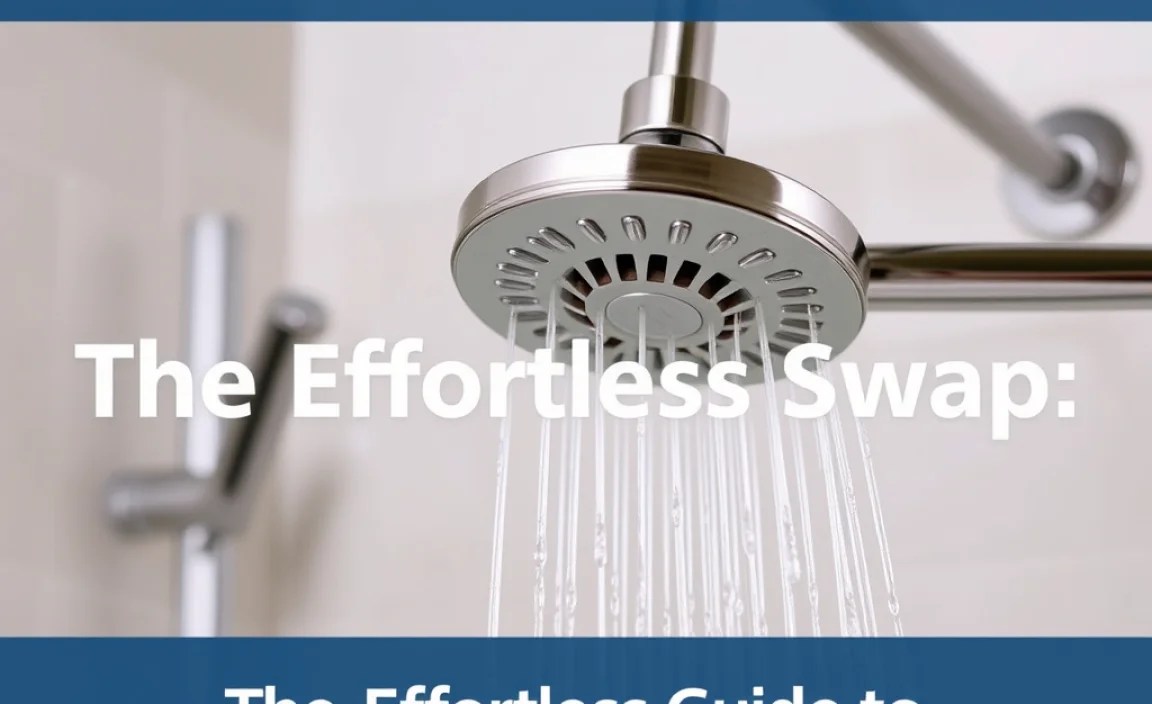
Ready to say goodbye to your old showerhead? Let’s get this done! This process is straightforward, and I’ll guide you through each step. Safety first: ensure the shower faucet is turned OFF and thoroughly cold before you begin.
Step 1: Protect and Loosen the Old Showerhead
Take your rag and wrap it around the base of the showerhead where it connects to the shower arm. This protects the finish from scratches when you use your wrench or pliers. Now, using your adjustable wrench or pliers, grip the base of the showerhead. Turn it counter-clockwise to loosen it.
You might feel some resistance. Apply steady, firm pressure. If it’s particularly stubborn, a little extra wrap of the rag can give you better grip. Once it starts to turn, it should become easier. Continue unscrewing it until it’s completely detached from the threaded shower arm.
Step 2: Clean the Shower Arm Threads
Once the old showerhead is off, you’ll see the threaded end of the shower arm. There might be old Teflon tape, mineral deposits, or gunk on these threads. Take your rag and carefully wipe away any debris. You want the threads to be clean and smooth for a good seal with the new showerhead.
If there are any stubborn bits of old tape, you can use a plastic scraper or even your fingernail to gently remove them. Avoid using sharp metal tools that could damage the threads. A clean set of threads is key to preventing leaks.
Step 3: Apply New Teflon Tape
This is a critical step for ensuring a leak-free connection. Take your roll of Teflon tape. Start at the end of the shower arm threads, leaving a little tape to fold over the very end. Wrap the tape around the threads in a clockwise direction. Think “righty-tighty” – you want to wrap it the same direction that you’ll be screwing on the new showerhead.
Overlap the tape slightly with each pass. You typically need about 3-4 wraps to create a solid, watertight seal. Press the tape firmly into the threads as you go. Ensure the tape is covering all the threads evenly without any major gaps or excessive build-up.
Pro Tip: Wrapping clockwise prevents the tape from unraveling as you screw on the new showerhead. If you wrap counter-clockwise, the new showerhead could unwind the tape and cause leaks.
Step 4: Screw On the New Showerhead
Now it’s time for the exciting part! Take your new showerhead and align it with the threaded end of the shower arm. Begin screwing it on by hand, turning it clockwise. Again, you’re matching the direction of the Teflon tape wrap. You should feel it thread on smoothly.
Hand-tighten the showerhead as much as you can. This is often sufficient, especially with newer showerheads that have rubber gaskets. However, for extra security and to ensure a tight seal, you might need to use your wrench or pliers.
Step 5: Final Tightening (If Needed)
If your new showerhead has a metal-on-metal connection without a rubber seal, or if you want extra peace of mind, use your wrench or pliers. Again, protect the finish with your rag. Grip the base of the new showerhead and give it a gentle turn, about a quarter to a half turn, clockwise. Don’t overtighten! Overtightening can damage the threads or the showerhead itself.
Most showerheads are designed to be hand-tight plus a little extra with a tool. If you’re unsure, err on the side of caution and don’t force it. A snug fit is what you’re aiming for.
Step 6: Test for Leaks
Turn on the shower. Start with cold water and gradually increase the temperature. Let the water run for a minute or two. Carefully check the connection point between the shower arm and the new showerhead. Look and feel for any drips or moisture. If you see any leaks, turn off the water and give the showerhead an additional small turn with your wrench (about 1/8th of a turn). If leaks persist after a second tightening, you might need to remove the showerhead, clean the threads again, and reapply Teflon tape, ensuring a complete seal.
Check the showerhead itself for any other leaks, such as from the spray face or adjustable parts, though this is less common with new units.
Troubleshooting Common Issues

Even with simple DIY tasks, occasional hiccups can occur. Here are some common problems and how to fix them:
Problem: Leaking at the Shower Arm Connection
- Cause: Insufficient or improperly applied Teflon tape, or the showerhead is not tight enough.
- Solution: Turn off the water, remove the showerhead, clean the threads, reapply Teflon tape (ensure it’s wrapped clockwise and covers all threads), and reattach the showerhead. Hand-tighten, then use a wrench for a small final turn if needed.
Problem: Low Water Pressure from the New Showerhead
- Cause: The showerhead might have a flow restrictor that’s too restrictive for your liking, or there might be debris in the shower arm.
- Solution: Many showerheads have removable flow restrictors. Check the manufacturer’s instructions on how to do this. If you’re in a water-scarce area or focused on conservation, you might need to adjust your expectations or look for showerheads with advanced spray technologies that provide a feeling of higher pressure with less water. Also, ensure the shower arm is clear of debris by running water through it after removing the old head.
Problem: Showerhead Won’t Screw On
Cause: The threads on the shower arm or the showerhead might be crossed, or there might be damaged threads.
Solution: Gently unscrew the showerhead. Visually inspect the threads on both the shower arm and the showerhead. If they appear damaged or misaligned, do not force it, as this can cause more significant damage. You might need to replace the shower arm. For minor cross-threading, sometimes backing it off completely and trying again slowly can work. Ensure you’re not cross-threading by feeling for easy engagement.
For additional resources on plumbing basics, you can check out guides from organizations like the EPA, which often provides information on water-efficient fixtures and their benefits.
The Benefits of a New Showerhead: Beyond the Twist
You’ve successfully replaced your showerhead! Now, let’s talk about the rewards. It’s more than just a new piece of metal in your bathroom; it’s an upgrade to your daily life.
Enhanced Water Pressure and Spray Patterns
The most immediate difference you’ll notice is likely the water pressure. A new showerhead, especially one designed for better performance or one with a wider spray, can feel like a significant upgrade. Imagine moving from a weak sprinkle to a powerful, invigorating stream that effectively rinses shampoo and conditioner. Modern showerheads offer a variety of spray patterns, from a gentle, wide rainfall to a focused, pulsating massage. This variety allows you to customize your shower to your mood or needs. For instance, a wide spray is perfect for rinsing off, while a targeted massage can help soothe tired muscles after a long day. This is a level of personalization that’s simply not possible with an old, worn-out fixture.
Water and Energy Savings
Choosing a water-efficient showerhead is a smart move for both your wallet and the environment. The U.S. Environmental Protection Agency’s WaterSense program promotes showerheads that use at least 20% less water than the federal standard (2.5 gallons per minute) without sacrificing performance. By upgrading to an EPA WaterSense-labeled showerhead, a typical family can save over 2,500 gallons of water per year. This not only reduces your water bill but also the energy needed to heat that water, leading to additional savings on your energy bill. It’s a win-win that contributes to a more sustainable household.
Aesthetic Appeal and Bathroom Modernization
Let’s not forget how much a showerhead contributes to your bathroom’s overall look. An old, corroded, or outdated showerhead can drag down the appearance of even a well-maintained bathroom. A new, stylish showerhead, whether a sleek chrome finish, a modern brushed nickel, or a bold matte black, can instantly update the space. Consider how a new showerhead can complement your existing fixtures like faucets and towel bars. This small change can create a cohesive and more contemporary feel, making your bathroom a more pleasant place to be.
Improved Durability and Maintenance
Higher-quality showerheads are often made with more durable materials and feature finishes that resist corrosion and mineral buildup, especially those with specialized coatings or high-grade plastics. This means they’ll look better for longer and require less frequent deep cleaning. Many newer models also have features like rubber nozzles that are easy to wipe clean, preventing clogs and maintaining optimal spray patterns with minimal effort. This translates to less time spent on maintenance and more time enjoying a consistently great shower.
Comparing Types of Showerheads
The world of showerheads has expanded significantly, offering choices to suit every preference and need. Understanding the basic types can help you choose the perfect upgrade.
| Showerhead Type | Description | Pros | Cons |
|---|---|---|---|
| Fixed (Wall-Mounted) | The most common type, attaches directly to the shower arm. | Simple installation, wide variety of styles and prices, often very affordable. | Limited adjustability (only the angle), can be less effective for rinsing long hair. |
| Handheld | Features a flexible hose and a showerhead that can be removed from its holder. | Highly versatile, great for rinsing, cleaning the shower, bathing children or pets, and accessibility. | Installation can sometimes be slightly more complex (more parts to connect), hose can tangle over time. |
| Dual/Combo | Combines a fixed showerhead with a detachable handheld showerhead on a diverter. | Offers the best of both worlds – spray from a fixed head and the versatility of a handheld. | Can be more expensive, slightly more complex installation, diverter needs to function well. |
| Rainfall/Overhead | Larger diameter heads, typically mounted overhead or flush with the ceiling, simulating rain. | Luxurious, spa-like experience, great for relaxation. | Can have lower pressure if not designed well, may not be optimal for rinsing thick hair or high-pressure needs, requires specific shower arm or ceiling mount. |
| High-Pressure | Designed to increase the velocity of water exiting the nozzles, creating a stronger spray. | Excellent for those who prefer a powerful shower, can be good for rinsing. | May use more water than extremely low-flow models, can be too intense for some users. |
When selecting your new showerhead, consider how you use your shower the most. If you need versatility, a handheld or combo unit might be ideal. For a pure relaxation experience, a rainfall head could be perfect. Don’t forget to check reviews for real-world performance on water pressure and ease of cleaning!
Frequently Asked Questions (FAQs)
Q1: How long does it typically take to replace a showerhead?
A: For most people, replacing a showerhead is a quick job that takes about 10-30 minutes. This includes gathering tools, removing the old head, cleaning, and installing the new one.
Q2: Do I need any special tools to replace a showerhead?
A: You’ll need an adjustable wrench or pliers, Teflon tape, and a rag. Most homeowners have these items already. No plumbing experience is necessary!
Q3: Will I need to turn off the main water supply to my house?
A: No, you do not need to turn off the main water supply. You only need to ensure the shower faucet is turned OFF and is cold before you start unscrewing the old showerhead.
Q4: How do I know if I’m using enough Teflon tape?
A: Wrap the Teflon tape around the threads in a clockwise direction about 3-4 times, overlapping slightly with each pass. Press it into the threads. This usually creates a sufficient seal to prevent leaks.
Q5: What if my new showerhead is still leaking after installation?
A: If there’s a leak at the connection point, turn off the water, remove the showerhead, clean the threads, and reapply Teflon tape. Make sure to wrap it in the correct direction (clockwise) and apply enough layers. Then, re-attach and hand-tighten, followed by a small final turn with a wrench if needed.
