
Get a charming, personalized rustic bathroom look with easy DIY accessories! This guide shows you how to craft unique, budget-friendly items from natural materials for a warm, inviting space, even if you’re new to DIY.
Tired of sterile, uninspired bathrooms? Do you dream of a cozy, welcoming retreat that feels uniquely yours? Many homeowners find it challenging to achieve a warm, rustic vibe without spending a fortune on pre-made décor. It can feel overwhelming to know where to start, especially if you’re not a seasoned DIYer. But don’t worry! Creating genuine rustic bathroom accessories is simpler than you think. We’ll walk you through easy projects using common materials, giving your bathroom character and charm. Get ready to transform your space with these step-by-step guides!
Why Go Rustic with Your Bathroom?
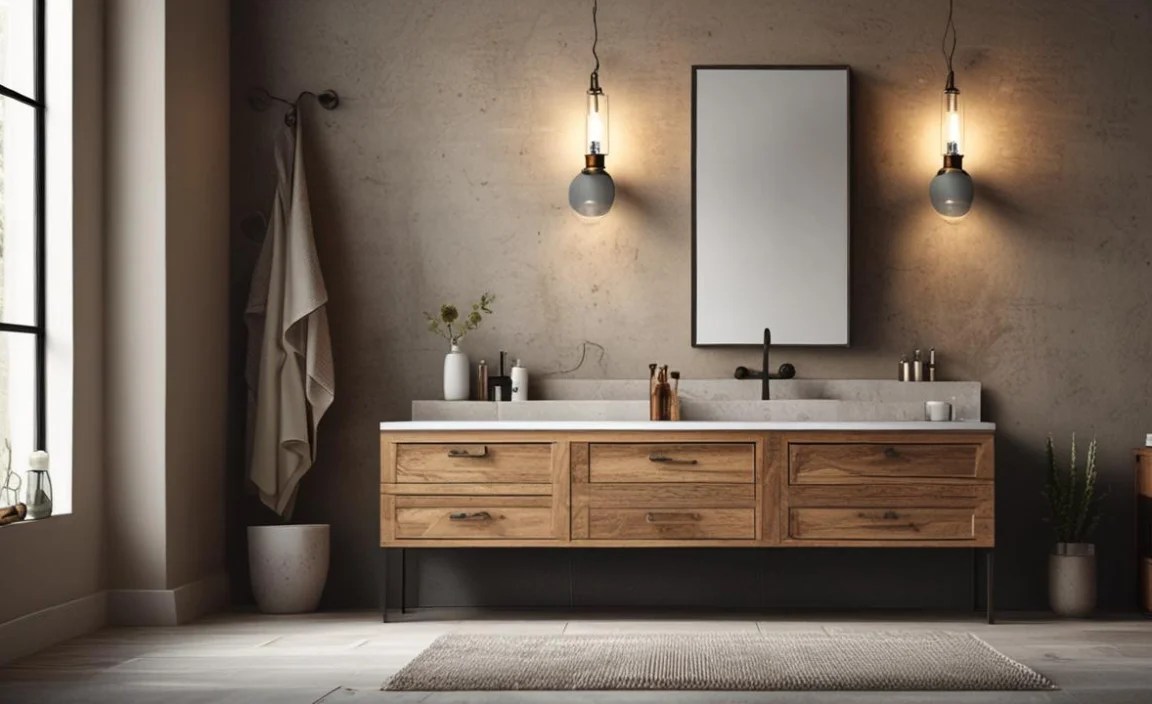
Rustic décor brings the beauty of nature indoors. Think natural wood, aged metal, and cozy textures. It creates a feeling of warmth, comfort, and relaxation – perfect for a bathroom sanctuary. Unlike fleeting trends, rustic style has a timeless appeal that makes your home feel grounded and inviting. Plus, by making your own accessories, you save money and ensure your bathroom truly reflects your personal taste. It’s about adding character, not just decorating. You get to choose the exact look and feel, making your space genuinely one-of-a-kind.
Getting Started: Essential Tools & Materials
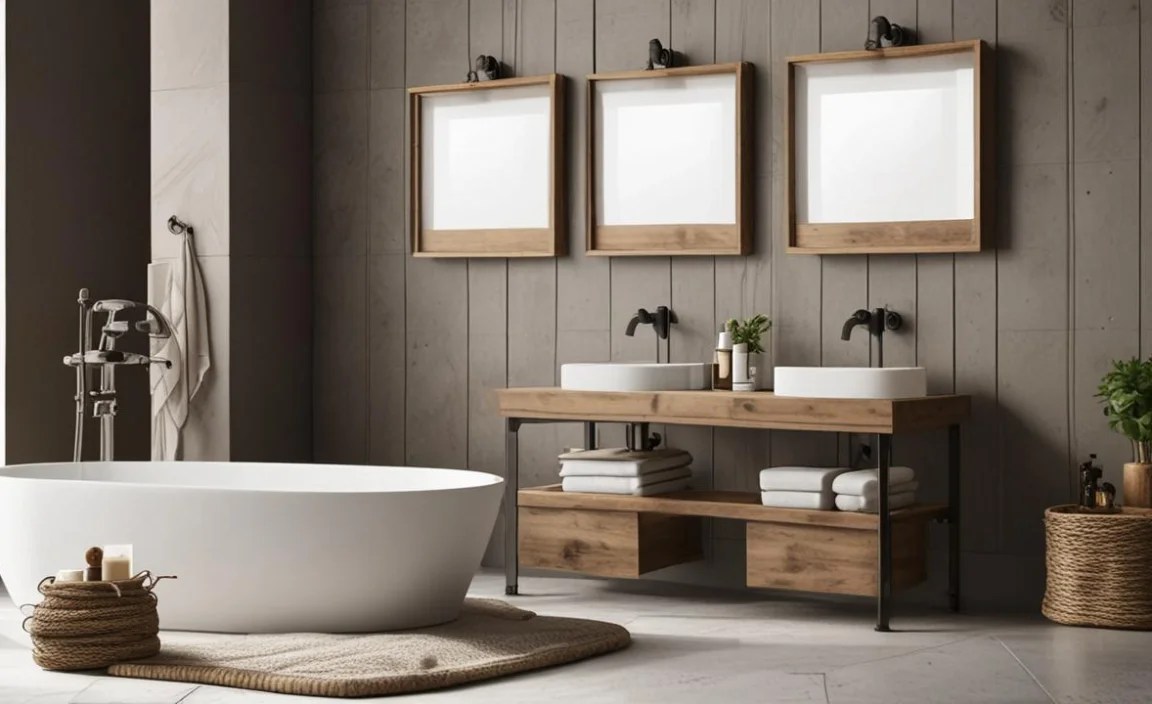
Before we jump into projects, let’s gather what you’ll need. Don’t be intimidated; most of these are basic items you might already have or can easily find. Safety first, always! Make sure you have safety glasses and gloves for any project involving cutting or sanding.
Must-Have Tools:

- Measuring Tape: For accurate sizing.
- Pencil: For marking cuts.
- Saw (Hand Saw or Jigsaw): For cutting wood. A hand saw is great for small projects and beginners.
- Sandpaper (various grits, e.g., 80, 120, 220): For smoothing rough edges.
- Drill with Drill Bits: For creating holes for screws or mounting.
- Screwdriver Set: Manual or electric, for assembling pieces.
- Clamps: To hold pieces together while glue dries or during assembly.
- Paintbrushes: For applying stains, paints, or sealants.
- Safety Glasses: Protect your eyes.
- Work Gloves: Protect your hands.
Common Rustic Materials:
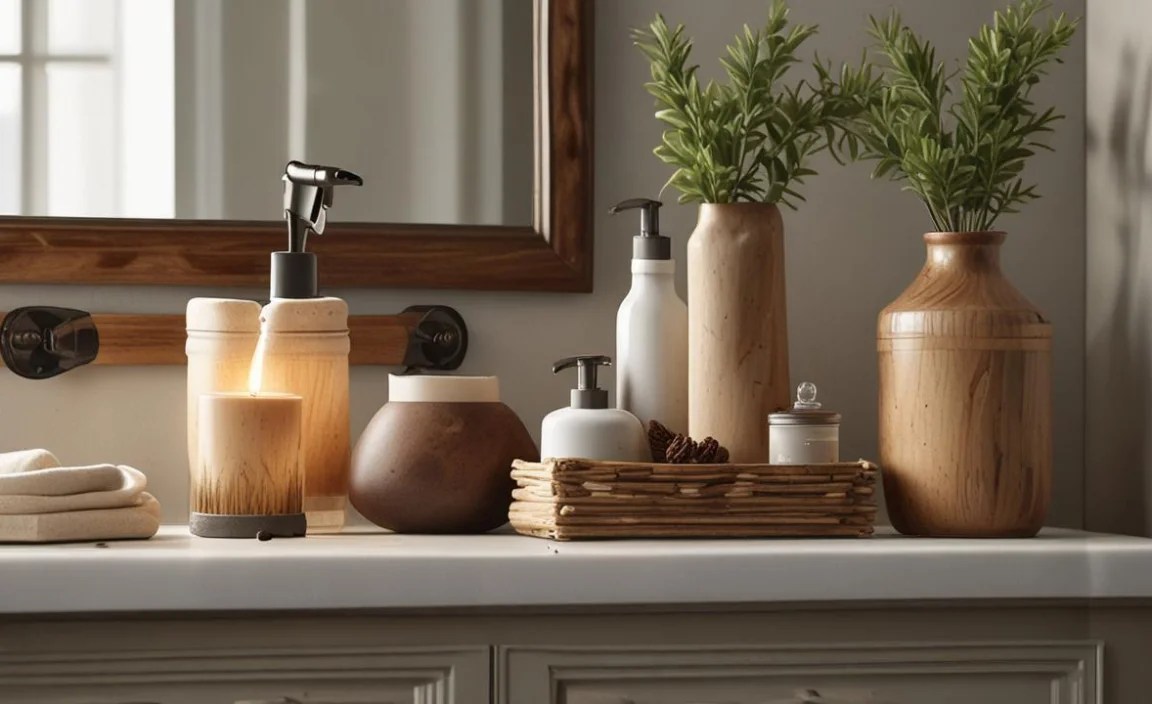
- Reclaimed Wood or Pine Boards: Look for character! Old fence pickets, pallet wood (ensure it’s heat-treated, not chemically treated), or barn wood are fantastic. Even new pine can be “distressed” to look old. You can often find affordable wood at local lumber yards or even online marketplaces.
- Metal Hardware: Think old hinges, drawer pulls, pipes, or brackets. Check antique stores, salvage yards, or even hardware stores for interesting pieces.
- Rope or Twine: Natural jute or sisal rope adds texture and a nautical/farmhouse feel.
- Stains and Sealants: Wood stains in dark, natural tones (like walnut, oak, or even a gray wash) enhance the rustic look. A clear sealant protects your creations.
- Paint: Chalk paint or mineral paint in muted, earthy tones (creams, grays, deep greens, blues) work well.
- Glass Jars or Bottles: Repurpose old jam jars, mason jars, or decorative bottles for storage.
DIY Rustic Bathroom Accessories: Step-by-Step Projects

Let’s bring some rustic charm to your bathroom! These projects are designed for beginners and offer a big impact with simple steps.
Project 1: Reclaimed Wood Towel Bar

A simple wooden towel bar adds instant rustic warmth. It’s a perfect beginner woodworking project.
Materials:
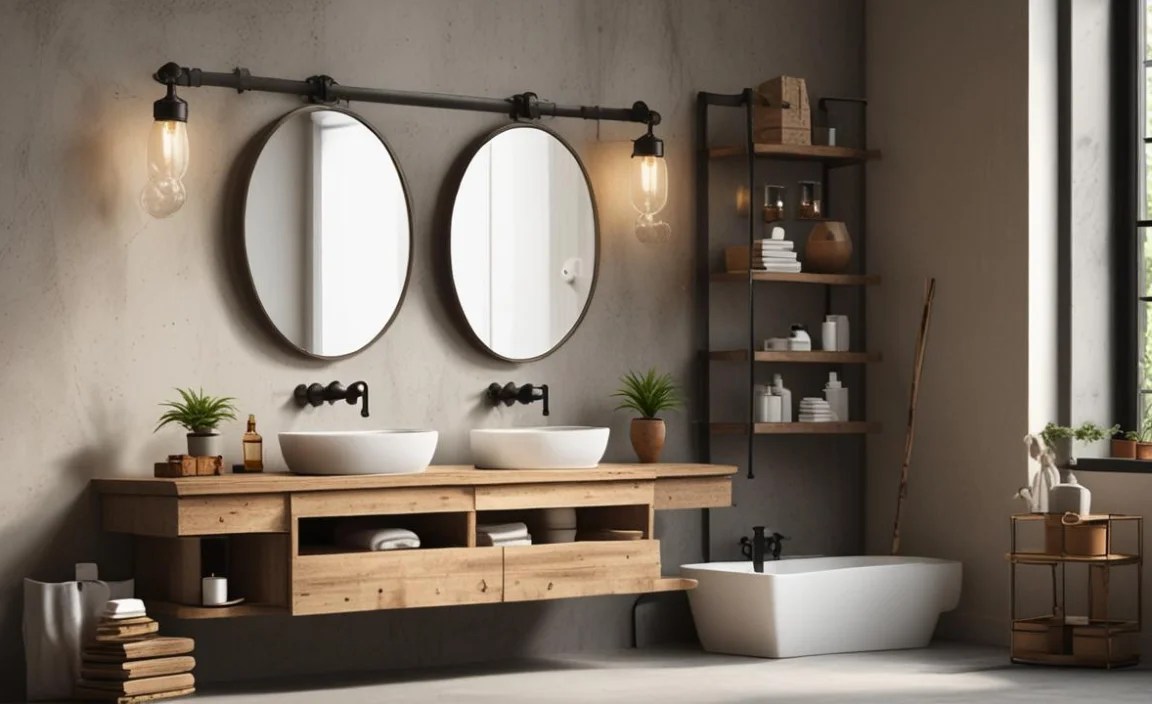
- 1 piece of reclaimed wood (approx. 18-24 inches long, 3-5 inches wide, 1 inch thick)
- 2 metal pipe fittings or sturdy metal brackets (e.g., cast iron shelf brackets, or 1/2 inch plumbing fittings with flanges)
- Wood screws (appropriate length for your wood thickness)
- Screws or anchors for mounting to the wall (depending on your wall type)
- Wood stain or paint (optional)
- Clear sealant (optional)
Tools:
- Measuring Tape
- Pencil
- Drill with drill bits
- Screwdriver
- Sandpaper
- Safety Glasses
- Work Gloves
Steps:

- Prepare the Wood: If using reclaimed wood, clean it thoroughly to remove dirt and debris. Sand all surfaces and edges until smooth, paying attention to any rough spots or splinters. Use a coarser grit (like 80 or 120) for initial smoothing and a finer grit (like 220) for a smoother finish. Wipe away dust.
- Stain or Paint (Optional): If desired, apply wood stain to achieve a darker, aged look. Follow the product instructions, usually applying with a brush or rag and wiping off excess. Let it dry completely. You can also paint it with chalk paint or a muted color.
- Seal the Wood (Optional): Once dry, apply a clear sealant like polyurethane or a wax finish to protect the wood from moisture. Let it cure fully according to the product’s instructions.
- Mark Bracket Placement: Decide where you want your towel bar to hang on the wall. Then, measure and mark the wood piece where the brackets or flanges will attach. Ensure they are evenly spaced and the wood is centered over them. You can hold the bracket against the wood and mark the screw hole locations.
- Attach Brackets (to Wood): If using pipe fittings, screw the flanges onto the wood. If using brackets, pre-drill pilot holes and then securely attach the brackets to the underside or back of the wood piece using wood screws. Ensure they are level and firmly attached.
- Mark Wall Placement: Hold the finished wood bar against the wall at your desired height. Use a level to ensure it’s straight. Mark the screw hole locations for the brackets onto the wall.
- Mount to Wall: If mounting into wall studs, pre-drill pilot holes into the studs. If not mounting into studs, use appropriate wall anchors for your wall type (e.g., drywall anchors). Secure the towel bar to the wall by screwing through the brackets into the studs or anchors.
Project 2: Mason Jar Soap Dispenser
Transform a simple mason jar into a charming liquid soap or lotion dispenser. This is a fantastic upcycling project.
Materials:
- 1 wide-mouth mason jar with a lid
- 1 replacement pump soap dispenser top (often found in craft or hardware stores, or you can repurpose one from an old dispenser)
- Optional: Twine or jute rope, decorative metal band, or a bit of paint
Tools:

- Drill with a bit large enough to fit the pump’s straw
- Sandpaper (optional, for smoothing edges)
- Pliers (optional, if modifying a pump)
Steps:

- Prepare the Lid: The key is to make a hole in the mason jar lid for the dispenser pump’s straw. If the pump top has a threaded base, you might need to remove the inner seal of the lid.
- Make the Hole: Carefully drill a hole in the center of the mason jar lid. The hole should be just large enough for the pump’s straw to pass through. If you don’t have a drill bit for metal, you can sometimes use a rotary tool (like a Dremel) or even carefully hammer and punch to create a hole, though drilling is cleaner.
- Smooth Edges (Optional): If the drilled hole has sharp edges, gently sand them with fine-grit sandpaper or use pliers to carefully flatten any burrs.
- Assemble the Pump: Insert the straw of your soap dispenser pump through the hole in the lid from the top. Screw the lid onto the mason jar securely.
- Decorate (Optional): For extra rustic flair, tie a piece of jute twine or rope around the neck of the jar. You could also paint some of the metal parts of the pump or lid, or wrap a decorative metal band around the jar.
- Fill and Use: Fill the mason jar with your liquid soap or lotion. Screw the lid with the pump back on tightly. It’s ready to dispense!
Project 3: Rope-Wrapped Toilet Paper Holder

Add a touch of coastal or farmhouse rustic charm with a toilet paper holder wrapped in natural rope.
Materials:
- 1 empty cardboard tube (from paper towels or toilet paper)
- Jute or sisal rope (enough to cover the tube generously)
- Hot glue gun and glue sticks
- Scissors
- Optional: 2 small eye hooks or D-rings for wall mounting
- Optional: Spray paint (e.g., matte black, oil-rubbed bronze) for the eye hooks
Tools:
- Hot Glue Gun
- Scissors
- Safety Glasses (when working with hot glue)
Steps:

- Prepare Tube: If using a paper towel tube, cut it to the desired length for a single toilet paper roll (usually around 5-6 inches). Ensure the ends are cut cleanly.
- Start Gluing Rope: Apply a line of hot glue near one end of the cardboard tube. Press the end of your jute rope firmly into the glue. Let it set for a moment.
- Wrap the Tube: Begin wrapping the rope tightly around the tube, ensuring each new wrap presses snugly against the previous one. Apply glue in small sections as you go to keep the rope secure. Work your way around the entire length of the tube.
- Finish Wrapping: When you reach the other end, apply a final line of glue and press the end of the rope firmly into it. Trim any excess rope with scissors. Ensure the ends are neatly tucked and secured.
- Add Mounting Hardware (Optional): If you plan to mount this holder to the wall instead of just hanging it on a hook, screw small eye hooks or D-rings into the sides of the tube, near the top. You can spray paint these hardware pieces with matte black or oil-rubbed bronze spray paint for a more finished look. Let them dry completely.
- Install: You can place this holder on a shelf, hang it from a hook, or mount it to the wall using screws through the eye hooks (ensure you use wall anchors for drywall).
Project 4: Distressed Wood Mirror Frame

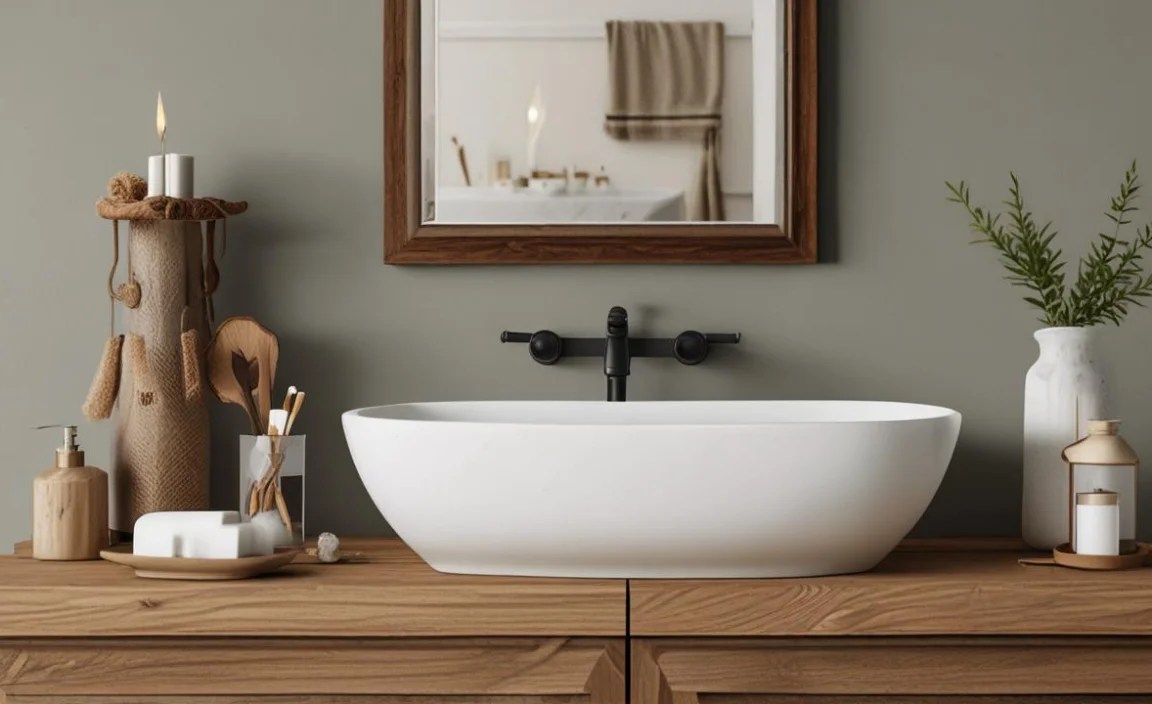
Give an ordinary mirror a rustic makeover with a distressed wood frame. This can elevate any bathroom’s aesthetic.
Materials:
- An existing mirror with a basic frame, or a mirror you want framed
- Wood planks or craft wood (e.g., fence pickets, thin pine boards, hobby wood)
- Wood glue
- Brad nails or small finishing nails
- Wood stain (e.g., dark walnut, gray wash)
- White or cream chalk paint or mineral paint
- Clear wax or poly sealant
- Sandpaper (various grits)
- Optional: Angled brackets for reinforcing corners
Tools:
- Measuring Tape
- Pencil
- Saw (hand saw or miter saw for clean cuts)
- Hammer or Brad Nailer
- Drill with small bit (for pilot holes if needed)
- Orbital Sander (optional, for faster distressing)
- Paintbrushes
- Safety Glasses
- Work Gloves
Steps:
- Measure and Cut Wood: Measure the dimensions of your mirror’s existing frame or the outer edge if you’re building from scratch. Cut your wood planks to create a new frame around the mirror. For corners, use a 45-degree miter cut for a professional look, or simple butt joints for ease. You’ll need four pieces: two for the sides and two for the top/bottom.
- Prepare Wood: Sand the roughness off the wood planks if needed. If using new wood, you’ll want to “distress” it to give it an aged look. A few ways to do this include:
- Hitting it lightly with a hammer or chain.
- Using a wire brush to create texture.
- Using a chisel to create small dents and gouges.
Then, sand any very sharp or dangerous edges.
- Paint and Stain: For a classic distressed look:
- Apply a base coat of your chosen dark stain (e.g., walnut). Let it dry completely.
- Apply a layer of white or cream chalk paint (or mineral paint). Don’t aim for perfect coverage; let some of the stain show through.
- Once the chalk paint is dry, use sandpaper (start with a medium grit like 120) to lightly sand the edges and prominent areas. This will reveal the darker stain underneath, creating a worn, aged effect.
Wipe away dust.
- Assemble the Frame: Apply wood glue to the edges of the wood pieces where they will join. Press them together and secure with brad nails or finishing nails for added strength. Use clamps to hold them while the glue dries. If using corner brackets, attach them on the back for reinforcement.
- Attach to Mirror: Carefully place your mirror face down on a protected surface. Position the new wood frame around it. Apply wood glue to the back edges of the wood frame where it will meet the mirror. Press the frame onto the mirror. For added security, you can carefully nail small finishing nails through the frame into the edge of the mirror’s backing (if it has one), or use strong adhesive strips appropriate for mirrors. Ensure the frame is flush with the mirror’s edge.
- Seal and Hang: Once the glue is fully dry, apply a coat of clear wax or a matte poly sealant to protect the paint and wood. Allow it to cure. Add hanging hardware to the back of the frame if needed, ensuring it’s rated for the weight of the mirror.
Project 5: Floating Wood Shelves with Pipe Supports

Industrial rustic charm comes alive with simple floating shelves supported by pipe fittings. These are surprisingly sturdy and make a statement.
Materials:

- Solid wood board(s) for shelves (pine, oak, or reclaimed wood), cut to desired length and depth (e.g., 24 inches long, 8 inches deep, 1.5 inches thick)
- Pipe fittings: 4 elbows, 4 flanges, and 2 short pipe nipples (per shelf) – choose a finish like black iron or galvanized steel.
- Wood screws (to attach flanges to the shelf)
- Wall screws and anchors (appropriate for your wall type)
- Wood stain and sealant (optional)
Tools:
- Measuring Tape
- Pencil
- Drill with drill bits
- Screwdriver
- Level
- Stud Finder
- Sandpaper
- Safety Glasses
- Work Gloves
Steps:
- Prepare Shelves: If using raw wood, sand it smooth. Apply your desired stain and let it dry. Then, apply a protective sealant.
- Assemble Pipe Supports: For each shelf, screw a short pipe nipple into each of two elbows. Then, screw a flange onto the other end of each elbow. This creates two “L” shaped pipe assemblies where the flange will attach to the shelf bracket.
- Mark Flange Placement on Shelf: Decide on the placement of your pipe supports on the underside of the shelf. They should be positioned to provide good support but not interfere with what you plan to put on the shelf. Hold the flange against the wood and mark the screw holes with a pencil. Repeat for all four flanges.
- Attach Flanges to Shelf: Pre-drill pilot holes at the marked locations. Then, use wood screws to securely attach the four flanges to the underside of the wooden shelf.
- Locate Wall Studs: Use a stud finder to locate wall studs where you want to mount your shelves. Marking studs is crucial for strong support.
- Mark Shelf Position on Wall: Hold the shelf against the wall at the desired height. Use a level to ensure it’s perfectly horizontal. Mark the wall through the screw holes in the flanges. Ensure your marks align with the wall studs.
- Mount Shelves: If mounting into studs, pre-drill pilot holes into the studs. If you cannot align with studs for all holes, use appropriate heavy-duty wall anchors. Secure the shelf to the wall by screwing through the flanges into the studs or anchors.
- Final Check: Ensure the shelves are level and securely fastened.
For more on safely anchoring shelves, consult resources like <a
