
Transform your cramped bathroom into a functional and stylish oasis with these genius DIY small bathroom accessories. Simple projects boost storage, organization, and charm without breaking the bank, empowering you to create a space you’ll love.
Ever feel like your small bathroom is a black hole for towels and toiletries? You’re not alone! Many of us struggle to maximize the limited space in our bathrooms. It can be frustrating when everyday items seem to have no home, leading to clutter and a less-than-relaxing atmosphere. But don’t worry! With a few smart DIY projects, you can add essential storage and style, making your tiny bathroom feel much bigger and more organized. This guide will walk you through simple, beginner-friendly ideas that will boost your bathroom’s utility and charm. Get ready to unlock the full potential of your small space!
Small Bathroom Accessories DIY: Genius Essentials for Maximizing Space

Welcome to the world of smarter, more functional small bathrooms! If your bathroom feels more like a closet than a sanctuary, you’ve come to the right place. We’re diving into the realm of DIY small bathroom accessories – the kind that don’t just look good, but actually solve problems. Think clever storage solutions, space-saving designs, and a touch of personal style, all achievable with simple tools and readily available materials. No advanced carpentry skills needed here! We’ll empower you to transform your little washroom into a tidy, inviting space that works for you.
Why Go DIY for Small Bathroom Accessories?

Small bathrooms present unique challenges, but also fantastic opportunities for creative solutions. Store-bought organizers can be expensive and often don’t fit quite right. DIY, on the other hand, offers the ultimate flexibility. You can tailor each accessory to the precise dimensions and needs of your space. Plus, there’s a unique satisfaction in building something that perfectly solves a problem in your home.
DIY projects for small bathrooms are also budget-friendly. You can repurpose materials, find great deals on hardware, and avoid the markups of retail stores. Most importantly, these projects are beginner-friendly. We’ll focus on simple techniques that build your confidence and result in functional, stylish additions to your bathroom.
1. The Vertical Towel Rack: Reaching New Heights

In a small bathroom, floor space is precious. That’s why going vertical is a game-changer. A wall-mounted towel rack can hold multiple towels without taking up an inch of floor real estate. This DIY project is surprisingly simple and can be customized to your style.
Materials & Tools You’ll Need:
- Wooden planks (e.g., pine or cedar, at least 1/2 inch thick)
- Wood screws (appropriate length for your wood thickness)
- Wall anchors if mounting into drywall
- Sandpaper (medium and fine grit)
- Wood stain or paint (optional)
- Mounting brackets or sturdy screws for wall attachment
- Drill with drill bits
- Screwdriver
- Level
- Tape measure
- Pencil
Step-by-Step: Building Your Vertical Towel Rack
- Measure and Cut: Decide on the height and width of your towel rack. Cut your wooden plank(s) to the desired length. For a multi-tier rack, cut additional planks for the shelves.
- Sand Smooth: Sand all the cut edges and surfaces until they are smooth to the touch. This is important for safety and a professional finish. Start with medium-grit sandpaper and finish with fine-grit.
- Assemble (if applicable): If you’re building a multi-tiered rack, attach the shelf planks to the main vertical board using screws. Pre-drilling pilot holes can prevent the wood from splitting. Use a level to ensure each shelf is straight.
- Finish: Apply your chosen wood stain or paint. Allow it to dry completely according to the product instructions. A water-resistant sealant is highly recommended for bathroom use.
- Mounting: Determine the best location on your wall. Use a level to mark where the mounting brackets or screws will go. If you’re not drilling into a wall stud, use appropriate wall anchors for a secure hold. Attach the rack firmly to the wall using your brackets or screws.
This simple rack adds significant towel storage. You can even add hooks to the sides for hanging loofahs or bath brushes!
2. Corner Shelving Unit: Utilizing Unused Space
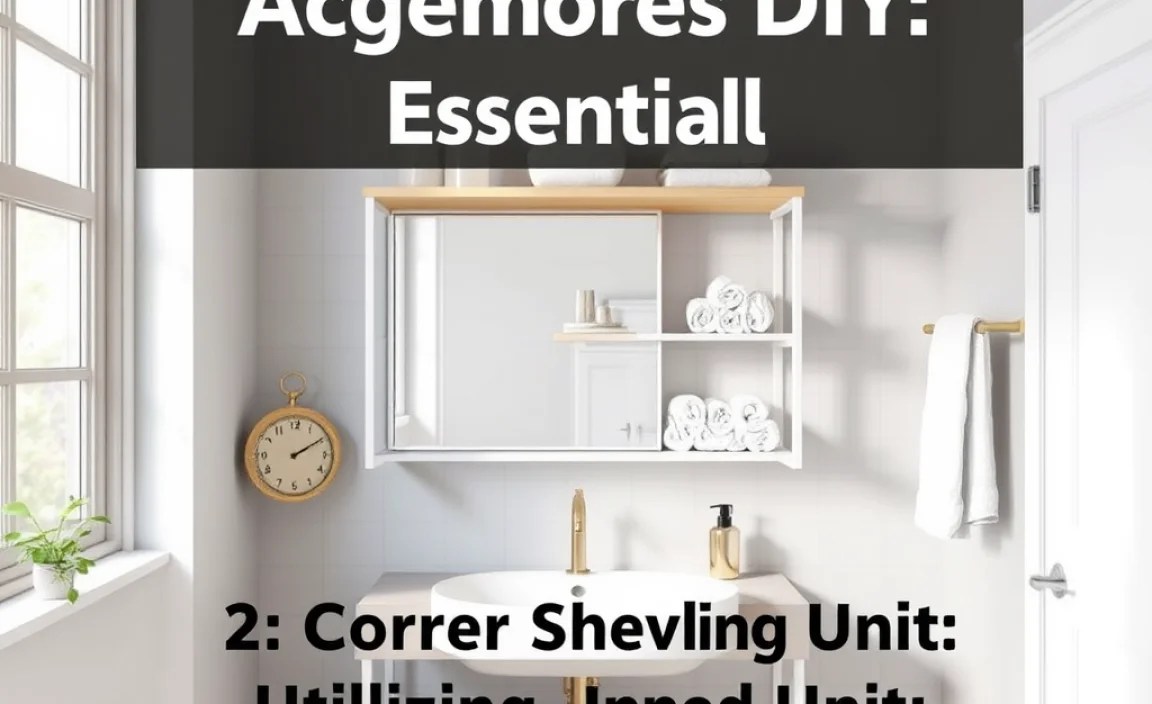
Those awkward corners in small bathrooms often go to waste. A DIY corner shelf unit is a fantastic way to add storage for toiletries, decorative items, or even extra toilet paper rolls, all while fitting neatly into these often-neglected spots.
Materials & Tools You’ll Need:
- Plywood or MDF (moisture-resistant recommended)
- Wood screws
- Wood glue
- L-brackets or corner braces
- Sandpaper
- Paint or sealant
- Drill
- Screwdriver
- Jigsaw or hand saw (for cutting curved corners, optional)
- Tape measure
- Pencil
- Level
Step-by-Step: Crafting Your Corner Shelves
- Measure Your Corner: Measure the height you want your shelving unit to reach and the depth of the corner you’re utilizing.
- Cut the Shelves: You’ll need to cut pieces of wood that fit the corner. A simple way is to cut square or rectangular shelves and then trim them to fit. For a more polished look, you can cut them into quarter-circle or triangular shapes to perfectly hug the corner. Use a jigsaw for curved cuts.
- Sand and Finish: Sand all edges smoothly. Apply a moisture-resistant paint or clear sealant to protect the shelves from humidity. Multiple coats are best.
- Assemble the Unit: Decide on the spacing for your shelves. You can attach them directly to the wall using L-brackets, or you can create a freestanding unit by attaching them to a central support. For wall-mounted shelves, use L-brackets on the back edges, screwing them into the wall studs or using anchors.
- Install: Carefully position your shelves in the corner. Use a level for each shelf to ensure they are perfectly horizontal. Secure them with screws through the L-brackets into the wall. If building a freestanding unit, ensure it’s stable before placing items on it.
Corner shelves are ideal for holding small bottles of shampoo, conditioners, lotions, or decorative items. They keep surfaces clear and add a functional aesthetic.
3. Over-the-Toilet Media Shelf

The space above your toilet tank is prime real estate. Instead of just leaving it empty, install a slim shelf for your media – think small books, a speaker, or even a small plant. This adds a touch of personality without encroaching on the functional space.
Materials & Tools You’ll Need:
- A sturdy shelf board (e.g., 1×6 or 1×8 lumber, MDF, or even a pre-made shelf)
- Two shelf brackets
- Wood screws (for attaching brackets to shelf and shelf to wall)
- Wall anchors (if not hitting studs)
- Sandpaper
- Paint or stain (and sealant)
- Drill
- Screwdriver
- Level
- Tape measure
- Pencil
Step-by-Step: Installing the Media Shelf
- Measure and Cut: Measure the width of the space above your toilet. Cut your shelf board to fit, leaving a few inches of clearance on either side.
- Prepare the Shelf: Sand the shelf smooth. If desired, paint or stain it to match your bathroom décor. Apply a sealant for moisture protection.
- Position Brackets: Place the shelf board upside down on a flat surface. Position your shelf brackets evenly spaced, ensuring they are a safe distance from the ends of the shelf. Flip the shelf board right-side up and mark the bracket positions.
- Attach Brackets to Shelf: Align the brackets with your marks and screw them into the underside of the shelf.
- Mark Wall Placement: Hold the shelf unit (or just the brackets if it’s easier) against the wall above the toilet. Use your level to ensure the shelf will be straight. Mark the screw holes for the brackets on the wall.
- Install Shelf: If you’re not drilling directly into studs, install wall anchors at your marked spots. Then, secure the shelf unit to the wall by screwing through the brackets into the anchors or studs.
This shelf is perfect for holding a small tablet for reading, a Bluetooth speaker, or a minimalist succulent. It’s a simple functional upgrade that adds a lot of value.
4. Magnetic Spice Rack on Cabinet Door
This is a brilliant way to add discreet storage. Many bathrooms have cabinet doors under the sink or elsewhere. Adding small magnetic containers to the inside of these doors can hold things like bobby pins, cotton swabs, small first-aid items, or even medication. You won’t see it, but you’ll know it’s there!
Materials & Tools You’ll Need:
- Small metal containers or tins (like those for spices or mints)
- Strong neodymium magnets (rated for the weight of the container plus its contents)
- Strong adhesive (e.g., E6000, Gorilla Glue, or industrial-strength double-sided tape)
- Rubbing alcohol or surface cleaner
- Optional: Labels
Step-by-Step: Creating the Magnetic Organizer
- Clean Surfaces: Thoroughly clean the back of your metal containers and the inside of your cabinet door with rubbing alcohol or a good surface cleaner. Let it dry completely.
- Attach Magnets: Apply a generous amount of strong adhesive to the back of each magnet. Carefully press each magnet onto the back of a metal container. Hold firmly for the recommended drying time on the adhesive packaging.
- Repeat and Dry: Repeat for all your containers. Allow the adhesive to cure fully (usually 24-72 hours, check product instructions) before proceeding. This is crucial for a strong bond.
- Place Containers: Once cured, simply place your magnetic containers onto the inside of your chosen cabinet door. Arrange them as desired.
- Load Up: Fill them with your small bathroom essentials. You can add labels to the outside of the containers for easy identification.
This project is incredibly easy and offers hidden storage that keeps surfaces decluttered. It’s a genius way to utilize normally unused space. For more information on refrigerator magnets and their strength, you might find resources from magnet manufacturers or consumer product safety advisories helpful.
5. DIY Shower Caddy Insert
Many shower caddies can fall short in organizing smaller items. A custom insert can elevate its functionality, keeping bottles from tipping and small items from getting lost.
Materials & Tools You’ll Need:
- Waterproof material (e.g., a plastic cutting board, a thin piece of PVC sheet, or even a modified plastic storage bin)
- Measuring tape
- Utility knife or a fine-toothed saw
- Drill with small drill bits (for drainage)
- Optional: Flexible waterproof sealant
Step-by-Step: Crafting the Insert
- Measure Your Caddy: Take precise measurements of the interior of your existing shower caddy. Note the dimensions of compartments and any dividers.
- Cut the Material: Transfer your measurements onto your waterproof material. Cut out the pieces needed to create compartments or a base for your caddy. For example, if your caddy has a wide open space, you might cut a piece to divide it into smaller sections.
- Add Drainage: If you’re creating inserts that will hold items directly, drill several small holes in the bottom of each compartment for drainage. This prevents water from pooling and causing mildew.
- Assemble: Fit the cut pieces into your shower caddy. If the pieces are meant to fit snugly, you can use a bit of waterproof sealant to hold them in place if needed, but often a friction fit is sufficient.
- Test It Out: Place your bottles and items into the newly organized caddy. Ensure everything is stable and water can drain away effectively.
This DIY insert turns a standard shower caddy into a highly organized system. It’s a small change that makes a big difference in keeping your shower essentials tidy and accessible.
More Genius Small Bathroom Accessory Ideas
The possibilities for small bathroom DIY are endless! Here are a few more quick ideas to spark your creativity:
- Floating Shelves: These create an illusion of more space by appearing to “float” on the wall, perfect for holding a small plant or decorative items.
- Repurposed Mason Jar Organizers: Mount mason jars to the wall or to a piece of wood for holding toothbrushes, makeup brushes, or cotton swabs. Ensure the mounts are secure.
- Behind-the-Door Hooks: Install simple adhesive or screw-in hooks on the back of your bathroom door for hanging robes, towels, or even a laundry bag.
- Vertical Toilet Paper Holder: Use a narrow, tall stand or a wall-mounted dispenser that holds multiple rolls, saving space by stacking vertically.
- DIY Bath Mat: Create a custom-sized bath mat from absorbent, quick-drying materials like rope or even old towels, sewn together.
Choosing the Right Materials and Finishes
When undertaking any DIY project for a bathroom, especially a small one, material selection is key. Bathrooms are naturally humid environments, so moisture resistance is your top priority. Here’s a quick guide:
| Material Type | Pros | Cons | Best For |
|---|---|---|---|
| Treated Wood (e.g., Cedar, Redwood) | Naturally moisture and rot-resistant, durable, attractive | Can be more expensive, requires proper sealing for full protection | Shelving, towel racks, cabinet frames |
| Marine-grade Plywood or MDF | Specifically designed for wet environments, stable | Can be harder to find, may require painting or sealing | Shelving, cabinet inserts, backings |
| Plastic (PVC, Acrylic) | Completely waterproof, lightweight, easy to clean, often inexpensive | Can look less premium, might scratch or warp, requires specific glues | Shower caddy inserts, drawer dividers, small organizers |
| Metal (Stainless Steel, Powder-coated Aluminum) | Durable, rust-resistant (if properly treated), modern look | Can be more costly, requires specific tools for cutting/drilling, can feel cold | Shelving brackets, towel bars, small accessory holders |
| Tile/Stone (for larger projects) | Extremely durable, waterproof, elegant | Heavy, requires specialized tools and skills, grout needs maintenance | Not typically for small accessories but good to know for context |
Finishing Touches: Always seal your DIY projects with a good quality, water-resistant sealant or varnish, especially if you’re using non-treated wood or materials not inherently waterproof. This is your main defense against moisture damage and mildew. For painted finishes, use paint designed for high-moisture areas.
Safety First!
Working with tools and materials requires a bit of caution, especially in tight spaces. Always remember these safety tips:
- Wear Protection: Safety glasses are a must when cutting or drilling. Gloves protect your hands from splinters and chemicals.
- Ventilation: Use paints, stains, and adhesives in a well-ventilated area. Open windows or use a fan.
- Electrical Safety: If your project involves any electrical components (like adding a new light fixture or outlet), always turn off the power at the circuit breaker first. If you’re not comfortable with electrical work, hire a professional. The National Fire Protection Association (NFPA) offers extensive resources on electrical safety standards.
- Secure Mountings: Ensure all shelves and racks are securely fastened to the wall using appropriate anchors or studs. A falling shelf can be dangerous.
- Tool Use: Familiarize yourself with your tools. Read manuals and watch tutorials if you’re unsure.
Conclusion
Transforming a small bathroom from cluttered to chic doesn’t require a hefty budget or professional help. By embracing simple DIY small bathroom accessories, you can unlock hidden storage, improve functionality, and add a personal touch that makes your space feel more expansive and inviting. From vertical towel racks that conquer limited wall space to discreet magnetic organizers that utilize the insides of cabinet doors, these projects empower you to make the most of every inch.
Remember, the key is clever design, smart material choices, and a willingness to get your hands a little dirty. Start with one project that solves a nagging problem in your bathroom, build your confidence, and then tackle another. You’ll be amazed at how much of a difference these genius essentials can make. So, grab your tools, get inspired, and start creating the small bathroom of your dreams – one DIY accessory at a time!
Frequently Asked Questions
What are the most common small bathroom challenges?
Common challenges include lack of storage space for toiletries and towels, limited floor area making it feel cramped, and finding places to hang items like robes and hair dryers. Often, the layout itself can feel awkward.
Are DIY bathroom accessories difficult to make?
Not at all! The DIY projects we’ll cover are designed for beginners. They use simple tools and readily available materials, focusing on straightforward steps that build confidence as you go.
What basic tools do I need for these DIY projects?
You’ll typically need a tape measure, a screwdriver set (manual or electric), a level, a drill with various bits, and possibly a saw or sandpaper depending on the project. Many projects can be done with just a few of these!
How can DIY accessories make a small bathroom look bigger?
Smart accessories can create the illusion of space by keeping surfaces clear. Vertical storage, such as wall-mounted shelves, draws the eye upward. Good lighting and well-placed mirrors, often integrated into DIY projects, also dramatically enhance the sense of openness.
Where can I find inspiration for small bathroom DIY?
Inspiration is everywhere! Look to home décor blogs, Pinterest, DIY forums, and even your own home for ideas. Sometimes, a simple change to an existing item or repurposing something from another room can spark a great DIY project.
Is it safe to do electrical work for bathroom accessories myself?
For any project involving electricity, it’s crucial to prioritize safety. If you’re unsure about wiring, even for simple fixtures like a new light or an outlet, it’s best to consult a qualified electrician. Always turn off the power at the breaker box before starting any electrical work.
What kind of materials are best for DIY bathroom accessories?
Moisture-resistant materials are key. Consider treated wood, plastic, metal, and certain types of composite boards. With proper sealing and finishing, many common materials can work well. For a natural look, reclaimed wood can be beautiful but requires diligent sealing.
