
Understanding the structure of tiles in plumbing is key to preventing leaks and ensuring durability. It involves how tiles, grout, and waterproofing systems work together to protect your walls and floors from water damage in areas like bathrooms and kitchens. This guide breaks down this essential knowledge for DIY success.
Dealing with water in our homes is a big part of life, especially when it comes to bathrooms, kitchens, and laundry rooms. We rely on tiles to keep things looking good and, more importantly, to create a barrier that stops water from reaching the walls and floors underneath. But have you ever wondered how that tiled surface actually works to keep your home dry? It’s not just about the tiles themselves; it’s about how they fit together with everything else. This can seem a bit complicated at first, but don’t worry! By the end of this guide, you’ll understand the structure of tiles in plumbing like a pro. We’ll break it down step-by-step, making it simple and clear. Let’s get started on building a more water-resistant home!
Understanding the Layers: How Tile Structures Protect Your Plumbing

When we talk about the “structure of tiles in plumbing,” we’re really talking about a system. It’s a layered approach designed to keep water exactly where it should be – in the fixtures, not in your walls or under your floors. Think of it like a protective shield. Each layer has a specific job, and they all work together to create a waterproof and durable surface.
Why This Structure Matters for Plumbing
The primary goal of any tiled surface in a wet area is to prevent water intrusion. If water finds its way behind the tiles, it can cause serious problems:
- Mold and Mildew Growth: Dampness is a breeding ground for mold, which can be harmful to health and difficult to remove.
- Material Degradation: Constant moisture can rot drywall, damage subflooring, and even weaken the structural integrity of your home.
- Plumbing Issues: Water seeping into walls can reach pipes, leading to corrosion, leaks, and costly repairs.
- Aesthetic Damage: Stains, peeling paint, and bubbling finishes are unsightly signs of water damage.
The correct tile structure acts as the first line of defense against all these issues, ensuring your plumbing system and home structure remain safe and sound. Understanding this system means you can identify potential weak points or confidently tackle DIY tiling projects.
The Core Components: Building Blocks of a Tiled System
A tile installation isn’t just tiles and grout. There’s a deliberate sequence of materials that create an effective barrier. Let’s look at the essential components, starting from the base and working our way up.
1. Substrate (The Foundation)
This is the structural layer beneath the tile. It needs to be strong, stable, and able to withstand moisture. Common substrates include:
- Cement Board: This is a popular choice for wet areas like bathrooms and kitchens. It’s made of cement and reinforcing fibers, making it highly resistant to moisture and rot. It provides a stable base for tile adhesive.
- Exterior Grade Plywood: While sometimes used, it’s not ideal for direct contact with water. It needs to be properly sealed or have a waterproofing membrane installed over it.
- Backer Board (e.g., DensShield, HardieBacker): These are specialized boards designed to be water-resistant or waterproof and provide a good surface for tile adherence.
The substrate’s role is to provide a solid, unmoving surface for the tiles. If the substrate flexes or moves, the tiles and grout can crack. For areas prone to water, like shower walls, using a moisture-resistant substrate is absolutely critical.
2. Waterproofing/Water-Resistant Membrane (The Shield)
This is arguably the most crucial layer in preventing water damage, especially in showers, tub surrounds, and around sinks. While some backer boards have inherent water-resistant qualities (like DensShield), many installations require a dedicated waterproofing membrane applied over the substrate. These membranes act as a liquid barrier.
- Liquid-Applied Membranes: These are painted or rolled onto the substrate and solidify into a seamless, waterproof layer. Brands like RedGard or Hydro Ban are common examples.
- Sheet Membranes: These are large sheets, often made of rubber or plastic, that are adhered or mechanically fastened to the substrate, creating a waterproof barrier.
- Integrated Waterproofing Boards: Some backer boards come with a factory-applied waterproofing surface, eliminating a separate step.
This membrane is designed to stop any water that might manage to penetrate the grout lines or tile surface before it can reach the sensitive substrate or the structure behind it. You can find more technical details on waterproofing standards from organizations like the Tile Council of North America (TCNA), which sets industry benchmarks for tile installation best practices.
3. Thin-Set Mortar (The Adhesive)
This is the specialized cement-based adhesive that bonds the tile to the substrate or waterproofing membrane. It’s not like standard cement; it contains polymers that enhance its bonding strength and flexibility. When applied correctly, it creates a strong, rigid bond and helps to distribute weight evenly.
- Application: Thin-set is typically applied with a notched trowel. The size of the notches depends on the tile size, ensuring even coverage on both the substrate and the back of the tile.
- Coverage: Proper coverage is essential. Gaps in thin-set coverage can create voids that trap moisture and allow tiles to become loose over time. Aim for at least 90% coverage for wall tiles and 95% for floor tiles.
The thin-set acts as a bridge, ensuring that the tiles are securely attached and that any minor imperfections in the flatness of the substrate or tile are compensated for.
4. Tiles (The Surface)
These are the visible, protective layer. Tiles are typically made from ceramic, porcelain, natural stone, or glass. They are non-porous (or very low porosity for porcelain/glazed ceramics) and are designed to withstand moisture and wear.
- Material Types: Porcelain is extremely dense and even less porous than ceramic, making it excellent for very wet areas. Glazed ceramic tiles have a protective glass coating that makes them waterproof. Natural stone can be beautiful but requires sealing to prevent staining and absorption.
- Installation: Tiles are laid with small gaps between them to allow for grout.
While tiles are the aesthetic element, their structural role is to provide a durable, easily cleanable surface that resists stains and water penetration. However, tiles alone are not waterproof. Water will eventually find its way through the grout lines.
5. Grout (The Filler)
Grout fills the spaces between tiles. It’s a cementitious material, sometimes with added polymers to improve its strength and flexibility and reduce water absorption.
- Sanded vs. Unsanded: Sanded grout is used for wider joints (1/8″ or more) and provides more strength. Unsanded grout is for narrow joints (less than 1/8″) where sand could cause tile scratching.
- Epoxy Grout: For extreme durability and water resistance, epoxy grout is an excellent, albeit more challenging, option. It’s virtually waterproof and stain-proof.
Grout’s primary function is to lock the tiles in place and provide a finished look. However, standard cementitious grout is porous and will absorb water if not sealed. This is where the waterproofing membrane behind the tile becomes indispensable.
6. Grout Sealer (The Protection)
After the grout has cured, a grout sealer is often applied. This is a liquid that penetrates the porous grout and creates a barrier that repels water and stains. It’s a vital step for standard cementitious grouts to maintain the integrity of the overall waterproof system.
- Frequency: Grout sealers need to be reapplied periodically (typically every 1-3 years, depending on the product and traffic) to remain effective.
Think of the sealer as an extra layer of protection for the grout, ensuring it doesn’t become a weak point in your waterproofing system.
Visualizing the Structure: A Cross-Section View
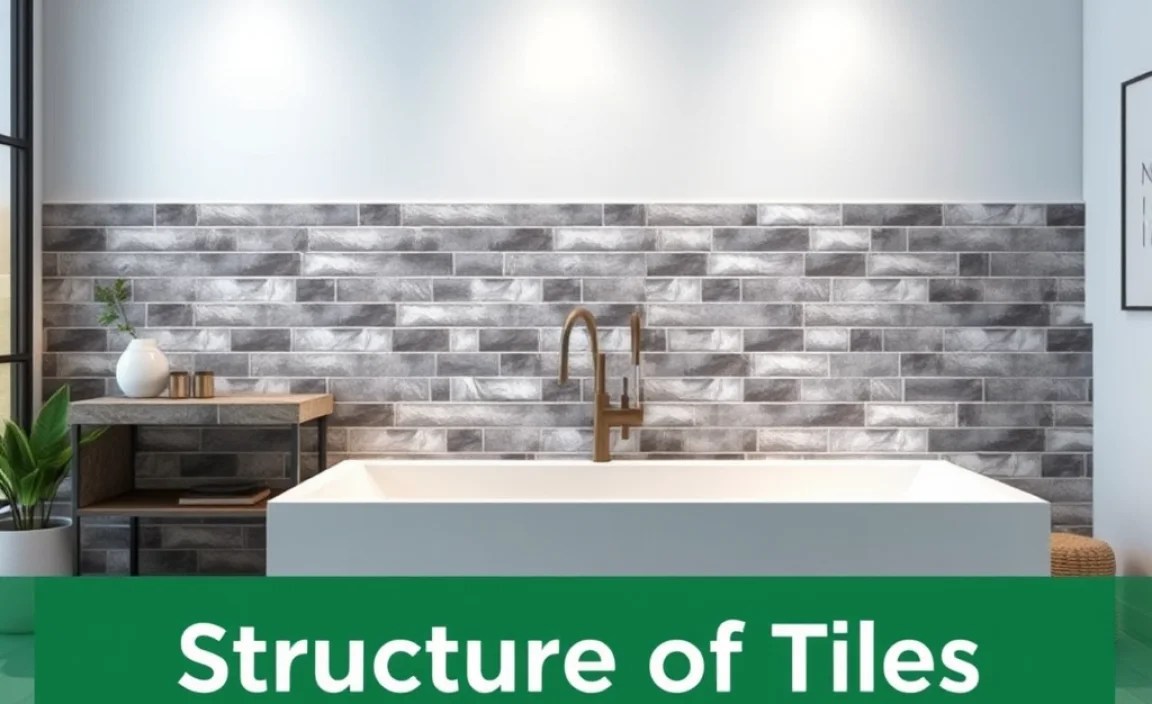
To truly grasp the structure of tiles in plumbing, it helps to visualize it as layers. Imagine slicing through a tiled wall or floor in a shower:
Typical Shower Wall Cross-Section:
From Interior to Exterior (towards the room structure):
- Tile: The visible decorative surface.
- Grout: Fills the gaps between tiles.
- Thin-Set Mortar: Bonds tiles to the membrane.
- Waterproofing Membrane: The critical barrier against water.
- Cement Board (or other substrate): Provides stable backing.
- Studs/Wall Structure: The framing of your home.
This layered approach ensures that even if water finds its way through the tile and grout, it’s stopped by the waterproof membrane before it can damage the underlying structure. This is why each layer is so important.
Key Considerations for a Robust Tile Structure
Building a durable, waterproof tiled surface involves more than just slapping on some tiles. Attention to detail in each step is crucial.
1. Proper Substrate Preparation
Before you do anything else, ensure your substrate is clean, dry, and structurally sound. Any dirt, dust, grease, or loose particles will prevent proper adhesion of subsequent layers.
- Remove old adhesives, paint, or coverings.
- Ensure the surface is level and free of damage.
- For wood-based substrates, use appropriate backer boards and consider a decoupling membrane if there’s a risk of movement.
2. Impermeable Waterproofing
This can’t be stressed enough. In wet areas, a continuous, seamless waterproof membrane is non-negotiable. This means:
- Full Coverage: No gaps or missed spots, especially at corners, edges, and around penetrations (like shower heads or faucets).
- Proper Curing: Allow liquid membranes to cure fully according to the manufacturer’s instructions before proceeding.
- Flood Testing: For showers, a flood test (filling the shower base with a few inches of water for 24 hours) after the waterproofing is installed but before tiling can help identify leaks.
3. Correct Thin-Set Application
As mentioned, good coverage is key. A notched trowel is your best friend here. The larger the tile, the larger the notches required to ensure full contact.
- Use the right type of thin-set for your tile and substrate.
- Comb the thin-set in one direction with the “teeth” of the trowel.
- Back-buttering (applying thin-set to the back of large tiles) ensures complete coverage.
The U.S. Department of Housing and Urban Development (HUD) also provides guidelines on building standards that often touch upon moisture control and material selection, reinforcing the importance of these layers.
4. Grout Joint Size and Type
The size and type of grout chosen can impact water resistance. Smaller grout joints mean less grout that can potentially absorb water. If using standard cementitious grout, consider using a high-quality sealer and reapply it regularly.
5. Proper Sealing and Maintenance
Regularly inspecting and maintaining your tiled surfaces is key to their longevity and waterproofing effectiveness. This includes checking grout lines for cracks, and reapplying grout sealer as needed.
Common Mistakes to Avoid
Many problems down the line stem from simple mistakes made during the tiling process. Being aware of these can save you a lot of headaches.
- Skipping Waterproofing: This is the most common and costly mistake in wet areas.
- Using the Wrong Adhesive: Not all adhesives are suitable for all tiles or wet environments.
- Inadequate Substrate Support: A flexible substrate will lead to cracked tiles and grout.
- Poor Grout Coverage: Gaps in grout allow water to seep behind tiles.
- Not Sealing Porous Grout: Neglecting to seal grout in wet areas is a recipe for disaster.
- Tiling Directly Over Old Tile Without Preparation: This can lead to adhesion problems and an uneven surface.
Comparing Tile Structures: Common Scenarios
The specific structure can vary slightly depending on the application. Here’s a look at a couple of common areas.
Scenario 1: Shower Wall (High Moisture Area)
This requires the most robust structure.
| Layer | Material Example(s) | Purpose |
|---|---|---|
| Tile | Porcelain, Ceramic | Aesthetic, surface protection, easy cleaning. |
| Grout | Epoxy, Polymer-modified Cementitious | Fills gaps, locks tiles. Epoxy offers superior water resistance. |
| Adhesive | Polymer-modified Thin-Set Mortar | Bonds tiles to membrane, ensures even distribution. |
| Waterproofing Membrane | Liquid Polymer, Sheet Membrane | Critical: Prevents water from reaching substrate/structure. |
| Substrate | Cement Board, DensShield | Stable, rigid, moisture-resistant backing. |
| Wall Studs/Structure | Wood or Metal Framing | Load-bearing structure of the building. |
Scenario 2: Kitchen Backsplash (Moderate Moisture Area)
This area sees splashes but not prolonged water exposure. The structure can be simpler but still needs care.
| Layer | Material Example(s) | Purpose |
|---|---|---|
| Tile | Ceramic, Glass, Stone | Aesthetic, surface protection, easy cleaning. |
| Grout | Sanded or Unsanded Cementitious | Fills gaps, locks tiles. Sealing is recommended. |
| Adhesive | Standard Thin-Set Mortar | Bonds tiles to substrate. |
| Substrate | Drywall (painted or sealed), Plywood | Provides a stable surface for tiles. |
| Wall Studs/Structure | Wood or Metal Framing | Load-bearing structure of the building. |
| Optional | Water-resistant paint or primer applied to drywall before tiling. | Adds a layer of moisture resistance. |
Note: While standard drywall can be used, it’s always better practice to use a moisture-resistant drywall or treat standard drywall with a waterproofing primer in areas prone to splashes, like behind sinks.
Tools You Might Need
For a successful tile installation that respects the structure of tiles in plumbing, having the right tools is essential:
- Notched Trowel: For applying thin-set mortar. The size of the notches depends on the tile size.
- Margin Trowel: For mixing and scooping mortar.
- Grout Float: For applying grout.
- Sponges: For cleaning excess grout.
- Buckets: For water and mixing mortar/grout.
- Tile Cutter or Wet Saw: For cutting tiles to fit.
- Utility Knife: For scoring and cutting membranes.
- Caulking Gun: If using sealant or specific adhesive tubes.
- Safety Glasses and Gloves: Essential for protection.
- Level: To ensure your tiles are straight.
- Measuring Tape: For accurate layout and cuts.
Having these tools on hand will make the process smoother and help ensure each layer of your tile structure is installed correctly. You can find a great selection of tiling tools at most hardware stores or online retailers.
Frequently Asked Questions (FAQ)
Q1: Do I really need a waterproofing membrane in my shower?
A1: Yes, absolutely. While tiles and grout can resist some water, they are not entirely waterproof. A dedicated waterproofing membrane is the most critical component in preventing water damage behind your shower tiles, protecting your walls and subfloor from mold and rot.
