
Transform your bathroom with clever, personalized DIY toothbrush holder designs that offer genius storage solutions, decluttering your space and adding a unique touch.
Keeping your toothbrushes tidy and hygienic can be a surprisingly common bathroom challenge. Loose toothbrushes can easily fall over, get splashed, or become unappealing clutter on your counter or in your cabinet. But what if you could create a stylish and practical solution yourself? This guide will walk you through simple, fun, and effective DIY toothbrush holder designs that are perfect for any skill level. Get ready to declutter your sink area and add a custom flair to your bathroom!
Why DIY Toothbrush Holders? The Unexpected Benefits
You might be thinking, “Why bother making a toothbrush holder when I can just buy one?” That’s a fair question! But taking a DIY approach brings a host of advantages that store-bought options often can’t match. It’s about more than just storage; it’s about personalization, functionality, and even a bit of eco-friendly crafting.
Here’s why diving into DIY toothbrush holder design is a brilliant idea:
Customization: You get exactly what you want. Choose the size, the number of slots, the materials, and the style to perfectly match your bathroom décor.
Space Saving: Traditional holders can be bulky. DIY allows you to create compact solutions that fit specific nooks or wall spaces, maximizing your bathroom real estate.
Hygienic Solutions: Many DIY designs can promote better airflow and drainage, helping your toothbrushes dry faster and stay cleaner.
Cost-Effective: Using repurposed materials or simple craft supplies can be significantly cheaper than purchasing a specialized holder.
Unique Aesthetic: Add a personal touch and a conversation starter to your bathroom with a holder you made with your own hands.
Sustainability: Upcycling old items like jars, cans, or wood scraps is a fantastic way to reduce waste and give new life to old materials.
Materials & Tools: Your DIY Toolkit
Before we dive into specific projects, let’s get you acquainted with the kinds of materials and tools that will be your best friends. Don’t worry if you don’t have everything; most of these are readily available at craft stores, hardware stores, or even around your home.
Common Materials for DIY Toothbrush Holders:
Glass Jars/Vases: Mason jars, old jam jars, or small decorative vases work great.
Tin Cans: Cleaned and deburred food cans (ensure no sharp edges!).
Wood Scraps: Plywood, pine, or even reclaimed pallet wood.
PVC Pipe Sections: Easy to cut and assemble, and water-resistant.
Cardboard Tubes: Sturdy paper towel or wrapping paper rolls.
Ceramic Pots: Small planters or decorative pots.
Plastic Containers/Bottles: Sturdy yogurt containers or durable plastic bottles.
Clay/Air-Dry Clay: For molding custom shapes.
Hot Glue Sticks: For quick and secure assembly.
Waterproof Sealant/Varnish: To protect materials, especially wood, from moisture.
Paint/Spray Paint: For color and decoration.
Decorative Elements: Rope, twine, beads, fabric scraps, mosaic tiles, pebbles.
Essential DIY Tools:
Scissors/Craft Knife: For cutting paper, plastic, or fabric.
Hot Glue Gun: For fast and strong bonds.
Drill and Drill Bits: For making holes in wood, PVC, or sometimes plastic.
Saw (Hand Saw or Jigsaw): For cutting wood or PVC pipe.
Sandpaper: To smooth rough edges on wood or metal.
Measuring Tape/Ruler: For accurate measurements.
Pliers: For handling small parts or deburring metal.
Safety Glasses: Crucial when cutting or drilling.
Gloves: To protect your hands.
Safety First! Always wear safety glasses when cutting, drilling, or sanding. Ensure good ventilation when painting or using spray sealants. If working with sharp edges (like on tin cans), wear sturdy gloves. Always supervise children if they are involved in the project.
Genius DIY Toothbrush Holder Ideas: Step-by-Step
Let’s get creative! Here are a few popular and easy DIY toothbrush holder designs that cater to different styles and skill sets.
1. The Mason Jar Magic Holder
This is a classic for a reason: simple, versatile, and looks great in almost any bathroom.
What You’ll Need:
1-2 clean Mason jars (wide mouth works best)
Cardboard or thick cardstock
Pen/Pencil
Scissors or craft knife
Optional: Paint, decorative rope, hot glue gun
Step-by-Step:
1. Prepare the Lid: Take the lid off the Mason jar. You’ll only need the flat insert part.
2. Mark the Holes: Place the lid insert on a piece of cardboard or thick cardstock. Use a pencil to trace around the inner edge of the lid. This will be your template.
3. Determine Toothbrush Spacing: Decide how many toothbrushes you want to hold. Place your toothbrushes on the template, spaced out evenly where you want the holes to be.
4. Trace the Holes: Carefully trace around the handle of each toothbrush where it sits on the template. Make sure the holes are large enough for the handles to pass through comfortably, but not so large that the brushes fall through.
5. Cut the Holes: Using sharp scissors or a craft knife, carefully cut out the traced circles for the toothbrush handles.
6. Assemble: Insert the cardstock with the holes into the Mason jar lid ring. Screw the lid ring onto the jar.
7. Decorate (Optional): You can paint the lid, wrap the jar with decorative rope using hot glue, or leave it as is for a clean, modern look.
8. Insert Toothbrushes: Place your toothbrushes through the holes in the cardstock. The toothbrush heads will rest above the cardstock, and the handles will hang inside the jar.
9. Add Drainage (Optional but Recommended): For better drying, you can drill a few small holes in the bottom of the jar itself or simply place a few pebbles or marbles at the bottom to help elevate the toothbrushes and allow air circulation.
This method keeps toothbrushes upright, separated, and off the counter, making it a tidy and hygienic choice.
2. The Repurposed Can Organizer
Give an old tin can a new lease on life! This is perfect for a more industrial or rustic look.
What You’ll Need:
1-3 clean tin cans (different sizes can be fun)
Can opener (that leaves smooth edges if possible)
Sandpaper (medium grit)
Strong adhesive (like E6000 or a strong craft glue) or a drill and screws if mounting.
Paint or primer (optional)
Decorative elements (twine, fabric, wood veneer – optional)
Safety gloves
Step-by-Step:
1. Clean and Prepare Cans: Thoroughly wash and dry the tin cans. Carefully remove any labels. Crucially, check for sharp edges around the opening. Sand down any rough or sharp spots with sandpaper until smooth.
2. Paint or Decorate (Optional): If you want to add color, now is the time. Apply primer and then your chosen paint. You can also wrap the cans in twine, fabric, or even wood veneer using strong adhesive for a different aesthetic.
3. Arrange the Cans: Decide how you want to arrange your cans. You can place them side-by-side on a shelf, or if you’re feeling ambitious, you can create a mounted unit. For side-by-side placement, ensure the bottoms are level.
4. Secure the Cans (if attaching): If you want to create a multi-can unit that stays together, apply a strong adhesive to the sides of the cans where they will meet. Press them together firmly and let the adhesive cure completely. For a mounted version, you would drill through the back of the cans (into a piece of wood or directly into a wall stud) using appropriate screws, ensuring extreme care is taken. Learn more about using a drill driver safely from This Old House.
5. Fill and Use: Once dry and secure, place your toothbrushes in the cans. This design offers generous space and can accommodate electric toothbrush heads or larger brushes.
This project is a fantastic way to reduce waste and create a durable, customized holder.
3. The PVC Pipe Wall-Mounted Holder
For a modern, clean, and space-saving solution, look to PVC pipe. This is ideal for smaller bathrooms where counter space is limited.
What You’ll Need:
PVC pipe (e.g., 1.5-inch or 2-inch diameter)
PVC pipe cutter or a saw
Drill and drill bits (slightly larger than your toothbrush handles)
Sandpaper
Mounting hardware (screws, anchors if needed) OR strong adhesive suitable for PVC and your wall surface (like liquid nails).
Optional: PVC end caps, spray paint, sealant.
Safety glasses
Measuring tape
Step-by-Step:
1. Measure and Cut: Cut sections of PVC pipe to your desired length. A good length for a toothbrush holder is usually 4-6 inches. You can cut a single long piece and drill multiple holes, or cut individual shorter pieces to mount separately.
2. Smooth Edges: Use sandpaper to smooth any rough edges on the cut ends of the PVC pipe.
3. Mark and Drill Holes: Decide how many toothbrushes you want to store. Place your toothbrushes against the pipe where you want the handles to go. Mark the spots. Important: Drill holes slightly larger than the toothbrush handles so they fit comfortably. For a wall-mounted holder, you might drill holes on the top or front of the pipe.
4. Drill Mounting Holes: If mounting to the wall, determine where you’ll attach it. You can drill holes on what will be the back of the pipe to screw it directly to a wall stud or a mounting block. Alternatively, you can attach end caps to the top and then drill holes through the end caps for mounting.
5. Paint and Finish (Optional): If you want to paint the PVC, use a spray paint formulated for plastic. Apply thin, even coats for best results. You can also seal the ends with PVC caps for a more finished look.
6. Mount the Holder: Securely attach the PVC pipe to your bathroom wall using screws and wall anchors if necessary. Ensure it is stable and can hold the weight of wet toothbrushes. If not mounting, ensure the pipe is stable on a counter or shelf.
7. Insert Toothbrushes: Place your toothbrushes into the drilled holes. The open ends of the pipe will allow for excellent airflow and drainage.
This design is incredibly practical, keeping toothbrushes hygienic and out of the way.
4. The Wooden Block Holder
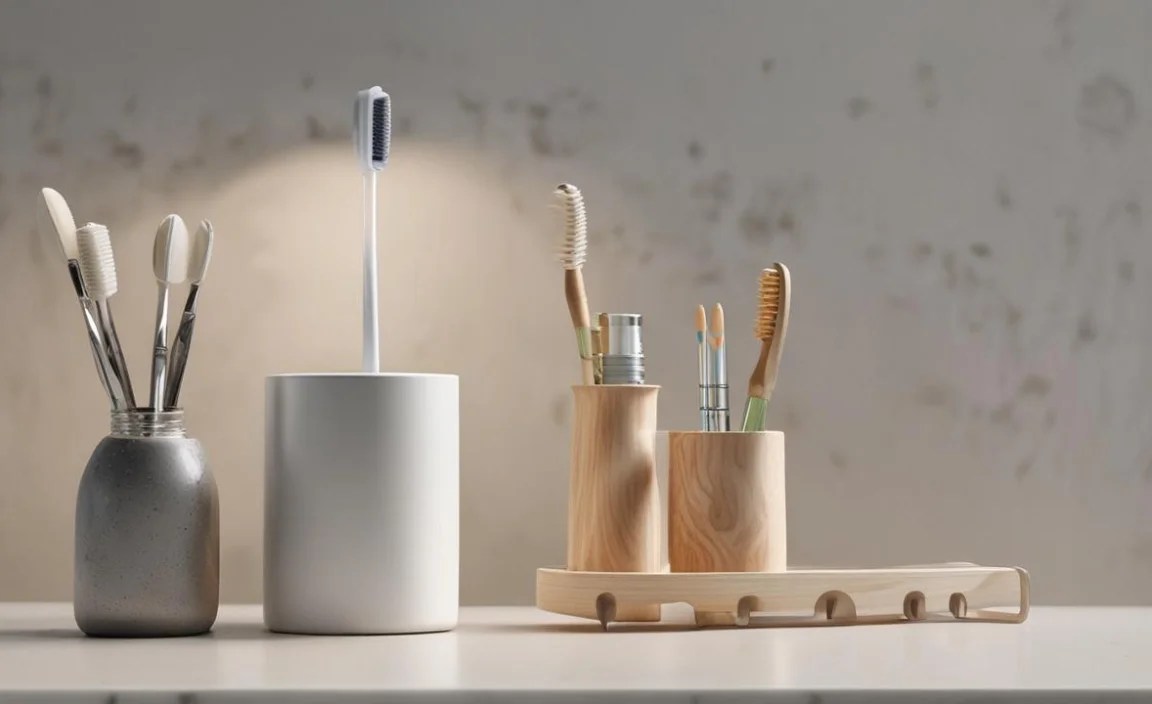
For a sturdy and natural feel, a wooden block holder is a fantastic option. It’s surprisingly simple to make and looks great in traditional or modern bathrooms.
What You’ll Need:
A block of wood (e.g., a 2×4 scrap, a thicker plank) – at least 4 inches wide and wide enough for your desired number of toothbrushes.
Drill and drill bits (spade bits or Forstner bits work well for clean holes) – choose a diameter slightly larger than your toothbrush handles.
Saw (if you need to cut the wood to size)
Sandpaper (various grits: coarse, medium, fine)
Waterproof sealant or polyurethane varnish
Optional: Paint, wood stain, mounting hardware.
Safety glasses
Step-by-Step:
1. Prepare the Wood: Cut your block of wood to the desired size if needed. A typical size might be 4 inches wide, 3 inches deep, and 2 inches high.
2. Sand Smooth: Sand all surfaces of the wood block, starting with a coarser grit and moving to finer grits. The smoother it is, the better it will look and feel.
3. Mark Hole Locations: Measure and mark where you want the toothbrush holes. Space them evenly, ensuring enough room for each brush without them touching.
4. Drill the Holes: Important: Don’t drill all the way through the block! You want the toothbrushes to rest in the holes, not fall out. Drill to a depth of about 1 to 1.5 inches, or deep enough to securely cradle the handle. Use a drill press if you have one for straighter holes, but a handheld drill can work with care. Use a wood bit, spade bit, or Forstner bit for cleaner results.
5. Sand Inside Holes: Carefully sand the inside of the drilled holes to remove splinters and create a smooth finish.
6. Seal the Wood: Apply several coats of a waterproof sealant or polyurethane varnish to all surfaces of the wood block, including inside the holes. This is crucial to protect the wood from moisture and prevent damage. Allow adequate drying time between coats.
7. Mount or Place: You can either place the finished block on your counter or mount it to the wall using appropriate hardware drilled into the back.
8. Add Toothbrushes: Insert your toothbrushes into the custom-made slots.
This design offers robustness and a natural aesthetic, fitting seamlessly into many bathroom styles.
5. The Air-Dry Clay Custom Mold
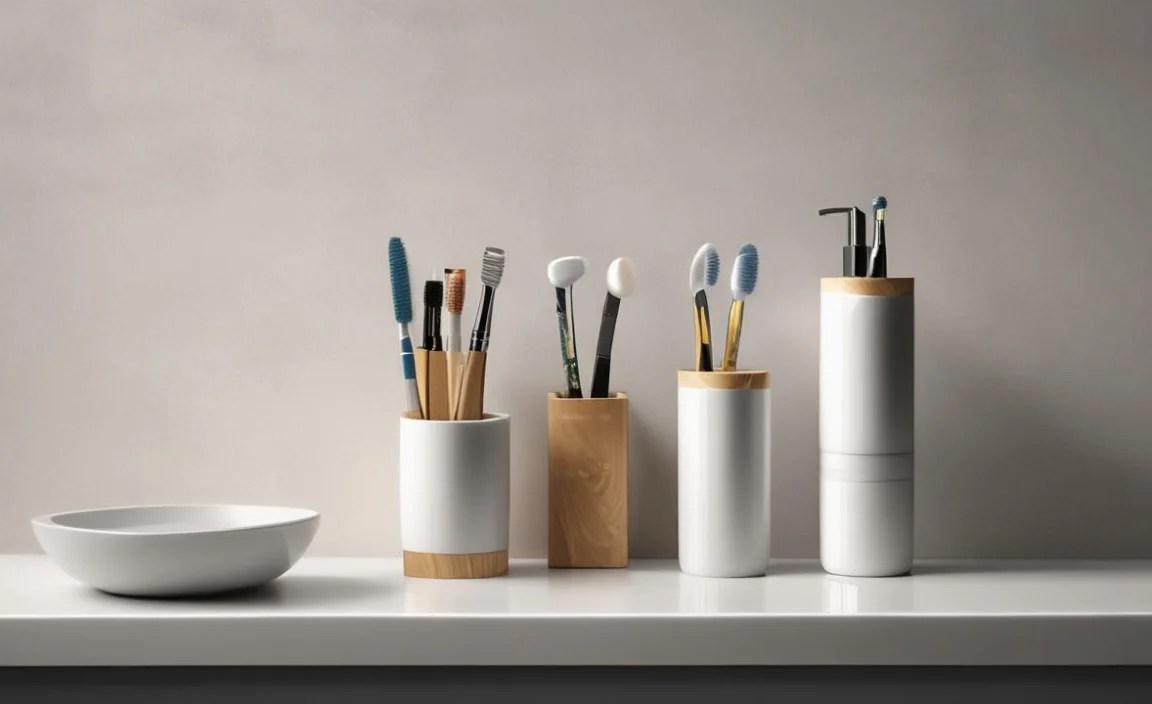
For ultimate creative freedom, air-dry clay lets you sculpt a holder exactly as you envision it.
What You’ll Need:
Air-dry clay
Toothbrushes (to gauge size)
Water (for smoothing)
Rolling pin (optional)
Craft knife or sculpting tools
Waterproof sealant or varnish
Optional: Acrylic paints, decorative stamps.
Surface to work on (parchment paper or a craft mat)
Step-by-Step:
1. Plan Your Design: Sketch out what you want your holder to look like. Consider stability, the number of toothbrushes, and drainage.
2. Work the Clay: Knead the air-dry clay until it’s pliable. If needed, roll it out to a consistent thickness.
3. Shape the Holder: Mold the clay into your desired shape. You can create an open tray with distinct slots, a small pot with holes drilled in the side, or any custom design. Use your toothbrushes to help gauge the size and spacing of openings.
4. Create Openings: If you need holes for the toothbrushes to sit in, use your tools or a small circular cutter to create them while the clay is still soft. You want the toothbrush handles to fit snugly.
5. Sculpt Details (Optional): Add decorative elements like patterns or texture using stamps or tools.
6. Dry the Clay: Let the clay dry completely according to the manufacturer’s instructions. This can take 24-72 hours depending on thickness and humidity. Turn it periodically to ensure even drying.
7. Sand and Smooth: Once dry, lightly sand any rough areas.
8. Seal and Paint: Apply a waterproof sealant to protect the clay from moisture. Once the sealant is dry, you can paint your holder with acrylic paints and add any further decorative touches.
9. Use: Place your custom-made toothbrush holder in your bathroom and insert bristles.
This method allows for truly unique, personalized pieces that are functional art.
Comparing DIY Toothbrush Holder Designs
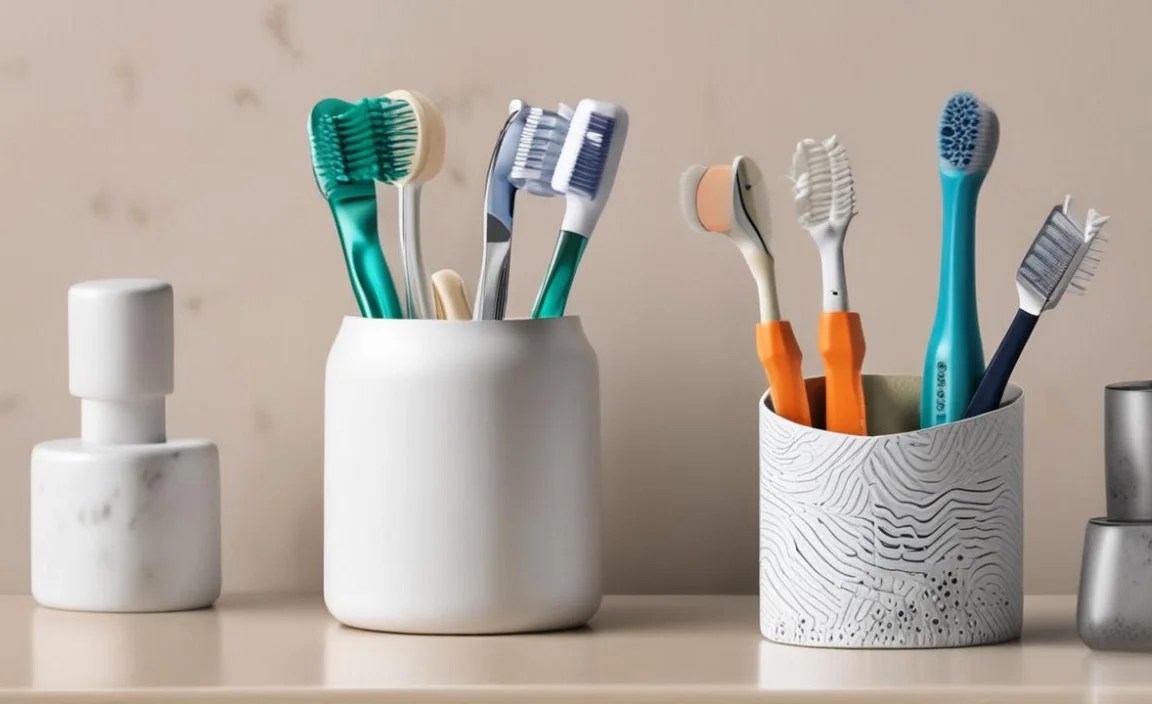
To help you choose the best project for your needs, here’s a quick comparison of the popular DIY methods:
| Design Method | Ease of Use (Beginner) | Durability | Aesthetic Versatility | Cost-Effectiveness | Best For |
|---|---|---|---|---|---|
| Mason Jar Magic | Very High | Good | Modern, Rustic, Bohemian | Very High (uses recycled materials) | Quick, simple, versatile décor |
| Repurposed Can Organizer | High | High | Industrial, Modern, Rustic | Very High (uses recycled materials) | Durable, budget-friendly, larger brushes |
| PVC Pipe Wall-Mounted | Medium | High | Modern, Minimalist, Functional | High | Space-saving, wall-mounted solutions, hygienic |
| Wooden Block Holder | Medium | Very High | Natural, Traditional, Modern | Medium (wood cost varies) | Sturdy, natural look, custom fit |
| Air-Dry Clay Custom Mold | Medium-High (requires artistic touch) | Medium (if sealed well) | Highly Customizable, Artistic | High | Unique shapes, personalized art piece |
Tips for Success and Longevity
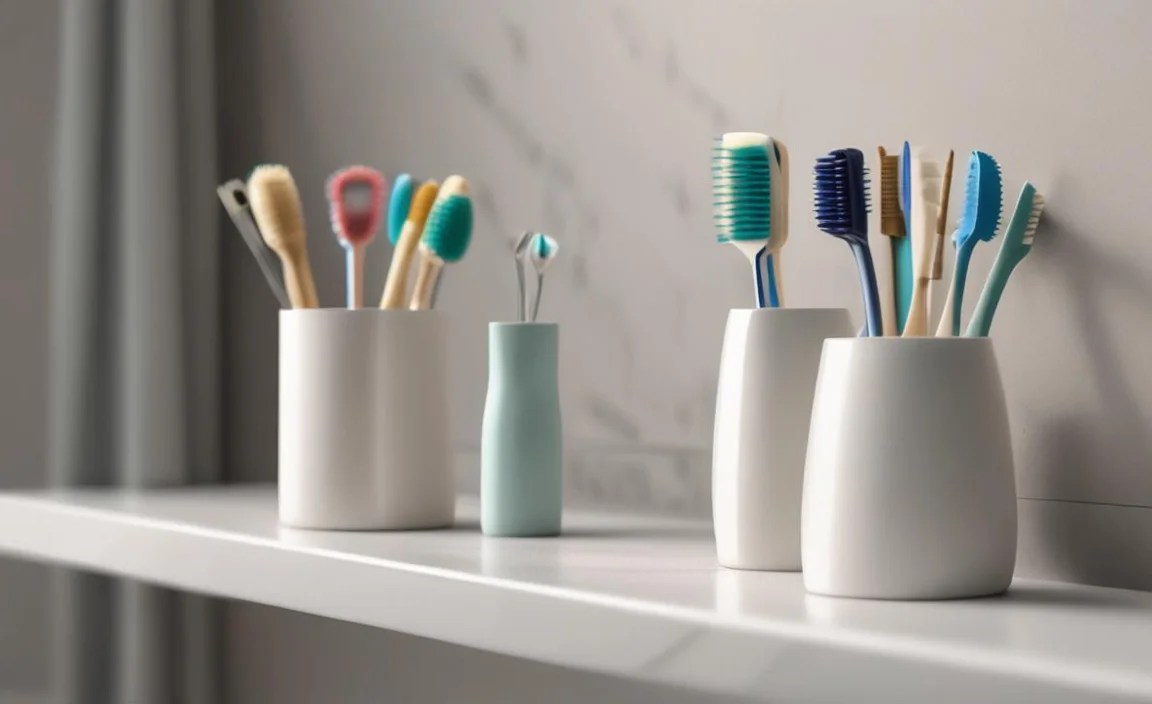
No matter which DIY toothbrush holder design you choose, a few extra tips can ensure it’s both functional and lasts a long time:
Drainage is Key: Always consider how water will escape. If your design is enclosed, drill small drainage holes in the bottom. Elevating toothbrushes slightly also helps.
Ventilation Matters: Good
