
Have you ever wondered how many types of toilets exist? Imagine walking into a bathroom in another country and seeing a toilet you’ve never seen before. Toilets come in many shapes and designs. They have different features for various needs. Let’s explore the different types of toilet in plumbing that you might encounter.
Key Takeaways
- There are many types of toilets used worldwide.
- Each type has unique features and benefits.
- Choosing the right toilet depends on space and usage.
- Understanding the types helps in making informed choices.
- Some types of toilet in plumbing are environmentally friendly.
Gravity-Flush Toilets
Gravity-flush toilets are the most common type. They use the force of gravity to move water. When you flush, the tank empties water into the bowl. This action pushes waste down the drain. These toilets are popular for being simple and effective. They don’t need electricity or special parts. This makes them easy to maintain and repair.
- Uses water from the tank.
- Flushes with gravity force.
- Simple mechanism.
- No electricity needed.
- Easy maintenance.
Gravity-flush toilets can come in various styles. They can fit into any bathroom design. They are budget-friendly, making them a favorite for many households. Gravity-flush toilets also have new designs that save water. Saving water is good for the planet and your wallet.
Fun Fact or Stats: Gravity-flush toilets were invented in the 18th century!
Dual-Flush Toilets
Dual-flush toilets offer two flushing options. One button uses less water for liquid waste. The other uses more water for solid waste. This choice helps save water. It is an environmentally friendly option. Dual-flush toilets are becoming popular in many homes. They are a bit more expensive but save water in the long run.
- Two flush options.
- Saves water.
- Environmentally friendly.
- Higher cost but long-term savings.
- Modern design.
Many modern bathrooms now use dual-flush toilets. They are available in many styles and colors. Dual-flush toilets can match any bathroom decor. They are a smart choice for those looking to save water. However, they might need a bit more maintenance than gravity-flush toilets.
Fun Fact or Stats: Dual-flush toilets can save up to 67% water compared to traditional toilets.
Pressure-Assisted Toilets
Pressure-assisted toilets use air pressure to flush. Water is stored in a tank inside the toilet tank. This tank uses compressed air to flush water forcefully. This results in a powerful flush that cleans the bowl well. These toilets are often found in public restrooms. They are perfect for areas with high traffic because of their strong flushing power.
- Uses air pressure.
- Powerful flush.
- Common in public areas.
- Requires good water pressure.
- Can be noisy.
Pressure-assisted toilets can be a bit noisy. This might not be ideal for everyone. They also need good water pressure to work. Despite this, they are great for getting rid of waste quickly. They also help prevent clogs, which is a big plus. This makes them a popular choice for places like malls and airports.
Fun Fact or Stats: Pressure-assisted toilets can use half the water of gravity-flush toilets!
Composting Toilets
Composting toilets are unique and eco-friendly. They turn human waste into compost. This is done through a natural process. These toilets don’t use water. Instead, they need air and natural matter to break down waste. Composting toilets are great for homes off the grid. They are also popular in areas with water shortages.
- Eco-friendly.
- No water needed.
- Creates compost.
- Great for remote areas.
- Requires maintenance.
Composting toilets can be a bit tricky to maintain. They need regular cleaning and emptying. However, they are a great way to reduce water use. They are especially useful in areas where water conservation is important. Plus, the compost created can be used for gardening!
Fun Fact or Stats: Composting toilets can save over 6,000 gallons of water per year!
Smart Toilets
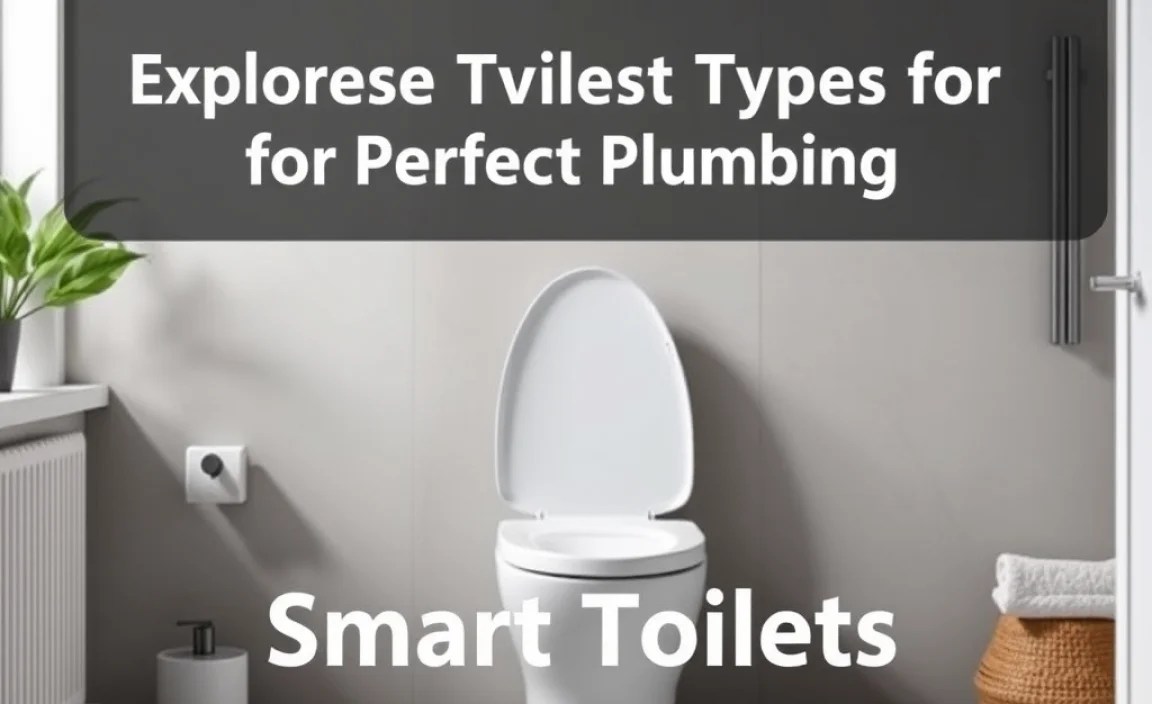
Smart toilets are the toilets of the future. They have many high-tech features. These can include automatic flushing, heated seats, and self-cleaning functions. Some smart toilets even play music or have a built-in nightlight. They are very convenient but can be expensive. Smart toilets are often found in luxury homes or hotels.
- High-tech features.
- Automatic flush.
- Heated seats.
- Self-cleaning.
- Luxury item.
Smart toilets are for those who love technology. They bring comfort and convenience to the bathroom. Despite their cost, they are becoming more popular. As technology advances, smart toilets might become more common. These toilets can also help save water with efficient flushing systems.
Fun Fact or Stats: Some smart toilets can connect to your smartphone!
Wall-Hung Toilets
Wall-hung toilets are modern and stylish. They are mounted on the wall, not the floor. This gives the bathroom a sleek look. Wall-hung toilets save space and make cleaning easier. The tank is hidden behind the wall. This can be a space-saving feature, especially for small bathrooms.
- Mounted on the wall.
- Saves space.
- Easy to clean.
- Stylish look.
- Installation can be costly.
Wall-hung toilets offer a modern bathroom design. They are perfect for small spaces. The hidden tank provides more room in the bathroom. However, they can be more expensive to install. If style and space are important, a wall-hung toilet is a great choice.
Fun Fact or Stats: Wall-hung toilets can support up to 500 pounds!
Conclusion
There are many types of toilet in plumbing. Each type has its benefits and uses. Gravity-flush toilets are simple and common. Dual-flush toilets save water. Pressure-assisted toilets are powerful. Composting toilets are eco-friendly. Smart toilets are high-tech. Wall-hung toilets are stylish. Choose the one that fits your needs best!
FAQs
Question: What are the most common types of toilet in plumbing?
Answer: The most common types are gravity-flush and dual-flush toilets. Gravity-flush toilets use gravity to flush. Dual-flush toilets offer two flushing options for water savings.
Question: How do composting toilets work without water?
Answer: Composting toilets use air and natural materials to break down waste. This process creates compost. They are eco-friendly and save water. They are ideal for areas with water shortages.
Question: Are smart toilets worth the cost?
Answer: Smart toilets offer many features like heated seats and automatic flushing. They are convenient and luxurious. If you value technology and comfort, they might be worth the cost. They can also help conserve water.
Question: Do wall-hung toilets save space?
Answer: Yes, wall-hung toilets save space. They are mounted on the wall, allowing for more floor space. The tank is hidden in the wall, giving extra room in the bathroom. They are ideal for small spaces.
Question: Why are pressure-assisted toilets loud?
Answer: Pressure-assisted toilets use air pressure to flush, which can be loud. The pressure creates a strong flush. This noise is often accepted for their efficiency. They are common in public restrooms where power is needed.
Question: Can dual-flush toilets help reduce water bills?
Answer: Yes, dual-flush toilets can reduce water bills. They offer two flushing options to save water. Less water used means lower water bills. They are an environmentally friendly choice for households.
