
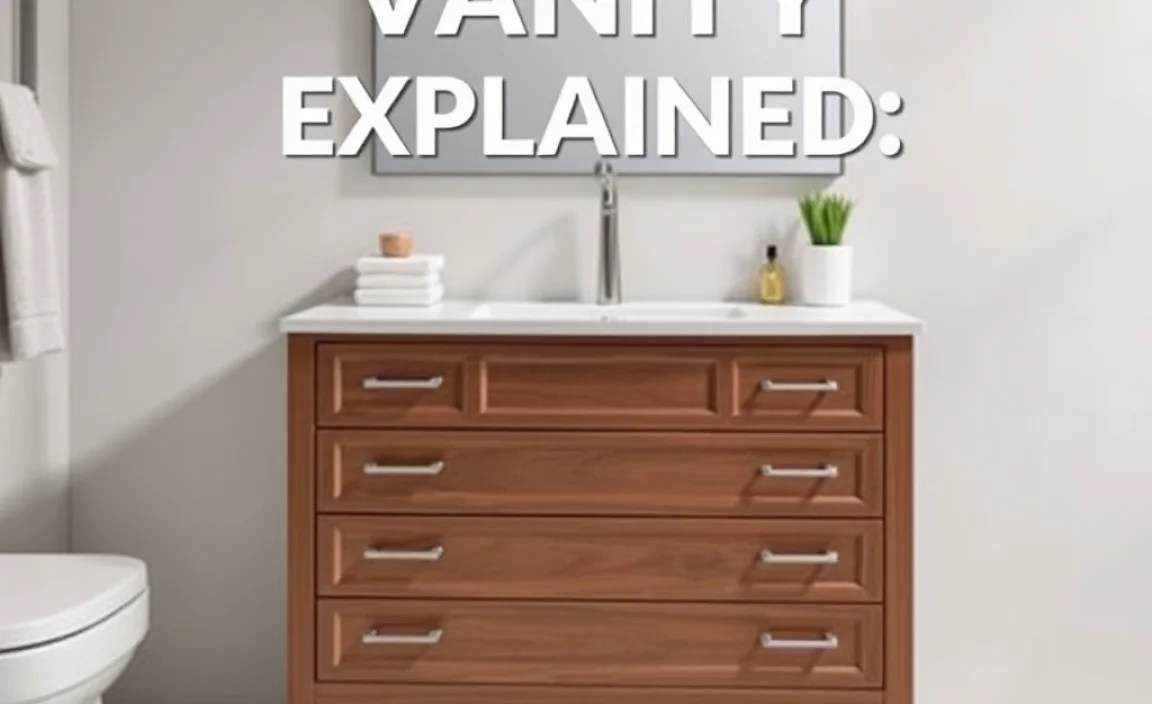
A vanity, often called a bathroom cabinet or sink unit, is a freestanding or wall-mounted fixture holding a sink and providing storage. It enhances bathroom functionality, style, and organization, making it a key element for any beginner DIYer looking to upgrade their space.
Your bathroom vanity is more than just a place to wash your hands; it’s the heart of your bathroom’s style and function. It houses your sink, offers precious storage, and sets the overall mood of the room. For many homeowners, especially beginners tackling DIY projects, understanding what a vanity is and how it works can feel a bit daunting. But don’t worry! It’s actually quite straightforward. This guide is here to break down everything you need to know about bathroom vanities in a way that’s easy to grasp.
We’ll cover what they are, the different types you’ll encounter, and what makes a good choice for your home. No more feeling overwhelmed. By the end of this article, you’ll have the confidence and knowledge to identify, choose, and even start thinking about installing your own vanity. Ready to unlock the secrets of your bathroom’s central hub? Let’s dive in!
What Exactly is a Bathroom Vanity?

At its core, a bathroom vanity is a piece of furniture designed specifically for your bathroom. Think of it as a multi-functional unit that typically includes a countertop, a sink, and storage cabinets or drawers underneath. Its primary purpose is to provide a clean, accessible space for personal hygiene tasks while also helping you keep your bathroom organized and clutter-free.
Before vanities, bathrooms might have had only a pedestal sink with no storage, or perhaps a simple shelf. The vanity revolutionized bathroom design by combining essential fixtures with practical storage solutions. This makes it an indispensable part of any modern bathroom, whether you’re renovating a master suite or sprucing up a small powder room.
Key Components of a Vanity
Understanding the parts of a vanity helps you appreciate its function and design. Here are the typical components you’ll find:
Countertop: This is the flat surface on top of the vanity. It can be made from various materials like granite, quartz, marble, laminate, or solid wood. The countertop supports the sink and provides space for toiletries.
Sink (Basin): This is where you wash your hands. Sinks can be mounted on top of the countertop (undermount or drop-in) or integrated into it. Materials range from porcelain and ceramic to stainless steel and composite.
Cabinetry: This is the main body of the vanity, providing storage space. It can include drawers, doors, or open shelving, allowing you to store towels, cleaning supplies, toiletries, and other bathroom essentials.
Faucet & Drain Assembly: While not always part of the vanity unit itself, the vanity is designed to accommodate these crucial plumbing fixtures.
Mirror (Optional): Many vanities come as part of a larger set that includes a matching mirror, or are designed to have a mirror mounted above them.
Why Are Vanities So Important?
The importance of a bathroom vanity extends beyond its basic function. A well-chosen vanity can significantly impact the aesthetics, utility, and even the resale value of your home.
Firstly, it’s a critical component for organization. Bathrooms, by nature, can become cluttered spaces quickly. Towels, toiletries, cleaning supplies, and hair care products all need a home. A vanity with ample drawers and cabinets provides that much-needed storage, helping maintain a tidy and serene environment. This is especially crucial in smaller bathrooms where space is at a premium.
Secondly, vanities are major style elements. They come in countless designs, from sleek, modern designs with clean lines to traditional, ornate pieces. The countertop material, sink style, cabinet finish, and hardware all contribute to the overall look and feel of your bathroom. Choosing the right vanity can transform a dull bathroom into a stylish sanctuary.
Finally, the functionality of a vanity is paramount. It provides a stable surface for daily routines and houses the plumbing, making it easy to access and maintain. A good vanity installation ensures that your sink and storage work seamlessly together, making your bathroom experience more convenient and pleasant.
Types of Bathroom Vanities

When you start looking for a bathroom vanity, you’ll quickly realize there’s a wide variety to choose from. Understanding the different types will help you narrow down your options and pick the one that best suits your needs, space, and style. Here are the most common types of vanities:
1. Freestanding Vanities
These are the most traditional and common type of vanity. A freestanding vanity is a self-contained unit that sits on the floor, much like a piece of furniture. It doesn’t need to be attached to the wall, though it is typically secured for stability.
Pros:
- Easy to install; often requires minimal plumbing knowledge beyond connecting the water supply and drain.
- Offers a classic furniture look, adding character to the bathroom.
- Many styles and sizes are available, fitting a wide range of bathroom designs.
- Can create a sense of depth in smaller bathrooms by leaving a gap around the sides and back.
Cons:
- May offer less countertop space compared to some other types.
- Can be harder to clean around the base if it’s very close to the floor.
- If not properly secured, can be a tipping hazard, especially for children.
Ideal for: Most bathrooms, especially those looking for a traditional aesthetic or where extensive wall modifications are not desired.
2. Wall-Mounted (Floating) Vanities
As the name suggests, wall-mounted vanities are attached directly to the wall, appearing to “float” above the floor. This creates a modern and minimalist look.
Pros:
- Creates a sleek, contemporary aesthetic.
- Makes cleaning the bathroom floor much easier as there’s space underneath.
- Can make a small bathroom feel larger and more open by exposing more floor space.
- Provides a clean, uncluttered look.
Cons:
- Installation is more complex, requiring sturdy wall support (often studs) to hold the weight.
- Plumbing might need to be routed through the wall for a cleaner look, which can be a more involved process.
- Storage capacity might be limited compared to floor-standing units.
- Not ideal for all wall types or for users who prefer a very robust, grounded feel.
Ideal for: Modern bathrooms, small spaces where maximizing perceived space is important, and for those who value ease of floor cleaning.
3. Console Vanities
Console vanities typically consist of a countertop supported by legs, similar to a table. They often have an open design with minimal or no lower cabinetry, sometimes featuring only a shelf or a few drawers.
Pros:
- Offers a light and airy feel, often used in smaller bathrooms or powder rooms.
- Can be a more budget-friendly option.
- Easy access to plumbing, which can simplify installation and repairs.
- Unique aesthetic, often appearing more like furniture than a typical vanity.
Cons:
- Very limited storage space.
- Can feel less substantial than other vanity types.
- More exposed plumbing might not appeal to everyone.
Ideal for: Powder rooms, guest bathrooms, or any space where storage is not a primary concern and a decorative furniture piece is desired.
4. Corner Vanities
Designed to fit neatly into a corner, these vanities are excellent space-savers, particularly in very compact or oddly shaped bathrooms.
Pros:
- Maximizes the use of often-underutilized corner space.
- Can make a small bathroom feel more functional.
- Available in various styles, from freestanding to wall-mounted.
Cons:
- Limited countertop and storage space compared to larger, standard vanities.
- Can sometimes feel a bit cramped to use depending on the layout.
- Fewer design options compared to standard vanities.
Ideal for: Small bathrooms, powder rooms, or RVs and other tiny living spaces where every inch counts.
5. Single vs. Double Vanities
This distinction refers to the number of sinks the vanity can accommodate. This is less about the style of the unit and more about its size and purpose.
Single Vanity: Designed with one sink. This is the most common type and is suitable for most bathrooms, especially smaller ones or those used by one or two people.
Double Vanity: Features two sinks, usually side-by-side. These are ideal for master bathrooms or larger family bathrooms where multiple people need to use the sink area at the same time. They offer more countertop space and convenience but require a larger footprint.
Choosing the Right Vanity: A Beginner’s Checklist
Selecting a bathroom vanity might seem overwhelming with so many options. But don’t stress! By following a clear checklist, you can make a confident decision that fits your space, style, and budget.
Here’s a breakdown of what to consider:
1. Measure Your Space Accurately
This is the absolute first step. You need to know the exact dimensions of the area where the vanity will go. Measure the width, depth, and height available. Don’t forget to account for the space needed for doors to open and for comfortable movement around the vanity. It’s also crucial to note the location of existing plumbing (water supply lines and drainpipe) and any electrical outlets.
Tip: Use a measuring tape to get precise measurements. It’s better to be a little off on the side of caution with measurements than to buy a vanity that’s too big or too small.
2. Determine Your Style and Aesthetic
Think about the overall look you want for your bathroom. Are you going for modern and minimalist, traditional and elegant, or rustic and cozy? The vanity is a major piece, so it should complement your chosen style.
- Modern: Look for clean lines, minimalist hardware, and materials like sleek laminate, engineered stone, or lacquered finishes.
- Traditional: Opt for raised panel doors, decorative molding, natural wood finishes, and classic hardware.
- Rustic/Farmhouse: Consider distressed wood finishes, simple hardware, and natural stone countertops.
- Industrial: Think metal accents, reclaimed wood, concrete-look countertops, and exposed plumbing if you go for a console style.
3. Consider Storage Needs
How much storage do you need? Do you have many toiletries, large towels, or cleaning supplies to store? Or is your bathroom primarily for quick use?
- Lots of Storage: Prioritize vanities with ample drawers and cabinets. Deep drawers are excellent for towels, while smaller drawers are good for toiletries and makeup.
- Minimal Storage: If you have limited items to store or have additional storage elsewhere, a vanity with open shelving or a few shallow drawers might suffice. A console vanity might even work.
4. Choose Your Countertop Material
The countertop material affects durability, maintenance, and appearance. Here’s a quick look at some popular choices:
| Material | Pros | Cons | Best For |
|---|---|---|---|
| Granite | Durable, heat-resistant, unique patterns, adds value | Can be expensive, requires sealing to prevent stains | High-end bathrooms, busy families |
| Quartz | Non-porous, stain-resistant, durable, consistent look | Can be expensive, less heat-resistant than granite | Low-maintenance, modern looks |
| Marble | Luxurious, elegant, classic beauty | Porous, stains and etches easily, requires frequent sealing, expensive | Luxury master bathrooms (with high maintenance tolerance) |
| Laminate | Affordable, wide variety of colors/patterns, easy to clean | Less durable, can scratch or chip, not heat-resistant | Budget-friendly, quick updates, low-traffic bathrooms |
| Solid Wood | Warm, natural aesthetic, can be refinished | Susceptible to water damage and warping, requires sealing | Rustic, traditional, or transitional styles (requires good sealing) |
5. Select Your Sink Type
Vanities can accommodate various sink styles. The most common are:
- Undermount Sink: Installed beneath the countertop. This provides a seamless look and makes wiping the counter easy.
- Drop-in (Top-Mount) Sink: Sits on top of the countertop, with a rim that rests on the surface. Easier to install than undermount.
- Integrated Sink: The sink and countertop are made from a single piece of material (e.g., solid surface, porcelain). Offers a very clean, seamless look and is easy to clean.
6. Factor in Your Budget
Vanities can range from a few hundred dollars for a basic laminate model to several thousand for custom-made units with high-end countertops and features. Set a realistic budget before you start shopping. Remember to include installation costs if you’re not doing it yourself, as well as the cost of a new faucet, drain, and mirror if they aren’t included.
7. Consider Installation Complexity
Are you a seasoned DIYer or a complete beginner? If you’re new to plumbing and home repairs, a simpler freestanding vanity might be a better choice than a wall-mounted one that requires drilling into studs and potentially more complex plumbing adjustments. If you’re unsure, it’s always wise to consult a professional.
Essential Tools for Vanity Installation (Beginner’s Guide)
Installing a new vanity can be a rewarding DIY project. To make the process smoother and safer, having the right tools is essential. Here’s what you’ll likely need, broken down for beginners:
1. Measuring and Marking Tools
Tape Measure: For accurate measurements of your space and the vanity.
Pencil: For marking drill holes and cut lines.
Level: Crucial for ensuring your vanity is installed straight and plumb.
2. Plumbing Tools
Adjustable Wrench (or Pipe Wrench): For tightening and loosening plumbing connections.
Pro Tip: Use two wrenches – one to hold the pipe and one to turn the fitting to avoid putting too much stress on the pipes.
Basin Wrench: A specialized tool designed to reach awkwardly placed faucet nuts beneath the sink.
Plumber’s Putty or Silicone Caulk: For creating watertight seals around the sink and drain.
Bucket: To catch any residual water when disconnecting old pipes.
Pipe Cutter (if modifying pipes): For a clean cut on copper or PVC pipes. Most beginner DIYers will avoid this by using existing hookups.
3. Fastening and Drilling Tools
Drill/Driver (Cordless is convenient): For drilling pilot holes and driving screws.
Drill Bits: Various sizes, including wood bits and possibly masonry bits if mounting into tile or concrete.
Screwdriver Set (Phillips and Flathead): For assembling components and securing the vanity.
Stud Finder: Essential for wall-mounted vanities to locate wall studs for secure mounting.
4. Safety Gear
Safety Glasses: To protect your eyes from debris and dust.
Work Gloves: To protect your hands and improve grip.
Dust Mask: Especially important when drilling into drywall or old materials.
5. Other Useful Items
Utility Knife: For opening boxes, cutting caulk, etc.
Drop Cloth or Old Towels: To protect your floors from scratches and water damage.
Flashlight or Headlamp: To see in dimly lit areas under the sink.
Remember to check the specific installation instructions for your chosen vanity, as they may recommend additional or specialized tools. If you’re ever unsure about a step, especially with plumbing, it’s safest to call a professional plumber.
Step-by-Step: Installing a Basic Freestanding Vanity (Beginner Friendly)
Installing a freestanding vanity is a great entry-level DIY project. This guide covers the general steps; always refer to your vanity’s specific instructions.
Disclaimer: Plumbing can be tricky. If you are uncomfortable at any point, especially with water shut-off or drain assembly, it’s best to consult a certified plumber.
Step 1: Preparation is Key
Turn off the water supply: Locate the shut-off valves for hot and cold water under the sink. Turn them clockwise until tight. Turn on the old faucet to relieve pressure and drain residual water.
Disconnect the old plumbing: Place a bucket under the P-trap (the U-shaped pipe under the drain). Unscrew the slip nuts connecting the P-trap to the drainpipe and the tailpiece from the sink. Also, disconnect the water supply lines from the shut-off valves.
* Remove the old vanity: Unscrew it from the wall if it’s attached. Carefully lift and remove it.
