
Understanding water pressure is key to home maintenance. This glossary demystifies essential terms like PSI, GPM, and static pressure, empowering you to diagnose issues, choose fixtures, and ensure your home’s water system works efficiently and safely.
Low water pressure can be a real headache, right? It means a weak shower, a faucet that takes ages to fill, or even trouble using multiple appliances at once. It’s a common problem many homeowners face. But don’t worry! Understanding a few key terms about water pressure can make all the difference. This guide will break down the essential vocabulary so you can tackle any water pressure questions with confidence.
We’ll cover everything from the basics of what water pressure is to how it’s measured, and what those numbers really mean for your home. Get ready to turn those confusing terms into easy-to-understand concepts that help you fix problems and make smart choices for your plumbing.
Understanding Water Pressure: The Basics
Water pressure is essentially the force pushing water through your pipes. Think of it like the force pushing air through a balloon. The more force, the more water comes out of your faucet or showerhead. It’s measured in different ways, and knowing these measurements helps you understand if your home’s water supply is healthy.
This pressure comes from a few places. For homes connected to a municipal water supply, it’s typically provided by the local water utility’s pumping stations and the height of the water tower. For homes with a private well, the pressure is generated by a pressure tank and a pump. Regardless of the source, consistent and adequate water pressure is vital for a comfortable and functional home.
Essential Water Pressure Terms You Need to Know
Let’s dive into the core terms that will make you feel like a pro when talking about water pressure. Knowing these will help you communicate with plumbers, choose the right fixtures, and troubleshoot common issues.
PSI (Pounds per Square Inch)
PSI is the most common unit of measurement for water pressure. It tells you how much force is being applied to a specific area of your pipes. Think of it as the “strength” of the water in your system.
- What it means: Higher PSI means stronger water pressure.
- Typical Home Range: Most homes have a water pressure between 40 and 80 PSI.
- Too Low? Below 40 PSI can lead to weak showers and slow filling sinks.
- Too High? Above 80 PSI can damage your plumbing system over time, leading to leaks and appliance wear. Many places require a pressure reducing valve (PRV) if the incoming pressure is above 80 PSI.
You can measure PSI using a simple water pressure gauge that screws onto an outdoor spigot or a laundry hookup. It’s a DIY-friendly way to check your home’s water pressure situation.
GPM (Gallons Per Minute)
GPM measures how much water flows through a pipe or fixture over a minute. It’s about the volume of water, not just the force. Think of it as the “amount” of water you get.
- What it means: Higher GPM means more water is available.
- Fixture Dependent: Showerheads, faucets, dishwashers, and washing machines are rated by their GPM.
- Efficiency Matters: Newer, water-efficient fixtures often have lower GPM ratings, but modern designs ensure you still get good performance.
For example, a low-flow showerhead might use 2.5 GPM, while an older, less efficient one could use 5 GPM. While a higher GPM might seem better, it’s important to consider the overall flow rate your pipes can handle and your local water conservation efforts.
Static Pressure
Static pressure is the water pressure within your pipes when no water is flowing. It’s essentially the pressure that’s just sitting there, not actively being used.
This is the pressure you measure when all your faucets and appliances are turned off. It gives you the “resting” pressure of your system and is a good baseline for understanding your home’s water supply pressure. It’s usually what you measure with a basic pressure gauge attached to an outdoor faucet.
Dynamic Pressure (or Flow Pressure)
Dynamic pressure is the water pressure when water is actually flowing through your pipes. When you turn on a faucet, the pressure drops because the water is moving. This is the pressure you experience when using your water.
This is a crucial measurement because it reflects the real-world experience of using your water. If your static pressure is high, but your dynamic pressure is low, it indicates a restriction in your pipes, a partially closed valve, or a problem with your water supply.
Pressure Drop
Pressure drop is the reduction in water pressure that occurs as water flows through pipes, elbows, valves, and fixtures. It’s a natural consequence of water moving frictionally through your plumbing system.
- Causes: Pipe diameter, pipe length, number of bends, and the type of fixtures all contribute to pressure drop.
- Impact: A significant pressure drop can make water-efficient fixtures perform poorly.
- Consideration: When designing or troubleshooting plumbing, minimizing unnecessary pressure drop is important for efficient water delivery.
Maximum Flow Rate
Maximum flow rate is the highest volume of water that can pass through a particular pipe or fixture in a given time. It’s often expressed in GPM.
This term is important when selecting appliances or fixtures. For instance, if you have a whole-house water filter, it will have a maximum flow rate. You need to ensure this rate is higher than the combined GPM of all the fixtures you might use simultaneously in your home.
Water Hammer
Water hammer is a loud banging or thumping noise that occurs in pipes when water flowing at high speed is suddenly stopped or forces change very quickly. This typically happens when a valve is shut off abruptly.
- Causes: Quick-closing valves (like those on washing machines), sudden pump shutdowns, or even rapid faucet closures.
- Effects: Besides the noise, water hammer can cause significant stress on your plumbing system, leading to leaks and damage over time.
- Solutions: Water hammer arrestors can be installed to absorb the shock.
You can learn more about managing water hammer from resources like the Building Science Corporation, a reputable source for building performance information.
Pressure Reducing Valve (PRV)
A Pressure Reducing Valve (PRV) is a device installed in your main water line that automatically reduces and maintains a lower water pressure from the source (like municipal supply) to a safe and consistent level for your home’s plumbing system.
- Purpose: Protects your plumbing and appliances from damage caused by excessively high water pressure.
- Installation: Typically installed where the main water line enters your house.
- Adjustment: PRVs can leak or become less effective over time and may need adjustment or replacement.
If your home’s incoming water pressure exceeds 80 PSI, a PRV is essential for protecting your pipes, fixtures, and appliances. Many local building codes require them.
Pressure Tank
For homes with private wells, a pressure tank is a crucial component. It’s a closed container that holds water and air under pressure, located between the well pump and your home’s plumbing system.
The tank works with a pressure switch to maintain consistent water pressure. When you use water, the pressure in the tank drops, triggering the pump to turn on and refill the tank. When the tank is full and the desired pressure is reached, the switch turns the pump off. This prevents the pump from cycling on and off constantly, which can shorten its lifespan.
Flow Rate vs. Pressure
It’s easy to confuse flow rate and pressure, but they are distinct. Pressure is the force, while flow rate is the volume over time. You can have high pressure but low flow if the pipes are restricted, or low pressure but decent flow if the volume is there but not the force.
Think of it like a garden hose:
- High Pressure, Low Flow: Imagine a tiny hole being pinched in the hose. Water squirts out with force, but not much of it.
- Low Pressure, High Flow: Imagine a very wide hose with a slight uphill slope. Water comes out, but without much force.
- Good Pressure and Flow: A comfortably open hose, with enough force to reach where you want it and enough volume to get the job done quickly.
Common Water Pressure Scenarios and Terms

Understanding these terms becomes even more useful when you can apply them to real-world situations you might encounter.
Scenario: Weak Shower
If your shower has low pressure, it could be due to several factors, and these terms help identify the cause:
- Low Static Pressure: The overall water supply to your home might be too low.
- Low Dynamic Pressure: Even if static pressure is okay, issues in the pipes or a restrictive showerhead could be the cause.
- Low GPM: The showerhead itself might have a low Gallons Per Minute rating, either by design (water-saving) or due to mineral buildup.
- Clogged Fixtures: Mineral deposits (limescale) can clog the small holes in a showerhead, reducing both pressure and flow.
Scenario: Water Pressure Fluctuates
If your water pressure seems to go up and down, it could be related to these terms:
- PRV Malfunction: If you have a Pressure Reducing Valve, it might be failing or set incorrectly.
- Pump Cycling (Well Systems): In well systems, an improperly set pressure switch or a faulty pressure tank can cause pressure to fluctuate as the pump cycles on and off.
- High Demand: If multiple fixtures are running simultaneously, the overall system flow rate might be maxed out, causing a temporary drop in pressure for individual fixtures.
Scenario: Water Bills Are High or Appliances Wear Out Quickly
This might point towards excessively high water pressure:
- High Static Pressure: The incoming pressure from the city might be too high. This forces more water through pipes than necessary and puts stress on seals and connections.
- No PRV or Faulty PRV: A missing or malfunctioning PRV is often the culprit for consistently high pressure.
Tools to Measure Water Pressure
To effectively use these terms and understand your home’s water system, having the right tools is essential. Here are a few common ones:
Water Pressure Gauge
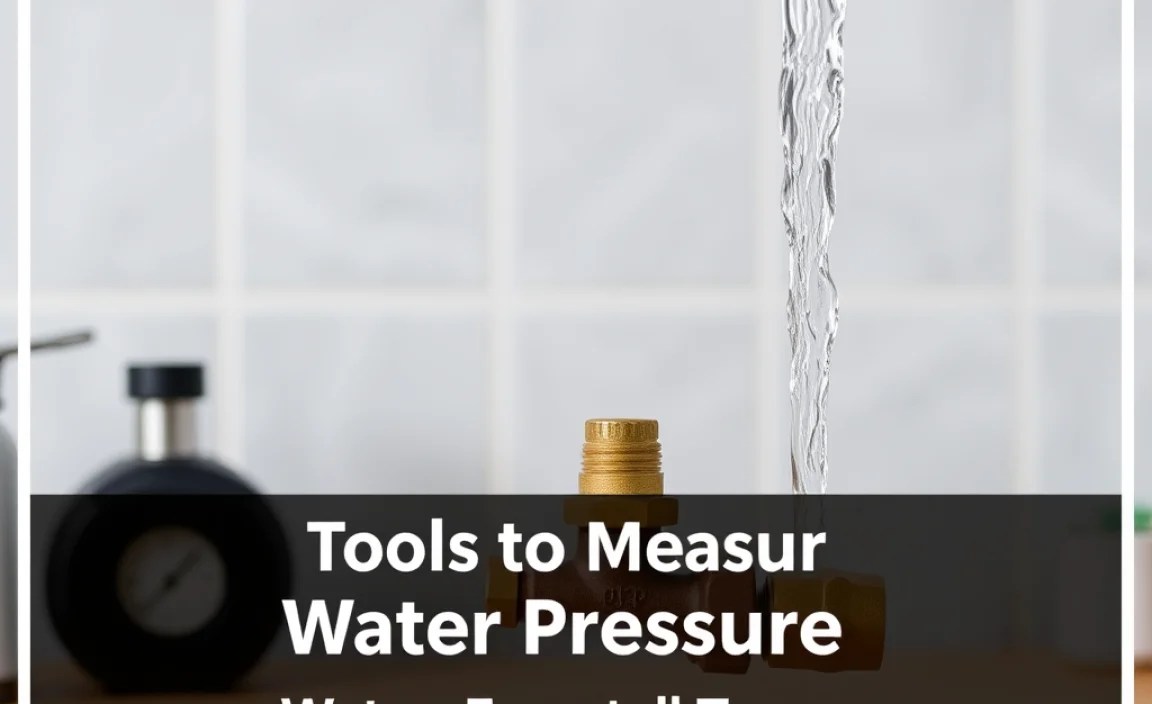
This is the most fundamental tool for understanding your home’s water pressure. It’s a small device that typically screws onto an outdoor hose bib or a laundry hookup. When you turn the water on slightly, it will display the PSI.
Flow Rate Meter
While less common for DIYers than a pressure gauge, flow rate meters can be attached temporarily to measure GPM. For most homeowners, understanding fixture GPM ratings is sufficient.
Plumber’s Tape (PTFE Tape)
Essential for creating watertight seals when screwing on a pressure gauge or any threaded plumbing connection. This ensures you get an accurate reading and prevents leaks.
Troubleshooting Common Water Pressure Issues
Now that you know the terms, let’s look at how to tackle some common problems.
1. Checking Your Home’s Water Pressure
Step 1: Gather Your Tools
- Water pressure gauge (designed for faucets)
- Plumber’s tape (optional, for a better seal)
Step 2: Locate a Faucet
The easiest place to test is an outdoor hose spigot (bib). If you don’t have one or want to test indoors, a laundry hookup is a good alternative.
Step 3: Attach the Gauge
Screw the pressure gauge onto the faucet threads. Hand-tighten it securely. If it seems loose or you anticipate leaks, wrap a few layers of plumber’s tape around the faucet threads before attaching the gauge.
Step 4: Turn on the Water Slowly
Turn the faucet on just enough to get a good flow, but not so much that you create a lot of splashing. You’ll see the needle on the gauge move.
Step 5: Read the Pressure
Once the water is flowing steadily, read the PSI indicated on the gauge. Turn off the water and remove the gauge.
Step 6: Analyze the Reading
- 40-60 PSI: This is generally considered good.
- Below 40 PSI: You likely have low water pressure. Common causes include issues with the municipal supply, a partially closed main valve, or a failing PRV (if you have one).
- Above 80 PSI: Your pressure is too high. You need a PRV installed or adjusted immediately to protect your plumbing.
2. Addressing Low Water Pressure
- Check the Main Water Valve: Ensure it’s fully open. Sometimes, these can get partially closed accidentally.
- Inspect for Leaks: Check all visible pipes and fixtures for any signs of leaks. A hidden leak can reduce pressure elsewhere.
- Clean Fixtures: Unscrew aerators from faucets and showerheads. Soak them in vinegar to remove mineral buildup. For showerheads, you may need to clean out individual nozzles.
- Check Your PRV (if applicable): A failing PRV can restrict flow. They can sometimes be adjusted, but often need replacement if they are old or causing consistent issues. For guidance on PRVs, check out resources like Michigan State University Extension, which provides helpful agricultural and consumer information.
- Consider a Booster Pump: For persistent low pressure issues that can’t be solved by other means, a whole-house booster pump system might be an option, especially for homes with well systems or very low municipal supply.
3. Addressing High Water Pressure
- Install or Adjust a PRV: If your pressure is consistently above 80 PSI, installing a PRV is crucial. If you already have one, an experienced plumber can check if it’s functioning correctly and adjust it to the optimal range (typically 50-60 PSI).
- Check for Clogs: While less common for high pressure, a severely clogged main line could theoretically create downstream pressure fluctuations, though this is rare.
4. Dealing with Water Hammer
- Locate the Source: Figure out which appliance or faucet causes the noise when shut off quickly.
- Install Water Hammer Arrestors: These devices are installed on the supply lines to appliances (like washing machines or dishwashers) or at fixture connections to absorb the shock of sudden valve closures.
- Check Valve Operation: Ensure valves aren’t being shut off too abruptly.
Understanding Fixture Ratings
When you’re shopping for new faucets, showerheads, or other water-using appliances, you’ll often see GPM ratings. Here’s a quick look at typical ranges:
| Fixture Type | Typical GPM Range (Older) | Typical GPM Range (Water-Efficient) | Notes |
|---|---|---|---|
| Kitchen Faucet | 2.0 – 2.5 GPM | 1.5 – 2.2 GPM | Lower GPM can still provide good cleaning power with aerator design. |
| Bathroom Faucet | 2.0 – 2.5 GPM | 0.5 – 1.5 GPM | Significantly lower GPM for water conservation. |
| Showerhead | 2.5 – 5.0+ GPM | 1.5 – 2.5 GPM | Standard for efficiency since 1994 limits showerheads to 2.5 GPM, with newer options even lower. |
| Toilet | 1.6 – 3.5 Gallons Per Flush (GPF) | 1.28 GPF or less | Measured in GPF, not GPM, but impact water volume. |
| Washing Machine | 1 |
