
Mastering bathroom essentials for beginners means focusing on core components like proper ventilation, effective lighting, and thoughtful plumbing basics. This guide breaks down these crucial bathroom details, ensuring a functional, safe, and comfortable space with simple, proven steps.
Welcome to the wonderful world of home maintenance! If you’re new to DIY or just looking to get a handle on your bathroom’s inner workings, you’ve come to the right place. Bathrooms can seem complex with all their pipes and fixtures, but understanding the basics – the “details” – is the first step to confidence. Often, frustration arises when small issues become big problems because the fundamentals weren’t clear.
This guide is designed to demystify those essential bathroom details. We’ll walk through the key elements that make a bathroom functional and comfortable, equipping you with the knowledge you need to tackle minor upkeep and make informed decisions. Get ready to feel more in control of your bathroom’s health!
Understanding Your Bathroom’s Core: The Plumbing Primer

At the heart of every bathroom is its plumbing system. It’s easy to overlook, but understanding its basic components is vital. Think of your plumbing like the circulatory system of your bathroom – it’s how everything flows. When it works well, you don’t think about it. When it doesn’t, it’s quite noticeable! We’ll cover the absolute essentials to get you started, focusing on what you’ll likely interact with or need to maintain.
The Water Supply: Hot and Cold
Your taps deliver hot and cold water, thanks to the water supply lines connected to your home’s main supply. These lines are typically made of copper, PEX (cross-linked polyethylene), or sometimes older galvanized steel.
- Water Main Shut-off: Knowing where your main water shut-off valve is located is paramount. In an emergency, like a burst pipe, this is your first line of defense. It’s usually found in your basement, garage, or utility closet.
- Shut-off Valves for Fixtures: Each major fixture (toilet, sink, shower) usually has its own smaller shut-off valve. These are super handy for repairs. If your toilet is leaking, you can turn off just its water supply without affecting the rest of the house.
- Understanding Pressure: Home water pressure is measured in pounds per square inch (PSI). A good range is typically between 40-60 PSI. Too high, and you risk leaks and damage; too low, and your shower will feel weak. You can get a simple gauge to test this yourself. For more on water pressure, check out resources from the U.S. Environmental Protection Agency.
The Drainage System: Where it All Goes
Once water has served its purpose, it needs to go somewhere. The drainage system whisks it away safely. It’s a marvel of gravity and well-angled pipes.
- Traps: You’ll notice a U-shaped bend in the pipes under your sink and behind your toilet. This is called a trap (or P-trap). Its crucial job is to hold a small amount of water, creating a seal that prevents sewer gases from wafting up into your bathroom.
- Vents: Plumbing systems need air to function smoothly. Vent pipes extend from your drainage pipes up through your roof. These allow air into the system, which helps water drain faster and prevents that gurgling or flushing sound that can happen when air pressure is off.
- Pitch: Drain pipes aren’t laid flat; they have a slight downward slope, or “pitch.” This ensures that water and waste flow in the right direction towards the main sewer line or septic tank.
Essential Bathroom Fixtures and Their Basics

These are the workhorses of your bathroom. While they seem simple, understanding their basic function and maintenance can save you from many headaches.
The Toilet: More Than Just a Seat
The toilet is often the most-used fixture. Keeping it running smoothly is key.
- Flapper: This is the rubber seal at the bottom of the tank that lifts when you flush, allowing water to enter the bowl. They are a common culprit for running toilets if they don’t seal properly anymore.
- Fill Valve (Ballcock): This mechanism refills the tank after flushing. If your tank is constantly overfilling or not filling properly, the fill valve might need adjustment or replacement.
- Flush Handle and Chain/Arm: The handle you push connects to an arm that lifts the flapper chain, which in turn lifts the flapper. Simple mechanics, but sometimes the chain can stretch or the arm can bend.
- Rough-in: This refers to the distance from the finished bathroom wall to the center of the drainpipe or the bolts that secure the toilet. The standard is 12 inches, but 10-inch or 14-inch rough-ins exist. Knowing this is important if you ever need to replace a toilet.
The Sink: From Washing Hands to Water Flow
Your bathroom sink is a hub of activity. Here are its key components:
- Faucet Types: You’ll encounter compression faucets (older, require turning a handle multiple times), cartridge faucets (modern, lever moves up/down and side-to-side), ceramic disc faucets (very durable, a lever turns across ceramic discs), and ball faucets (often seen in kitchens, but sometimes baths, with a single handle).
- Aerator: This small screen is located at the tip of the faucet spout. It mixes air with water to create a smooth, splash-free stream. If your water pressure seems low from the faucet, the aerator is often clogged and just needs a quick clean.
- Stopper Mechanism: This is what you use to plug the sink and fill it with water. It can be a pop-up stopper controlled by a lever behind the faucet, a lift rod stopper, or a simple plug. These can get clogged with hair and debris.
The Shower and Tub: Your Personal Oasis
These are where you relax, but also where water is used most intensely.
- Shower Head: From fixed heads to adjustable or rainfall types, they all connect to the shower arm. Clogged showerheads are common and can be cleaned by soaking them in vinegar.
- Tub Spout: This directs water into the tub. Some have a diverter switch to send water up to the showerhead.
- Drain Assembly: Similar to sink drains, tub drains have a mechanism to open and close, often a stopper or a lever. They are prone to clogs from hair and soap scum.
- Valve System: Behind the wall is the valve that controls water temperature and flow to the showerhead and/or tub spout. These are more complex and often require professional attention if they leak or malfunction.
Ventilation: Keeping Your Bathroom Fresh and Dry

This is perhaps the most undervalued but critical detail for beginner homeowners. Proper ventilation prevents mold, mildew, and protects your home’s structure.
The Bathroom Fan: Your Moisture Defender
A properly working exhaust fan is your best friend in the bathroom. Its job is to pull moist air out of the room.
- When to Use It: Turn your fan on before you start showering or using the toilet, and leave it on for at least 15-20 minutes after you’re done. This ensures all the humidity has a chance to escape.
- Checking for Functionality: The simplest test is the humidity test. Hold a piece of toilet paper against the fan grille while it’s running. If the fan is strong enough, it should pull the paper towards the grille.
- Cleaning the Fan Grille: Over time, dust and lint can accumulate on the fan grille, reducing its efficiency. Most grilles can be gently pried off and cleaned with a damp cloth or vacuumed.
- Ducting: The fan pushes air through a duct that should ideally vent to the outside of your home, not into the attic. You can often see the vent cap on your roof or exterior wall. If you’re unsure, a quick visual inspection (safely, from the ground with binoculars, or by a pro) can confirm.
Natural Ventilation: Windows
If your bathroom has a window, use it! Opening it, even just a crack, during and after showering can significantly help reduce moisture. Just be mindful of privacy and security.
Lighting Your Bathroom: Function and Ambiance
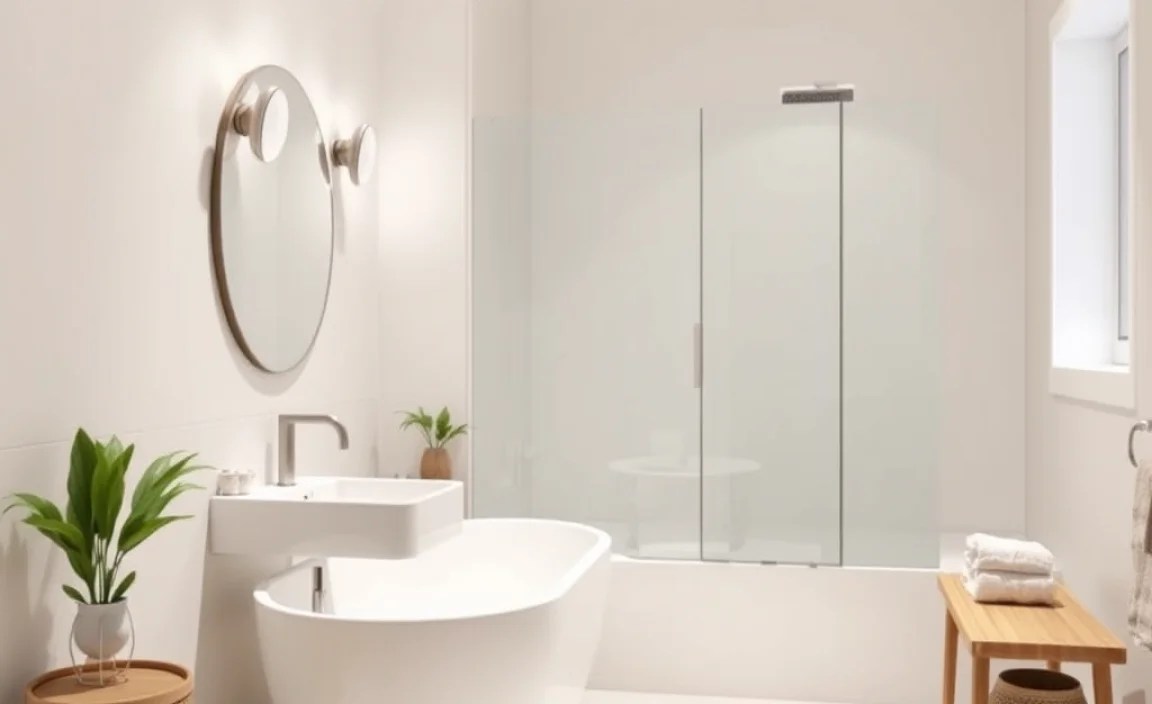
Good lighting makes a bathroom safer and more pleasant. It’s about more than just having a lightbulb; it’s about where and how you use light.
Task Lighting: For Precision
This is the light you need for tasks like shaving or applying makeup.
- Vanity Lights: Lights positioned on either side of the mirror, at eye level, provide the most even illumination for your face. Overhead lights can cast shadows.
- Brightness: Look for bulbs that provide neutral white light (around 3500-4000 Kelvin) for accurate color representation. The brightness, measured in lumens, should be sufficient for detailed tasks.
Ambient Lighting: Setting the Mood
This is the general light that fills the room.
- Ceiling Fixture: A central ceiling light provides overall illumination. Dimmers are fantastic for ambient lighting, allowing you to adjust the mood from bright and functional to soft and relaxing.
Safety First: Wet-Rated Fixtures
Bathrooms are wet environments. Any light fixture installed within a certain zone (directly over a shower or tub) must be specifically rated for damp or wet locations to prevent electrical hazards. Check the fixture’s packaging or specifications for this rating. You can find more information on safe electrical practices from organizations like the National Fire Protection Association (NFPA).
Flooring and Walls: Durability and Moisture Resistance

These surfaces are constantly exposed to water and humidity, so choosing the right materials is key for longevity and hygiene. For beginners, understanding what works best is the goal.
Water-Resistant Materials
- Tile: Ceramic and porcelain tiles are excellent choices for bathroom floors and walls. They are durable, easy to clean, and highly water-resistant. Grout, however, needs sealing to prevent staining and moisture absorption.
- Vinyl Flooring: Luxury Vinyl Tile (LVT) and Vinyl Plank flooring are very popular for bathrooms. They are waterproof, durable, and come in many styles, often mimicking wood or stone. They are also generally easier for beginners to install than tile.
- Painted Drywall: For walls in areas not directly hit by water (like outside the shower enclosure), moisture-resistant paint is essential. Use semi-gloss or satin finishes, as they are easier to clean than matte finishes and offer better protection against moisture.
Mold and Mildew Prevention
Use mold-resistant drywall (often green or purple) in areas prone to moisture, such as around showers and tubs or if you don’t have perfect ventilation. Regular cleaning and immediate action on leaks are your best defense.
Basic Tool Kit for Bathroom Maintenance
You don’t need a professional’s workshop, but a few key tools will make simple repairs and maintenance tasks much easier.
Essential Tools
- Adjustable Wrench: For tightening or loosening nuts and bolts of various sizes.
- Pipe Wrench: Specifically designed for gripping pipes, useful for plumbing tasks.
- Plumber’s Tape (Teflon Tape): Essential for sealing threaded pipe connections to prevent leaks.
- Screwdriver Set: A set with various sizes and types (Phillips and flathead).
- Pliers: Needle-nose and standard pliers are incredibly useful for gripping, bending, and cutting.
- Bucket: For catching water during repairs or for cleaning.
- Safety Glasses: Always protect your eyes, especially when working with water or under sinks.
- Gloves: To protect your hands from dirt, grease, and chemicals.
- Caulking Gun and Caulk: For sealing around tubs, sinks, and toilets to prevent water leaks and drafts. Use a bathroom-specific, mold-resistant caulk.
Creating a Functional Bathroom: Layout and Flow
While major layout changes are for bigger projects, understanding basic flow can help you appreciate your space and plan minor improvements.
Key Considerations for Layout
- Clearance: Ensure there’s enough space to comfortably use each fixture. For example, enough room to open the shower door, stand in front of the sink, and access the toilet.
- Ventilation Access: Make sure the exhaust fan isn’t blocked by tall cabinets or other items.
- Lighting Placement: Ensure task lighting is effective and ambient lighting provides good general coverage.
Troubleshooting Common Bathroom Issues
Even with the best details, small problems can arise. Here’s a quick guide to common beginner issues.
Leaky Faucets
Often caused by worn-out washers or O-rings. Shut off the water supply to the fixture, disassemble the faucet, identify the worn-out part, and replace it. Many hardware stores have replacement kits. This Old House offers excellent video guides for various faucet types.
Running Toilets
Usually due to a faulty flapper or fill valve. Check that the chain isn’t caught, the flapper is sealing correctly, and the water level in the tank isn’t too high. Adjustments are often simple. If not, replacing the flapper or fill valve is a common DIY fix.
Slow Drains
Most commonly caused by hair and soap scum. Try a plunger first. If that doesn’t work, you can often remove the drain stopper (under the sink or tub) and clear visible blockages. A drain snake or enzymatic drain cleaner can also help. Avoid harsh chemical drain cleaners if possible, as they can damage pipes over time.
Maintenance Schedule for Your Bathroom Details
A simple schedule helps keep everything in top shape and prevents minor issues from becoming major ones. Think of it as preventative care for your bathroom.
Monthly Checks
- Test Exhaust Fan: Use the toilet paper test.
- Clean Faucet Aerators: Unscrew, rinse, and reassemble.
- Wipe Down Surfaces: Keep moisture and soap scum at bay.
- Check Under Sinks: Look for any signs of leaks or drips.
Quarterly Tasks
- Deskunk Shower Drains: Remove and clean any hair catches.
- Check Caulk: Look for any cracks or signs of mildew and re-caulk as needed.
- Wipe Down Fan Blades/Grilles: Dust accumulation can reduce effectiveness.
Annual Deep Dive
- Test Water Pressure: Use a gauge if you suspect issues.
- Inspect Shower Heads: Clean or descale if flow is poor.
- Check Toilet Seals: Ensure no water is leaking around the base.
- Test Main Water Shut-off: Ensure it turns freely and can be operated.
Summary Table: Essential Bathroom Components
Here’s a quick reference guide to the key components and their basic functions:
| Component | Primary Function | Beginner Maintenance Tip |
|---|---|---|
| Water Supply Lines | Delivers hot and cold water to fixtures. | Know where the main shut-off valve is. |
| Drainage Pipes | Carries wastewater away. | Ensure P-traps are clear and not dry. |
| Toilet Flapper | Seals the tank to prevent constant running. | Replace when it looks worn or doesn’t seal. |
| Faucet Aerator | Improves water flow and reduces splatter. | Clean monthly to maintain pressure. |
| Exhaust Fan | Removes moisture and odors. | Run during and after showers; test monthly. |
| Grout/Caulk | Seals joints, prevents water intrusion. | Inspect quarterly, repair or replace as needed. |
Frequently Asked Questions (FAQ)
Q1: What’s the most important thing to know about bathroom plumbing for a beginner?
A1: Knowing where your main water shut-off valve is located is critical. In case of a leak or burst pipe.
