
This guide explains essential bathroom layouts to maximize space and functionality, helping beginners choose designs that suit their needs and budget. Discover smart solutions for any bathroom size, from tiny powder rooms to spacious master suites, ensuring a comfortable and efficient space.
Planning a bathroom layout can feel like a puzzle, especially when space is tight. It’s common to feel a bit lost, wondering how to fit everything you need – a sink, toilet, and shower or tub – without making it feel cramped or awkward. But don’t worry! With the right approach, creating a beautiful and functional bathroom is totally achievable. We’ll walk you through some genius and essential bathroom layouts designed for real homes and real people. Get ready to transform your bathroom into a space you’ll love!
Understanding the Core Components of Bathroom Layout

Before we dive into specific designs, let’s chat about the basic building blocks of any bathroom. These are the fixtures you’ll be placing, and their size and placement are key to a great layout. Think of them as your puzzle pieces:
- The Toilet: This is a must-have! Consider its proximity to the door for privacy and ease of access.
- The Sink (Vanity): More than just a place to wash your hands, a vanity also provides storage. Size matters here – a pedestal sink saves space, while a double vanity offers more room for couples.
- The Shower/Tub: This is often the largest fixture. Will it be a sleek shower stall, a luxurious soaking tub, or a combination of both? The choice significantly impacts the layout.
- Doors and Walkways: Crucial for flow! You need enough space to move around comfortably between fixtures and to open doors without bumping into things. Minimum clearances are important for usability and safety.
Getting these elements right is the first step toward a successful bathroom layout. We’ll look at how different arrangements of these components create different experiences and functionalities.
Essential Bathroom Layout Types for Every Space
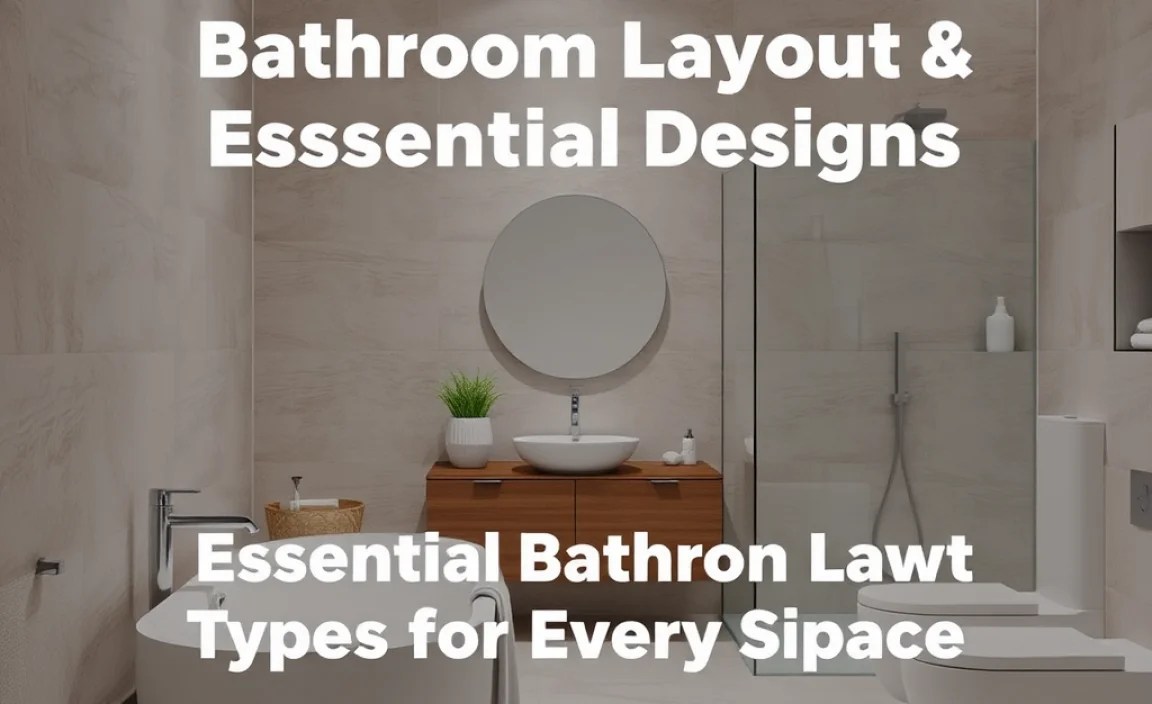
Not all bathrooms are created equal, and thankfully, neither are their layouts! Here are some common and effective designs that work well for various room shapes and sizes. We’ll explore how each can be optimized.
1. The One-Wall Layout: Simple and Space-Saving
This is one of the most straightforward layouts. All your main fixtures – toilet, sink, and shower/tub – are arranged along a single wall. It’s fantastic for narrow or long bathrooms where space is at a premium.
- Best For: Powder rooms, small bathrooms, guest bathrooms, or when remodeling a difficultly shaped room.
- Pros: Maximizes floor space, cost-effective (plumbing is concentrated), feels open.
- Cons: Limited counter space, can feel a bit linear if not designed well, may lack storage if a full vanity isn’t used.
Pro Tip: To make a one-wall layout feel more spacious, consider a wall-mounted sink and toilet. This creates a sense of openness by leaving the floor visible.
2. The Galley Layout: Efficient and Defined
Imagine two parallel walls. In a galley bathroom, fixtures are placed along these two walls. This is common in long, narrower bathrooms, often found in older homes or as part of a hallway.
- Best For: Long and narrow bathrooms, hallways that are converted into bathrooms.
- Pros: Good flow, efficient use of space, can separate wet and dry areas (e.g., vanity on one side, toilet and shower on the other).
- Cons: Can feel a bit closed in if the hallway is very narrow, requires careful planning for clearances.
How to Make it Work: Place the toilet and shower on one wall and the vanity on the opposite. This creates a clear pathway down the middle. Using smaller, integrated sinks on the vanity can help maintain a clean line.
3. The L-Shaped Layout: Flexible and Functional
This layout uses two adjacent walls, forming an ‘L’ shape. It’s versatile and can make better use of corner space than a simple one-wall design. You might have the vanity and sink on one wall, with the toilet and shower occupying the corner and extending slightly onto the second wall.
- Best For: Square or rectangular bathrooms, creating distinct zones within the bathroom.
- Pros: Good balance of space and function, allows for more natural separation of fixtures, can create a more private toilet area.
- Cons: Might feel a bit less open than a one-wall layout, requires careful planning to avoid awkward corner placements.
Design Idea: Consider placing a corner shower or a vanity with a corner sink to maximize the use of the corner. This can sometimes feel more ergonomic.
4. The U-Shaped Layout: Maximizing Wall Space
A U-shaped layout utilizes three walls of a room. This is a less common layout for a full bathroom due to space requirements but can be effective in larger rooms or for specific needs.
- Best For: Larger, square rooms where you want to create a distinct zone or utilize ample wall space.
- Pros: Excellent use of wall space, can create a spa-like feel with plenty of room for vanities and storage, good for separating functions.
- Cons: Requires a larger room, can feel enclosed if not well-designed, plumbing can be more complex.
5. The Corner Layout: Efficient Use of Space
Often a variation of other layouts, the corner layout specifically focuses on utilizing a corner for either the shower or the sink. Small bathrooms often benefit from a corner shower, freeing up valuable wall space for a vanity or toilet.
- Best For: Very small bathrooms, maximizing floor space.
- Pros: Frees up significant central floor area, makes small bathrooms feel larger, keeps plumbing concentrated in one corner.
- Cons: Corner showers can be small, may limit vanity options.
Expert Insight: For tiny bathrooms, a good rule of thumb is to place the wettest area (shower/tub) in a corner to keep the rest of the room more open and easier to keep dry. Many manufacturers offer compact corner shower units perfect for this.
Genius Bathroom Layout Designs for Common Scenarios

Now that you understand the basic types, let’s look at how these layouts can be applied brilliantly to solve common bathroom challenges. These are designs that homeowners swear by!
Scenario 1: The Tiny Powder Room (Half Bath)
A powder room typically only has a toilet and a small sink. Space is the absolute priority here.
- Layout Choice: One-wall or Corner.
- Genius Design:
- A wall-mounted toilet and a slim pedestal sink or a floating vanity.
- Opt for a corner-mounted sink to save even more floor space.
- Consider a compact, round toilet.
- Use creative storage like shelves above the toilet or a mirrored medicine cabinet.
- Why it works: It keeps the floor clear, making the small space feel larger and more inviting for guests. For more ideas on maximizing tiny spaces, consult resources from organizations like Houzz, which offers extensive design inspiration and practical advice.
Scenario 2: The Standard Small Bathroom
This is your typical family bathroom in a house or apartment, needing a toilet, sink, and shower/tub combination.
- Layout Choice: One-wall, L-shaped, or Galley.
- Genius Design:
- One-Wall: Place the vanity, then toilet, then tub/shower along one wall. This is often the most straightforward.
- L-Shaped: Put the vanity and sink on one wall, and the toilet and tub/shower on the adjacent wall, often in a corner. This can create a more defined toilet area.
- Galley: If the bathroom is long and narrow, place fixtures on opposite walls: vanity and toilet on one, tub/shower on the other.
- Shower/Tub Combo: Use a standard 60-inch tub/shower unit. If space is extremely tight, consider a neo-angle corner shower enclosure.
- Smart Storage: Utilize vertical space with tall medicine cabinets or narrow linen towers. Built-in niches in the shower are also fantastic.
Scenario 3: The Master Bathroom Suite
Master bathrooms are often larger and can accommodate more luxurious features like a separate shower and tub, double vanities, or even a dressing area.
- Layout Choice: L-shaped, U-shaped, or custom island layouts.
- Genius Design:
- Double Vanity: Essential for couples, placed on one long wall.
- Separate Shower and Tub: Often placed on adjacent walls or at opposite ends of the room, creating distinct wet zones. A freestanding tub can be a stunning focal point.
- Toilet Enclosure: Consider a separate water closet (WC) for privacy, which can be enclosed with a door or a half-wall.
- Walk-in Shower: Design a spacious walk-in shower with a glass enclosure to keep the room feeling open.
- Flow is Key: Ensure ample space between fixtures for a feeling of luxury and ease of movement. Consider the placement of doors and windows to maximize natural light and ventilation. The National Association of Home Builders (NAHB) provides excellent guidelines on recommended room dimensions for comfortable living spaces, including bathrooms.
Key Considerations for Your Bathroom Layout
Beyond simply placing the fixtures, several other factors play a huge role in creating a functional and beautiful bathroom layout. Think about these before you finalize your plans.
1. Plumbing and Electrical
This is where you can save a lot of money! Whenever possible, try to keep your new layout within the existing plumbing and electrical lines. Moving major plumbing can be a substantial expense and involve structural changes. If you are renovating, locate your existing water supply lines and drain pipes. You can find more information on standard plumbing codes and practices from the International Code Council (ICC), which publishes codes often adopted by local municipalities.
2. Traffic Flow and Clearances
This is crucial for a usable bathroom. You need enough space to move comfortably. Here are some general guidelines:
- Toilet Clearance: At least 15 inches from the centerline of the toilet to any vanity, wall, or other fixture. 30 inches of clear space in front of the toilet is ideal.
- Sink Clearance: At least 15 inches from the centerline of the sink to any side fixture. 21 inches of clear floor space in front of the sink is recommended.
- Shower/Tub Clearance: A minimum of 30 inches width and 30 inches depth for a shower or tub. If it’s a combination, ensure enough space to stand comfortably.
- Door Swing: Make sure the bathroom door can open fully without hitting any fixtures.
3. Lighting and Ventilation
A well-lit and well-ventilated bathroom is more pleasant and healthier. Consider:
- Natural Light: If you have a window, try not to block it with large fixtures.
- Artificial Light: Plan for task lighting around the vanity (sconces or overheads), ambient lighting for the room, and potentially dimmable lights for a spa-like feel.
- Ventilation: A good exhaust fan is non-negotiable to prevent moisture buildup, mold, and mildew.
4. Storage Needs
Think about what you need to store: towels, toiletries, cleaning supplies, hairdryers? This will influence the type and size of vanity you choose, as well as whether you need additional cabinets or shelving.
5. Accessibility
Even if not a primary concern now, thinking about accessibility can make your bathroom more future-proof. Wider doorways, grab bars, and curbless showers are features that benefit everyone, not just those with mobility issues.
Bathroom Layout Planning Table
To help you visualize options, here’s a table comparing common bathroom layouts and their suitability for different room sizes. This is a simplified guide; actual dimensions can vary based on fixture sizes.
| Layout Type | Ideal Room Shape | Typical Room Size (Approx.) | Best For | Key Feature |
|---|---|---|---|---|
| One-Wall | Narrow, Long | 5′ x 8′ or smaller | Powder rooms, guest baths, small apartments | All fixtures on one wall, maximizes open floor space |
| Galley | Long, Narrow Hallway-like | 5′ x 10′ or larger | Hallway bathrooms, master suites with distinct zones | Fixtures on two parallel walls, creates a clear walkway |
| L-Shaped | Square, Rectangular | 6′ x 6′ to 8′ x 10′ | Standard family bathrooms, master baths | Utilizes two adjacent walls, good for corner fixtures |
| U-Shaped | Square, Larger Rectangular | 8′ x 8′ or larger | Spacious master baths, rooms with specific zoning needs | Fixtures on three walls, maximizes storage and counter space |
| Corner | Any, especially Small | Small to Medium | Tiny bathrooms, maximizing floor area in any size room | Shower or vanity placed in a corner to free up central space |
Tools and Tips for Laying Out Your Bathroom
Before you get your hands dirty with demolition or installation, good planning is your best tool. Here’s what you’ll need:
- Measuring Tape: Essential for accurate measurements.
- Graph Paper or Layout Software: To sketch out your plans to scale. Many free tools are available online.
- Masking Tape: To mark out fixture locations on your actual bathroom floor. This is a game-changer for visualizing space!
- A Second Opinion: Talk to family members or a design professional.
Step-by-Step Layout Planning:
- Measure Your Space: Accurately measure the length, width, and height of your bathroom. Note the location of existing windows, doors, and plumbing rough-ins.
- Draw to Scale: On graph paper or using software, draw your bathroom to scale.
- Sketch Your Fixtures: Cut out paper templates of your chosen fixtures (toilet, sink, tub/shower) to scale and move them around on your drawing until you find a layout that works.
- Consider Flow: Imagine walking through the bathroom. Is there enough space? Are doors opening correctly?
- Mark on the Floor: Once you have a promising layout on paper, use masking tape to outline the footprint of each fixture directly on your bathroom floor. This allows you to walk around and get a true feel for the space and clearances.
- Check Plumbing: If you’re not relocating plumbing, ensure your chosen layout aligns with existing pipe locations. For significant changes, consult a licensed plumber.
- Finalize and Plan for Installation: Once you’re happy, finalize your plan and get ready for the next steps, whether it’s DIY installation or hiring professionals.
Frequently Asked Questions (FAQs) About Bathroom Layout
Q1: What is the most efficient bathroom layout for a small space?
The most efficient layout for a small bathroom is typically a one-wall layout or a layout that utilizes a corner for the shower. This maximizes floor space by keeping fixtures linear or tucked away, making the room feel more open.
Q2: How much space do I need between a toilet and a vanity?
You need at least 15 inches from the centerline of the toilet to the vanity or any other obstruction. Ideally, aim for 30 inches of clear space in front of the toilet.
Q3: Can I put my toilet next to my shower?
Yes, you can place a toilet next to a shower, but you still need to maintain adequate clearances. Typically, there should be at least 15 inches from the centerline of the toilet to the wall of the shower, and the shower itself needs a minimum clearance for entry and use.
