
Quick Summary:
Achieve a clean, clutter-free bathroom with minimalist shelf ideas. Focus on essential design, smart storage, and clean lines to elevate your space. These genius solutions maximize utility while maintaining a serene aesthetic, perfect for any beginner DIYer.
Tired of a bathroom that feels cluttered and chaotic? You’re not alone! Keeping a small or busy bathroom organized can feel like a constant battle. The good news? You don’t need a massive renovation to create a serene, stylish space. Simple bathroom shelf ideas with a minimal look can transform your room, making it both functional and a joy to be in. We’ll guide you through genius essential designs that are easy to implement, even if you’re new to DIY. Get ready to discover how to declutter and beautify!
Why Minimalist Shelving Works Wonders in Bathrooms

Minimalism isn’t just a design trend; it’s a lifestyle that brings calm and order. In a bathroom, this translates to intentional choices that prioritize function and aesthetics without excess. Think clean lines, smart placement, and only what you truly need. A well-designed minimalist bathroom shelf system can:
- Reduce visual clutter, making the space feel larger and more peaceful.
- Make it easier to find what you need, saving precious time.
- Enhance the overall design of your bathroom by focusing on quality and form.
- Provide essential storage without overwhelming the room.
For beginners, focusing on minimalism means simpler projects, fewer materials, and a more achievable outcome. It’s about smart solutions, not complicated installations.
Understanding Minimalist Bathroom Shelf Design Principles

Before we dive into specific shelf ideas, let’s talk about what makes a shelf design “minimalist.” It’s all about:
- Simplicity: Clean, straight lines and basic geometric shapes are key. Avoid overly ornate brackets or shelving materials.
- Functionality: Every shelf should serve a purpose, holding essentials without becoming a dumping ground.
- Material Choice: Natural materials like wood, metal, or clear acrylic often lend themselves well to a minimalist aesthetic.
- Color Palette: Neutral colors (white, grey, black, natural wood tones) help maintain a sense of calm and spaciousness.
- Floating Elements: Shelves that appear to float without visible support create a sleek, unfettered look.
By keeping these principles in mind, you can make informed choices for your bathroom.
Genius Essential Bathroom Shelf Ideas for a Minimal Look

Here are some fantastic ideas to get you started, focusing on simplicity and essential function:
1. The Classic Floating Shelf
This is the cornerstone of minimalist bathroom design. Floating shelves offer clean lines and a sense of spaciousness because the brackets are hidden.
- Materials: Wood (oak, pine, bamboo), MDF (painted), or sleek laminate.
- Placement: Above the toilet, beside the vanity, or on a blank wall.
- What to Store: Towels, decorative items, lotions, a small plant, or toiletries in uniform containers.
- DIY Friendly? Yes! With the right hardware (like internal mounting brackets), it’s a very achievable project. You can often find pre-made floating shelves at your local hardware store.
Pro Tip: Opt for shelves with a slim profile to keep the look extra light and airy.
2. The Slim Ledge Shelf
Similar to floating shelves, but often a bit more robust, ledge shelves have a small lip or edge. This is great for preventing items from sliding off but still maintains a clean profile.
- Materials: Metal, wood, or composite materials.
- Placement: Ideal for narrow spaces, like the area above a doorway or a small alcove.
- What to Store: Small toiletries, framed pictures, or decorative objects.
- DIY Friendly? Very. They often mount with simple screws, and the ledge provides a good design element.
3. The Corner Shelf Unit
Utilizing awkward corner spaces is a hallmark of smart, minimalist design. Corner shelves can be freestanding or wall-mounted and are excellent for maximizing often-unused real estate.
- Types:
- Floating Corner Shelves: These fit neatly into the right angle of the wall.
- Quadrant Shelves: These are often triangular or curved to fit the corner.
- Ladder-Style Corner Shelves: A leaning ladder with shelves can fit snugly into a corner.
- Materials: Wood, metal, or glass.
- What to Store: Bath essentials, shower soaps, shampoo bottles (if wall-mounted in the shower), or decorative items.
- DIY Friendly? Wall-mounted corner shelves can be a bit more involved but are still manageable. Freestanding units require no installation.
4. The Open Cube or Grid Shelf
Industrial or modern minimalist designs often incorporate open cube or grid shelving. These offer a structured yet airy look.
- Materials: Metal wire, thin metal frames, or wood.
- Placement: Can be mounted on the wall or as a freestanding unit.
- What to Store: Folded towels, baskets of toiletries, or showcasing curated items.
- DIY Friendly? Wall-mounted units are usually straightforward. Freestanding modular systems are also easy to assemble.
Tip: Use uniform baskets or containers within the cubes to maintain the minimalist aesthetic.
5. Integrated Shelving (Recessed or Built-In)
The ultimate minimalist solution is shelving that’s part of the wall itself. Recessed shelves, often found in showers, offer a seamless look because they don’t protrude into the room.
- Materials: Tile, stone, or waterproof composite boards, often finished with grout.
- Placement: Most commonly in shower niches, but can also be built into vanity walls.
- What to Store: Toiletries.
- DIY Friendly? This is a more advanced DIY project, often best left to experienced renovators or contractors. However, understanding the concept helps when evaluating potential bathroom upgrades.
For a simpler approach, consider shelving that sits flush against the wall with minimal bracket visibility.
6. Minimalist Wall-Mounted Cabinets (with open shelf feature)
While “minimalist” often means open shelving, a small, sleek wall-mounted cabinet can also fit the bill, especially if it incorporates an open shelf element.
- Design: Look for frameless doors, handle-less designs (push-to-open mechanisms), or very slim, integrated pulls.
- Materials: High-gloss laminate, painted wood, or frosted glass.
- Placement: Above the toilet, beside the mirror, or on a taller blank wall.
- What to Store: Medicines, first-aid supplies, or less aesthetic toiletries in the cabinet; display items on the open shelf.
- DIY Friendly? Wall-mounted cabinets require secure mounting to wall studs, which is a common DIY task.
7. The “Invisible” Acrylic Shelf
Acrylic shelves offer a modern, almost weightless look. Because they are clear, they take up no visual space, making them perfect for small bathrooms.
- Materials: Clear acrylic.
- Placement: Anywhere you need a shelf without adding visual bulk. Great for displaying art or small, curated items.
- What to Store: Small decorative items, a sleek soap dispenser, or a toothbrush holder.
- DIY Friendly? Yes, they are often simple to install with basic hardware.
Caution: Acrylic can scratch easily, so be mindful of what you place on it.
Choosing the Right Location for Your Bathroom Shelves
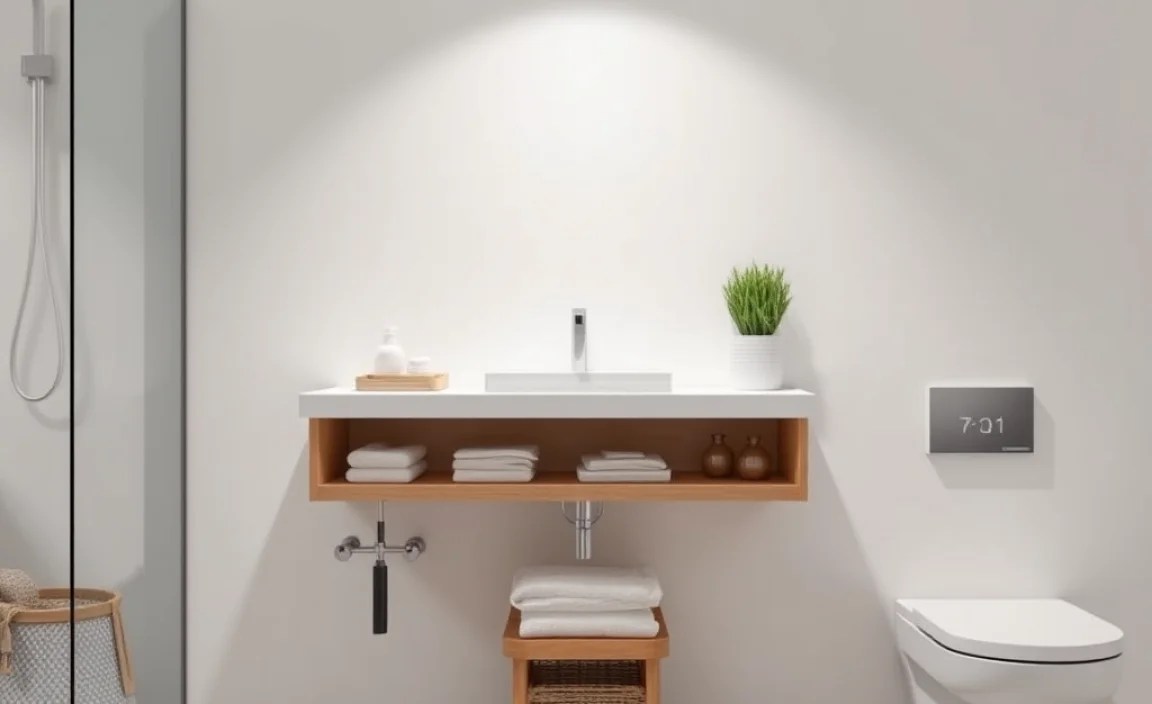
The placement of your shelves is as crucial as the shelf style itself. Consider these prime spots:
- Above the Toilet: A classic and often underutilized space. Perfect for towels, decorative baskets, or storing extra toilet paper. Ensure there’s enough clearance for comfortable use of the toilet.
- Beside the Vanity: If you have wall space next to your sink, shelves here can hold daily essentials like lotions, toothbrushes, or decorative plants, keeping your countertop clear.
- Above the Doorway: A high, often overlooked spot that can be great for less frequently used items or decorative baskets.
- On a Blank Wall: Use a longer wall to create a statement with a few well-spaced floating shelves, displaying a curated collection of items.
- Inside the Shower (Recessed or Corner): Essential for keeping shower products organized and off the floor. Recessed niches are ideal for a seamless look.
When planning, always measure the space carefully and consider the overall flow of the room. You want shelves that enhance accessibility, not hinder movement.
Essential Tools and Materials for Installation
Most minimalist shelf installations are beginner-friendly. Here’s a list of tools and materials you might need, depending on the shelf type:
Basic Tools:
- Measuring Tape: For accurate measurements.
- Pencil: To mark drilling points.
- Level: Essential for ensuring your shelves are straight.
- Stud Finder: Crucial for securely mounting shelves to wall studs for maximum weight capacity.
- Drill and Drill Bits: For creating pilot holes and driving screws.
- Screwdriver Set: Manual or powered, to match screw types.
- Hammer: For tapping in wall anchors if needed.
Common Materials:
- Your Chosen Shelving Unit: This could be a pre-made floating shelf, a piece of wood cut to size, or a metal shelf.
- Mounting Hardware:
- Internal Mounting Brackets: For floating shelves.
- L-Brackets or Shelf Brackets: For shelves that require visible support. Choose sleek, minimalist designs.
- Screws: Appropriate length and type for your wall material and shelf weight.
- Wall Anchors: If you cannot locate wall studs, use heavy-duty drywall anchors rated for the weight you intend the shelf to hold. Always check the suitability of anchors for your wall type (drywall, plaster, etc.). A useful resource for understanding wall anchors and load-bearing is often found via building material supply stores or DIY guides from organizations like the This Old House ventilation guide, which covers load-bearing principles.
- Caulk (Optional): For sealing gaps around integrated shelving.
- Paint or Stain (Optional): If you’re customizing wooden shelves.
Safety First: Important Considerations
Before you start drilling, remember these safety tips:
- Locate Wall Studs: Always try to screw into wall studs for the most secure installation. Use a stud finder!
- Check for Utilities: Be mindful of electrical wiring or plumbing within walls. If unsure, consult a professional or use a utility finder.
- Weight Limits: Adhere to the weight limits specified for your shelves and hardware. Don’t overload them.
- Use the Right Anchors: If studs aren’t available, use heavy-duty drywall anchors designed for the load. Poorly installed anchors can lead to shelves falling and potential injury or damage.
- Wear Safety Glasses: Protect your eyes when drilling or hammering.
Step-by-Step: Installing a Basic Floating Shelf
Let’s walk through installing a common type of floating shelf. This process is generally applicable to most pre-made floating shelf kits.
Step 1: Plan and Measure
- Determine the exact location and height for your shelf.
- Hold the shelf or its mounting bracket against the wall.
- Use a level to ensure it’s perfectly horizontal.
- Lightly mark the intended top edge of the shelf or the mounting bracket holes with a pencil.
Step 2: Locate Wall Studs
- Use a stud finder to locate the nearest wall studs within your marked area.
- Mark the center of each stud where your bracket will be attached. Ideally, you’ll hit at least one, preferably two, studs for maximum support.
Step 3: Position and Mark the Bracket
- Hold the floating shelf’s mounting bracket (the internal piece that screws to the wall) against the wall, aligning it with your stud marks and the desired height.
- Use the level again to ensure it’s perfectly straight.
- Mark the screw hole locations through the bracket onto the wall.
Step 4: Drill Pilot Holes
- If screwing into studs, select a drill bit slightly smaller than your screws.
- Drill pilot holes at your marked locations.
- If you cannot hit studs and must use drywall anchors, follow the anchor manufacturer’s instructions for hole size and installation.
Step 5: Attach the Mounting Bracket
- Align the mounting bracket with your pilot holes or anchors.
- Securely screw the bracket to the wall. If using studs, ensure the screws are long enough to penetrate well into the wood.
- Check that the bracket is firmly attached and doesn’t wiggle.
Step 6: Attach the Shelf
- Slide the shelf onto the protruding rods or into the bracket channel.
- Many floating shelf systems have small screws on the underside of the shelf that you tighten to secure it to the bracket.
- Ensure the shelf is fully seated and feels stable.
Step 7: Final Check
- Gently press down on the shelf to test its stability.
- Wipe away any pencil marks.
- You’re ready to decorate!
For other types of shelves, such as those with visible brackets, the process will involve mounting the brackets first, then attaching the shelf to them. Always refer to the specific installation instructions that come with your chosen shelving product.
Elevating Your Minimalist Bathroom Shelf Design
Once your shelves are installed, it’s time to style them. Remember, the goal is curated and functional, not cluttered.
- Uniform Containers: Store toiletries, cotton swabs, or makeup in matching jars, boxes, or baskets. This instantly creates a cohesive look.
- Consider Height and Depth: Vary the heights of items. Place taller items at the back and shorter ones at the front. Don’t let items spill over the edges.
- Add Greenery: A small, moisture-loving plant like a snake plant or ZZ plant can bring life to a shelf.
- Minimal Decor: Choose one or two decorative items that complement your bathroom’s style, like a small piece of art, a decorative tray, or a stylish candle.
- Function First: Ensure that essential items are easily accessible. A beautiful shelf is useless if you can’t grab your toothbrush when you need it.
- Regular Decluttering: The key to maintaining a minimalist look is to regularly go through what’s on your shelves and remove anything that doesn’t belong or isn’t used.
Before & After: The Transformative Power of Minimalist Shelving
Imagine this:
- Before: A countertop overflowing with bottles, a shower caddy crammed with half-used shampoo, and a general feeling of disarray.
- After: A clear vanity surface, a sleek floating shelf holding neatly folded hand towels, another above the toilet with a small framed print and a neatly organized basket of essentials, and a minimalist recessed shelf in the shower housing only the necessary bottles.
The difference is striking. Minimalist shelves help create visual breathing room, making your bathroom feel like a private spa retreat rather than a storage unit.
Table: Comparing Minimalist Shelf Styles
Here’s a quick comparison to help you choose the best style for your needs:
| Shelf Style | Key Aesthetic | Best For | DIY Difficulty | Notes |
|---|---|---|---|---|
| Floating Shelf | Clean, seamless, modern | General storage, display | Easy to Moderate | Requires hidden bracket system |
| Slim Ledge Shelf | Light, unobtrusive | Displaying lighter items, narrow spaces | Easy | Small lip prevents items from sliding |
