
Bathtub descriptions for beginners are simple guides to help you identify and understand different bathtub features, materials, and types. This essential guide breaks down everything you need to know, from basic terms to choosing the right tub for your needs, making your bathroom upgrade or repair projects stress-free and successful.
So, you’re looking at bathtubs, maybe for a new home, a renovation, or just trying to understand what that funny button does. It can feel like a foreign language with all the different terms for materials, shapes, and features. But don’t worry! Understanding bathtub descriptions is actually quite straightforward once you know the basics. We’ll walk through everything so you can feel confident talking about tubs, making choices, and getting the most out of your bathroom space.
This guide is designed to be your go-to resource, explaining everything in plain English. We’ll cover the essential parts of a bathtub description, what different materials mean for you, and how to avoid common confusion. Get ready to become a bathtub pro!
Understanding Bathtub Anatomy: The Basics
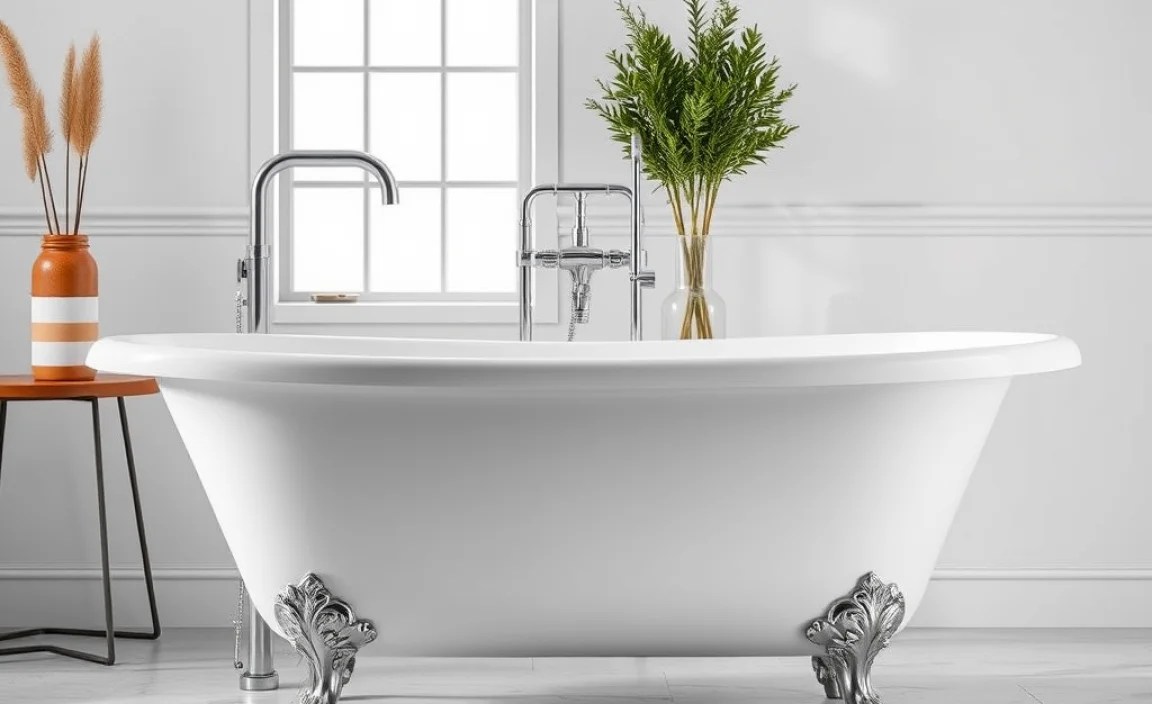
Before diving into descriptions, let’s get familiar with the main parts of a bathtub. Knowing these terms will make descriptions much easier to understand.
Key Bathtub Components:
- Rim: The top edge of the bathtub that you see and can feel. Sometimes called the lip.
- Tubber Wall/Skirt: The vertical paneling around the base and sides of a freestanding tub, or the part of the tub that faces into the room.
- Flange: An outward-facing edge, usually around the top of the tub, designed to help seal the tub against the wall and subfloor, preventing water from seeping behind it.
- Drain: The opening at the bottom of the tub where water escapes.
- Overflow: A safety feature located near the top of the tub wall. It’s a drain hole that prevents the tub from overflowing if the main drain is blocked or forgotten.
- Faucet/Spout: Where the water comes out. This can be mounted on the tub itself, on the wall, or even on the floor.
- Drain Stopper: The mechanism used to close the drain, allowing the tub to fill.
Decoding Bathtub Materials: What Are They Made Of?

The material a bathtub is made from significantly impacts its durability, appearance, cost, and how it feels. Here’s a breakdown of common bathtub materials and what they mean for you:
1. Acrylic Bathtubs
Acrylic is a popular choice, especially for its versatility and affordability. It’s a type of plastic that is molded into shape. Acrylic tubs are:
- Lightweight: Making them easier to transport and install.
- Non-porous: Which means they resist stains and are easy to clean and disinfect.
- Warm to the touch: They don’t feel as cold as some other materials.
- Repairable: Minor scratches can often be buffed out.
- Available in many styles and colors: Offering a lot of design flexibility.
Beginner Tip: Look for “reinforced acrylic” which indicates a stronger, more durable construction, often with a fiberglass or resin core.
2. Fiberglass (Fiberglass Reinforced Plastic – FRP) Bathtubs
Similar to acrylic, fiberglass is also a plastic composite. However, it’s generally less durable and more prone to chipping and cracking than acrylic.
- Very Lightweight: Easiest to manage during installation.
- Most Affordable: Often the lowest cost option.
- Can be easily damaged: Susceptible to impact and heat.
- Porous by nature: Can absorb stains and odors if the gel coat wears down.
Beginner Tip: While budget-friendly, consider if the lower durability justifies the cost savings for your specific use, especially in high-traffic bathrooms.
3. Cast Iron Bathtubs
These are the classic, heavy-duty tubs. They are made by pouring molten iron into a mold and then coating it with a porcelain enamel finish.
- Extremely Durable: Can last for generations if cared for.
- Excellent Heat Retention: Keep water warmer for longer baths.
- Heavy: Requires reinforced flooring and significant effort to move and install.
- Porcelain enamel can chip: If struck with a heavy object, the enamel can chip, exposing the iron beneath to rust.
- Expensive: Generally one of the pricier options.
Beginner Tip: If you’re considering a cast iron tub, always check your floor’s weight capacity. You might need professional help for installation.
4. Steel Bathtubs
Steel tubs are made from stamped steel sheets, often with a porcelain enamel finish. They are a lighter and more affordable alternative to cast iron.
- Lighter than cast iron: Easier to install.
- More affordable than cast iron: A good middle-ground option.
- Good heat retention: Better than acrylic or fiberglass, but not as good as cast iron.
- Can dent: Thinner steel can be dented if hit hard.
- Porcelain enamel can chip: Similar to cast iron, the enamel can chip.
Beginner Tip: Look for thicker gauge steel for better durability and sound deadening, as steel tubs can sometimes produce a “water hammer” sound when filling.
5. Solid Surface / Composite Tubs
These are made from a blend of natural minerals and resins. They offer a premium look and feel.
- Luxurious feel: Often mimic the look of stone or marble.
- Non-porous and durable: Excellent resistance to stains and scratches.
- Repairable: Minor damage can often be sanded and resurfaced.
- Heavy: Similar to cast iron in weight, requiring structural consideration.
- Expensive: Generally a higher-end option.
Beginner Tip: These tubs are a great option if you want the look of natural stone without the extreme weight and porosity issues.
Understanding Bathtub Types: Shapes and Installation Styles

Beyond materials, bathtubs come in different styles that dictate how they fit into your bathroom. This is often a key part of their description.
1. Alcove Bathtubs
These are the most common type of bathtub, designed to fit into a three-walled recess (an alcove). They usually have a finished front and are often paired with a shower surround.
- Space-saving: Ideal for smaller bathrooms.
- Integrated design: Built into the structure of the bathroom.
- Easy installation: Designed for standard bathroom layouts.
- Typically “drop-in” or “alcove” style: Meaning they are installed within a framed space.
Beginner Tip: When looking at alcove tubs, pay attention to the “drain side” (left or right) to ensure it matches your plumbing. This information is usually clearly stated in the description.
2. Drop-in Bathtubs
These tubs are designed to be placed into a custom-built deck or frame, with the rim resting on top of the surround. They can be installed in an alcove or as a corner tub.
- Customizable: Can be fitted into various deck designs.
- Easier installation than undermount: The rim supports the tub.
- Requires more surrounding material: Needs a deck or platform to sit on.
- All faucet controls are accessible: Can be mounted on the deck.
Beginner Tip: The description will indicate if it’s a “drop-in” tub, meaning it’s meant to be surrounded by tile, wood, or other deck material. This is different from a freestanding tub.
3. Freestanding Bathtubs
These tubs are not attached to any walls and stand independently in the bathroom. They offer a luxurious and stylish focal point.
- Aesthetic appeal: Make a statement in the bathroom.
- Flexible placement: Can be placed anywhere with access to plumbing.
- Require specific plumbing: Often need a floor-mounted faucet.
- Can be heavier: Many are made of cast iron or solid surface materials.
Beginner Tip: Freestanding tubs are described by their style (e.g., clawfoot, modern, slipper) and material.
4. Corner Bathtubs
As the name suggests, these tubs are designed to fit into a corner of the bathroom, often large and luxurious, sometimes with seating areas.
- Space utilization: Good for maximizing corner space, especially for larger tubs.
- Can offer more space: Often wider and deeper.
- Requires specific corner framing/plumbing: Installation can be more complex.
Beginner Tip: Corner tubs are often described by their shape (e.g., triangular, quadrant) and their dimensions.
5. Japanese Soaking Tubs (Ofuro)
These are typically deeper, smaller tubs designed for sitting upright and soaking, rather than reclining.
- Deep soaking experience: Promotes relaxation.
- Space-efficient: Can fit into smaller bathrooms if designed as a built-in.
- Requires specific plumbing considerations: Due to depth.
Beginner Tip: “Ofuro” is the Japanese term. They are often made of wood, though modern versions can be acrylic or other materials. Descriptions will emphasize depth.
Understanding Bathtub Features and Functions

Beyond basic construction, bathtubs can come with various features that enhance the bathing experience. These are often highlighted in descriptions.
1. Standard Bathtub
This refers to a basic, no-frills tub designed for filling with water for a bath. The description will focus on material, size, and installation type.
2. Whirlpool Bathtubs
These tubs have jets that circulate water, creating a massaging effect. The description will often mention the number and type of jets.
- Hydrotherapy benefits: Can help soothe muscles.
- Requires dedicated electrical circuit: For the pump.
- More complex installation and maintenance: Due to extra plumbing and electrical components.
Beginner Tip: Look for terms like “water jets” or “hydro-massage.” The pump size (horsepower) might also be mentioned.
3. Air Bathtubs (Air Baths)
These tubs use a blower to push warm air through tiny holes in the tub floor, creating a gentle, effervescent massage.
- Gentle massage: Bubbles provide a relaxing sensation.
- Less aggressive than whirlpools: Good for those who prefer a lighter touch.
- Requires a blower: Also needs a dedicated electrical circuit.
- Easy to clean: The small holes are less prone to clogging than water jets.
Beginner Tip: “Air jets” or “bubble massage” are common terms. The blower capacity is usually stated in watts or horsepower.
4. Soaking Bathtubs
These are designed for deep immersion. They are typically deeper than standard bathtubs and may have sloped sides for comfortable reclining.
- Maximized depth: Allows more of your body to be submerged.
- Focus on relaxation: No jets, just pure water immersion.
- Requires more water: To fill to the desired depth.
Beginner Tip: Descriptions will emphasize depth dimensions, often specifying the “water depth” or “fill depth.”
5. Bathtub Drains and Overflow Systems
The drain is where water exits, and the overflow prevents flooding. Descriptions might detail the type of mechanism.
- Cable Drain (Lift-and-turn): A rod is lifted to open the drain, turned to lock it closed.
- Foot-actuated Drain: Push down with your foot to open or close.
- Toe-tap Drain: Push down with your toe to open or close.
- Trip Lever Drain: Operated by a lever on the overflow plate.
Beginner Tip: These are often available as separate purchases but are sometimes included with the tub. The finish (chrome, brushed nickel, etc.) is important for matching fixtures.
Putting It All Together: Excerpt from a Bathtub Description

Let’s look at a hypothetical description and break it down:
“Modern 60-inch Alcove Soaking Bathtub in White Acrylic (Model: AquaLux 3000)”
- “Modern”: Refers to the design style – sleek, clean lines, likely minimalist.
- “60-inch”: The length of the tub. Standard tub length is often 60 inches. This indicates a common size.
- “Alcove”: The installation type. It’s designed to fit into a three-walled recess.
- “Soaking Bathtub”: The primary function. This tub is optimized for deep water immersion, not jets.
- “White Acrylic”: The material and color. It’s made of lightweight, non-porous acrylic and is white.
- “(Model: AquaLux 3000)”: The specific product identifier, useful for looking up more details or parts later.
Another example:
“Freestanding Clawfoot Bathtub in Cast Iron with Porcelain Enamel Finish – 72 inches Long”
- “Freestanding”: Installation type – it stands alone, not against walls.
- “Clawfoot”: A classic style of freestanding tub, characterized by decorative feet.
- “Cast Iron”: The robust, heavy material known for heat retention.
- “Porcelain Enamel Finish”: The durable, glossy outer coating.
- “72 inches Long”: A larger than standard size, offering more room.
Essential Tools for Bathtub Installation & Maintenance
While selecting a tub might be the focus of descriptions, having the right tools is crucial for any DIY tub project. Here are some essentials:
| Tool | Purpose | Beginner Tip |
|---|---|---|
| Adjustable Wrench | Tightening/loosening nuts and bolts on plumbing connections. | Get a sturdy one with a good grip. |
| Plumber’s Putty/Silicone Sealant | Sealing around drains, faucets, and tub edges to prevent leaks. | Always check if the material you’re sealing needs putty or sealant (some materials react badly to putty). |
| Level | Ensuring the tub is perfectly level for proper drainage and stability. | A longer level is better for catching any slight dips. |
| Measuring Tape | Accurately measuring spaces for tub fit and clearances. | Essential for ensuring your new tub fits! |
| Utility Knife/Caulking Gun | Cutting caulk tubes and applying sealant smoothly. | Practice on scrap material first. Fresh caulk looks much better. |
| Gloves and Eyewear | Protecting your hands and eyes from debris and chemicals. | Safety first, always! |
For more detailed information on plumbing tools, this resource from This Old House is excellent.
Common Bathtub Description Terms You’ll Encounter
Here’s a quick glossary of terms you might see in product descriptions that can be confusing:
- Apron Front: The visible vertical panel on the front of an alcove or some freestanding tubs.
- Bathtub Surround: The walls around an alcove tub, often made of acrylic, fiberglass, tile, or stone.
- Bathtub Drain Assembly: The complete set of parts needed to create the drain, including the strainer, shoe, and tailpiece.
- Escutcheon Plate: A decorative plate behind a faucet or showerhead to cover.
