
Best oil-lubed 33-gallon air compressors offer robust performance and longevity for DIY projects. Choose based on CFM, PSI, motor power, and noise level. Regular oil changes and maintenance are key for peak operation.
Tackling DIY projects often requires reliable compressed air power, and a 33-gallon oil-lubed air compressor is a fantastic workhorse for many homes. But with so many options, how do you pick the right one without getting lost in technical specs? Don’t worry! This guide breaks down exactly what you need to know to find the best oil-lubed 33-gallon air compressor for your needs. We’ll walk through the key features, help you understand the jargon, and steer you towards a compressor that will serve you reliably for years to come. Get ready to power up your projects with confidence!
Why Choose an Oil-Lubed 33 Gallon Air Compressor?

Oil-lubed air compressors are known for their durability and ability to handle demanding tasks. The oil keeps the internal components, like the piston and cylinder, cool and well-lubricated. This reduces wear and tear, leading to a longer lifespan compared to their oil-free counterparts. The 33-gallon tank size is a sweet spot for many home garages and workshops. It’s large enough to provide a steady supply of air for tools like impact wrenches, sanders, and spray guns without needing to cycle on and off too frequently, but it’s generally still manageable in terms of space and portability.
For homeowners and DIY enthusiasts, this size offers a great balance. It can handle intermittent high-air demands and provides continuous airflow for longer jobs. Unlike smaller compressors that might struggle with continuous use or larger industrial models that might be overkill and too power-hungry, the 33-gallon oil-lubed unit is the versatile champion of the home workshop.
Key Features to Consider When Buying
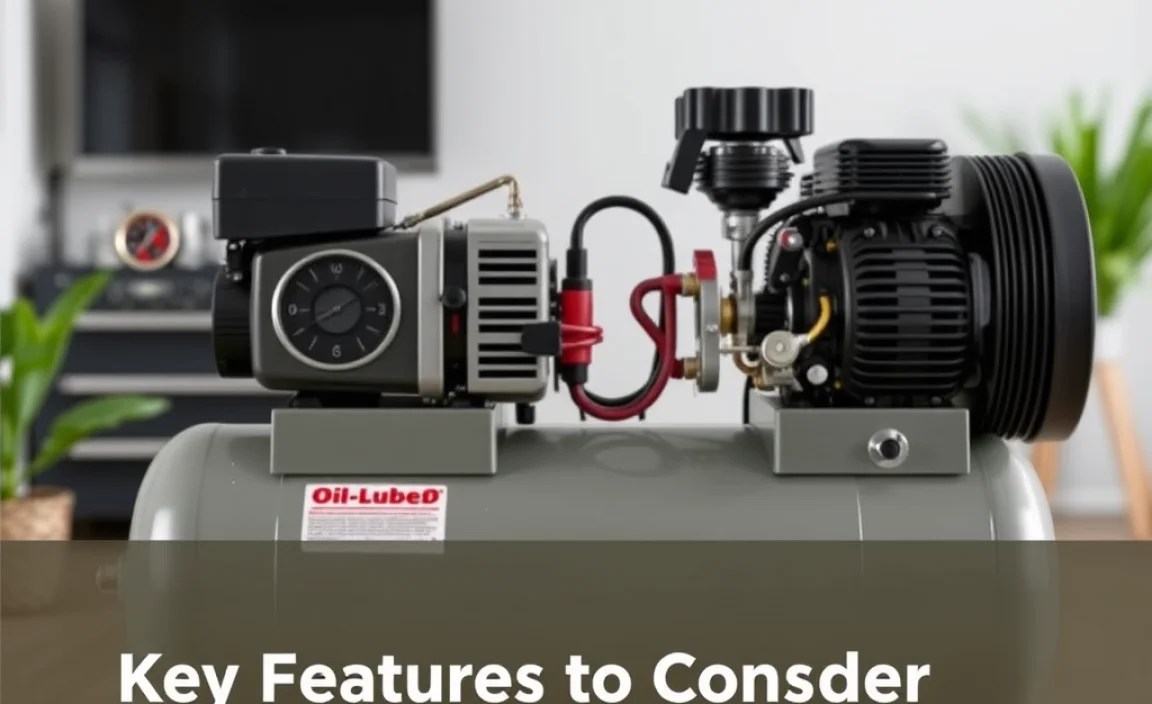
When you’re looking for the best oil-lubed 33-gallon air compressor, a few features will make a big difference in performance and usability. Let’s break them down:
1. CFM (Cubic Feet per Minute)
CFM is arguably the most important spec. It tells you how much air the compressor can deliver per minute. Different air tools require different CFM ratings to operate effectively. To find the right CFM for your needs, consider the tools you’ll be using most often. You want a compressor that provides at least 1.5 times the CFM requirement of your most air-hungry tool. This ensures your tools run at their optimal pressure without bogging down.
Here’s a quick guide for common tools:
- Nail guns (brad, finish): 1-2 CFM
- Impact wrenches: 5-8 CFM
- Orbital sanders: 5-10 CFM
- HVLP spray guns: 7-12 CFM
- Grinders: 8-15 CFM
Always check the specifications of your air tools to confirm their CFM requirements. Using a compressor with insufficient CFM will lead to poor tool performance and frustration.
2. Maximum PSI (Pounds per Square Inch)
PSI measures the air pressure the compressor can produce. Most common air tools operate effectively between 90-100 PSI. A 33-gallon compressor will typically have a maximum PSI of 125-175 PSI. This higher PSI allows the tank to store more air, meaning the compressor won’t have to run as often. It also ensures that even as the tank pressure drops, you’ll still have enough pressure to operate your tools during those critical moments.
3. Horsepower (HP)
Horsepower relates to the motor’s power. While it’s often advertised prominently, CFM is a more direct indicator of performance for air tools. A higher HP motor generally means the compressor can produce more air faster and handle tougher jobs. For a 33-gallon compressor, you’ll typically see motors in the 2 HP to 6 HP range. A 3-5 HP motor is usually sufficient for most home and DIY applications.
4. Tank Size
You’re specifically looking for a 33-gallon tank, which is a great size for versatility. A larger tank means less frequent cycling of the motor, which can reduce wear and tear and provide a more consistent air supply for continuous-use tools. It also means you can run tools for longer before the pressure drops significantly.
5. Pump Type and Durability
Oil-lubed compressors typically use cast-iron cylinders, which are more durable and dissipate heat better than aluminum cylinders found in some oil-free models. Look for a pump with a well-regarded reputation for longevity. Oil-lubed pumps generally require less maintenance in the long run and are built for more demanding, continuous-duty cycles.
6. Noise Level
Air compressors can be loud. If you’re working in a residential area or a sensitive environment, noise level is a critical factor. Compressors are often rated in decibels (dB). A quieter compressor can make a big difference in your or your neighbors’ comfort. Look for models that advertise lower dB ratings, often starting around 60-70 dB for quieter models, though many standard models will be in the 70-85 dB range.
For more information on how air compressors work and their specifications, the U.S. Department of Energy offers valuable insights into energy efficiency and performance metrics.
7. Portability and Wheels
While a 33-gallon compressor isn’t something you’ll move daily, most come with wheels to help with repositioning in your garage or workshop. Check the wheel design – larger, sturdy wheels are better for uneven surfaces. Some models may also have a handle for easier lifting and maneuvering.
Top Oil-Lubed 33 Gallon Air Compressor Recommendations

Finding the absolute “best” depends on your specific needs and budget. However, several brands and models consistently receive high marks from DIYers and professionals for their reliability, performance, and value in the 33-gallon oil-lubed category.
Here are a few types of compressors that are often highly rated:
1. Ingersoll Rand SS5 Series
Ingersoll Rand is a brand synonymous with professional-grade air compressors. Their SS5 series, offering a 33-gallon tank option, is a popular choice for its durable cast-iron pump, powerful motor, and ability to deliver consistent CFM. These units are built for continuous operation and are a significant investment that will likely last for decades with proper care.
2. Campbell Hausfeld 33 Gallon Vertical Air Compressor
Campbell Hausfeld offers a range of solid options for the home user. Their 33-gallon vertical compressors are often praised for being powerful enough for most home garage tasks, relatively quiet compared to some competitors, and offering good value for money. The vertical design also helps save floor space. They typically feature cast-iron cylinder pumps for durability.
3. Kobalt 33 Gallon Electric Vertical Air Compressor
Available at Lowe’s, Kobalt compressors are a strong contender for DIYers. They often provide a good balance of performance, features, and price. The 33-gallon vertical models usually boast sufficient CFM for a wide array of tools, durable construction, and user-friendly features, making them an accessible option for many.
4. Craftsman 33 Gallon Electric Air Compressor
Craftsman is a staple in many home workshops. Their 33-gallon oil-lubed compressors are known for their robust build and reliable performance. They often come with features like multi-functional regulators and easy-drain valves, designed with the home user in mind. These are typically good all-around performers for various DIY projects.
5. DEWALT 33 Gallon Electric Air Compressor
DEWALT is another trusted name in the tool industry. Their 33-gallon air compressors are built to be tough and efficient. They often feature powerful motors, durable pumps, and designs that focus on consistent airflow and longevity, making them a reliable choice for serious DIYers and light professional use.
When comparing these, always look at the specific CFM and PSI ratings for the model you’re considering, as these can vary even within the same “series.”</p
Essential Maintenance for Your Air Compressor
To ensure your best oil-lubed 33-gallon air compressor runs efficiently and lasts for years, regular maintenance is crucial. It’s not complicated and can be broken down into simple steps.
Daily Checks (Before or After Each Use)
1. Drain the Tank: This is the most important daily task. Water condenses inside the tank as the air compresses and cools. If left unchecked, this water can cause rust from the inside out, damaging the tank and potentially contaminating your air supply. Most compressors have a drain valve at the bottom of the tank. Slowly open it to let out all the moisture and any residual air. Do this with the compressor turned off and the tank depressurized.
2. Check Oil Level: For oil-lubed compressors, ensure the oil level is between the minimum and maximum marks on the sight glass. If it’s low, add the type of oil recommended by the manufacturer. Using the wrong oil can damage the pump.
3. Inspect Air Filter: Visually inspect the air filter. If it looks dirty or clogged, it will restrict airflow and make your compressor work harder. Some filters can be cleaned; others need to be replaced.
Weekly or Monthly Maintenance
1. Clean the Air Filter: If your air filter is cleanable (often a sponge or foam type), clean it according to the manufacturer’s instructions. A dirty filter forces the motor to work harder, reducing efficiency and potentially causing overheating.
2. Check for Leaks: Listen for any unusual hissing sounds, which could indicate air leaks from hoses, fittings, or valves. Leaks waste energy and can prevent your compressor from reaching its desired pressure, leading to more frequent cycling.
3. Wipe Down the Exterior: Keep the compressor clean. Dust and debris can clog cooling fins and vents, causing the unit to overheat.
Annual or Based on Hours of Operation
1. Change the Oil: This is the most critical maintenance task for oil-lubed compressors. The oil breaks down over time, losing its lubricating and cooling properties. Refer to your owner’s manual for the exact oil type and capacity, and the recommended interval for changing it. It’s typically every 500-1000 hours of operation, or annually, whichever comes first. Draining old oil and replacing it with fresh, high-quality compressor oil is vital for pump longevity. You can find reputable compressor oils from brands like Mobil, Royal Purple, or specific compressor oil manufacturers.
2. Inspect and Replace Belts (if applicable): Some compressors have a belt drive system connecting the motor to the pump. Check the belt for wear, cracks, or looseness. If it shows signs of damage, replace it. Always ensure the compressor is unplugged and the tank is depressurized before working on belts.
3. Inspect Valves and Hoses: Check intake and exhaust valves for wear or damage. Inspect all hoses and connections for cracks, brittleness, or signs of wear. Replace any components that appear compromised to maintain efficiency and safety.
For detailed guidance on maintenance specific to your model, always consult the owner’s manual from the manufacturer. Many manuals are available online and provide clear, step-by-step instructions.
Factors Affecting Compressor Lifespan and Performance

Beyond regular maintenance, several factors contribute to how long your 33-gallon air compressor will perform optimally:
- Duty Cycle: This is the percentage of time a compressor motor can run within a given period without overheating. For home use, look for compressors rated for 50% to 100% duty cycle. A 100% duty cycle means it can run continuously. Oil-lubed units generally have higher duty cycles than oil-free ones.
- Environment: Operating your compressor in a clean, well-ventilated area is crucial. Excess dust can clog filters and cool the motor and pump. Extremely high temperatures can also stress the components.
- Air Quality: While not as critical for lubrication as it is for painting directly, using clean air intake can prolong filter life. For critical applications like painting, consider an air dryer or filter system. You can learn more about air filtration and treatment at resources like OSHA standards for ventilation, which indirectly relate to air quality in a workspace.
- Proper Shut-off Procedure: Always bleed the tank pressure after use and before turning off the power, following the manufacturer’s recommended shutdown procedure. This prevents pressure-related wear.
Understanding Compressor Specifications: A Comparison Table
To help you compare different 33-gallon oil-lubed air compressors, here’s a look at how key specifications might stack up. Note that specific models will vary. This table provides a general comparison.
| Feature | Typical Range for 33 Gal Oil-Lubed | Importance for Beginners | What to Look For |
|---|---|---|---|
| CFM @ 90 PSI | 4.0 – 7.0+ CFM | High. Determines tool usability and efficiency. | Match or exceed your strongest tool’s needs by 1.5x. |
| Max PSI | 125 – 175 PSI | Medium. Higher provides better reserve. | 150 PSI or more is generally good. |
| Horsepower (HP) | 2.0 – 6.0 HP | Medium. Correlates to CFM but isn’t the sole factor. | Consider HP alongside CFM. |
| Tank Size | 33 Gallons | High. Standard for this category. | Ensures steady airflow for many tasks. |
| Pump Material | Cast Iron | High. Affects durability and heat dissipation. | Cast iron is the standard for oil-lubed. |
| Noise Level (dB) | 70 – 85 dB | Medium to High. Depends on workspace. | Lower is better for noise-sensitive areas. |
| Weight | 150 – 250 lbs | Medium. Affects portability. | Look for good wheel design. |
Safety First! Operating Your Air Compressor
Safety should always be your top priority when working with any power tool, and air compressors are no exception. Here are some essential safety tips:
- Read the Manual: Before operating your compressor, thoroughly read and understand the owner’s manual. It contains specific safety instructions for your model.
- Wear Safety Glasses: Always wear safety glasses or goggles to protect your eyes from flying debris, especially when draining the tank or when air is being expelled.
- Proper Ventilation: Ensure the area where you operate the compressor is well-ventilated, especially if running it indoors. Generators and compressors can produce carbon monoxide.
- Electrical Safety: Use grounded electrical outlets and appropriate extension cords (heavy gauge, rated for outdoor use if necessary). Ensure the compressor is unplugged when performing maintenance.
- Pressure Release: Never attempt to exceed the maximum pressure rating of the unit or your air tools. Always release pressure from the tank after use.
- Secure the Unit: Ensure the compressor is on a stable, level surface to prevent it from tipping over.
- Hose and Fitting Integrity: Use only air hoses and fittings rated for the maximum pressure of your compressor. Inspect them regularly for wear and tear.
For comprehensive safety guidelines on compressed air systems, the Compressed Air Best Practices Guide is an excellent resource that provides industry-standard safety protocols.
What Can a 33 Gallon Air Compressor Power?
A 33-gallon oil-lubed air compressor is incredibly versatile for a home workshop. It can power a wide range of air tools and applications:
- Automotive Work: Impact wrenches for lug nuts and suspension work, tire inflators, grease guns, and air-powered ratchets.
- Woodworking: Nail guns (framing, finish, brad nailers), staplers, sanders (orbital, palm), and air-powered routers or die grinders.
