
A diagram of a faucet in plumbing shows its internal parts, like the valve seat and O-ring, helping you understand how water flow is controlled and identify potential leaks for DIY repairs.
Water is essential, and the faucet is our main connection to it. When it drips, splutters, or refuses to work, it’s more than just annoying—it’s a small plumbing puzzle. Understanding the basic diagram of a faucet in plumbing can make these everyday frustrations much easier to handle. You don’t need to be a pro plumber to get a handle on how your faucet works. We’ll break down the components and show you how understanding them can save you time and money. Let’s get those common faucet issues fixed with confidence!
Diagram of Faucet In Plumbing: Essential Guide

Ever stared at a dripping faucet and felt a wave of dread? You’re not alone. Faucets are complex enough to be intimidating, but understanding the basic diagram of a faucet in plumbing is your secret weapon for tackling common issues. It breaks down the seemingly mysterious “guts” of your faucet into understandable parts.
Knowing these parts demystifies leaks, strange noises, and poor water flow. It empowers you to diagnose problems and even perform simple repairs yourself. This guide will walk you through the essential components illustrated in a typical faucet diagram. We’ll keep it simple, clear, and actionable, so you can regain control over your home’s water flow with confidence.
Why Understanding Your Faucet Diagram Matters

Think of a faucet diagram as a map. It shows you all the critical landmarks within that essential fixture. When something goes wrong—a drip, a struggle to turn on the water, or a leak under the sink—this map helps you pinpoint the issue.
For beginners, this is incredibly important. You don’t need to learn complex plumbing jargon. Instead, you learn to recognize key parts like the O-ring, the valve seat, or the cartridge. Knowing what these are and where they are located means:
- Accurate Diagnosis: You can identify the likely cause of a problem without just guessing.
- Efficient Repairs: When you know the part that needs replacing, you can buy the right one. This saves you trips to the hardware store and frustration.
- Saving Money: Many faucet issues are simple fixes that don’t require a professional plumber. Understanding the diagram empowers you to do it yourself.
- Preventative Maintenance: A little knowledge helps you spot potential problems before they become major leaks.
Common Faucet Types and Their Diagrams

Faucets aren’t one-size-fits-all. The internal workings, and thus the diagrams, vary slightly depending on the type. The most common ones you’ll encounter are:
- Compression Faucets: These are the older, more traditional style, often found with two separate handles for hot and cold water. They work by using rubber washers that are squeezed against a valve seat to stop water flow.
- Ball Faucets: Common in kitchens, these single-handle faucets use a slotted metal or plastic ball inside the faucet body to control water flow and temperature. They can be a bit trickier to repair due to the complexity of their parts.
- Cartridge Faucets: These also typically have one or two handles. They use a cartridge, which is a self-contained unit with all the valve mechanisms. Replacing a faulty cartridge is often a straightforward fix.
- Ceramic Disc Faucets: These are the most modern and durable, usually single-handle. They use two ceramic discs that slide against each other to control water flow. They are known for their longevity and resistance to leaks.
While each has unique elements, the core function—controlling water flow—is achieved through similar principles, making most faucet diagrams share some fundamental components.
Essential Parts of A Faucet Diagram

Let’s break down the key players you’ll see on most faucet diagrams. Understanding these components is the first step to mastering faucet repair.
The Body
This is the main housing of the faucet. It’s what you see on your sink or tub. Internally, it contains all the pathways for water and the mechanism that controls its flow. It connects to the water supply lines underneath.
The Spout
This is the part where the water actually comes out. It’s connected to the faucet body and directs the water into the sink or tub. Spouts can be fixed or swivel.
Handles
These are what you use to turn the faucet on and off and adjust the temperature. They connect to the internal valve mechanism. Single-handle faucets control both flow and temperature, while two-handle faucets typically control hot and cold water separately.
The Valve Mechanism
This is the heart of the faucet. It’s what regulates the flow of water and mixes hot and cold water if it’s a single-handle faucet. Depending on the faucet type, this could be:
- Washers and Stems (Compression Faucets): A stem that moves up and down, pressing a rubber washer against a valve seat.
- Ball: A rotating ball with holes that align with water inlets.
- Cartridge: A self-contained unit that houses the valve components.
- Ceramic Discs: Two precisely matched discs that control water flow when they move against each other.
The O-Ring
These are small, circular rubber rings that act as seals. You’ll commonly find them around the base of the spout (to prevent leaks when the spout swivels) and on the valve stem or cartridge. They are a frequent source of leaks when they wear out.
The Valve Seat
Found in compression faucets, the valve seat is a small metal opening at the bottom of the faucet body. The washer presses against it to stop water flow. If this seat becomes corroded or has debris on it, it can cause leaks.
The Stem
In compression faucets, the stem is the part that moves up and down when you turn the handle. It’s connected to the handle and has the washer attached at its end. It also houses O-rings to prevent leaks around the handle area.
The Aerator
This is the small screen or mesh at the very tip of the spout. It mixes air with water, creating a smoother, splash-free stream and also helps conserve water. If your water flow is weak or sputtering, the aerator might be clogged with mineral deposits.
Escutcheon or Flange
This is the decorative plate or collar that covers the hole where the faucet passes through the sink or countertop. It hides the rough opening and any mounting hardware, giving a cleaner look.
Visualize The Parts: An Example Diagram
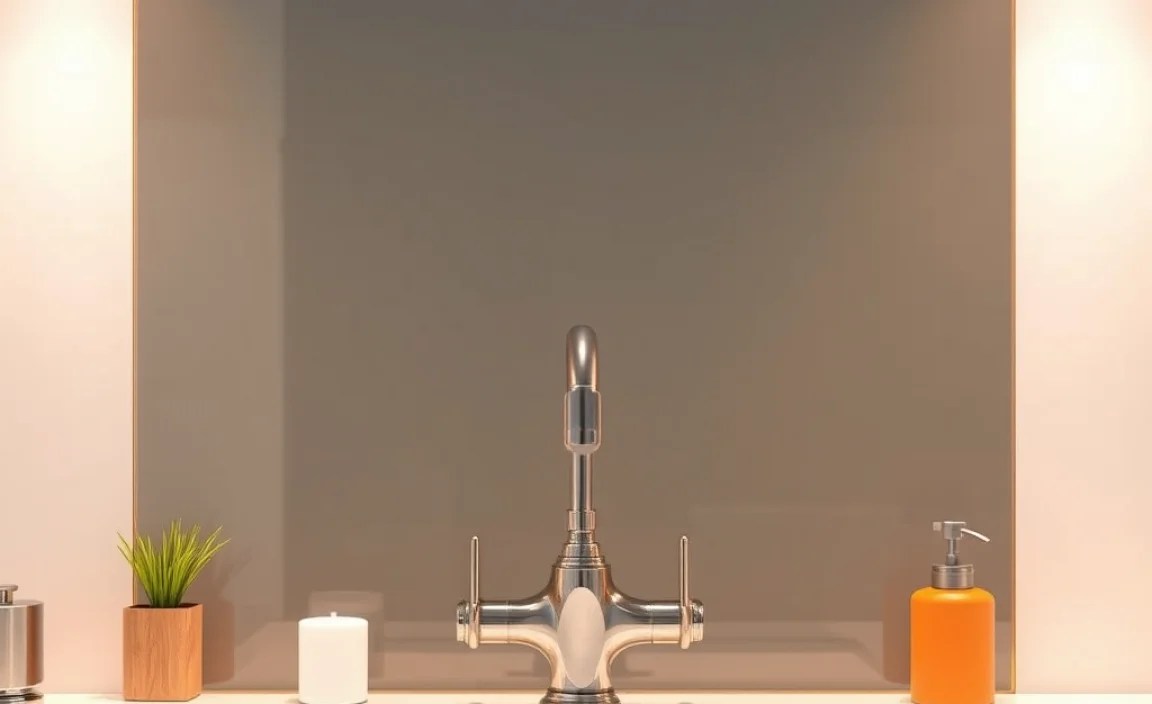
To make this even clearer, let’s imagine a common two-handle, compression-style faucet, as it showcases several fundamental parts described above. Many diagrams would label these components:
| Component | Function | Visual Description | Common Issues |
|---|---|---|---|
| Faucet Body | Housing and water channel | The main metal structure on top of the sink. | Corrosion, cracks (rare). |
| Handles (Hot & Cold) | Operate the valve mechanism | The knobs or levers you turn. | Become loose, handles break. |
| Stem | Controls water flow via washer | Shaft connecting handle to washer. | Wear and tear, stripped threads. |
| Washer | Seals against valve seat | Small rubber disc at the bottom of the stem. | Deterioration, cracking, hardening. (Primary leak cause). |
| Valve Seat | Surface for washer to seal against | Metal ring inside the faucet body. | Corrosion, debris, mineral buildup. (Causes leaks). |
| O-Rings (on stem) | Seal around the stem | Small rubber rings on the stem. | Deterioration, causing leaks around handle. |
| Spout | Directs water flow | The curved pipe over the sink. | Leaking at the base (needs new O-rings). |
| Aerator | Mixes air with water, filters debris | Screen at the spout tip. | Clogging, reducing water flow. |
For other faucet types like cartridge or ball faucets, the “valve mechanism” section of the diagram would show a cartridge unit or a ball with its associated springs and seats, rather than a stem and washer. However, the principles of sealing and flow control remain.
DIY Troubleshooting Using Diagrams
Let’s say you have a persistent drip from your spout. You’ve read about faucet parts and now you’re ready to investigate. Here’s how a diagram helps:
Step 1: Identify Your Faucet Type
Look at your faucet’s handles and general design. Is it single-handle or double-handle? Does it look older or more modern? Consulting your home’s manual or the manufacturer’s website (if you know the brand) is the best way to confirm the type. This helps you find the correct diagram.
Step 2: Locate the Diagram
Search online for “[Your Faucet Brand] [Model Number] Faucet Diagram” or “[Faucet Type] Faucet Parts Diagram.” Reputable plumbing supply sites and manufacturer websites are excellent resources. For example, sites like Lowe’s often provide guides on identifying general faucet parts suitable for beginners.
Step 3: Understand the Leak Location
- Drip from the Spout: This usually points to an issue with the washer, valve seat, cartridge, or ceramic discs—the parts directly controlling water flow. In compression faucets, it’s almost always the washer or a damaged valve seat. For cartridge or disc faucets, the entire cartridge or disc assembly might be faulty.
- Leak around the Handle: This typically indicates a problem with the O-rings around the valve stem or cartridge, or sometimes a faulty bonnet nut.
- Leak at the Base of the Spout: This almost always means the O-rings that seal the spout to the faucet body have worn out.
Step 4: Plan Your Repair Using the Diagram
Once you’ve identified the likely faulty part from your diagram, you can prepare for the repair. You’ll know exactly which component to purchase. For instance, if your compression faucet is dripping, your diagram shows the washer at the end of the stem. That’s your target for replacement.
Safety First: Remember to always turn off the water supply to the faucet (usually via the shut-off valves under the sink) before you begin any disassembly. You can find more on general plumbing safety at resources like the EPA’s WaterSense program, which also touches on faucet efficiency.
Common Repairs and Parts to Keep on Hand
Based on common issues and the parts shown in faucet diagrams, here are a few items that are often worth having in your DIY toolkit:
- Assorted Washers and O-rings: Especially for older compression faucets, a small kit of various-sized rubber washers and O-rings can save the day.
- Cartridge: If you have cartridge faucets, keeping a spare cartridge for your specific model can mean a quick fix for a common failure point.
- Plumber’s Grease: A silicone-based grease used to lubricate O-rings and cartridges, ensuring a good seal and smooth operation.
- Aerator Wrench (Optional): Sometimes aerators are too tight to remove by hand, especially if coated in mineral deposits.
Identifying Parts for Purchase
Your faucet diagram is crucial here. When you bring a worn-out part to the hardware store, or search online, you need to be specific. A diagram helps you understand the technical name of the part (e.g., “ball valve assembly nut” vs. “that round metal thingy”). This ensures you buy the correct replacement, avoiding frustration and repeat trips.
Understanding Different Valve Mechanisms
The diagram of a faucet in plumbing really shines when you compare how different valve mechanisms work. This is where the magic of controlling water happens.
Compression Faucet Mechanism
This is the most basic. When you turn the handle, it spins a screw-like stem. The stem moves up or down. At the bottom of the stem is a rubber washer. When the stem is screwed down, the washer presses firmly against the valve seat, blocking water. When you lift the stem, the washer moves up, allowing water to flow around it and up through the faucet body.
Diagram Highlight: Look for the threaded stem, the washer at its end, and the stationary valve seat inside the faucet body.
Ball Faucet Mechanism
These use a cylindrical or spherical plastic or metal ball with slots and holes. The single handle connects to a cam mechanism that rotates the ball inside a housing. As the ball rotates, its slots align with openings from the hot and cold water inlets and the spout outlet to control flow and temperature. Springs and rubber seats help maintain pressure and create a seal.
Diagram Highlight: Notice the ball, its cam, springs, and the inlet/outlet ports within the faucet body.
Frequently Asked Questions
What is the most common reason for a leaky faucet?
The most common culprit is a worn-out washer or O-ring. These small rubber parts create a seal to stop water flow. Over time, they can degrade, crack, or harden, allowing tiny amounts of water to escape, leading to that persistent drip.
How can I identify the type of faucet I have?
Look at the handle. A single handle faucet usually uses a cartridge to control water. Two-handle faucets can be compression (with rubber washers) or ball/cartridge types. Knowing this helps when you need to buy replacement parts or look up specific diagrams.
What does a “valve seat” do in a faucet?
The valve seat is a crucial part of compression faucets. It’s a small metal or brass fitting where the washer presses down to stop the flow of water. If the valve seat is corroded or damaged, it won’t create a good seal, causing leaks even with a new washer.
Are faucet diagrams important for DIY repairs?
Absolutely! A diagram of a faucet in plumbing acts like a blueprint. It shows you exactly where each part is located and how it fits together. This is invaluable for identifying the problem, knowing which part to replace, and correctly reassembling the faucet.
What are the basic parts of almost any faucet?
Most faucets, regardless of type, share some basic components. These typically include the spout (where water comes out), handles (to control water flow and temperature), a valve mechanism (to stop/start water), and seals (like O-rings or washers) to prevent leaks.
Where can I find a specific faucet diagram for my brand?
Your best bet is to check the faucet manufacturer’s website. They usually have a “support” or “downloads” section where you can find model-specific manuals, parts lists, and detailed diagrams. You can also often find them by searching online using your faucet’s brand and model number.
