
Quick Summary: Understanding faucets in construction means knowing their purpose, types, and how they work. This guide breaks down faucet anatomy and function, making it easy for beginners to identify, maintain, and even install them with confidence. We’ll cover everything from basic parts to common issues and solutions.
Ever felt a little lost when talking about faucets during a home project? You’re not alone! Faucets are everywhere in our homes, but knowing what’s inside and how they work can seem like a technical puzzle. Whether you’re a DIY beginner looking to fix a leaky tap or curious about what goes into building your home, this guide is here to help. We’ll demystify faucets, explaining all the essential parts and their jobs in simple terms. Get ready to feel more confident about your home’s plumbing!
What Exactly is a Faucet in Construction?

In simple terms, a faucet is a valve that controls the flow of water from a pipe. Think of it as the gatekeeper for your water supply to a sink, tub, or shower. In construction, understanding faucets involves knowing their different types, their internal workings, and how they connect to your home’s plumbing system. They aren’t just for looks; they are crucial functional components that need to be reliable and efficient.
The Core Purpose of a Faucet
The main job of any faucet is to give you control over water. This means:
- Starting and Stopping Water Flow: The most basic function. Turn it on to get water, turn it off to stop.
- Regulating Water Temperature: Most modern faucets allow you to mix hot and cold water to get your desired temperature.
- Controlling Water Pressure: You can often adjust how strong or gentle the water stream is.
- Directing Water Flow: Some faucets have spouts that can be moved or diverters to send water to different outlets (like a showerhead vs. a tub spout).
Why Understanding Faucets Matters for DIYers
For anyone tackling home improvement or maintenance, knowing about faucets is a game-changer. When a faucet leaks, stops working, or needs an update, understanding its parts helps you diagnose the problem and fix it correctly. It can save you money on repair calls and give you the satisfaction of a job well done. Plus, when you’re choosing new fixtures, you’ll know what to look for beyond just style.
Anatomy of a Faucet: The Essential Parts

Even though faucets look different, they share many common internal parts. Let’s break down what’s inside a typical faucet:
1. The Spout
This is the most visible part of the faucet, where the water actually comes out. It can come in many shapes and sizes, from simple curves to modern waterfall designs. The spout is connected to the faucet body and houses the aerator.
2. The Aerator
Found at the tip of the spout, the aerator is a small, screw-on (or sometimes integrated) device with a mesh screen. It’s often overlooked, but it’s vital! It mixes air with water, creating a smoother, splash-free stream and can also help conserve water by reducing flow rate without you noticing a difference. If your water flow seems weak or is splashing everywhere, the aerator is a common culprit.
3. The Handle(s)
These are what you use to operate the faucet. They can be single handles that control both hot and cold water with a twist or lift, or two separate handles for hot and cold water. The handle is connected to the valve mechanism inside the faucet body.
4. The Valve Mechanism
This is the heart of the faucet, hidden inside the faucet body. It’s responsible for controlling the flow and temperature of the water. There are several types of valve mechanisms, and understanding them is key to troubleshooting and repair:
a. Compression Valves
These are the oldest and simplest type. They use a rubber washer that gets pressed down (compressed) against a valve seat to stop water flow. To turn the water on, the handle lifts the washer away from the seat. These are common in older homes and are relatively easy to repair, often just requiring a replacement washer.
b. Cartridge Valves
A step up in design, cartridge valves use a movable stem (the cartridge) that slides or rotates to control water flow. They are very reliable and prevent leaks over time. If a cartridge valve fails, you typically replace the entire cartridge unit. They are found in many single-handle and some two-handle faucets.
c. Ball Valves
Common in single-handle faucets found in kitchens, ball valves use a hollow, slotted metal or plastic ball that rotates. Inside the faucet body, this ball lines up slots with the water inlets and outlet to control flow and temperature. They are durable but can sometimes be trickier to repair than cartridge valves.
d. Ceramic Disc Valves
These are the most durable and modern type of valve. They use two hardened ceramic discs that slide against each other. One disc is stationary, and the other moves with the handle. When aligned, water flows; when misaligned, they create a watertight seal. They are highly resistant to wear and tear, making them very long-lasting and leak-proof.
5. The Faucet Body
This is the main housing of the faucet, connecting the spout, handles, and valve mechanism. It’s usually made of brass, stainless steel, or a durable plastic, and it’s what attaches to your sink or countertop.
6. The Escutcheon or Flange
This is the decorative plate or ring that covers the hole where the faucet mounts to the sink or countertop. It provides a finished look and helps to seal the mounting area.
7. The Supply Lines
These are flexible hoses or rigid pipes that connect the faucet’s internal workings to your home’s hot and cold water supply pipes (faucets). They are crucial for getting water to the faucet.
Types of Faucets You’ll Encounter

Beyond their internal workings, faucets are also categorized by their design and how many holes they use to mount to a sink. This is important when you’re choosing a replacement or fitting a new sink.
Common Faucet Designs
- Single-Handle Faucets: One handle controls both water flow and temperature. They are convenient and a popular choice for kitchens and bathrooms.
- Two-Handle Faucets: Separate handles for hot and cold water. This offers more precise temperature control and is often seen in more traditional settings.
- Wall-Mounted Faucets: Installed on the wall behind a sink or tub, often used where a countertop isn’t available or for a specific design aesthetic.
- Centerset Faucets: A common type for bathrooms, where the spout and handles are all on one unit, typically designed for sinks with pre-drilled holes spaced 4 inches apart.
- Widespread Faucets: The spout and handles are separate pieces, requiring three holes in the sink or countertop, usually spaced 8 inches or more apart. This design offers more flexibility in placement and a more custom look.
- Pull-Down/Pull-Out Faucets: Popular in kitchens, these feature a detachable spray head that can be pulled down or pulled out from the main spout for easier rinsing and cleaning.
How Faucets Work: The Flow of Water

Let’s trace the journey of water from your pipes to your sink:
- Water Supply: Cold water comes from one supply pipe, and hot water comes from another, usually heated by your water heater.
- Supply Lines: These connect the main water pipes under your sink (or behind your tub/shower) to the faucet body.
- Entering the Faucet Body: Water enters the faucet body through the supply line connections.
- Valve Control: The valve mechanism (cartridge, ceramic disc, etc.) then controls how much hot and cold water is allowed to pass through.
- Mixing (for single-handle or thermostatic): If it’s a single-handle faucet, the valve mechanism moves to mix the hot and cold water to your desired temperature. For two-handle faucets, the handles independently control the flow of hot and cold, and you mix them manually.
- Flow to Spout: The controlled and mixed water then travels up through the faucet body to the spout.
- Aeration: As the water exits the spout through the aerator, it mixes with air, softening the stream and reducing splashing.
Common Faucet Problems and How to Solve Them
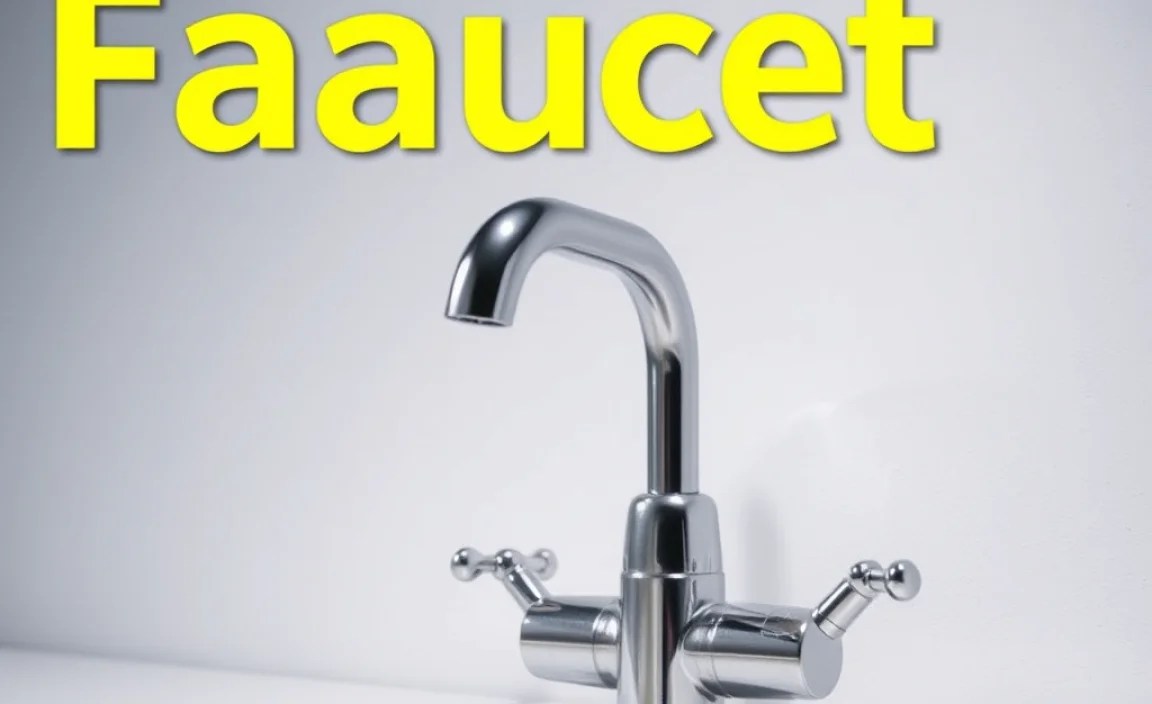
Even the best faucets can develop issues. Here are some common problems and simple DIY fixes:
1. Leaky Faucets
This is perhaps the most common complaint. A drip, drip, drip can be annoying and waste water. The most frequent cause is a worn-out washer (in compression faucets), O-ring, or a faulty cartridge/valve seat.
- Diagnosis: Note which faucet is leaking and from where (spout, handle).
- Fix (Compression Faucet): Turn off the water supply! Disassemble the handle, remove the stem, and replace the rubber washer and O-ring.
- Fix (Cartridge/Disc/Ball Faucet): Turn off water. Remove handle and then the cartridge or valve assembly. Inspect for damage and replace the faulty part according to the manufacturer’s instructions. You can often find replacement kits at hardware stores. Organizations like the Federal Trade Commission offer tips on water efficiency, which includes fixing leaks.
2. Low Water Pressure
Suddenly finding yourself with a trickle instead of a stream? It’s often not a major plumbing issue.
- Check the Aerator: Mineral deposits and debris can clog the aerator. Unscrew it, clean it with vinegar or a brush, rinse, and screw it back on. This is usually the first and easiest fix.
- Check Supply Lines/Valves: Ensure the shut-off valves under the sink are fully open. Sometimes, the valve itself can be partially closed or clogged.
- Internal Clogs: Less commonly, the internal pathways of the faucet or pipes could be blocked by sediment. This might require more advanced cleaning or professional help.
3. Loose Faucet
If your faucet wiggles when you use it, it’s not just unsightly; it can lead to leaks.
- Tighten Mounting Nuts: Look under the sink where the faucet mounts to the countertop or sink. There are usually large nuts or screws holding it in place. Tighten these. Be careful not to overtighten, which could damage the sink or countertop.
4. No Hot Water or Cold Water
If you only get one temperature, the issue might be with your home’s overall water heating or supply, but sometimes it’s the faucet itself.
- Check Separate Handles: For two-handle faucets, ensure the hot and cold handles are both working and not clogged internally.
- Check Mixing Valve: In single-handle faucets, the mechanism that balances hot and cold might be faulty or misaligned.
- Check Main Supply: If neither hot nor cold works, or only one temperature is out from all fixtures, the problem is likely with your water heater or the main water supply to your house.
Materials Used in Faucets
The materials used significantly impact a faucet’s durability, cost, and appearance. Here’s a quick look:
| Material | Pros | Cons | Common Uses |
|---|---|---|---|
| Brass (Chrome-Plated or Solid) | Very durable, corrosion-resistant, can be plated with various finishes. Recyclable. | Can be more expensive. Cheaper brass may contain lead, though most modern faucets meet strict safety standards. | Bodies, internal valve components, spouts. |
| Stainless Steel | Resistant to corrosion and staining, hygienic, modern look. | Can be more expensive than other metals. May show water spots if not wiped. | Spouts, handles, sometimes entire faucet bodies. |
| Zinc Alloy | Lower cost, easy to cast into complex shapes. | Less durable than brass or stainless steel, can corrode over time, not as resistant to high pressure. | Lower-end faucets, decorative parts. |
| Plastic/ABS | Very affordable, lightweight, resistant to corrosion. | Least durable option, can become brittle over time, not suitable for high-pressure or high-temperature applications. | Internal cartridges, some decorative non-moving parts, very basic utility faucets. |
| Ceramic (for discs) | Extremely hard and smooth, highly durable, excellent sealing properties, resists mineral buildup. | Can be brittle if dropped. | Used in ceramic disc valve mechanisms. |
When selecting a faucet, especially for a kitchen or bathroom with regular use, brass or stainless steel are generally recommended for their longevity. Always check for certifications like IAPMO R&T that ensure the product meets safety and performance standards.
Choosing the Right Faucet for Your Project
When you’re in the construction or renovation phase, selecting the right faucet involves considering several factors:
1. Functionality and Location
A kitchen faucet needs to be practical for washing dishes (hence pull-down/pull-out options). A bathroom faucet needs to fit the sink’s hole configuration and be easy to operate. A shower faucet needs to provide reliable temperature control. Consider how each faucet will be used.
2. Number of Holes
As mentioned, sinks and countertops come with a specific number of pre-drilled holes (1, 3, or 4). Make sure your new faucet matches this configuration, or consider a sink/countertop that can accommodate your desired faucet style.
3. Valve Type
For reliability and fewer future headaches, faucets with ceramic disc or high-quality cartridge valves are generally the best choice. They are more durable and less prone to leaks.
4. Finish and Style
This is where aesthetics come in. Common finishes include chrome (durable, affordable), brushed nickel (hides water spots), matte black (modern), and oil-rubbed bronze (traditional). Choose a finish that complements your bathroom or kitchen decor.
5. Brand and Warranty
Reputable brands often offer better quality and longer warranties. A good warranty can provide peace of mind and save you money if issues arise down the line.
Tips for Maintenance and Longevity
Keeping your faucets in good working order doesn’t require a lot of effort:
- Regular Cleaning: Wipe down your faucets with a soft cloth after use to prevent water spots and mineral buildup, especially on finishes like chrome or stainless steel.
- Gentle Operation: Avoid using excessive force when turning handles on or off. This can damage the internal valve mechanisms.
- Address Leaks Quickly: Don’t ignore small drips. They waste water and can worsen over time, potentially leading to more significant problems.
- Know Your Shut-Off Valves: Familiarize yourself with the location of the main water shut-off valve for your house and the individual shut-off valves under each sink. This is crucial for any DIY repair.
Frequently Asked Questions (FAQ)
Q1: What’s the most common reason a faucet leaks?
A1: For older compression faucets, it’s usually a worn-out rubber washer. For newer cartridge, ball, or disc faucets, it’s often a worn O-ring or a damaged cartridge/valve seal.
Q2: How do I stop a faucet from dripping?
A2: First, turn off the water supply to the faucet. Then, identify the type of internal valve mechanism. Depending on the type, you’ll likely need to replace a washer, O-ring, or the entire cartridge/valve assembly. Cleaning the aerator can also sometimes help if the drip is very slow and seemingly from the spout tip.
Q3: What is an aerator, and why is it important?
A3: An aerator is a small screen at the tip of the faucet spout. It mixes air into the water stream, creating a smoother, splash-free flow and can also reduce water consumption. It’s important for both user experience and water conservation.
Q4: Can I replace a faucet myself?
A4: Yes, replacing a faucet is a common DIY project for many homeowners. You’ll need basic tools like a wrench and possibly.
