
Understanding faucet structure is simpler than you might think! Inside every faucet, clever design elements work together to control water flow and temperature. Knowing these basic parts helps with easy fixes and choosing the right replacement. We’ll reveal the genius behind faucet design, making maintenance a breeze for any homeowner.
Have you ever stared at a leaky faucet and wondered what’s going on inside? It’s like a little mystery box! But don’t worry, understanding the basic parts of a faucet isn’t complicated. Most faucets, no matter how fancy they look, share a common internal structure that’s pretty ingenious. By learning what these parts do, you can tackle simple repairs yourself and save a trip to the store. This guide will break down the genius design secrets of faucet structure, explained in a way that makes sense for everyone. Get ready to feel confident about your home’s plumbing!
The Genius Anatomy of Your Faucet

Think of your faucet as a small, well-engineered machine designed specifically to give you water whenever you need it, at the temperature you prefer. It might seem simple from the outside – a handle, maybe a spout – but beneath the surface is a clever system of parts working in harmony. These parts are designed for durability, ease of use, and most importantly, to effectively control the flow of water from your pipes to your sink.
The core of any faucet’s function lies in its ability to regulate both the volume and temperature of the water. This is achieved through a few key components, each with a specific role. Understanding these components is the first step to demystifying your faucet and empowering you to handle minor issues. We’re going to explore these ingenious designs, from the humble valve seat to the smooth-moving cartridge or stem, and see how they combine to create that everyday marvel we call a faucet.
Key Faucet Components Explained for Beginners
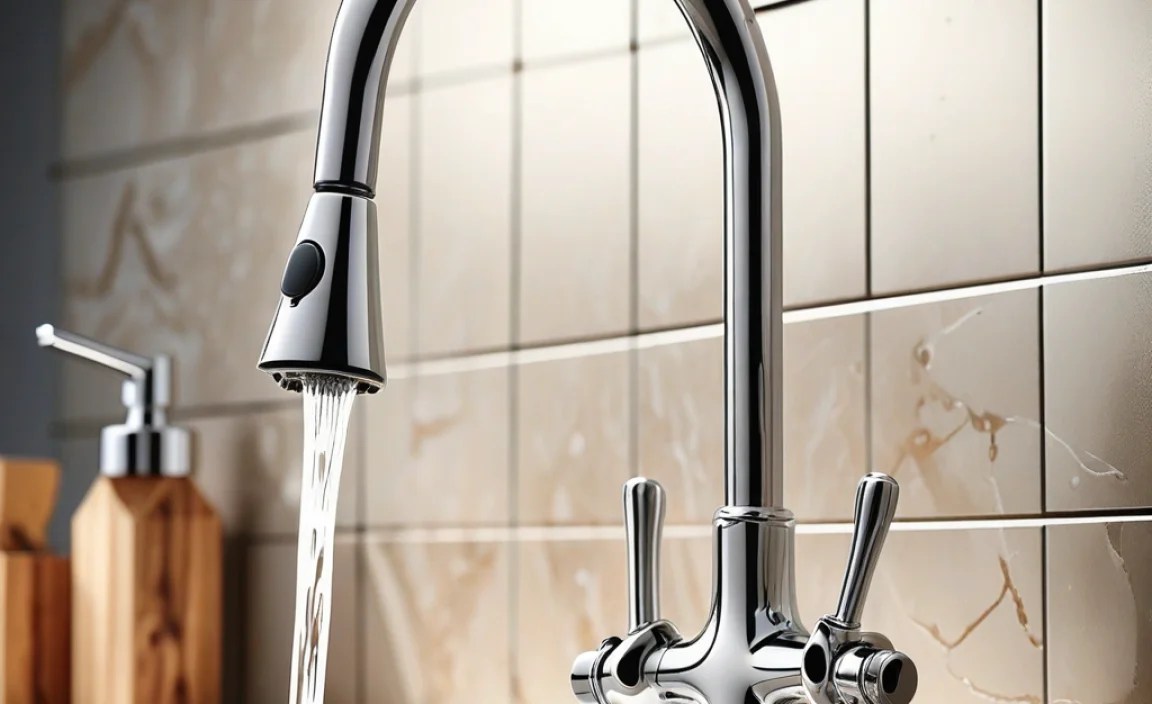
Every faucet, whether it’s in your kitchen, bathroom, or even bathtub, is built with a similar set of core components. These parts work together like a team to deliver water precisely where and when you want it. Let’s break down each essential piece in simple terms:
The Body: The Faucet’s Outer Shell
This is the main housing of the faucet, the part you see and touch the most. It can be made from various materials like brass, stainless steel, or even plastic composites. The body is where all the internal magic happens; it connects to your water supply lines and has openings for the spout and handle(s).
The Spout: Where the Water Comes Out
The spout is simply the channel through which water exits the faucet. It’s positioned to direct the water flow into your sink or basin. Some spouts are fixed, while others can swivel, offering more versatility. The design of the spout can range from basic and utilitarian to decorative and ornate, but its function remains the same: to guide the water.
The Handle: Your Control Center
This is what you’ll interact with to turn the water on and off, and to adjust the temperature. Handles can be a single lever (common in modern faucets) or two separate knobs (one for hot, one for cold) in more traditional designs. The handle is directly connected to the valve mechanism inside the faucet body.
The Valve Mechanism: The Brain of the Faucet
This is arguably the most crucial part of the faucet’s structure. The valve mechanism is responsible for controlling the flow of water and mixing hot and cold water to achieve your desired temperature. There are several types, but the most common ones you’ll encounter are:
Compression Valves (The Classic Style)
Older faucets often used compression valves. These work by using a rubber washer that’s pressed against a valve seat. When you turn the handle, a stem pushes the washer down to seal off the water or lifts it to let water flow. This is a very simple, mechanical system. They are generally reliable but can wear out due to the washer.
Cartridge Valves (The Modern Workhorse)
Cartridge faucets are very common today. Instead of separate washers, they use a self-contained cartridge, usually made of plastic or brass. This cartridge has internal ports that align or misalign as you move the handle, controlling water flow and temperature. They are known for their durability and ease of use. When a cartridge fails, you typically replace the entire unit.
Ball Valves (Found in Single-Handle Faucets)
These faucets typically have a single handle that controls a rotating metal or plastic ball inside the faucet. The ball has holes that line up with water inlets. By rotating the ball, you control how much hot and cold water enters the valve and how much flows out. Ball valves can offer a wide range of motion for temperature and flow control but can sometimes be a bit trickier to repair than cartridge types.
Ceramic Disc Valves (The Most Durable)
These are considered the most durable and long-lasting type of valve. They use two ceramic discs that are extremely hard and smooth. One disc is stationary, and the other rotates with the handle. They slide against each other, and ports in the discs either align to let water through or move out of alignment to stop the flow. Because ceramic is so hard, it’s highly resistant to wear and tear, making leaks less common.
The Valve Seat: The Sealing Surface
This is a crucial part, especially in older compression faucets. It’s a small metal ring at the bottom of the faucet body where the washer or valve assembly presses against to stop water flow. If the valve seat becomes corroded or damaged, it can cause leaks, even with a new washer.
The Aerator: The Water Finisher
Located at the very tip of the spout, the aerator is a small, screw-on component. Its primary job is to mix air into the water stream. This results in a softer, splash-free flow of water and can also help conserve water by reducing the overall volume without sacrificing perceived pressure. It also filters out larger debris.
Screwheads and Retaining Clips: Holding It All Together
These are the nuts and bolts of faucet assembly. Various screws, O-rings, and sometimes retaining clips are used to secure handles, cartridges, and other parts, ensuring a watertight seal and preventing components from falling apart. O-rings are particularly important as they create seals to prevent leaks around moving parts like stems or cartridges.
How Different Faucet Types Use These Components
While the fundamental components remain similar, their arrangement and the specific type of valve mechanism define how a faucet operates. Understanding these differences helps demystify why one faucet might feel different to operate or why one might be more prone to certain types of leaks.
Two-Handle Faucets: Precise Control
Traditional two-handle faucets usually employ a compression valve or a cartridge system for each handle. One handle controls only the hot water, and the other controls only the cold. You manually mix the water by turning both handles to achieve your desired temperature. This design offers very precise control over individual hot and cold water flow, making them a favorite for those who like to fine-tune their water temperature.
Typical Valve Mechanism:
- Compression: Two separate stems, each with a washer pressing against a spindle.
- Cartridge: Two separate cartridges, one for hot and one for cold.
Single-Handle Faucets: Convenience and Speed
Single-handle faucets are designed for convenience. A single lever controls both water flow and temperature. Moving the handle up and down typically controls the volume, while moving it left and right (or in an arc) controls hot and cold mixing. These are very popular in kitchens and bathrooms for their ease of use, especially when your hands are full or dirty.
Typical Valve Mechanism:
- Ball Valve: A single, slotted ball that rotates to control water flow.
- Cartridge Valve: A specialized cartridge that moves to mix hot and cold water.
- Ceramic Disc Valve: Two ceramic discs that rotate against each other, often within a single unit controlled by the handle.
Wall-Mounted Faucets: Space Savers
These faucets are mounted directly to the wall behind the sink, freeing up counter space. Their internal structure is similar to standard deck-mounted faucets but adapted for wall installation. They can use any of the common valve types (cartridge, ceramic disc) and often feature extended spouts to reach over the basin. The main difference is in how they connect to the water supply, requiring specific rough-in valves within the wall.
Thermostatic Faucets: Temperature Consistency
Often found in showers and bathtubs, thermostatic faucets are designed to maintain a set water temperature precisely, regardless of fluctuations in hot or cold water supply pressure. They contain a special thermostatic mixing valve that actively adjusts the mix of hot and cold water to achieve and hold your chosen temperature. This is a genius feature for safety, ensuring you won’t be scalded by a sudden burst of hot water or chilled by a surge of cold.
How They Work:
These valves typically use a wax or plastic component that expands or contracts with temperature changes. This movement mechanically adjusts the flow of hot and cold water to maintain the preset temperature. Leading manufacturers like Grohe offers insights into this advanced technology.
The Hidden Genius in Common Faucet Problems and Fixes

Even the most brilliantly designed faucet can sometimes develop a hiccup. The good news is that most common faucet problems are directly related to the failure or wear of specific components we’ve discussed. Knowing these connections makes troubleshooting much simpler.
Leaky Faucets: The Usual Suspects
A persistent drip is the most common faucet complaint. In older compression faucets, this is very often due to a worn-out rubber washer that can no longer create a watertight seal against the valve seat. In cartridge, ball, or ceramic disc faucets, a leak typically means the internal seals or the cartridge/ball itself has failed or become obstructed with mineral deposits.
Fixes:
- Compression Faucet: Replace the rubber washer and check the condition of the valve seat. Sometimes, a valve seat dresser tool can resurface a slightly worn seat.
- Cartridge/Ball/Ceramic Disc Faucet: Replace the entire cartridge or ball assembly. For ceramic disc faucets, cleaning out any mineral buildup can sometimes resolve minor issues before replacement is necessary.
Low Water Pressure: An Aerator Issue
If your faucet suddenly has weaker flow, don’t immediately assume the pipes are clogged. The most common culprit is a clogged aerator. Over time, mineral deposits, sediment, and grit from the water supply can build up inside the aerator’s screen, restricting water flow.
Fixes:
- Unscrew the aerator from the tip of the spout.
- Disassemble it (if possible, often they are just screwed together).
- Clean the screen thoroughly. Soaking in vinegar can help dissolve mineral deposits.
- Reassemble and screw it back onto the spout.
Faucet Dripping From the Base or Spout Base
A leak around the base of the handle or the base of the spout itself often indicates a problem with O-rings or seals within the faucet body. Like washers, O-rings are flexible seals that prevent water from escaping around moving parts.
Fixes:
- Carefully disassemble the handle and spout assembly.
- Examine the O-rings. If they appear cracked, flattened, or worn, replace them with new ones of the exact same size. Lubricating new O-rings with plumber’s grease before installation helps create a better seal.
Materials Behind the Genius Design
The choice of materials is a crucial aspect of faucet design, contributing to durability, safety, and aesthetics. High-quality materials not only make a faucet look and feel better but also ensure it stands the test of time and frequent use.
Brass: The Classic and Durable Choice
Solid brass is a favorite for faucet bodies and internal components. It’s strong, corrosion-resistant, and can be cast into intricate shapes. Brass faucets tend to be heavier and more durable. However, to prevent lead contamination, many manufacturers now use low-lead or lead-free brass alloys. The EPA’s Lead Free Drinking Water Act sets standards for these materials.
Stainless Steel: For Modern Elegance
Stainless steel is known for its resistance to corrosion and staining, making it a popular choice for a sleek, modern look. It’s also very robust. Faucets made from stainless steel are generally a good option for maintaining water quality.
Plastics and Composites: Lightweight and Affordable
Many internal components, such as cartridges and small seals, are made from high-quality plastics and composite materials. These are often chosen for their ability to form precise seals, their resistance to certain types of corrosion, and their lower cost. While they might not feel as premium as metal, the engineering behind them ensures reliability and longevity when used appropriately in the design.
Rubber and Silicone: Essential for Sealing
These flexible materials are critical for creating watertight seals. Washers in older faucets, O-rings in newer ones, and seals within cartridges all rely on the elasticity and durability of rubber or silicone compounds. The quality of these materials directly impacts how long a faucet will last before developing leaks.
Faucet Design Trends and Future Innovations
Faucet design isn’t static. Manufacturers are constantly innovating, blending aesthetics with advanced functionality and sustainability. Here’s a peek at what’s happening and what’s next:
Touchless and Smart Faucets
Infrared sensors allow faucets to turn on and off with a wave of your hand, promoting hygiene and water conservation. Smart faucets can connect to home assistants, allowing voice control for precise temperature and volume settings, and even tracking water usage. This represents a significant leap in convenience and efficiency.
Water-Saving Technologies
Beyond the aerator, advanced flow restrictors and internal designs are being developed to significantly reduce water consumption by as much as 50% or more, without compromising user experience. Look for faucets with WaterSense labels, which are certified by the EPA for water efficiency.

Enhanced Customization and Finish Options
Homeowners now have a vast array of finishes, from classic chrome and brushed nickel to trendy matte black and vibrant colors. Customization also extends to unique spout shapes and handle designs, allowing faucets to become a statement piece in any kitchen or bathroom.
