
An exhaust fan’s main job is to remove stale air, moisture, and odors, while alternatives like opening windows or using air purifiers offer different benefits for ventilation and air quality. Understanding their distinct functions helps you choose the best solution for your needs.
Ever feel that lingering stuffiness in your bathroom after a shower, or notice persistent cooking smells that just won’t leave your kitchen? You’re not alone! These common home frustrations often point to a need for better air circulation. While exhaust fans are a popular solution, they aren’t always the only option. We’ll break down exactly what an exhaust fan does and explore some clever alternatives. By the end of this guide, you’ll feel confident in knowing how to tackle any stuffy room and keep your home smelling fresh and feeling comfortable.
Understanding the Function of an Exhaust Fan

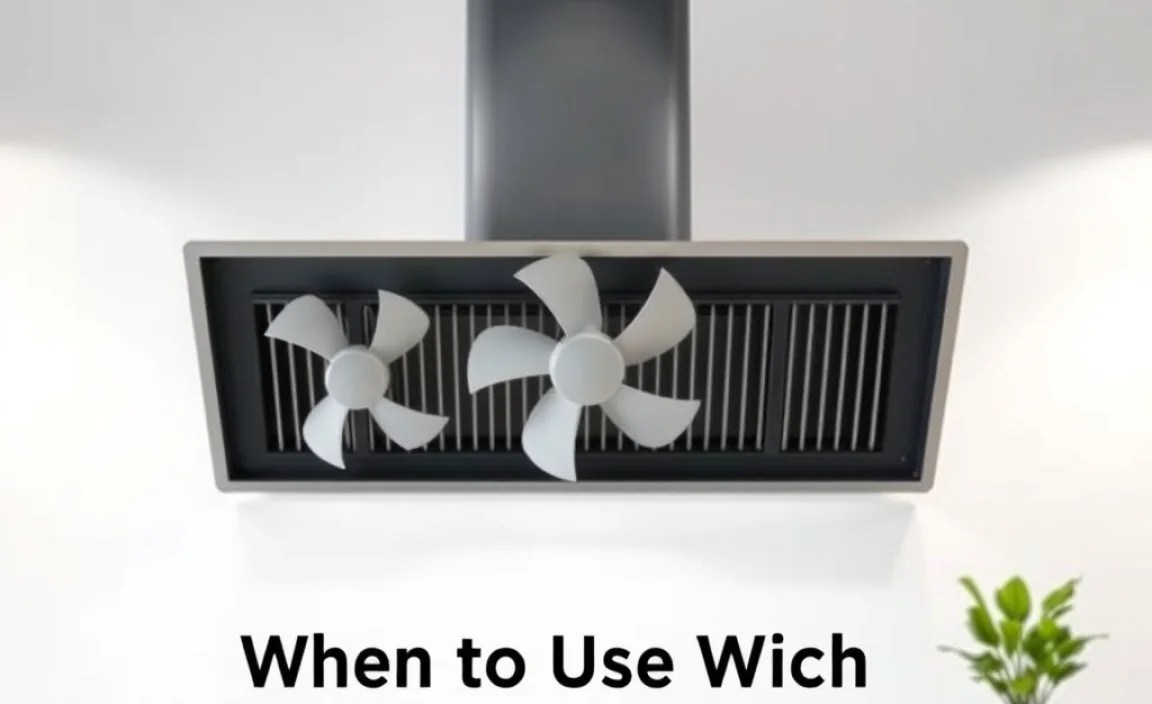
At its core, an exhaust fan is a ventilation device designed to pull air out of a specific area and expel it outside your home. Think of it as a powerful little buddy dedicated to getting rid of undesirable air. Its primary goal is to improve air quality by removing moisture, odors, and pollutants from enclosed spaces like bathrooms, kitchens, and laundry rooms.
How Exhaust Fans Work
An exhaust fan typically consists of a motor, a fan, and a housing. When you switch it on, the motor powers the fan, which then draws air from the room. This air is pushed through a duct or vent system that leads to the outside of your house. Many exhaust fans also have a one-way damper to prevent outside air from coming back in when the fan is off.
Key Functions of an Exhaust Fan:
- Moisture Removal: This is arguably the most critical function, especially in bathrooms. Exhaust fans prevent excess moisture from humid activities like showering or bathing from building up. This helps to stop mold and mildew growth, protect paint and drywall, and extend the life of your fixtures.
- Odor Elimination: Whether it’s lingering cooking smells in the kitchen, bathroom odors, or the scent of cleaning products, an exhaust fan effectively pulls these smells away, leaving your home smelling fresher.
- Pollutant Removal: In kitchens, exhaust fans help remove smoke, grease particles, and other airborne pollutants generated during cooking. In laundry rooms, they can vent out lint and other airborne particles.
- Air Circulation: While not their primary purpose, exhaust fans do contribute to overall air circulation by creating negative pressure that draws in fresher air from other parts of the home.
Where Are Exhaust Fans Typically Used?
You’ll most commonly find exhaust fans installed in a few key areas of a home:
- Bathrooms: Essential for managing humidity and odors.
- Kitchens: Usually above the stove (range hoods), to capture smoke, grease, and cooking odors.
- Laundry Rooms: To vent moisture and lint from dryers.
- Garages/Workshops: To remove fumes from painting, soldering, or operating engines.
The Importance of Proper Ventilation

Good ventilation is more than just making your home smell nice; it’s crucial for a healthy living environment. Poor ventilation can lead to a variety of problems:
- Health Issues: Stale air can contain pollutants, allergens, and even viruses. Mold and mildew, thriving in damp, unventilated spaces, can trigger asthma and allergy symptoms.
- Structural Damage: Persistent moisture buildup can cause wood rot, warp drywall, and damage paint and wallpaper – leading to costly repairs.
- Unpleasant Odors: Odors can become trapped and pervasive, making your home feel uncomfortable and unwelcoming.
- Increased Energy Costs: Inefficient ventilation might mean you need to run your heating or cooling systems more often to combat stuffiness or dampness.
This is where understanding the “function of exhaust fan vs alternative” becomes so important. Each solution addresses these issues differently.
Exploring Alternatives to Exhaust Fans

While exhaust fans are highly effective for targeted ventilation, they require installation and can sometimes be noisy. Thankfully, there are several alternatives that can help improve air quality and circulation in your home, each with its own strengths.
Alternative 1: Natural Ventilation (Opening Windows and Doors)
The simplest and most natural form of ventilation is opening windows and doors. This method relies on the natural movement of air to exchange stale indoor air with fresh outdoor air.
How it Works:
When you open windows, especially on opposite sides of your home, you create a cross-breeze. Air naturally flows from areas of higher pressure (outside, if it’s cooler or windier) to areas of lower pressure (inside), carrying away stale air and bringing in fresh oxygen. This is often referred to as passive ventilation.
Pros of Natural Ventilation:
- Cost-Effective: It’s completely free!
- Energy Efficient: No electricity required.
- Immediate Freshness: Provides a quick influx of fresh air.
- Simple to Use: Just open them up!
- Improved Mood: Natural light and fresh air can positively impact well-being.
Cons of Natural Ventilation:
- Weather Dependent: You can only do this when the weather is pleasant.
- Security Concerns: Open windows can be a security risk.
- Limited Control: You can’t control the volume or direction of airflow precisely.
- Air Quality Issues: If outdoor air quality is poor (e.g., during allergy season, wildfire smoke), this can bring pollutants inside.
- Energy Loss: May lead to heat loss in winter or heat gain in summer, increasing HVAC costs.
- Noise: Can let in outside noise.
Alternative 2: Air Purifiers
Air purifiers don’t “ventilate” in the same way an exhaust fan does by removing air from a space. Instead, they clean the air that’s already in the room. They are excellent for improving indoor air quality by filtering out pollutants.
How it Works:
Air purifiers use a fan to draw air in, pass it through a series of filters (most commonly HEPA and activated carbon filters), and then release the cleaned air back into the room. HEPA filters capture tiny particles like dust, pollen, and pet dander, while activated carbon filters absorb odors and volatile organic compounds (VOCs).
Pros of Air Purifiers:
- Improved Air Quality: Excellent at removing allergens, dust, smoke, pet dander, and VOCs.
- Odor Reduction: Activated carbon filters are very effective at neutralizing odors.
- Quiet Operation: Many models are designed to be very quiet.
- Energy Efficient: Generally consume less power than an exhaust fan.
- Easy to Use: Plug and play, with filter changes as the main maintenance.
- Constant Air Filtration: Can run continuously to maintain air quality.
Cons of Air Purifiers:
- Does Not Remove Moisture: They do not address humidity issues.
- Does Not Remove CO2: They don’t bring in fresh oxygen or remove carbon dioxide buildup.
- Filter Replacement Costs: Filters need regular replacement, which is an ongoing expense.
- Limited Room Coverage: Coverage is typically rated for a specific room size.
- Initial Cost: Can be an upfront investment.
Alternative 3: Dehumidifiers and Humidifiers
These appliances are specifically designed to control the moisture level in the air, which is a key function that exhaust fans also address, albeit differently. Dehumidifiers remove excess moisture, while humidifiers add it.
How They Work:
Dehumidifiers: Work like small air conditioners. They draw in air, cool it to condense moisture, collect the water in a tank, and then reheat the air slightly before releasing it. This is great for damp basements or humid climates.
Humidifiers: Add moisture to the air, often by releasing a fine mist. This is useful in dry climates or during winter when heating systems can dry out the air.
Pros of Dehumidifiers/Humidifiers:
- Precise Moisture Control: Allows you to set and maintain a target humidity level.
- Health Benefits: Can alleviate dry skin, sore throats, and respiratory issues caused by overly dry air. Can prevent mold and mildew in overly humid conditions.
- Protects Home: Prevents damage from excessive dryness or dampness.
Cons of Dehumidifiers/Humidifiers:
- Only Address Moisture: They don’t remove odors or volatile pollutants directly.
- Maintenance: Tanks need to be emptied (dehumidifiers) or refilled (humidifiers), and units need to be cleaned to prevent mold growth.
- Noise: Can be noisy, especially larger dehumidifier models.
- Energy Use: Dehumidifiers, in particular, can use a significant amount of electricity.
- Limited Room Coverage: Similar to air purifiers, coverage is room-specific.
Alternative 4: Energy Recovery Ventilators (ERVs) and Heat Recovery Ventilators (HRVs)
These are more advanced whole-house ventilation systems that can be integrated into your HVAC system. They provide fresh outdoor air while exhausting stale indoor air, and importantly, they transfer heat and moisture between the two air streams.
How They Work:
HRVs (Heat Recovery Ventilators): Transfer heat from the outgoing stale air to the incoming fresh air in winter, and vice-versa in summer, pre-conditioning the fresh air. This reduces the energy load on your heating and cooling systems.
ERVs (Energy Recovery Ventilators): Do the same as HRVs but also transfer moisture. This is particularly useful in climates with high humidity in the summer or very dry air in the winter, as they help maintain humidity levels.
For more technical details on ERVs and HRVs, the U.S. Department of Energy’s Energy Saver page provides excellent insights into their operation and benefits.
Pros of ERVs/HRVs:
- Whole-House Ventilation: Provides continuous fresh air to the entire home.
- Energy Efficiency: Significantly reduces energy loss compared to simply opening windows or using standard exhaust fans for constant ventilation.
- Improved Air Quality: Dilutes indoor pollutants and recirculates filtered air (often with integrated filters).
- Comfort: Pre-conditions incoming air, reducing drafts and temperature fluctuations.
- Moisture Control (ERVs): ERVs help manage indoor humidity levels.
Cons of ERVs/HRVs:
- High Initial Cost: These systems are a significant investment.
- Complex Installation: Requires professional installation, often during new construction or major renovations.
- Maintenance: Filters need cleaning or replacement, and the units require periodic checks.
- Requires Ductwork: Needs to be integrated with your home’s duct system.
Comparing Exhaust Fans vs. Alternatives

To make an informed decision, let’s compare the primary functions and benefits side-by-side. This table will help clarify when you might choose one over the other.
| Feature / Solution | Exhaust Fan | Natural Ventilation | Air Purifier | Dehumidifier/Humidifier | ERV/HRV |
|---|---|---|---|---|---|
| Primary Function | |||||
| Moisture Removal | ✔ (Good) | (Neutral) | (No) | ✔✔ (Excellent for Humidity Control) | ✔ (ERVs are Good for Humidity) |
| Odor Removal | ✔ (Good) | ✔ (Good, if outdoor air is fresh) | ✔ (Excellent with Carbon Filters) | (No) | ✔ (Dilutes Odors) |
| Pollutant Removal (Particles) | (Limited) | (Depends on outdoor air) | ✔✔ (Excellent with HEPA Filters) | (No) | ✔ (Often with Filters) |
| Fresh Air Intake | (Indirect, creates negative pressure) | ✔✔ (Direct) | (No) | (No) | ✔✔ (Direct & Controlled) |
| Energy Efficiency | Moderate | ✔✔ (Excellent) | ✔ (Good) | Moderate to Low (Dehums can be High) | ✔ (Very Good for Whole House) |
| Cost (Initial) | Low to Moderate | ✔✔ (Free) | Moderate | Moderate | High |
| Cost (Ongoing) | Low (Electricity) | Free | Moderate (Filter Replacement) | Moderate (Electricity, Water for Humidifiers) | Low to Moderate (Filter Replacement, Electricity) |
| Best Application | |||||
| Targeted Bathroom/Kitchen Moisture & Odors | ✔✔ | (Sometimes) | (No) | (Only for Moisture) | (Overkill for single room) |
| Allergy Relief & General Air Cleaning | (Limited) | (Depends on outdoor air) | ✔✔ | (No) | ✔ |
| Whole-House Healthy Air & Energy Savings | (No) | (Limited) | (No) | (No) | ✔✔ |
| Quick Burst of Fresh Air (Good Weather) | (No) | ✔✔ | (No) | (No) | (No) |
| Humidity Control (Specific Level) | (Limited) | (No) | (No) | ✔✔ | ✔✔ (ERVs) |
When to Use Which Solution: Practical Scenarios
Let’s walk through some common home scenarios to illustrate which solution might be best:
Scenario 1: A Steamy Bathroom After Your Morning Shower
Problem: High humidity, fogged-up mirrors, potential for mold growth.
Best Solution: Exhaust Fan. This is precisely what bathroom exhaust fans are designed for. They quickly remove the excess moisture generated during showering or bathing, preventing dampness and its associated problems.
Alternative Consideration: If you don’t have an exhaust fan, opening a nearby window (if weather permits) is your next best bet.
