
Grout layout vs alternative is about choosing how to fill the gaps between your tiles. Traditional grout is common, but alternatives like epoxy, sealant cartridges, or even specialized groutless systems offer different looks, durability, and maintenance needs. The best choice depends on your tile type, location, and desired style.
Tiling a new backsplash or finally tackling that bathroom floor? You’ve picked out the perfect tiles, but now you’re staring at the gaps between them, wondering what to do. This is where grout comes in! But what if you don’t want traditional grout, or what if there’s a better way? It’s a common question that can cause a bit of stress, especially when you want a beautiful, long-lasting finish. Don’t worry, we’ll break down the options, making it super clear so you can choose the best path for your project. Get ready to learn about your tiling gap solutions!
Understanding Grout: The Traditional Choice

For decades, grout has been the go-to for filling the spaces between tiles. It’s a mixture, typically made of cement, water, and sand, that hardens to create a solid bond. This bond not only holds your tiles in place but also helps protect them from moisture and debris. Think of it as the unsung hero that makes your tiled surfaces functional and cohesive.
What is Grout Made Of?
Traditional grout is usually a powder mixed with water on-site. This creates a paste that can be spread into the tile joints. The exact composition can vary. Sanded grout, which contains fine sand, is generally used for wider joints (typically 1/8 inch or larger) because the sand prevents shrinkage and cracking. Unsanded grout, without sand, is used for narrower joints (less than 1/8 inch) as the sand particles could create rough edges in tight spaces.
Why is Grout Important?
Structural Integrity: Grout locks your tiles together, providing stability and preventing them from shifting.
Protection: It seals the gaps, preventing water, dirt, and grime from seeping underneath the tiles, which can cause damage like mold growth or loosening tiles.
Aesthetics: Grout can complement or contrast your tiles, significantly impacting the overall look of your tiled area. It can make a pattern pop or create a seamless, subtle finish.
Common Grout Issues for Beginners
Even with its benefits, traditional grout can present challenges, especially for those new to tiling:
Staining and Discoloration: Porous grout can absorb spills and stains, leading to an unsightly mess.
Cracking and Crumbling: Over time, especially in high-traffic areas or where there’s movement, grout can crack or crumble.
Mold and Mildew: In damp areas like bathrooms and kitchens, grout is a prime spot for mold and mildew to grow.
Messy Application: Applying grout can be difficult, leading to unevenness and excess material that’s hard to clean up.
Grout Layout vs Alternative: Exploring Your Options
When we talk about “grout layout vs alternative,” we’re really looking at how you fill the spaces between tiles and what materials you use. While traditional grout is prevalent, several alternatives offer different benefits and aesthetic possibilities. Understanding these can help you make the best decision for your project, whether it’s a kitchen backsplash, a bathroom floor, or an outdoor patio.
Traditional Grout (Sanded & Unsanded)
This is what most people think of when they hear “grout.” It’s a cement-based product that’s mixed with water.
Pros:
Cost-effective.
Widely available in many colors.
Relatively easy to apply for basic jobs with practice.
Durable when properly installed and maintained.
Cons:
Porous, making it prone to staining and mildew.
Can crack or crumble over time.
Requires sealing to improve stain resistance.
Can be messy to clean up excess.
To learn more about different types of grout and their applications, the Ceramic Tile Industry offers comprehensive information.
Epoxy Grout: The High-Performer
Epoxy grout is a departure from cement-based options. It’s made from epoxy resins and a hardener, creating a non-porous, highly durable, and stain-resistant material.
Pros:
Extremely durable and resistant to chemicals, stains, and cracks.
Non-porous, meaning it repels water and is highly resistant to mold and mildew.
Ideal for high-moisture areas like bathrooms, kitchens, and pools.
Comes in many colors, sometimes with metallic or glass-like finishes.
Cons:
More expensive than cement-based grout.
Can be trickier to work with due to its fast setting time and stickiness, often requiring specific tools and technique.
Difficult to clean up if left to harden.
Can yellow or degrade with prolonged exposure to UV light in some formulations.
Furan Grout: For Extreme Conditions
Furan grout is a specialized product used in industrial settings or where extreme chemical and heat resistance is needed. It’s typically made from furan resins and is very strong but also brittle and difficult to install. For most home DIY projects, this is overkill and not a practical alternative.
Pre-Mixed Grout: The Convenient Option
Pre-mixed grouts are ready to use straight out of the container. They often contain acrylic or latex additives that improve flexibility and stain resistance compared to traditional cementitious grout.
Pros:
Extremely easy to use – no mixing required.
Good adhesion and flexibility.
Resistant to fading and cracking.
Faster cleanup than powdered grout.
Cons:
Generally more expensive than powdered grout.
Can have a longer drying time.
May not be as durable or water-resistant as epoxy for very demanding applications.
Limited shelf life after opening.
Groutless Systems and Alternatives
In some cases, you might not need traditional grout at all.
Large Format Tiles with Narrow Joints: For tiles with very precise edges (rectified tiles), you can sometimes achieve very narrow joints (1/16 inch or less) filled with a flexible sealant or even sometimes left with minimal filling depending on the application. This creates a visually seamless look.
Interlocking Tiles: Some tile systems are designed with edges that interlock, reducing or eliminating the need for grouting between them. This is more common with vinyl or laminate flooring but can sometimes be found in certain tile types.
Flexible Sealant/Caulk: In areas prone to movement or expansion, such as where tile meets a countertop or wall, flexible caulk or sealant is used instead of grout. These are also used for very thin joints where traditional grout might crack.
For more on sealant applications beyond grout, This Old House has great resources on caulking techniques.
Grout Layout vs Alternative: Key Design Considerations
Beyond the material itself, how you plan your grout lines is a crucial design element. The “layout” refers to the pattern and width of these lines, and it can dramatically change the look of your tiled surface.
Pattern and Direction
The way your tiles are arranged – straight grid, offset (subway pattern), diagonal, herringbone, or a more complex mosaic – influences how grout lines direct the eye.
Straight Grid: Simple and classic, it emphasizes the individual tile. Grout lines form a clean, even grid.
Offset/Subway: The most common pattern for rectangular tiles, where each tile is centered over the one below. Grout lines create a subtle staggered effect.
Diagonal: Tiles are laid at a 45-degree angle to the walls. This can make a room feel larger and adds visual interest, but it requires more cutting and can highlight imperfections more.
Herringbone: A classic V-shaped pattern that’s very striking. It requires precise cuts and can be more challenging to lay out.
Choosing a pattern impacts not just the look but also the amount of grout needed and the installation complexity. For ambitious patterns like herringbone, taking your time and planning your cuts is essential.
Grout Width (Joint Size)
The width of the gap between tiles is called the joint size. This is directly related to the type of tiles you’re using (rectified vs. cushion edge) and your chosen grout.
Narrow Joints (1/16″ – 1/8″): Often used with rectified tiles for a modern, seamless look. This is where unsanded grout, specific epoxy formulations, or flexible sealants are typically used. These joints minimize grout visibility, making the tile appear to take center stage.
Standard Joints (1/8″ – 3/16″): A common choice for most tile installations, offering a good balance of visual appeal and ease of installation. Both sanded and unsanded grout can be used here, depending on the grout manufacturer’s recommendation.
Wide Joints (3/16″ – 1/2″ or more): Often used with certain natural stones, rustic tiles, or for a specific aesthetic. These joints can require sanded grout to prevent cracking and may be filled with colored grout to create a significant design feature.
Grout Color: A Powerful Design Tool
Grout color is often an afterthought, but it’s one of the most impactful choices you’ll make.
Matching Grout: Using a grout color that closely matches your tile creates a seamless, flowing look. This makes the tile less about the pattern and more about a continuous surface, which can make small spaces feel larger.
Contrasting Grout: Choosing a grout color that stands out against the tile makes the individual tiles and the pattern very prominent. This is a bold design choice that can highlight intricate tile work or graphic patterns. White tiles with black grout, or dark tiles with white grout, are classic examples of this approach.
Neutral Grout: Tones like light grey, beige, or greige offer a middle ground. They provide a subtle definition without being too stark or disappearing completely.
When considering a grout color, it’s always a good idea to get a grout color chart from your tile supplier or even try a small sample on a few tiles before committing.
Grout Layout vs Alternative: Pros and Cons Comparison Table

To help you visualize the differences when considering grout layout vs alternatives, here’s a comparison table:
| Feature | Traditional Grout (Sanded/Unsanded) | Epoxy Grout | Pre-Mixed Grout | Groutless/Sealant Systems |
|---|---|---|---|---|
| Cost | Low to Medium | High | Medium to High | Variable (can be high for specialized systems) |
| Durability | Good to Very Good (with sealing/maintenance) | Excellent | Good to Very Good | Variable (sealant effectiveness depends on product) |
| Stain Resistance | Poor to Fair (needs sealing) | Excellent | Good to Very Good | Good (sealant dependent) |
| Water Resistance/Mold Inhibitor | Poor (needs sealing) | Excellent | Good to Very Good | Good (caulk/sealant specific) |
| Ease of Installation for Beginners | Medium (can be messy) | Difficult (fast setting, sticky) | Easy (no mixing) | Easy to Medium (depending on system) |
| Maintenance Required | Regular sealing, cleaning | Minimal cleaning | Regular cleaning | Regular cleaning (and potential resealing for caulks) |
| Best For | Most residential applications, budget-conscious projects | High-moisture areas, high-traffic zones, demanding environments | Convenience-focused DIYers, smaller projects | Modern, minimalist looks, specialized applications, areas with movement |
Step-by-Step: Planning Your Grout Layout
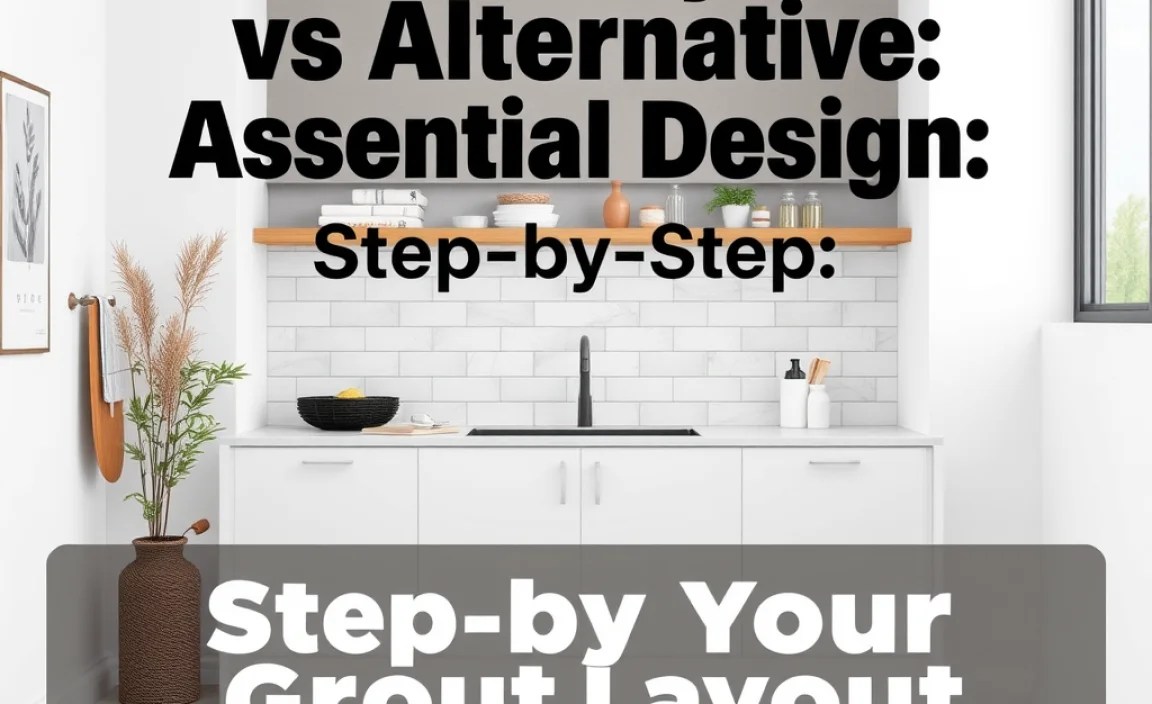
No matter which material you choose, a well-planned layout is key to a professional-looking finish. Here’s a simplified approach to planning:
Step 1: Choose Your Tiles and Consider Their Edges
Rectified Tiles: These tiles have very straight, sharp edges, allowing for minimal grout lines (1/16″ to 1/8″). They offer a clean, modern look.
Cushion Edge Tiles: These have slightly rounded or beveled edges. They are more forgiving and often require slightly wider grout lines (1/8″ and up) to accommodate the edge profile.
Step 2: Decide on Your Pattern
Consider the shape and size of your tiles and the room.
For rectangular tiles, classic patterns are straight grid, offset (like subway tiles), or herringbone.
For square tiles, a straight grid or diagonal pattern are common.
Think about how the pattern will flow with existing architectural features.
Step 3: Determine Grout Widths
Check Tile Manufacturer Recommendations: Always refer to your specific tile’s instructions. Some tiles have maximum recommended grout widths.
Consider the Tile Edge: As mentioned, cushion edge tiles usually need wider joints than rectified tiles.
Aesthetic Goal: Do you want a seamless look (narrow joints) or do you want to highlight the tiles (wider joints)?
Step 4: Select Your Grout Color
Color Visualizers: Many grout and tile manufacturers offer online tools to visualize different color combinations.
Stash Samples: Get a small quantity of your chosen grout and apply it to a few of your tiles to see how it looks in your actual lighting.
Consider Traffic and Use: Lighter grouts will show dirt more easily in high-traffic or high-use areas. Darker grouts can sometimes hide imperfections but can also look “dusty” if not cleaned well.
Step 5: Choose Your Grouting Material (Grout vs. Alternative)
Based on the location, moisture levels, traffic, and your comfort level with installation, select your material:
Bathroom Walls/Showers: Epoxy or high-quality pre-mixed grouts are recommended for their moisture and mold resistance.
Kitchen Countertops/Backsplashes: Epoxy or pre-mixed grouts are excellent due to stain resistance. Traditional grout with a good sealer can work but requires more vigilance.
Floors (High-Traffic): Epoxy grout offers superior durability. Traditional grout with a good sealer is also an option but may require more maintenance.
Areas with Movement (e.g., around tubs, counters): Use flexible caulk/sealant for these specific transition areas, even if you grout the main tile surface.
Step 6: Plan Your Execution
Tools: Ensure you have the right tools for your chosen material. Epoxy often requires specific applicators and cleaning tools.
Time: Some materials, like epoxy, set very quickly. Have a plan for application and cleanup.
Ventilation: Always ensure good ventilation, especially when working with resins or sealants.
Grout Alternatives in Detail: When to Use Them
Let’s dive a bit deeper into when alternatives to traditional grout shine.
Epoxy: The Champion of Durability and Moisture Resistance
If you’re tackling a shower surround, a kitchen backsplash that’s near the sink, or a pool area, epoxy grout is often the top choice.
Why it’s great: Its waterproof and stain-proof nature means less worry about spills, soap scum, and mold growth. It bonds exceptionally well and is resistant to cracking. Many homeowners find that surfaces grouted with epoxy are easier to clean in the long run, despite the initial installation challenge.
DIY Tip: Read the instructions thoroughly before you start. Have all your tools ready, and have a helper if possible. Work in small, manageable sections. Have a bucket of clean water and a sponge (or specialized cleaning pads for epoxy) ready for immediate cleanup of excess. For a comprehensive guide on working with epoxy grout, manufacturers like the Custom Building Products website offer valuable technical advice.
Pre-Mixed Grout: The Convenience King
For those who want to avoid the hassle of mixing powders or are working on smaller projects, pre-mixed grout is a game-changer.
Why it’s great: You open the tub, and it’s ready to go. It’s generally more flexible and less prone to cracking than basic cement grout, and it often has built-in stain inhibitors. It’s a popular choice for DIYers doing bathroom backsplashes or accent walls.
DIY Tip: Ensure the container is sealed tightly when not in use, as these can dry out. They tend to have a higher price point, so for very large floor areas, traditional grout might still be more economical.
