
Want to remove your old bathtub without a struggle? This guide breaks down the process into simple, manageable steps, ensuring a safe and efficient removal so you can move on to your next project with confidence.
Are you tired of that old, grimy bathtub dominating your bathroom? Maybe you’re dreaming of a sleek new shower or a modern soaking tub. Whatever your reason, the thought of removing a bathtub can seem a daunting task. It’s a big, heavy fixture, and many DIYers worry about causing damage or getting stuck. But don’t let that stop you! With a bit of preparation and the right approach, removing a bathtub can be a surprisingly straightforward DIY project. We’ll guide you through each step, making sure you feel prepared and confident. Get ready to create the bathroom of your dreams!
Why Remove Your Bathtub?

Bathtubs, while functional and cherished by many, do reach the end of their aesthetic or practical life for various reasons. Understanding these motivations can help affirm your decision to undertake this DIY project.
- Age and Wear: Over decades, tubs can develop cracks, chips, permanent stains, or rust spots that are impossible to clean. This wear and tear not only looks unappealing but can also harbor germs.
- Modernization: Bathroom styles evolve. An old, bulky tub might not fit with the contemporary look you’re aiming for. Many homeowners are opting for spacious walk-in showers or updated, stylish soaking tubs.
- Accessibility Needs: For individuals with mobility issues, a traditional bathtub can be a barrier. Removing it to install a walk-in shower with grab bars and a low threshold significantly improves bathroom safety and accessibility. A great resource for understanding accessibility standards is the U.S. Access Board.
- Resale Value: A modern, updated bathroom can significantly boost a home’s appeal to potential buyers. Outdated fixtures like an old bathtub might be a deterrent; replacing it with something more current can be a smart investment.
- Leak Repairs: Sometimes, the decision to remove a tub is driven by necessity. Persistent leaks or water damage behind the tub may require its complete removal for proper inspection and repair of underlying plumbing and structure.
Tools and Materials You’ll Need

Gathering all your tools before you begin is key to a smooth and “easy” bathtub removal. Having everything at hand means you won’t have to stop mid-project to hunt for a forgotten item. Here’s a comprehensive list of what you’ll likely need:
Essential Tools:
- Safety Gear: Safety glasses, work gloves, and a dust mask are crucial for protecting yourself from debris, chemicals, and splinters.
- Utility Knife: For scoring caulk lines and cutting through any sealed materials.
- Pliers and Wrenches: Adjustable wrenches, pipe wrenches, and slip-joint pliers will be needed for disconnecting plumbing.
- Screwdrivers: A set of Philips and flathead screwdrivers for removing fixtures like faucets, drain covers, and overflow plates.
- Pry Bar Set: Essential for gently loosening the tub from the walls and floor. A medium and a larger size will be very useful.
- Hammer: A standard claw hammer and possibly a small sledgehammer for breaking up stubborn materials if necessary.
- Reciprocating Saw (Sawzall): This is often the most effective tool for cutting through the tub material (especially cast iron or fiberglass) and surrounding wood or pipes if needed. Ensure you have the correct blades for the materials you’ll be cutting (metal, wood, plastic, or a demolition blade).
- Chisel: For chipping away old grout or stubborn caulk.
- Bucket: To catch any residual water in the plumbing.
- Drop Cloths and Tarps: To protect your bathroom floor, vanity, and any other surfaces from dust and damage.
- Shop Vacuum: For efficient cleanup of dust and debris.
- Pencil or Marker: For marking cut lines.
Potential Materials:
- Replacement Parts (if applicable): New drain assembly, overflow plate, etc., if you’re replacing them.
- Trash Bags or Container: For waste disposal.
- Wood Shims: Might be useful for supporting the tub during removal or for leveling.
Pre-Removal Steps: Preparation is Key!
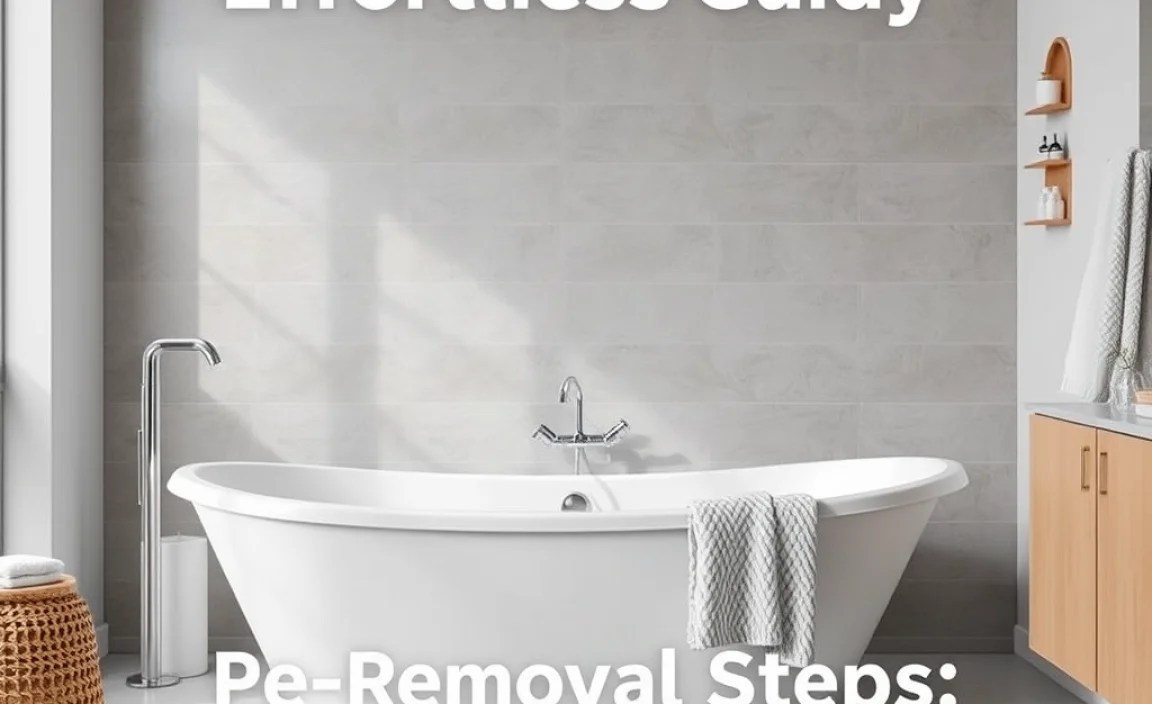
Before you grab your tools, a thorough preparation phase will make the entire process safer and much easier. Skipping these steps can lead to unexpected problems or unnecessary damage.
1. Turn Off Water Supply
This is the absolute first and most critical step. Locate the main water shut-off valve for your house and turn it off completely. Newer homes often have individual shut-off valves for the bathroom, usually located behind an access panel in a nearby closet or wall. If you can’t find it or it doesn’t work, the main valve is your best bet. Open the tub faucet and flush the toilet to drain any remaining water from the pipes.
2. Drain the Tub
Ensure the tub is as empty as possible. Give it a good wipe down to remove soap scum and grime, making it less slippery and easier to handle. Remember that residual water can still be present in the pipes, so have a bucket ready for when you disconnect the plumbing.
3. Protect Your Bathroom
Lay down drop cloths or tarps over your bathroom floor, especially if it’s not tile or if you want to protect grout lines. Cover your vanity, toilet, and any other fixtures to prevent them from getting scratched or covered in dust and debris. Remember, removing a bathtub can get messy!
4. Remove Fixtures and Accessories
This includes the faucet handles, spout, showerhead, drain cover, and overflow plate. Use your screwdrivers and wrenches. For the faucet, you might need to unscrew a decorative escutcheon plate or a small set screw holding the handle in place. The spout might screw off or have a set screw underneath. The drain cover usually unscrews, and the overflow plate is typically held by two screws. Keep all these small parts together in a bag or container so they don’t get lost.
5. Cut Away Caulk and Sealant
Use a sharp utility knife to carefully cut along all the lines where the tub meets the walls and the floor. You want to break the seal created by the caulk or silicone. Go slowly and deliberately to avoid cutting too deep and damaging the wall material. If you have excess caulk, go over it a couple of times to ensure a clean break.
6. Check for Wall Obstructions
Most bathtubs are installed before the wall finishes (like drywall or tile) go up. However, some older installations or specific designs might have the walls directly attached to the tub flange. You’ll want to gently probe around the edges of the tub where it meets the wall. If you find screws or nails, you may need to remove a small section of drywall or tile just above the tub’s lip to gain access to the mounting flange.
Step-by-Step Bathtub Removal Process

Now that everything is prepped, it’s time to get to the main event: removing the tub itself. We’ll cover different types of tubs as you progress.
Step 1: Detach Faucets and Plumbing
With the water supply confirmed OFF, you’ll need to disconnect the faucet from the actual water supply lines. This usually involves removing the escutcheon plate behind the faucet handles and spout. You’ll then see the pipe threads. Use a pipe wrench to steady the valve body while you unscrew the escutcheon or any other trim pieces. Have your bucket ready underneath to catch any residual water.
The tub drain and overflow assembly will also need to be disconnected. The drain usually unscrews from underneath the tub, and the overflow plate often has a mechanism or screws holding the drain shoe in place. This can be tricky, as access might be limited. A tub wrench (also known as a drain wrench) is specifically designed for this hard-to-reach job and makes it much easier. If you don’t have one, pliers or a large adjustable wrench might work, but be careful not to damage the drain pipes.
Step 2: Loosen the Tub from the Walls
Bathtubs typically have a flange around the top edge that is secured to the studs in the wall with screws or nails. If you uncovered this flange in your preparation, you’ll need to remove these fasteners. Use your pry bar or screwdriver to carefully remove any screws. If nails were used, you might need to use a claw hammer or a nail puller.
This is where you’ll really start to see the tub loosen up. Be gentle; you don’t want to rip out large chunks of drywall or tile unnecessarily. If the tub was installed before the wall surface, there might not be a flange that’s easily accessible, and the tub might be held in place by mortar or adhesive. In these cases, the pry bar will be your primary tool for creating space.
Step 3: Pry the Tub Away from the Walls
Once all fasteners are removed and caulk is cut, it’s time to start prying the tub away from the walls. Insert your pry bar behind the lip of the tub in several spots. Work your way around the tub, gently and evenly prying it away. You might hear some creaking or groaning – this is normal.
If you encounter significant resistance, re-check for any missed fasteners or sealant. Don’t force it too aggressively, as you could damage the studs or wall framing. Use small wooden shims to hold the gap open as you work around the tub. This technique helps maintain the distance you’ve created and prevents the tub from settling back against the wall.
Step 4: Breaking Down the Tub (If Necessary for Removal)
This is where the reciprocating saw often comes into play, especially for heavy tubs like cast iron or for when the tub won’t fit through the door in one piece.
For Fiberglass or Acrylic Tubs: These are lighter and can often be maneuvered out as a whole unit. If they are too heavy or awkwardly shaped for your chosen exit path, they can be cut. Use a fine-tooth blade on your reciprocating saw. Mark your cutting lines carefully. Cut the tub into manageable sections. Remember to wear your safety glasses and dust mask as fiberglass and acrylic dust can be irritating.
For Cast Iron Tubs: These are notoriously heavy and difficult to remove in one piece. It’s highly recommended to break them down. You’ll need a metal-cutting blade for your reciprocating saw and, potentially, a heavier-duty saw for a cast iron tub. Be aware that cutting cast iron is labor-intensive and creates sparks.
It’s often safer and easier to use a smaller sledgehammer to break the cast iron into pieces after you’ve made some strategic cuts to weaken it. Wear heavy-duty gloves and eye protection. Be prepared for a lot of dust and noise. The pieces will still be heavy but much more manageable. A guide to working with cast iron plumbing can be found from resources like The Engineering Toolbox, which can give you insights into its properties.
For Steel Tubs: Steel tubs are lighter than cast iron but heavier than fiberglass. They can often be removed whole if you have a clear path. If cutting is necessary, a metal-cutting blade on a reciprocating saw will do the job. They are less prone to shattering than cast iron when cut.
Step 5: Extract the Tub Pieces
Once the tub is loosened or broken down, carefully maneuver the pieces out of the bathroom. If you’re removing it whole, you might need a helper to lift and guide it. If you’ve cut it, carry out the sections one by one. Be mindful of doorways, corners, and any delicate flooring. This is where your drop cloths will be especially useful for protecting the floor as you slide or carry the pieces. Ensure you have a clear path and that any obstacles are moved out of the way.
Step 6: Clean Up the Area
After the tub is out, you’ll be left with a mess. Use your shop vacuum to thoroughly clean up all dust, debris, and small pieces. Inspect the walls and floor for any damage – torn drywall, chipped tile, or exposed plumbing. Make a note of any repairs that will be needed before you install a new tub or shower. If you disconnected plumbing, cap it off temporarily with threaded caps if you’re not immediately installing new fixtures. This prevents dust and debris from entering the pipes.
Tips for Different Bathtub Materials

The material of your bathtub significantly influences the removal process. Knowing this can save you a lot of hassle.
Fiberglass & Acrylic Tubs
Characteristics: Lightweight, often molded, can be a single piece or surround.
- Removal Ease: Generally the easiest to remove due to their light weight.
- Tips:
- Can usually be removed in one piece provided there’s a clear path.
- If cutting is needed, a standard reciprocating saw with a wood/plastic blade works well.
- Less prone to damaging surrounding structures if dropped (though still heavy enough to cause damage).
Cast Iron Tubs
Characteristics: Extremely heavy, durable, enamel coated.
- Removal Ease: The most challenging due to weight.
- Tips:
- Breaking them down is almost always recommended.
- Requires a powerful reciprocating saw with a metal blade, or even an angle grinder for initial cuts.
- A sledgehammer can be used to break weakened sections.
- Requires heavy-duty safety gear and multiple helpers.
- Be incredibly careful not to damage subflooring or walls when breaking.
Steel Tubs
Characteristics: Lighter than cast iron, heavier than fiberglass, often enameled, can dent.
- Removal Ease: Moderate.
- Tips:
- Can often be removed as a single piece.
- If cutting, a metal-cutting blade on a reciprocating saw is needed.
- Be cautious of sharp edges if cut.
Pedestal or Clawfoot Tubs
Characteristics: Often free-standing, attached via legs or a specific base.
- Removal Ease: Varies greatly.
- Tips:
- These are often installed with little to no wall attachment.
- Focus on disconnecting the drain and then carefully lifting or tilting the tub off its base.
- Legs or pedestals may need to be removed first.
Table: Bathtub Material vs. Removal Difficulty
| Bathtub Material | Approximate Weight | Cutting Tools Needed | Overall Difficulty | Recommendation |
|---|---|---|---|---|
| Fiberglass / Acrylic | 50-100 lbs | Wood/Plastic Blade (Reciprocating Saw) | Easy | Remove whole if possible; cut if necessary. |
| Steel | 100-200 lbs | Metal Blade (Reciprocating Saw) | Moderate | Remove whole; cut if necessary. Be mindful of sharp edges. |
| Cast Iron | 300-500+ lbs | Metal Blade (Reciprocating Saw), Angle Grinder (Optional), Sledgehammer | Difficult | Break down into smaller pieces. Requires significant effort and safety precautions. |
Troubleshooting Common Issues
Even with the best preparation, you might run into a few snags. Here’s how to handle them.
- Tub Won’t Budge: Double-check all caulk lines are fully cut. Look for any hidden screws or nails attaching the tub flange to wall studs. You might need to remove a small section of drywall or tile adjacent to the tub to expose these. Sometimes, tubs are set in a mortar bed for support. If so, you’ll need to break through that mortar.
- Plumbing Disconnects Are Stuck: Old plumbing can become corroded or seized. Applying a penetrating lubricant (like WD-40) and letting it sit for a while might help. Gently heating some metal fittings with a heat gun (be very careful not to scorch anything or ignite flammable materials) can sometimes help expand them, making removal easier. If it’s completely seized, you may need to cut the pipe, but do so carefully, ensuring you have a plan for re-plumbing or capping it safely. For the drain, a specialized tub wrench is often essential.
- Damage to Walls or Flooring: This is common. Minor damage to drywall can usually be patched. Chipped tiles might require replacement. If you’re replacing the tub, plan for these repairs in your overall project schedule. Deep gouges in subflooring might need patching or leveling compound.
- Tub is Too Heavy or Awkward to Move: If you didn’t plan to break down a heavy tub (like cast iron) and now realize.
