
Bolded Quick Summary: Replacing pipes can be an easy DIY project with the right preparation and guidance. This guide offers straightforward steps, essential tools, and safety tips to help you confidently replace your home’s pipes, saving you time and money.
Replace Pipes Easy: Your Essential DIY Guide
Leaky pipes or outdated plumbing can be a homeowner’s headache. Drips turn into puddles, and low water pressure is just plain annoying. You might think calling a plumber is your only option, but with a little know-how, you can tackle pipe replacement yourself. This guide breaks down how to replace pipes easily, making a complex job feel much more manageable. Get ready to boost your DIY skills and maybe even save a pretty penny!
Why You Might Need to Replace Pipes

Several signs point to your plumbing needing an upgrade. Understanding these will help you decide if it’s time for a pipe replacement project. Ignoring these issues can lead to bigger, more expensive problems down the road, like water damage or mold growth. For instance, discolored water often indicates rust or sediment building up inside older pipes.
- Age of Pipes: Older homes often have corroded or degraded pipes made of materials like galvanized steel or lead, which are prone to failure and health concerns.
- Frequent Leaks or Puddles: Small drips can escalate quickly. If you notice recurring leaks, even minor ones, it’s a sign the pipes are weakening.
- Reduced Water Pressure: Consistently low water pressure, especially if it’s a new issue, can be caused by clogs or corrosion inside the pipes.
- Discolored or Smelly Water: Rusty, brown, or foul-smelling water is a clear indicator of pipe deterioration or contamination.
- Visible Corrosion or Frosting: Look for green or white powdery substances on copper pipes or rust on steel pipes. These are signs of corrosion.
Is Pipe Replacement a DIY Job?
For many homeowners, pipe replacement falls into the realm of achievable DIY projects. With careful planning, the right tools, and by following safety precautions, you can absolutely tackle this task. It’s a rewarding way to learn more about your home’s systems and gain valuable skills. Of course, if you encounter significant issues or feel overwhelmed, there’s no shame in calling a licensed professional. But for straightforward replacements, especially in accessible areas like under a sink or for a single section of a pipe, DIY is a great option.
Essential Tools and Materials
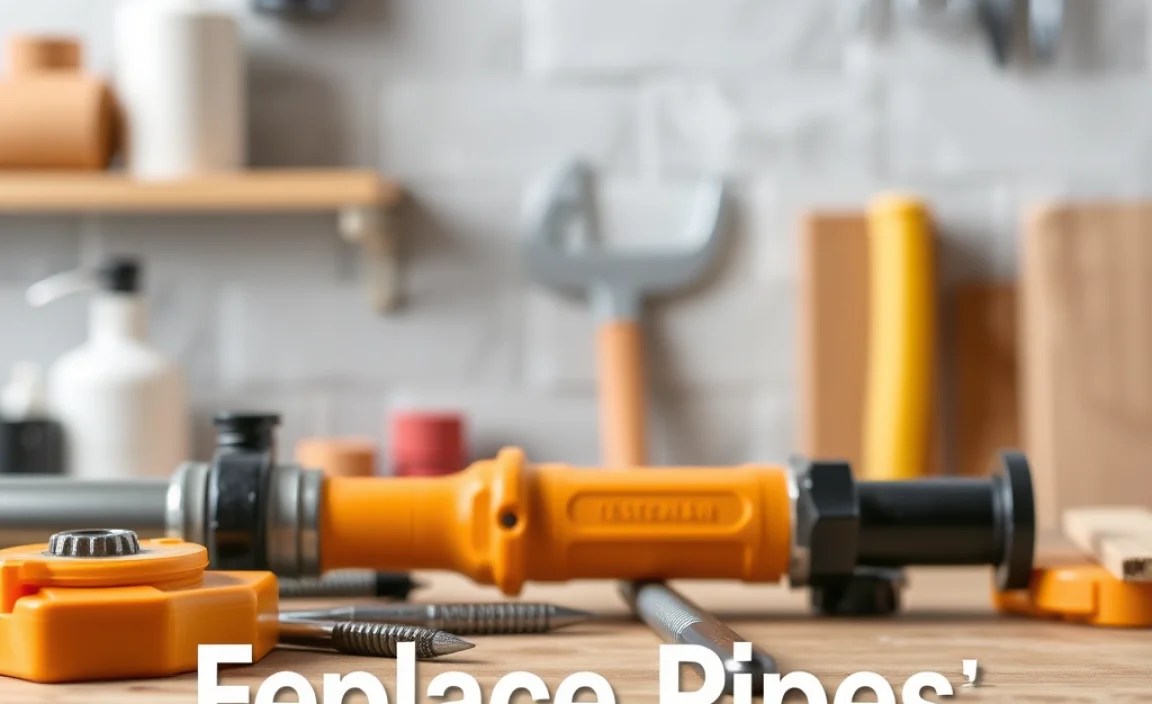
Gathering the right tools before you start is key to making the process smooth and easy. Having everything ready means less stopping and starting, which keeps your momentum going. Here’s a list of what you’ll likely need:
Tools You’ll Need
- Pipe Cutter: Essential for making clean, straight cuts on various pipe materials.
- Adjustable Wrenches (2): For loosening and tightening pipe fittings. Having two allows you to hold one fitting while turning another.
- Pipe Wrench: Provides extra grip and leverage for stubborn or larger pipes.
- Deburring Tool: To smooth the inside and outside edges of cut pipes, ensuring a good seal.
- Bucket and Rags: To catch any residual water and for cleanup.
- Safety Glasses: Always protect your eyes from debris and potential splashes.
- Work Gloves: To protect your hands and improve grip.
- Measuring Tape: For accurate measurements of the pipe sections you need to replace.
- Saw (Hacksaw or Reciprocating Saw): For cutting through tougher pipe materials if a pipe cutter isn’t sufficient.
- Thread Sealant or Teflon Tape: To create watertight seals on threaded connections.
- Level: To ensure pipes are installed at the correct slope if drainage is involved.
Materials You’ll Need
- Replacement Pipe: Ensure it’s the same type and diameter as the pipe you’re removing. Common DIY-friendly options include PEX (cross-linked polyethylene), copper, or PVC.
- Fittings: Elbows, couplings, connectors, and adapters needed to join new pipe sections to existing plumbing.
- Primer and Solvent Cement (for PVC pipes): Used to fuse PVC pipes together.
- Sandpaper or Emery Cloth: To clean the ends of copper pipes before soldering or connecting.
- Soldering Torch and Solder (for copper pipes): If you choose to solder copper pipes.
- Propane Torch (for PEX fittings): Some PEX systems require a torch for expansion fittings.
Step-by-Step Guide to Replacing Pipes
Let’s get down to business! This section will walk you through the process of replacing a section of pipe. Remember to work methodically and double-check each step. Safety first, always!
Step 1: Turn Off the Water Supply
This is the MOST important first step. Locate the main water shut-off valve for your home. It’s usually found in the basement, crawl space, utility closet, or where the water line enters your house. Turn the valve clockwise to shut off the water. Open the lowest faucet in your house (like an outdoor spigot or a basement sink) to drain any remaining water from the pipes.
Step 2: Drain Remaining Water
With the water supply off, open a faucet at a lower elevation than the pipe you’re replacing. This allows gravity to help drain the water out of the section you’ll be working on. Place a bucket and rags underneath the area to catch any drips.
Step 3: Remove the Old Pipe Section
Carefully inspect how the old pipe is connected. If it’s threaded, use two adjustable wrenches – one to hold the fitting on the existing pipe and the other to unscrew the old pipe section. If it’s a different type of connection (like glued for PVC or crimped for PEX), you’ll need the appropriate tool to cut or detach it. Use your pipe cutter for a clean cut on either side of the section you’re replacing. Make sure to cut at least a few inches away from any fittings to give yourself enough new pipe to work with.
Step 4: Prepare the New Pipe
Measure the length of the old pipe section you removed. Measure and cut your new pipe to the exact same length. Ensure your cuts are straight and clean. For PVC, use a deburring tool to smooth the inside and outside edges of the cut ends. For copper, gently sand the ends to remove any oxidation. If you’re using PEX, follow the manufacturer’s instructions for preparing the pipe ends.
Step 5: Install the New Pipe and Fittings
This step depends heavily on the type of pipe you’re using. Let’s look at common methods:
For PVC Pipes:
Apply primer to the outside of the pipe end and the inside of the fitting. Then, apply solvent cement to both primed surfaces. Quickly push the pipe into the fitting with a slight twisting motion. Hold it firmly for about 30 seconds to ensure a secure bond. Repeat for all connections. Allow ample drying time as per the cement manufacturer’s instructions before turning the water back on.
A great resource for understanding PVC pipe installation and safety is the Plastics Industry Association, which provides guidelines on best practices for plastic piping systems.
For Copper Pipes:
Clean the outside of the pipe and the inside of the fitting thoroughly with emery cloth or sandpaper. Apply flux to both surfaces. Slide the pipe into the fitting. Heat the joint with a propane torch until the solder melts when touched to the seam. Let the joint cool completely without disturbing it.
For PEX Pipes:
PEX systems often use push-to-connect fittings, expansion fittings, or crimp fittings. Push-to-connect fittings simply push onto the pipe and create their own seal. For expansion fittings, you’ll use a PEX expansion tool to enlarge the pipe end before inserting a ring and then pushing it onto a fitting. Crimp fittings involve sliding a ring onto the pipe, inserting the fitting, and then using a crimp tool to secure the ring. Always follow the manufacturer’s specific instructions for your chosen PEX system.
Step 6: Check for Leaks
Once everything is connected and any glue or solder has set, slowly turn the main water supply back on. Watch closely for any drips or leaks at the new connections. If you find any, turn the water off again and re-do the connection. It’s better to be safe than sorry!
Step 7: Test the System
Turn on various faucets and appliances throughout your home to ensure water is flowing properly and there are no residual air pockets. Flush toilets. Run the shower. Listen for any unusual noises and check all connections again. Once you’re confident there are no leaks, you’ve successfully replaced your pipe!
Choosing the Right Pipe Material
The type of pipe you choose can make a big difference in ease of installation and longevity. Here’s a quick look at common options:
| Pipe Type | Pros | Cons | Best For |
|---|---|---|---|
| PVC (Polyvinyl Chloride) | Inexpensive, easy to cut and glue, good for cold water and drainage. | Can become brittle in freezing temperatures, not suitable for hot water or drinking water systems in some areas if not rated for it. | Drainage, vent pipes, irrigation. |
| CPVC (Chlorinated Polyvinyl Chloride) | Similar to PVC but rated for hot water, relatively easy to install. | Can be more expensive than PVC, requires specific primer and cement. | Hot and cold water supply lines. |
| PEX (Cross-linked Polyethylene) | Flexible, easy to run through walls/floors, resistant to freezing, available in different colors for hot/cold identification, various connection methods (push-to-connect, crimp, expansion). | Can be damaged by UV light and certain chemicals, some concerns about leaching depending on quality and water chemistry. | Hot and cold water supply lines; very DIY-friendly. |
| Copper | Durable, long-lasting, resistant to corrosion and high temperatures, widely accepted for drinking water. | More expensive, requires soldering or specific compression fittings, can corrode in certain water conditions. | Traditional choice for hot and cold water supply lines. |
For DIYers, PEX is often the top recommendation due to its flexibility and ease of use with push-to-connect fittings, which require no special tools. The Uniform Plumbing Code provides extensive details on approved piping materials and their applications.
Tips for a Smoother Replacement Process
- Take Pictures: Before you disassemble anything, take photos of the existing setup. This can be a lifesaver if you forget how something was connected.
- Work in Sections: If you have a lot of pipe to replace, tackle it in manageable sections. Don’t try to do the whole house at once!
- Overestimate Slightly: When cutting new pipe, it’s often better to have it a tiny bit longer and be able to trim it down than to cut it too short.
- Double-Check Connections: Ensure all fittings are fully seated and connections are tight before turning the water back on.
- Ventilate Properly: If using solvent cement for PVC/CPVC, work in a well-ventilated area. The fumes can be strong.
- Know Your Local Codes: Some areas have specific requirements for plumbing materials and installation methods. A quick check with your local building department can save you headaches.
When to Call a Professional
While this guide aims to make pipe replacement easy, some situations are best left to the experts. If you’re dealing with any of the following, it’s wise to reach out to a licensed plumber:
- Major System Overhauls: Replacing entire sections of main water lines or sewer lines is complex and often requires specialized tools and permits.
- Unfamiliar Connections: If you encounter pipe types or connection methods you’ve never seen before and can’t easily identify.
- Accessibility Issues: Pipes hidden behind walls, under concrete slabs, or in tight, confined spaces can be very difficult to access and replace without professional expertise.
- Signs of Serious Damage: Extensive corrosion, burst pipes, or significant water damage might indicate underlying structural issues that a pro can diagnose and fix.
- Lack of Confidence: If at any point you feel unsure, unsafe, or are struggling with the task, don’t hesitate to call for help.
The EPA’s WaterSense program also offers advice on finding qualified plumbing professionals.
Conclusion
Taking on the task of replacing pipes might seem daunting at first, but as you’ve seen, it’s a project that’s well within the reach of many DIYers. By understanding the causes of pipe failure, preparing with the right tools and materials, and following these step-by-step instructions, you can successfully update your home’s plumbing.
Remember to prioritize safety, work methodically, and don’t hesitate to call a professional if you encounter a situation beyond your comfort level. A well-maintained plumbing system is crucial for a comfortable and functional home, and with this guide, you’re now better equipped to ensure yours is in top shape.
Frequently Asked Questions (FAQ)
Q1: How much does it typically cost to replace home pipes?
The cost of pipe replacement varies greatly depending on the material, the length of pipe, and whether you DIY or hire a plumber. DIY replacement can cost anywhere from $50-$300 for materials for a small section. Hiring a plumber for a significant rerun of pipes can range from $1,500 to $15,000 or more for a whole house repipe.
Q2: What is the easiest pipe material for a beginner to work with?
PEX (cross-linked polyethylene) is generally considered the easiest pipe material for beginners. It’s flexible, allowing you to bend it around obstacles, and it connects easily using push-to-connect fittings, which require no special tools like soldering or crimping.
Q3: How long does it take to replace a section of pipe?
For a beginner, replacing a single, easily accessible section of pipe (like under a sink) might take 1-3 hours. This includes gathering tools, making cuts, installing, and checking for leaks. Larger or more complex jobs will naturally take longer.
Q4: Do I need to shut off the water to the whole house to replace one pipe?
Yes, it’s always safest to shut off the main water supply to your entire house. This prevents any accidental water flow while you’re working and ensures you can safely drain the specific pipe section without water from other parts of the house entering the work area.
Q5: Can I replace my own main water line?
Replacing a main water line is a significant undertaking that often involves digging, dealing with municipal connections, and requires specialized tools and permits. While some very experienced DIYers might attempt it, it’s generally recommended to hire a licensed professional for main water line replacements due to the complexity and potential for serious issues.
Q6: What’s the difference between PVC and CPVC pipe?
Both are plastic pipes, but CPVC is specifically manufactured to handle higher temperatures, making it suitable for hot water supply lines. Standard PVC is typically used for drainage and vent piping, not for hot water or potable water supply in many applications. Always check pipe ratings for your intended use.
