
This guide provides a clear, step-by-step process for upgrading your mirror, making it easy for beginners to achieve a stylish and functional enhancement. We’ll cover everything from selecting the right mirror to secure installation, empowering you to refresh your space with confidence and a polished new look. Get ready for a seamless upgrade!
Ever looked at your mirror and thought, “This could be so much better”? You’re not alone! A tired, outdated, or plain mirror can really bring down the vibe of a room. But don’t worry, upgrading your mirror doesn’t have to be a huge, complicated project. With a few simple steps and a little bit of know-how, you can transform any mirror from drab to fab. We’re here to guide you through the entire process, making it super easy and stress-free. By the end of this guide, you’ll be ready to tackle your mirror upgrade with confidence and achieve a stunning new focal point for your home.
Why Upgrade Your Mirror? More Than Just Vanity

Mirrors are more than just a place to check your reflection; they’re powerful design tools. A well-chosen mirror can:
- Make a small room feel bigger: Mirrors reflect light and the visual space, instantly creating an illusion of a larger area.
- Brighten up a dark space: They bounce natural and artificial light around the room, making it feel airier and more inviting.
- Add style and personality: From ornate frames to minimalist designs, mirrors can tie together your decor or serve as a stunning statement piece.
- Improve functionality: A larger or strategically placed mirror can be incredibly useful in entryways, bathrooms, or dressing areas.
Often, the original mirror installed in a home might be basic, perhaps frameless or a standard size. Upgrading it is a relatively low-cost way to make a significant impact on your home’s aesthetic and feel. It’s a fantastic DIY project for beginners because the results are often immediately noticeable and highly rewarding.
Choosing Your New Mirror: Style Meets Substance

Before you start unscrewing anything, let’s talk about picking the perfect mirror. This is where you get to infuse your personal style into the upgrade. Consider the room, its existing decor, and the function you want the mirror to serve.
Types of Mirrors for Your Upgrade
The world of mirrors is vast! Here are some popular options that can beautifully upgrade your space:
- Framed Mirrors: These offer the most versatility in terms of style. Frames can be ornate, rustic, modern, minimalist, metallic, wooden, or painted. They add a finished look and can complement existing furniture or accent pieces.
- Beveled Mirrors: A beveled edge has a slanted, polished surface along the edge, adding a touch of elegance and depth. This is a great way to dress up a frameless mirror.
- Oversized Mirrors: These make a dramatic statement and are excellent for making rooms feel grander and brighter. They can lean against a wall or be mounted securely.
- Decorative Mirrors: Think mirrors with unique shapes, mirrored tiles, or artistic arrangements. These are often accent pieces rather than purely functional ones.
- Full-Length Mirrors: Essential for bedrooms and dressing areas, these offer a complete view and can also serve to visually expand a space.
Mirror Size and Placement Considerations
Think about where the mirror will go and what you want it to reflect. As a general rule:
- Over a Console Table or Dresser: The mirror should be about two-thirds the width of the furniture.
- Above a Fireplace: Typically, a mirror hung above a fireplace is around the same width as the fireplace opening.
- In a Small Room: Consider a large mirror on a prominent wall to maximize its light-reflecting and space-enhancing qualities.
- What it Reflects: Position your mirror to reflect something beautiful, like a window with a nice view, a piece of art, or an attractive light fixture. Avoid reflecting clutter or a blank wall if possible.
It’s also crucial to consider the weight of the mirror and the type of wall you’re mounting it on. Heavier mirrors will require more robust hardware and possibly professional installation, especially if you’re mounting them on drywall without hitting a stud.
Tools and Materials You’ll Need

Gathering your supplies beforehand makes the upgrade process much smoother. Here’s a list of what you might need. The exact items will depend on the type of mirror and how it’s being mounted.
Essential Tools
- Measuring Tape: For accurate placement and ensuring the mirror fits.
- Pencil: To mark drill holes or placement guides.
- Level: Absolutely crucial for ensuring your mirror hangs straight. A crooked mirror is a sure sign of a DIY that needs a little more attention!
- Stud Finder: If you’re mounting a heavy mirror on a wall, finding wall studs is essential for secure hanging.
- Drill and Drill Bits: For creating pilot holes and driving screws.
- Screwdriver (Phillips and Flathead): To attach mounting hardware.
- Safety Glasses: ALWAYS protect your eyes, especially when drilling or handling glass.
- Gloves: To protect your hands from sharp edges (especially if removing an old mirror) and keep the new mirror smudge-free.
Mounting Hardware (Choose based on mirror weight and wall type)
The hardware you use is critical for safety and longevity. Don’t skimp here!
- Picture Hanging Wire and Hooks: Suitable for lighter mirrors with pre-attached D-rings or wire.
- D-Rings and Screws: If your mirror doesn’t have them, you can add them for hanging with wire or directly to the wall.
- Mirror Clips: These are small brackets that hold the mirror in place, often used for frameless mirrors where the clips are visible or blend into the frame.
- Heavy-Duty Wall Anchors: For drywall installation when studs aren’t accessible. Toggle bolts or Molly bolts are good options for heavier items. For very heavy mirrors, consider using specialized heavy-duty drywall anchors designed for loads of 50-100 lbs or more. For best practice, consult the manufacturer’s weight recommendations.
- French Cleat System: An excellent, secure method for hanging heavier mirrors or artwork. This involves a two-part interlocking bracket that distributes weight evenly.
Optional Materials
- Painter’s Tape: To mask off areas or create temporary guides.
- Drop Cloth: To protect your floor from dust or debris.
- Mirror Adhesive/Silicone: For specific frameless installations where clips aren’t used.
- Cleaning Supplies: Glass cleaner and a lint-free cloth for a final shine.
Upgrade Mirror Step by Step: The Effortless Process
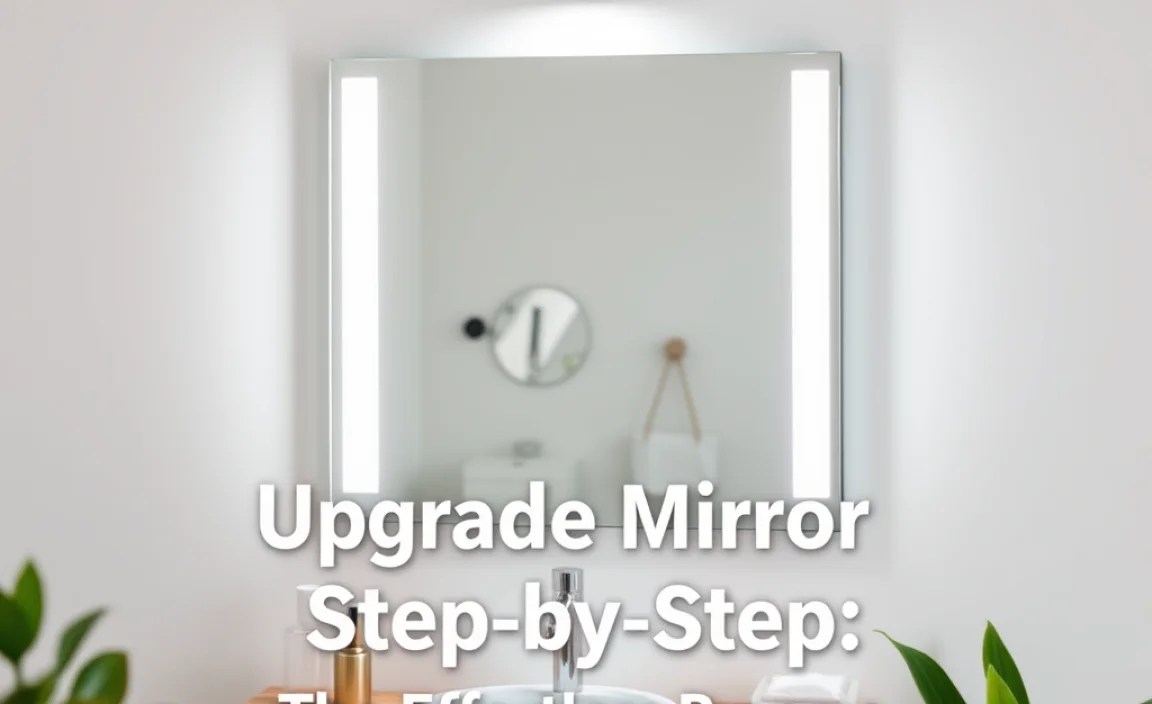
Ready to get started? Follow these steps for a smooth and successful mirror upgrade.
Step 1: Measure Twice, Mark Once
This is perhaps the most important step to avoid mistakes. Decide on the exact location for your new mirror. Use your measuring tape and pencil to mark where the top or sides of the mirror will sit. If you’re using mounting hardware that requires a specific spacing (like a French cleat or D-rings), measure and mark those points precisely. Hold the mirror (or a piece of cardboard cut to its size) against the wall to visualize its placement and ensure it looks right.
Step 2: Prepare the Wall for Mounting
For Drilled Holes: Using your level, ensure your marks are perfectly horizontal or vertical as needed. If you’re using a stud finder, locate wall studs in your desired mounting area. Marking the stud locations is crucial for securely anchoring heavy mirrors. If you can’t hit a stud, you’ll need appropriate heavy-duty drywall anchors. Drill pilot holes according to the size recommended for your chosen screws and anchors. For drywall anchors, follow the anchor manufacturer’s instructions for pilot hole size and depth.
Safety First: Before drilling into any wall, be aware of what might be behind it. Avoid areas where electrical wires or plumbing pipes are likely to be. If you’re unsure, consider consulting a professional or using a specialized detector.
Step 3: Install Mounting Hardware
This step varies greatly depending on your chosen mounting method:
- For Studs: Drive screws directly into the studs. For added security, you can use heavy-duty screws specifically designed for mounting heavy items.
- For Drywall Anchors: Insert your chosen drywall anchors into the pilot holes. Make sure they are flush with the wall surface. Then, drive the screws into the anchors.
- For French Cleats: Attach one part of the cleat to the wall (ideally into studs) and the corresponding part to the mirror. Ensure they are perfectly level and secure.
- For Mirror Clips: Screw the base of the clip into the wall, ensuring they are aligned and level to support the mirror’s bottom edge. The top may be secured with silicone or additional clips depending on the system.
Tip: When using a French cleat, ensure the wall-mounted piece is perfectly level. The mirror will hang straight if the cleat is installed correctly. For more information on heavy-duty hanging techniques, resources like This Old House offer excellent advice on securing items to walls.
Step 4: Secure the Mirror
For Mirrors with D-rings/Wire: Carefully lift the mirror and hang it onto the installed hooks or screws making sure the wire is securely seated. Check that it’s stable.
For Frameless Mirrors with Clips: Gently slide the mirror into the clips, ensuring it’s seated properly and securely. You might need to apply a few dots of mirror adhesive or silicone at the top corners for extra stability, following product instructions carefully. Ensure the silicone is rated for mirrors to prevent discoloration or damage.
For French Cleats: Lift the mirror and ensure the cleat on the mirror interlocks securely with the cleat on the wall. Give it a gentle tug to confirm it’s stable.
Tip: Always have a helper when lifting and positioning a mirror, especially larger or heavier ones. This prevents accidents and protects both you and the mirror.
Step 5: Final Check and Clean-Up
Once the mirror is in place, double-check that it’s level and secure. Gently press on the edges and corners to ensure there’s no wobbling. Step back and admire your work!
Use glass cleaner and a lint-free cloth to remove any smudges or fingerprints. Clean the surrounding wall area if necessary. Enjoy your beautifully upgraded mirror!
Removing an Old Mirror: A Step-by-Step Approach

Sometimes, upgrading means removing the old. If you have a mirror that’s glued directly to the wall or mounted with old adhesive, this can be a bit trickier. Here’s how to approach it safely:
Safety Precautions for Mirror Removal
- Wear protective gear: Always wear thick gloves and safety glasses.
- Protect yourselves and the floor: Cover the floor with drop cloths.
- Have a helper: This is non-negotiable for safety.
- Be prepared for breakage: Even with extreme caution, mirrors can break.
Methods for Removing Glued Mirrors
Mirrors glued to walls often use a strong adhesive, sometimes coupled with double-sided tape. The exact method for removal can depend on the adhesive used. A common approach involves breaking the adhesive bond carefully.
- Attempt Gentle Prying: Try carefully prying at the edges with a putty knife or a specialized wall scraper. Work slowly and try to get under the mirror without applying excessive force.
- Use Heat (with caution): In some cases, a hairdryer or heat gun (on a low setting) can help soften old adhesive. Apply heat to sections of the mirror’s edge and try to pry it off gently. Be very careful not to overheat the area or crack the glass.
- Consider Solvent Application: Products designed to remove adhesive may help. This usually involves applying the solvent to the edges and allowing it to seep behind the mirror, dissolving the adhesive. This can be a messy process and requires good ventilation.
- Breaking the Mirror (Last Resort): If the mirror is old, damaged, or impossible to remove intact, and you have exhausted safe options, sometimes the only way is to break it into smaller pieces. This is a dangerous step and requires significant protective gear and meticulous cleanup. Cover the mirror completely with thick blankets or tarps before hitting it gently with a hammer. Work from the center outwards.
For mirrors glued directly to drywall, aggressive removal can damage the drywall. After removal, you will likely need to repair the wall surface before installing a new mirror or redecorating.
Important Note: If your existing mirror is very large, heavily glued, or you encounter structural issues, it’s often best to consult a professional contractor or handyperson. They have the tools and experience to handle such situations safely and effectively.
Maintaining Your New Mirror
Once your beautiful new mirror is in place, a little care will keep it looking its best.
- Regular Cleaning: Wipe down your mirror regularly with a good quality glass cleaner and a lint-free microfiber cloth. Spray the cleaner onto the cloth, not directly onto the mirror, to prevent liquid from seeping into the frame or behind the glass, especially with framed mirrors.
- Frame Care: If your mirror has a frame, clean it according to the material. Wood frames might need dusting or a specific wood cleaner, while metal frames may require a polish.
- Check Hardware: Periodically (perhaps every six months to a year), gently check that the mounting hardware remains secure. This is especially important for heavier mirrors.
Proper maintenance ensures your upgraded mirror remains a stylish and functional part of your home for years to come.
Troubleshooting Common Mirror Upgrade Issues
Even with the best plans, hiccups can happen. Here are some common issues and how to fix them:
| Problem | Possible Cause | Solution |
|---|---|---|
| Mirror is crooked. | Mounting hardware wasn’t level, or the hanging wire slipped. | Carefully remove the mirror, re-measure and re-install the hardware using a level. Ensure wire is securely attached. |
| Mirror feels loose or wobbly. | Hardware is not secured properly, or drywall anchors are failing. | Check and tighten all screws. If using drywall anchors, ensure they are rated for the mirror’s weight and are installed correctly. For heavy mirrors, consider adding more anchor points or switching to a French cleat. |
| Scratches on the new mirror. | Improper cleaning tools or abrasive cleaners. | Use only soft, lint-free cloths and ammonia-free glass cleaner. For stubborn marks, consider a specialized glass polish designed for mirrors. |
| Frame is damaged during installation. | Too much force applied when hanging or mounting. | Handle the mirror by the frame gently and use a helper. For heavier mirrors, ensure the mounting system bears most of its weight. Minor damage might be repairable with touch-up paint or wood filler. |
| Mirror fell off the wall. | Insufficiently strong anchors, incorrect installation, or exceeding weight limits. | This is a serious safety hazard. Assess the damage to the wall and mirror. Reinstall using heavy-duty anchors or a French cleat system rated for significantly more than the mirror’s weight. Consult a professional if unsure. |
Remember, patience and precision are key to a successful DIY project. If you’re ever unsure about a step, it’s better to pause and seek advice or professional help than to risk damage or injury. For more detailed information on choosing the right anchors and understanding weight loads, resources like Family Handyman can provide valuable insights.
Frequently Asked Questions About Mirror Upgrades
Q1: How do I know if I’m hitting a wall stud?
Use an electronic stud finder. Run it horizontally across the wall where you want to place your hanger. It will beep or light up to indicate the presence of a stud. You can also test by lightly tapping the wall; a solid sound usually means you’ve hit a stud, while a hollow sound indicates drywall.
