
Vanity terms in plumbing are often confusing jargon, but understanding them is key to confidently discussing repairs and upgrades with professionals, choosing the right fixtures, and doing DIY projects. This guide breaks down common plumbing terms into simple language, empowering you to manage your home’s plumbing with ease and assurance.
Ever felt a little lost when a plumber starts talking about “P-traps” or “supply lines”? You’re definitely not alone! Home plumbing can sound like a different language, full of tricky, technical words. But what if you could understand what all those “vanity terms” mean? Knowing these common plumbing words empowers you to communicate better with professionals, make smarter choices when buying new fixtures, and even tackle simple DIY tasks yourself. It’s about feeling confident and in control of your home’s essential systems.
We’re here to demystify plumbing jargon. Get ready to unlock the secrets behind those everyday plumbing sounds and parts. We’ll walk through the most common terms, explaining each one in plain English, so you can finally feel like you’re speaking the same language as your plumber. Let’s dive in and make your plumbing knowledge crystal clear!
Why Understanding Plumbing Terms Matters

Imagine you’re trying to describe a leaky faucet, but you can’t quite find the right words. That’s where understanding plumbing terms becomes incredibly helpful. It’s not just about sounding smart; it’s about accuracy and efficiency.
- Clear Communication with Professionals: When you can clearly explain the problem using the correct terminology, plumbers can diagnose issues faster and more accurately. This saves you time and money.
- Informed Purchasing Decisions: Whether you’re buying a new toilet, faucet, or even just a replacement part, knowing the terms helps you choose the right product for your needs and understand its features.
- DIY Confidence: For those interested in DIY projects, understanding plumbing terms is crucial for following instructions, identifying parts, and performing repairs or installations safely and correctly.
- Preventing Bigger Problems: Recognizing the signs of potential issues and knowing the names of the components involved can help you address small problems before they escalate into costly emergencies.
The Anatomy of Your Plumbing System: Key Components Explained

Your home’s plumbing system is a network of pipes, fixtures, and components designed to deliver clean water and remove wastewater. Let’s break down some of the most common parts you’ll encounter.
Water Supply Lines
These are the pipes that bring fresh water into your home and deliver it to your faucets, showers, toilets, and appliances. They typically carry pressurized water from your main water source (like the municipal water supply or a well) to where you need it.
Drainage and Vent Pipes
Unlike supply lines, drain pipes carry wastewater away from your fixtures and out of your home, usually to a sewer line or septic system. The vent pipes are just as important; they allow air into the drainage system, which helps wastewater flow smoothly and prevents sewer gases from backing up into your home. Think of them as the lungs of your plumbing.
Title: Supply vs. Drain Lines
| Feature | Water Supply Lines | Drain Lines |
|---|---|---|
| Function | Delivers clean, pressurized water to fixtures. | Carries wastewater away from fixtures. |
| Water Flow Direction | Into the home/fixture. | Out of the home. |
| Pressure | Under high pressure. | Gravity and atmospheric pressure (no high pressure). |
| Materials | Copper, PEX, CPVC. | PVC, ABS, cast iron. |
Fixtures and Their Parts
These are the visible, functional components of your plumbing system that you interact with daily. This includes sinks, toilets, showers, bathtubs, and faucets.
Faucets
A faucet is the control valve for water at a sink or bathtub. You might call it a tap or a spigot. Key parts include:
- Aerator: A small screen at the tip of the faucet spout that mixes air with water. This reduces splashing and water usage while maintaining pressure.
- Cartridge/Valve: The internal mechanism that controls the flow and temperature of the water. Different faucet types (ball, cartridge, ceramic disc, compression) use different internal valve systems.
- Handle: What you turn to control the water flow and temperature.
- Spout: The part the water flows out of.
Toilets
A toilet has several important parts that work together to flush waste:
- Tank: Holds the water that is released during a flush.
- Bowl: Where waste collects and is flushed away.
- Flush Lever/Button: Activates the flushing mechanism.
- Flapper: A rubber or plastic piece in the tank that lifts to allow water to flow into the bowl during a flush and then seals the tank afterward.
- Fill Valve (Ballcock): Replaces water in the tank after a flush and shuts off when the tank is full.
- Siphon Jet: A small hole at the bottom of the bowl that helps start the siphoning action needed for a powerful flush.
Pipes and Traps
These terms refer to the conduits that move water and waste, and specific protective features within the drainage system.
P-Trap
You’ll find a P-trap under every sink, shower, and drain. It’s the U-shaped pipe that holds a small amount of water. This standing water acts as a seal, preventing sewer gases from rising up through the drain and into your home. It also catches heavier debris, which can sometimes be helpful if you need to retrieve something you accidentally dropped down the drain.
Shut-off Valve
These valves are critical safety features. They allow you to turn off the water supply to a specific fixture (like a toilet or sink) without shutting off the water to your entire house. They are usually located behind toilets, under sinks, and near water-using appliances like washing machines and dishwashers.
Main Water Shut-off Valve
This is the valve that controls the flow of water to your entire house. It’s usually located in the basement, crawl space, garage, or outside near your water meter. Knowing its location is essential in case of a major leak or emergency.
Sump Pump
If you have a basement or crawl space that is prone to flooding, you likely have a sump pump. This device is installed in a pit (sump pit) and automatically pumps out any accumulated water, preventing water damage and mold growth.
Plumbing Materials and Their Properties
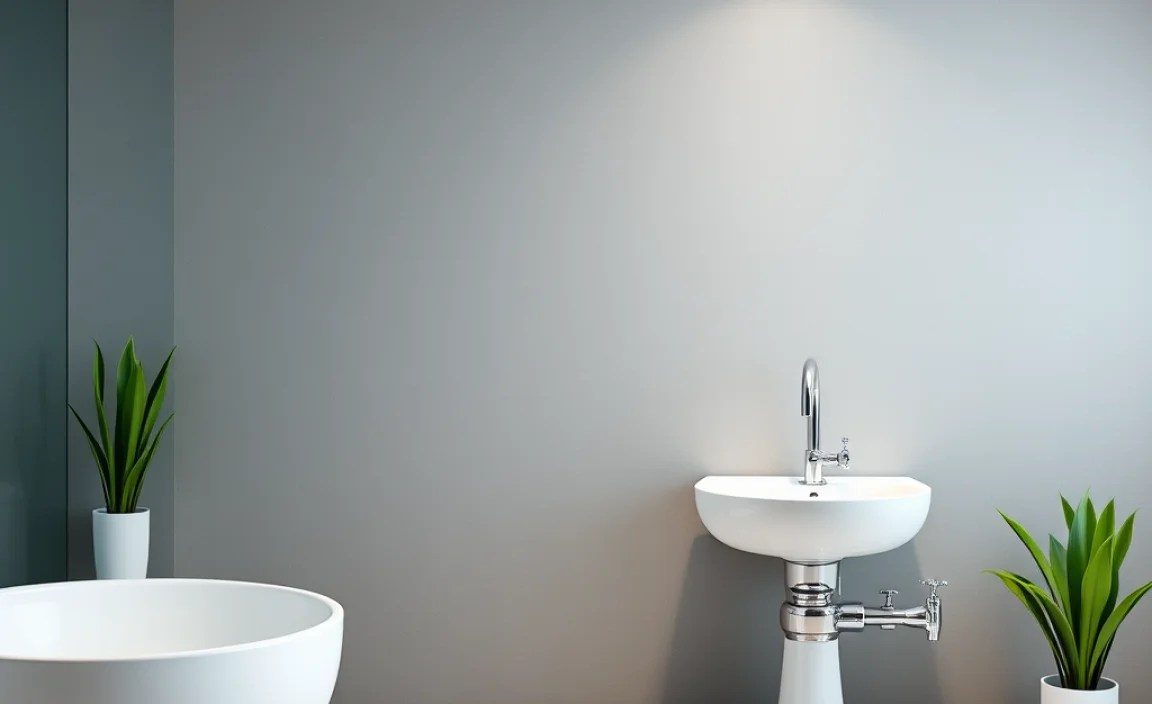
The pipes in your home are made from various materials, each with its own advantages and disadvantages. Knowing these can help you understand why certain repairs are done with specific materials.
Copper Pipes
Copper has been a plumbing staple for decades due to its durability, corrosion resistance, and ability to withstand high temperatures and pressure. However, it’s also more expensive and can be labor-intensive to install.
PEX (Cross-linked Polyethylene)
PEX is a flexible plastic tubing that has become very popular for both hot and cold water supply lines. It’s more affordable than copper, easier to install because it bends around corners, and is resistant to corrosion and freezing. You can learn more about its applications from resources like the U.S. Environmental Protection Agency’s guidance on plumbing materials.
EPA WaterSense: Plumbing Materials
PVC (Polyvinyl Chloride) and ABS (Acrylonitrile Butadiene Styrene)
These are rigid plastic pipes commonly used for drainage, waste, and vent (DWV) systems. They are lightweight, easy to cut and join, and cost-effective. PVC is typically white and used more often for supply lines in some regions and for DWV, while ABS is usually black and preferred for drain and vent pipes in many areas due to its smoother interior and better sound deadening. The materials can vary by local building codes.
Galvanized Steel
Older homes may have galvanized steel pipes, which are steel pipes coated with zinc. While durable, this coating can degrade over time, leading to rust and corrosion that can restrict water flow and contaminate water quality. They are generally replaced with modern materials like copper or PEX when renovations occur.
Cast Iron
Often found in older homes for drain and waste piping, cast iron is very durable and fire-resistant. However, it’s heavy, prone to rust, and can be noisy. Modern systems often use lighter materials for drains, but cast iron remains in many existing structures.
Common Plumbing Issues and Their Terms
Understanding the terminology around common plumbing problems can help you describe the issue to a professional and understand their proposed solutions.
Leaks
A leak is simply an unintended escape of water. They can occur at various points:
- Drip: A small, slow leak, often from a faucet or pipe joint.
- Seep: A slow, steady flow of water, often from a pipe connection or fitting.
- Gush/Rupture: A sudden, large flow of water, indicating a pipe has burst.
- Pinholes: Tiny holes in pipes, often caused by corrosion, that can spray water.
Clogs and Blockages
When drains become obstructed, wastewater can back up. Common causes include grease, hair, soap scum, food particles, and foreign objects.
- Drain Clog: A general term for a blockage in a drain pipe.
- Backflow: When wastewater flows backward into a fixture instead of draining away properly. This is a clear sign of a blockage in the main drain line.
- Slow Drain: A drain that empties water at a much slower rate than usual, often indicating a partial blockage that is worsening.
Water Pressure Issues
Problems with how forcefully water comes out of your fixtures.
- Low Water Pressure: Water flows from the faucet or showerhead with less force than normal. This can be caused by leaks, clogs, issues with the municipal supply, or problems with your home’s pressure regulator.
- High Water Pressure: Water flows too forcefully, which can damage pipes, fixtures, and appliances, and lead to leaks. A pressure-reducing valve (PRV) is used to control this. According to the U.S. Department of Justice standards, residential water pressure should ideally be between 40 and 60 psi, and never exceed 80 psi. HUD standards on water pressure (Note: While this link is about a legal settlement, it references HUD’s involvement with housing standards including plumbing, highlighting the importance of regulated pressure).
Water Heater Terms
If you’ve ever had a problem with hot water, you’ve likely heard these terms:
- Thermostat: The dial or control that sets the water temperature.
