
Have you ever wondered why water flows faster from some faucets? This is all about water pressure! Water pressure can be a bit tricky to understand at first. But don’t worry! By learning some basic water pressure terminology for beginners, you’ll soon feel like a pro. Let’s dive into the world of water pressure and discover its secrets.
Key Takeaways
- Water pressure impacts how fast water flows.
- Pressure is measured in units called PSI.
- Learn water pressure terminology for beginners to understand better.
- High pressure can cause leaks; low pressure slows flow.
- Pressure changes with pipe size and water source.
Understanding Basic Water Pressure Terms
Water pressure is the force that makes water flow through pipes. It is important in everyday life, from taking a shower to watering plants. The pressure is usually measured in PSI, which stands for pounds per square inch. The higher the PSI, the stronger the flow. For beginners, it can be helpful to learn terms like PSI, flow rate, and gauge. These terms will help you understand how water pressure works and affects your daily activities.
- PSI measures water force.
- Flow rate is water volume per time.
- Gauge measures pressure directly.
- Hydraulics study pressure in fluids.
- High pressure increases flow speed.
Now that you know some basic terms, you can better understand water pressure in your home. You can check pressure with a gauge to see if it’s too high or low. If the pressure is too high, it can cause leaks or burst pipes. Low pressure can make it hard to get enough water flow for showers or faucets.
Fun Fact or Stats: A typical home should have water pressure between 30-80 PSI.
What is PSI in Water Pressure?

PSI is a measurement that tells us how strong the water pressure is. It stands for “pounds per square inch.” Imagine someone lightly pressing on your hand. That is low pressure. Now imagine they press harder. That’s high pressure! In water systems, having the right PSI is important. Too low, and water trickles out; too high, and it can damage pipes. Understanding PSI is a key part of water pressure terminology for beginners.
- PSI tells water force strength.
- Low PSI causes weak flow.
- High PSI risks pipe damage.
- Optimal PSI is 30-80 for homes.
- PSI adjusts with valve changes.
When you have the right PSI, everything works smoothly. Showers feel strong, and washing dishes is quick. If PSI is off, you might notice changes in water flow. Checking PSI can solve many water issues at home. If unsure, a plumber can help measure and adjust the PSI.
Fun Fact or Stats: Firefighters use hoses with PSI over 100 to fight fires!
Flow Rate and Its Importance
Flow rate is the amount of water that comes out of a pipe over time. It is usually measured in gallons per minute (GPM). Imagine a garden hose. If you open it a little, water dribbles out slowly. Open it more, and water gushes out quickly. That’s the flow rate in action! Understanding flow rate is essential for beginners learning water pressure terminology.
- Flow rate measures water volume per time.
- Measured in gallons per minute (GPM).
- Higher flow rates fill tubs faster.
- Low flow rates conserve water.
- Flow rate affects water bills.
Knowing about flow rates helps with saving water and money. If you want to conserve water, you might use a fixture with a lower flow rate. For tasks like filling a pool, a higher flow rate is helpful. It’s all about balancing needs and resources.
Fun Fact or Stats: A typical shower uses 2.1 GPM of water!
Why Water Pressure Changes
Have you ever noticed water pressure changing at home? This happens for many reasons. Water pressure can change with the time of day, pipe size, or the water source. In the morning, when everyone uses water, pressure might drop. During the night, pressure can rise when less water is used. Understanding these changes is key for beginners learning water pressure terminology.
- Pressure changes with water use.
- Pipe size affects pressure.
- Water source impacts flow.
- Time of day can alter pressure.
- Seasonal changes affect supply.
Learning why water pressure changes helps in planning water use. For example, doing laundry at night could mean more water pressure. Knowing these factors helps avoid surprises. It’s like understanding a secret code that makes daily tasks easier!
Fun Fact or Stats: Water pressure can drop by 10% during peak hours.
Tools for Measuring Water Pressure
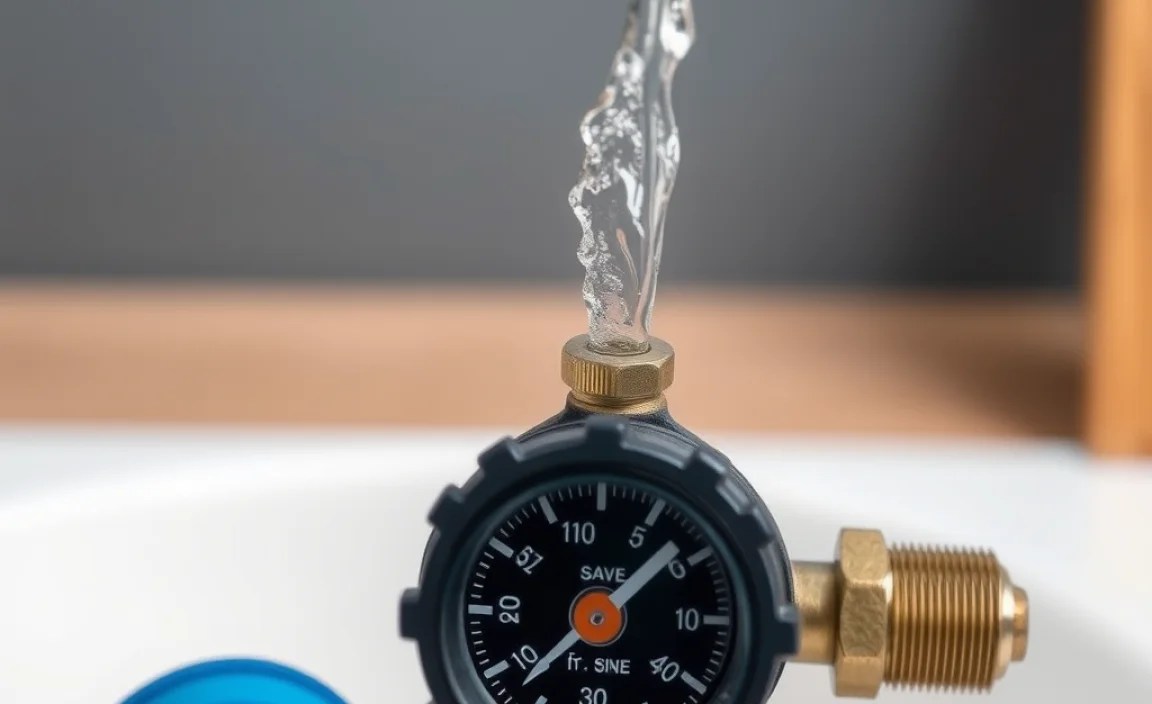
Have you ever tried to measure water pressure at home? With the right tools, it’s easy. A water pressure gauge is a common tool for this. It attaches to a faucet or hose bib. The gauge measures the pressure and shows it in PSI. Learning to use these tools is an important part of water pressure terminology for beginners.
- Pressure gauge measures PSI.
- Attach gauge to faucet or hose.
- Read PSI on the gauge’s dial.
- Use tools from hardware stores.
- Get expert help if needed.
Using a gauge helps ensure your home has the right pressure. If it’s too high, you can adjust it. If it’s too low, there might be a clog. Regular checks can prevent bigger problems. It’s a simple way to keep your home’s water system running smoothly.
Fun Fact or Stats: Some digital gauges can send PSI readings to your phone!
Comparing Home vs. Industrial Water Pressure
Water pressure varies greatly between homes and industrial settings. Homes usually have a lower PSI. This is because high pressure can damage household pipes. In contrast, factories and large buildings need higher water pressure. This helps power machines and provide water to many floors. Learning these differences is crucial for anyone using water pressure terminology for beginners.
| Setting | Average PSI | Purpose | Example |
|---|---|---|---|
| Home | 30-80 PSI | Daily use | Showers, sinks |
| Industrial | 100-150 PSI | Power machines | Factory equipment |
| High-rise Buildings | 150-300 PSI | Elevator systems | Skyscrapers |
| Fire Hoses | 100+ PSI | Fight fires | Fire rescue |
Understanding these differences helps when dealing with various water systems. If you move to a high-rise building or work in a factory, knowing the expected PSI is useful. It ensures everything runs smoothly and safely. Each setting has its own needs and solutions.
Fun Fact or Stats: Some skyscrapers use pumps to maintain water pressure.
Conclusion
Water pressure might seem complicated, but it’s easy with the right terms. By learning some water pressure terminology for beginners, you can tackle any water issue. Whether at home or elsewhere, understanding water pressure makes life simpler. Remember, the right pressure ensures everything works smoothly.
FAQs
Question: What is water pressure?
Answer: Water pressure is the force that moves water through pipes. It’s measured in PSI. Understanding water pressure terminology for beginners can help you manage issues at home.
Question: How do I measure water pressure?
Answer: You can measure water pressure using a gauge. Attach the gauge to a faucet and read the PSI. This helps you know if the pressure is too high or too low.
Question: Why does water pressure change?
Answer: Water pressure changes due to time of day, pipe size, and water use. Understanding these factors helps explain why pressure might be different at times.
Question: What is a good PSI for a home?
Answer: A good PSI for a home is between 30 and 80. This range ensures water flows well without damaging pipes.
Question: Can high water pressure cause problems?
Answer: Yes, high water pressure can cause leaks or burst pipes. It’s important to keep the PSI within the recommended range for safety.
Question: Why learn water pressure terminology for beginners?
Answer: Learning these terms helps you understand and solve water issues. It makes managing your home’s water system easier and more efficient.
