
A kitchen faucet works by using a valve system that controls water flow and temperature. When you turn the handle, it opens or closes pathways for hot and cold water, mixing them to your desired temperature before releasing it through the spout. Understanding this simple mechanism empowers you to handle minor issues and appreciate your plumbing’s everyday magic.
Ever wondered what happens inside your faucet when you turn the handle for a refreshing drink of water or to wash your hands? It might seem like simple magic, but it’s actually clever engineering! Faucets are essential in every home, and understanding how they work is the first step to becoming a DIY pro. Don’t worry if plumbing terms sound a bit technical; we’ll break it all down clearly. This guide will demystify the inner workings of your faucet, helping you feel more confident about your home’s plumbing. Let’s dive in!
Understanding the Basics: What’s Inside a Faucet?

At its core, a faucet is a valve. Its job is to control the flow of water from your home’s pipes to wherever you need it – your sink, shower, or bathtub. But it’s not just about turning water on and off; it’s also about controlling the temperature and pressure.
Think of it like this: your home has pipes carrying hot water and cold water. The faucet is the commander at the intersection, deciding how much of each gets to meet and then pour out for you.
The Essential Components
Most faucets, no matter their style, share a few key parts that make them work:
Here are the main players you’ll find inside almost any faucet:
- Body: This is the main housing of the faucet, what you see on the outside. It connects to your water supply lines.
- Spout: Where the water actually comes out.
- Handle(s): The part you turn or lift to control the water. Faucets can have one, two, or even more handles.
- Cartridge or Stem: This is the heart of the faucet! It’s the mechanism inside that actually controls the flow of hot and cold water. Different faucet types use different kinds of cartridges.
- Aerator: Located at the tip of the spout, this little screen mixes air with water. This creates a smooth, splash-free stream and also helps conserve water. You can often unscrew it to clean out sediment if your water pressure seems low.
- Seat & Spring (in older faucets): These work together with the stem to stop water flow.
How Faucets Control Water Flow and Temperature

The magic of temperature control happens because the faucet has separate inlets for hot and cold water. The handle you operate is connected to a mechanism – usually a cartridge – that precisely blends these two streams before sending them out through the spout.
When you move the handle:
- Turning it on/off: The handle moves the internal mechanism (like a cartridge) to open or close the pathways for water.
- Changing temperature: Moving the handle left or right (or up/down on some single-handle models) adjusts how much hot water and how much cold water can pass through.
- Adjusting pressure: The further you open the valve (by lifting the handle or turning it more), the more water flows, increasing pressure.
This precise control is why you can get anything from an icy blast to a warm trickle, or a steamy shower, all from the same fixture.
Different Types of Faucet Mechanisms: The Heart of the Matter
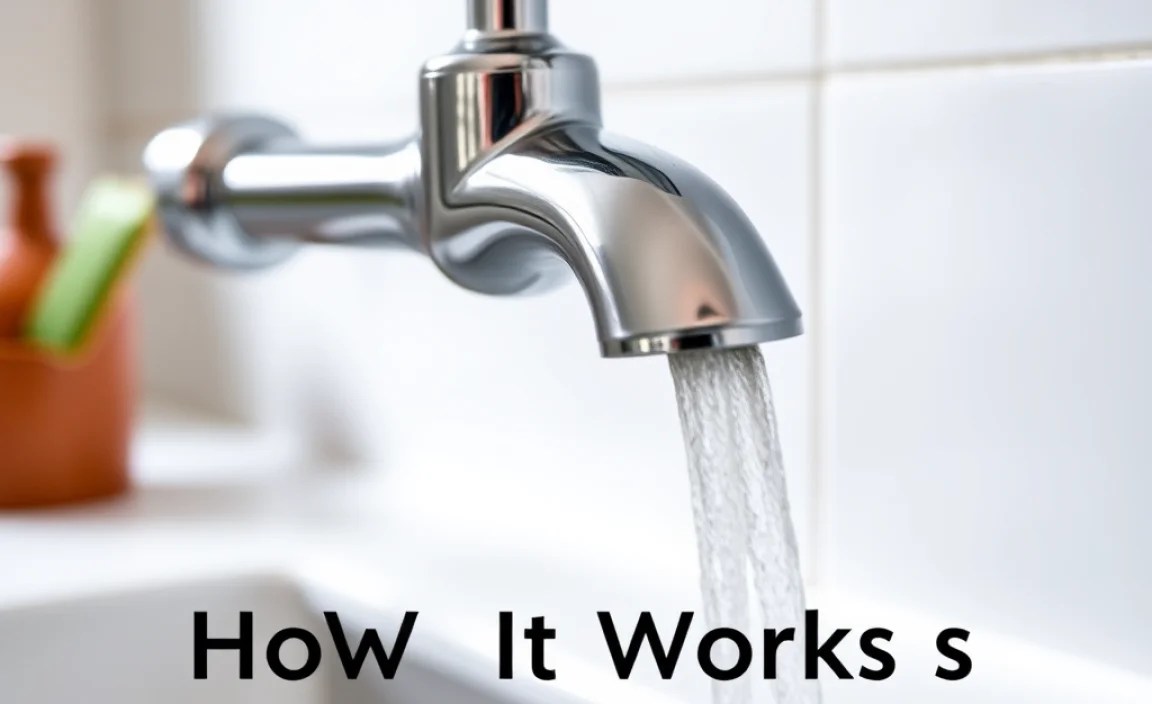
Faucets aren’t all built the same on the inside. Different designs use different internal parts to manage that crucial water flow and temperature. Understanding these types can help you identify your faucet and know what to expect if you ever need a repair.
1. Compression Faucets
These are some of the oldest and simplest faucet types, commonly found in older homes. They require you to tighten a handle to compress a rubber washer against a valve seat, effectively stopping the water flow.
How they work:
- Each handle controls either hot or cold water separately.
- When you turn the handle, a stem screw moves down, pressing a rubber washer (the “bushing”) against a “seat” inside the faucet body.
- This washer creates a seal, stopping the water.
- To turn water on, you turn the handle the opposite way, lifting the washer off the seat.
Pros:
- Simple to understand.
- Parts are inexpensive and easy to find (washers and O-rings).
- Easy for DIYers to repair for basic leaks.
Cons:
- Washers can wear out over time, leading to drips.
- Requires two hands to operate for hot and cold mixing.
- Can be prone to minor leaks if not maintained.
2. Ball Faucets
These are common in kitchens and are easily recognizable by their single handle that moves over a rounded ball-shaped cap. They were one of the first popular single-handle faucet designs.
How they work:
- A slotted, rotating ball sits inside.
- This ball has ports that align with hot and cold water inlets.
- The single handle is attached to the top of the ball.
- When you move the handle, it rotates the ball, changing the alignment of the ports to control water flow and temperature.
- Spring-loaded rubber seals press against the ball to prevent leaks.
Pros:
- Single handle operation for ease of use.
- Relatively inexpensive.
- Can be repaired, though it might be trickier than compression faucets.
Cons:
- Can be prone to leaks if the seals or ball get worn or damaged.
- Repair kits can be specific to the brand, making them slightly harder to find than universal compression parts.
- Can sometimes feel a bit “loose” or less precise over time.
3. Cartridge Faucets
Cartridge faucets are very common and known for their smooth handle operation. They use a movable stem cartridge that contains all the valve mechanism.
How they work:
- A cylindrical cartridge moves up and down and rotates inside the faucet body.
- This cartridge has internal passages that align with hot and cold water inlets.
- The handle is connected to the top of the cartridge stem.
- Moving the handle changes the position of the cartridge to control water flow, volume, and temperature.
- These are found in both single-handle and double-handle designs.
Pros:
- Smooth, consistent operation.
- Very reliable and durable.
- Easy to replace the entire cartridge if it fails; most plumbing supply stores carry them.
- Less prone to leaks than other types.
Cons:
- Replacement cartridges can be more expensive than washers for compression faucets.
- It’s crucial to get the correct cartridge for your specific faucet model.
4. Ceramic Disc Faucets
Considered the most durable and long-lasting type, ceramic disc faucets use two highly polished ceramic discs that slide against each other. They are very efficient at controlling water flow and temperature.
How they work:
- Two hardened ceramic discs are housed within the faucet body.
- One disc is stationary, while the other rotates with the handle.
- Each disc has corresponding holes.
- When the handle is turned, the holes in the discs align, allowing water to flow.
- The precision of the discs creates a very tight seal, making them highly resistant to leaks and mineral buildup.
- These are almost always single-handle faucets.
Pros:
- Extremely durable and long-lasting.
- Excellent resistance to leaks and drips.
- Smooth handle operation.
- Can withstand high water pressure and temperature.
Cons:
- Typically the most expensive type of faucet initially.
- While durable, if a ceramic disc cracks (rare), the entire cartridge unit usually needs replacement.
- DIY repair might be more intimidating due to the precision components.
Comparing Faucet Mechanisms
To help you visualize the differences, let’s look at a quick comparison:
| Faucet Type | Primary Water Control | Common Handle Type | Durability | Ease of Repair (DIY) | Typical Price Range |
|---|---|---|---|---|---|
| Compression | Washer & Seat | Two Handles | Moderate (washers wear) | Easy | Low |
| Ball | Slotted Ball | Single Handle | Moderate (seals wear) | Moderate | Low to Moderate |
| Cartridge | Moving Cartridge | Single or Two Handles | High | Easy to Moderate | Moderate |
| Ceramic Disc | Ceramic Discs | Single Handle | Very High | Moderate (replace cartridge) | Moderate to High |
The Plumbing Behind the Faucet: Water Supply Lines
The faucet itself is just the outlet; it’s connected to a system that brings water to it. This system involves pipes and supply lines that you don’t usually see unless you’re under the sink.
When you turn on your faucet, water travels from your main water supply line into smaller pipes, eventually reaching your faucet’s inlets.
- Hot Water Line: This pipe carries water that has been heated by your water heater.
- Cold Water Line: This pipe carries unheated water directly from your main water supply.
These lines connect to the faucet’s underside using flexible hoses called “supply lines” or “flexible connectors.” These are crucial because they allow for movement and vibrations, and they make it easier to disconnect the faucet for repairs or replacement. They are typically made of braided stainless steel or plastic for durability and to prevent bursting.
For a deeper understanding of how water travels throughout your home and the regulations surrounding plumbing, the U.S. Environmental Protection Agency (EPA) provides excellent resources on safe drinking water.
Troubleshooting Common Faucet Problems
Even the best faucets can develop issues. Here are some common problems and how they relate to the faucet’s inner workings:
1. Faucet Dripping
This is perhaps the most common faucet complaint. It usually means the seal that stops water flow has failed.
- Compression Faucets: Most likely a worn-out rubber washer or a damaged valve seat.
- Ball Faucets: Could be worn seals or O-rings, or a damaged ball.
- Cartridge Faucets: Often a worn-out cartridge or one of its seals.
- Ceramic Disc Faucets: Less common, but could be a worn seal around the discs or a cracked disc (rare).
Often, replacing the worn part (like a washer or O-ring) or the entire cartridge will fix a drip. For many DIYers, this is a manageable repair.
2. Low Water Pressure
If the water flow from your faucet seems weak, several things could be the cause:
- Clogged Aerator: Sediment or mineral buildup can block the small holes in the aerator. Unscrew it and clean it with vinegar.
- Partially Closed Shut-off Valve: Ensure the hot and cold water shut-off valves under the sink are fully open.
- Kinked Supply Line: Check if the flexible supply lines are bent or kinked, restricting flow.
- Cartridge Issues: Inside the faucet, mineral deposits can clog the passages within the cartridge.
- Home-wide Pressure Issues: It could be a problem with your main water supply, but if only one faucet is affected, it’s likely within the faucet itself or its immediate connections.
Cleaning the aerator is a very common fix for this issue and is a great first step for beginners.
3. Noisy Faucet
A faucet can make a variety of noises, from a hiss to a squeal or even a hammering sound.
- Screeching/Squealing: Often caused by worn-out washers or O-rings in older faucets, or a faulty cartridge.
- Chattering: Can occur in compression faucets if the washer is loose or the seat is worn.
- Water Hammer: A sudden banging sound when a faucet is turned off quickly, usually indicating loose pipes or water pressure issues, not typically a faucet mechanism problem itself, but sometimes the rapid valve closing contributes.
Addressing worn parts is key to silencing a noisy faucet.
4. Leaky Faucets Around the Handle
If water is seeping out from under the handle, it usually points to a problem with the seals or O-rings that surround the stem or cartridge.
- Compression Faucets: The O-ring on the stem is the usual suspect.
- Cartridge Faucets: The O-rings that seal the cartridge to the faucet body might be worn or damaged.
Replacing these seals can often stop leaks around the handle.
DIY Maintenance Tips to Keep Your Faucet Working
Maintaining your faucet is simpler than you might think, and a little effort can go a long way in preventing bigger problems.
Regular Cleaning
Clean your faucet regularly with mild soap and water.
For mineral deposits, use a soft cloth dipped in white vinegar. Rinse thoroughly.
Avoid abrasive cleaners, as they can scratch the finish and damage components.
Aerator Care
About every 6 months, unscrew the aerator (you might need pliers with tape on the jaws to avoid scratching).
Soak the aerator in white vinegar for a few hours to dissolve mineral buildup.
Use a small brush (like an old toothbrush) to scrub out any remaining debris.
Reassemble and screw it back onto the spout.
Checking Supply Lines
Periodically inspect the flexible supply lines under your sink.
Look for any signs of corrosion, cracking, or leaks.
If you see any damage, it’s best to replace them promptly. Braided stainless steel lines are a good, durable option, and you can find them at most hardware stores. For guidance on choosing the right supplies, sites like Toolstation’s plumbing guides offer practical advice.
Managing Water Hammer
* If you hear the loud banging known as “water hammer,” it’s important to address it. This can be caused by pipes not being secured properly or by excessive water pressure. The U.S. Department of Energy provides tips on water efficiency that may also touch upon pressure management.
When to Call a Pro
While many faucet issues are DIY-friendly, know when to reach out to a professional plumber:
- If you’re uncomfortable with any part of the repair.
- If you encounter recurring problems you can’t solve.
- If you suspect a leak inside the wall or a more significant plumbing issue.
- If you need to replace a faucet and aren’t confident in the installation process.
