
Creating a successful composting program for your community garden is simpler than you think! This guide will walk you through the essential steps, from choosing the right bin to managing your compost effectively, ensuring a sustainable cycle of nutrient-rich soil for everyone to enjoy.
Starting a community garden is a fantastic way to connect with neighbors and grow fresh food. But to keep those plants thriving, you need healthy soil. This is where composting comes in! Many garden enthusiasts find composting a bit mysterious, but it’s actually a straightforward process. You might be feeling a little daunted, wondering if you have the skills or knowledge to get it right. Don’t worry! This article is your step-by-step guide to becoming a composting pro for your community garden.
We’ll break down everything you need to know, from what materials to use and what to avoid, to how to build or select the perfect compost system. By the end, you’ll have the confidence and know-how to turn your garden’s waste into black gold, boosting your garden’s fertility and reducing waste.
Why Composting Matters for Community Gardens

Composting is more than just a way to get rid of kitchen scraps and yard trimmings; it’s a vital practice for any community garden aiming for sustainability and robust plant growth. It’s the ultimate recycling program, transforming organic waste into a nutrient-rich soil amendment that can dramatically improve garden health.
When you compost, you are actively contributing to a healthier ecosystem. This practice reduces the amount of waste sent to landfills, which in turn lessens the release of methane, a potent greenhouse gas. For a community garden, this means less reliance on store-bought fertilizers, which can be costly and environmentally impactful. Instead, you create a free, natural fertilizer that nourishes your plants from the ground up.
Benefits of Composting in a Community Setting:
- Enhanced Soil Fertility: Compost adds essential nutrients and organic matter to your soil, improving its structure, water retention, and aeration. This leads to healthier, more vigorous plants and better yields for everyone in the garden.
- Waste Reduction: It diverts significant amounts of organic waste (food scraps, leaves, grass clippings) from landfills, contributing to environmental well-being and potentially lowering waste disposal costs for the garden.
- Cost Savings: The compost produced is a free, high-quality soil amendment. This reduces or eliminates the need for purchasing expensive commercial fertilizers and soil conditioners.
- Improved Water Management: Compost-rich soil acts like a sponge, holding more moisture. This means less frequent watering, saving water and making the garden more resilient during dry spells.
- Community Engagement and Education: A communal composting system can be a fantastic educational tool, bringing gardeners together, fostering teamwork, and teaching valuable sustainable practices.
- Reduced Need for Chemical Inputs: Healthy soil enriched with compost naturally supports plant health, reducing the likelihood of pest and disease outbreaks, and the need for chemical pesticides and herbicides.
Getting Started: Choosing Your Composting Method
The first big decision for your community garden is how you’ll compost. Several methods work well, and the best choice often depends on the space available, the amount of organic material your garden produces, and the number of people involved. Each method has its pros and cons, so let’s explore them to find the perfect fit.
Method 1: The Three-Bin System
This is a popular and highly effective method for community gardens because it allows for continuous composting. You’ll have one bin for adding new materials, one for actively composting, and one for finished compost. This system requires a bit more space but is very efficient.
How it works:
- Bin 1 (Adding): This is where you deposit fresh “greens” (nitrogen-rich materials like food scraps, grass clippings) and “browns” (carbon-rich materials like dry leaves, shredded paper) as they become available.
- Bin 2 (Active): Once Bin 1 is full, you turn its contents into Bin 2. This is where the magic happens – decomposition is rapid. You’ll need to monitor moisture and aeration (turning) regular here.
- Bin 3 (Curing): Once materials in Bin 2 have decomposed significantly, they are moved to Bin 3 to cure and mature. This allows the compost to stabilize, kill weed seeds and pathogens, and develop its rich, earthy smell.
Pros:
- High volume composting capability.
- Continuous supply of finished compost.
- Relatively fast decomposition rates when managed well.
Cons:
- Requires more space.
- Higher initial effort for construction and ongoing management.
- Can attract pests if not managed properly.
Method 2: Contained Compost Bins (Tumbling or Static)
These are manufactured bins that keep everything neatly enclosed. Tumbling composters are large drums that you spin, while static bins are stationary containers, often with a lid and a door at the bottom for access to finished compost. They are excellent for managing odors and deterring pests.
How it works:
- Add Materials: Deposit your greens and browns into the bin.
- Mix/Turn: For tumblers, you’ll spin the drum every few days. For static bins, you’ll use a pitchfork or compost aerator to turn the contents periodically.
- Harvest: Once compost is ready, you access it from a hatch or by emptying the bin.
Pros:
- Neat and tidy appearance.
- Excellent pest and odor control.
- Good for smaller community garden spaces or for individual plots.
- Easier to manage moisture levels.
Cons:
- Limited volume compared to a three-bin system.
- Tumbling can be labor-intensive for large batches.
- Can be more expensive upfront than building your own bins.
Method 3: Simple Piles/Windrows
For larger community gardens with ample space, a simple compost pile or a long, linear pile known as a windrow is an option. These are less contained but can handle very large volumes.
How it works:
- Layer Materials: Begin by layering greens and browns directly on the ground.
- Build Up: Continue adding materials, aiming for a balanced mix.
- Turn Regularly: The key to aeration and decomposition in large piles is frequent turning, often with a front-end loader or a robust team effort. Moisture needs to be maintained.
Pros:
- Can compost very large volumes of material.
- Low initial cost for materials.
- Relatively simple setup.
Cons:
- Requires a lot of space.
- Can be less tidy and may attract pests if not managed well.
- Turning large piles is physically demanding and requires equipment or a dedicated team.
- May have slower decomposition if not turned frequently enough.
The Compost Recipe: What to Add (and What to Avoid)

Composting success hinges on a balanced mix of organic materials, often categorized as “greens” and “browns.” Think of it like baking a cake – the right proportions are key to getting a great result. This balance affects how quickly your compost breaks down and how nutrient-rich it becomes.
Understanding Greens and Browns
The “greens” are nitrogen-rich materials that provide the protein for the microorganisms that break down the waste. They tend to be moist. The “browns” are carbon-rich materials that provide the energy for the microorganisms and add bulk. They are typically dry.
A good general ratio to aim for is about 2 to 3 parts browns to 1 part greens. This might seem like a lot of browns, but it helps prevent the pile from becoming slimy and smelly.
What to Compost (The “Feastables”)
Greens (Nitrogen-Rich):
- Fruit and vegetable scraps (peels, cores, rinds, wilted produce)
- Coffee grounds and tea bags
- Grass clippings (add in thin layers to prevent matting)
- Plant trimmings from the garden (non-diseased)
- Seaweed
- Manure from herbivores (cows, horses, rabbits, chickens – avoid pet waste from carnivores)
Browns (Carbon-Rich):
- Dry leaves (a fantastic resource!)
- Shredded newspaper, cardboard, or paper bags (avoid glossy or colored inks)
- Straw or hay
- Wood chips or sawdust (use sparingly, can decompose slowly)
- Eggshells (crushed)
- Twigs and small branches (chopped or shredded)
What NOT to Compost (The “No-Nos”)
These items can cause problems, attract pests, or may not decompose properly.
- Meat, fish, dairy products, and oily foods: These attract pests and create foul odors.
- Diseased plants: Can spread diseases back into your garden.
- Weeds that have gone to seed: The seeds might survive the composting process and sprout in your garden.
- Pet waste (dogs, cats): Can contain harmful pathogens.
- Treated wood or lumber: May contain toxic chemicals.
- Coal or charcoal ash: Contains sulfur and iron in quantities that can be harmful to plants.
- Synthetic materials: Plastics, metals, glass, and synthetic fibers don’t break down.
- Glossy or colored paper/cardboard: Often contain chemicals that are not ideal.
Building or Setting Up Your Compost System
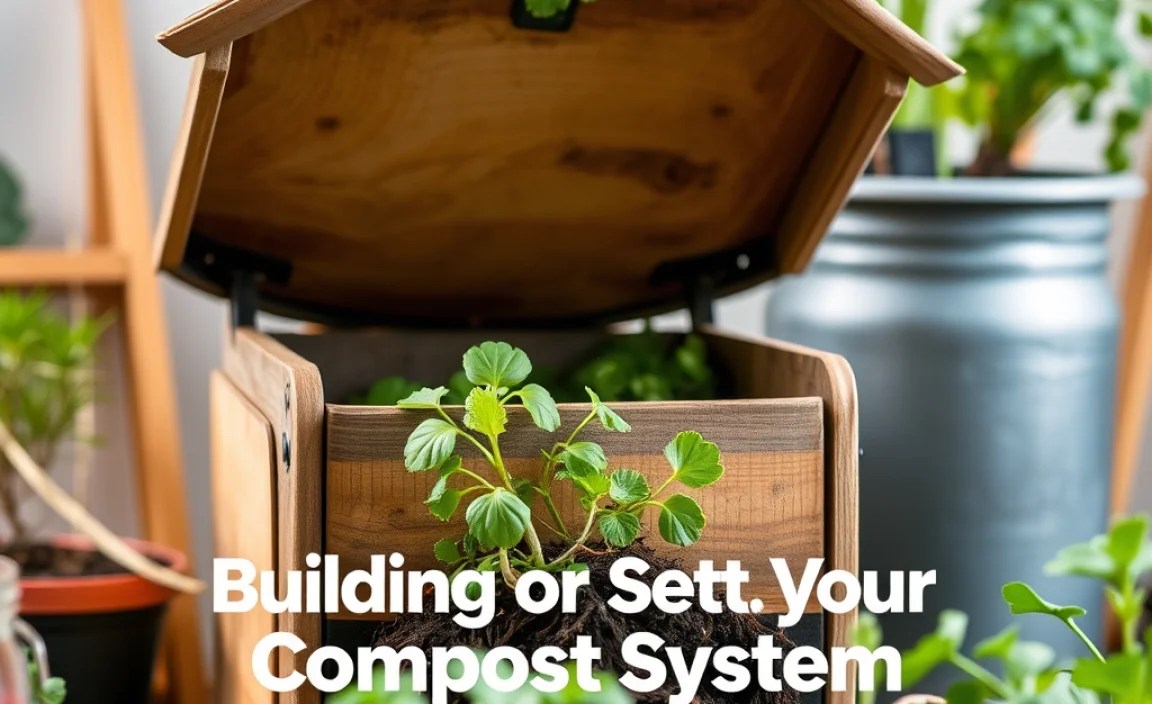
Once you’ve chosen your method, it’s time to get your compost system ready. Whether you’re building from scratch or assembling a purchased bin, proper setup is crucial for efficient composting.
For a Three-Bin System: DIY Construction
For a sturdy, long-lasting three-bin system, you’ll typically use wooden pallets or lumber. A common design is to create three connected bays, about 3x3x3 feet each.
Materials you might need:
- Several wooden pallets (free from many businesses, check for quality) OR treated lumber (heat-treated, not chemically treated)
- Wire mesh or hardware cloth (optional, for better aeration and pest control at the bottom)
- Screws or heavy-duty zip ties
- Hinges and latches (for front access panels, optional)
- Post hole digger and concrete (if you want extra stability for posts)
Basic Steps:
- Choose a Location: Select a level spot with good drainage, partial shade, and easy access for adding materials and turning.
- Assemble Back and Sides: Stand pallets up to form the back and sides of your three bays. Secure them firmly to each other, and to posts if using.
- Add Front (Optional): You can leave the front open, create removable slats, or build hinged doors for easier access.
- Add Base (Optional): Lining the bottom with hardware cloth can prevent rodents from burrowing in.
A great resource for detailed plans and tips on compost bin construction is the U.S. Environmental Protection Agency (EPA), which offers comprehensive guides on composting with various methods, including bin building.
For Contained Bins:
If you’ve opted for a manufactured bin, simply follow the manufacturer’s assembly instructions. Ensure the location is level and has decent access.
Key Setup Considerations for All Systems:
- Aeration: Compost needs air to function. Ensure your system allows for airflow. This can be through gaps in pallets, vents in manufactured bins, or by regular turning.
- Drainage: The compost pile should be moist, not waterlogged. If drainage is poor, consider raising the base or placing it on a few inches of gravel.
- Access: Make it easy to add materials and, crucially, to turn the compost and harvest finished product.
Composting Workflow: The Step-by-Step Process
Now that your system is in place, let’s get composting! The process involves regularly adding materials, maintaining the right conditions, and knowing when your compost is ready.
Step 1: Getting Started – The Base Layer
Begin by laying down a base layer of course, brown materials like small twigs or straw at the bottom of your bin or pile. This helps with drainage and aeration.
Step 2: Layering Greens and Browns
Start adding your organic materials, alternating layers of greens and browns. Aim for that 2-3:1 brown to green ratio. Chop or shred larger items to speed up decomposition. Sprinkle a shovel-full of finished compost or garden soil on top of your layers occasionally; this introduces beneficial microorganisms.
Step 3: Managing Moisture
Your compost pile should be as damp as a wrung-out sponge. If it’s too dry, decomposition slows down significantly. If it’s too wet, it can become anaerobic, leading to unpleasant smells.
- Too Dry: Water the pile thoroughly while turning it.
- Too Wet: Add more brown materials and turn the pile to incorporate them and introduce air.
Step 4: Aeration – Turning Your Compost
The microorganisms that break down organic matter need oxygen. Turning your compost pile introduces air.
- Frequency: Aim to turn your compost every 1-2 weeks for active, hot composting, or every 4-6 weeks for slower, cooler composting.
- How to Turn: Use a pitchfork or compost aerator. For a three-bin system, you’ll move material from Bin 1 to Bin 2, and then to Bin 3. For bins or piles, pitch the material from the outside to the middle, and the top to the bottom.
Step 5: Monitoring and Troubleshooting
Keep an eye on your compost.
- Smell Test: A healthy compost pile should smell earthy. Foul odors (like ammonia or rotten eggs) usually indicate too much green material or a lack of air.
- Temperature: A hot compost pile (130-160°F or 55-70°C) decomposes quickly and kills weed seeds and pathogens. You can use a compost thermometer to check.
- Pests: If pests are an issue, ensure you’re not adding meat/dairy, bury food scraps in the center of the pile, and consider a bin with a lid and pest-proof base.
Step 6: Harvesting Your Finished Compost
Finished compost is dark brown, crumbly, and smells earthy. You shouldn’t be able to recognize the original materials. The time it takes can vary from a few months to a year, depending on your method and management.
- How to Harvest: Sift the compost using a screen to remove any larger, undecomposed pieces, which can be returned to the active pile.
- Uses: Mix into garden beds, use as a top dressing, or add to potting mixes.
Compost Thermometer & Moisture Meter
For those serious about optimizing their compost, a compost thermometer and moisture meter can be invaluable tools. A thermometer helps you understand the decomposition process and ensures the pile is hot enough to kill pathogens and weed seeds. A moisture meter helps you maintain that perfect “damp sponge” consistency.
These tools are relatively inexpensive and can take the guesswork out of managing your compost, especially in a communal setting where multiple people might be involved. Understanding the internal temperature of your compost pile is a key indicator of microbial activity. Researchers at Utah State University Extension provide excellent resources on compost science and management, including temperature guidelines.
Table: What Goes Where in a Community Garden Compost System
This table provides a quick reference for sorting materials for your community garden compost bins.
| Category | Examples | Role in Composting | Notes |
|---|---|---|---|
| Greens (Nitrogen) | Grass clippings, fruit & veggie scraps, coffee grounds, tea bags, plant trimmings, manure (herbivores) | Provide protein for microbes, fuel decomposition, |
