
Quick Summary: Understanding drain layout vs. alternative designs is key for efficient water management and preventing costly damage. This guide simplifies choices, outlining proven designs for homeowners to ensure proper drainage and a dry foundation.
Dealing with water around your home can be a real headache. You might notice puddles after rain, damp spots in the yard, or even worry about water seeping into your basement. Getting the drainage right is super important for keeping your home safe and sound. It might sound complicated, but figuring out the best way to move water away from your house is totally achievable.
This guide will break down the common drain layout options and some smart alternatives. We’ll look at what works, why it works, and how you can choose the best plan for your needs. By the end, you’ll feel confident understanding the options and making informed decisions for a drier, happier home.
Understanding Your Drain Layout Options
Effective drainage is all about guiding water away from your home’s foundation and sensitive areas. This prevents water damage, mold growth, and even structural issues over time. When we talk about drain layout, we’re essentially creating a system of channels or pipes that direct water to where it needs to go, usually away from your house and into a storm drain, dry well, or a more suitable area of your property.
There are several common approaches to drain layout, each with its own strengths. The best choice often depends on your property’s specific topography (how the land slopes), soil type, and the amount of rainfall you typically experience. Let’s explore some of the most proven designs.
1. The French Drain: A Classic Solution
A French drain is a time-tested and highly effective solution for managing groundwater. It’s essentially a trench filled with gravel that surrounds a perforated pipe. Water seeps into the gravel, enters the pipe through its perforations, and then flows away from the area it’s protecting. It’s a workhorse for addressing soggy yards, preventing basement water intrusion, and protecting foundations.
How a French Drain Works
- A trench is dug, typically sloping away from the problem area.
- A layer of gravel is placed at the bottom of the trench.
- A perforated pipe is laid on top of the gravel, also sloping downwards.
- The pipe is wrapped in fabric (like landscape fabric) to prevent soil and debris from clogging it.
- More gravel is added to fill the trench above the pipe.
- Finally, a layer of soil is usually placed on top, sometimes with grass seed or other landscaping.
When to Choose a French Drain:
- Your yard consistently holds water or has soggy areas.
- You have a history of water seeping into your basement or crawl space.
- You need to dry out a specific area near your foundation or retaining walls.
- Your soil is heavy clay, which doesn’t drain well on its own.
Pros of French Drains:
- Very effective at moving groundwater and surface water.
- Relatively low maintenance once installed.
- Can be integrated with landscaping for a seamless look.
- Works continuously to keep areas dry.
Cons of French Drains:
- Installation can be labor-intensive and may require heavy equipment for larger projects.
- If not installed correctly, they can become clogged and ineffective.
- The initial cost can be a factor, especially for long drains.
2. Channel Drains (Trench Drains): Surface Water Champions
Channel drains, also known as trench drains, are linear drains designed to capture surface water quickly. They consist of a channel with a grate on top. You’ve likely seen them in driveways, patios, pool decks, and even commercial areas. They’re excellent for areas where water tends to pool on flat surfaces or where rapid runoff is crucial.
How Channel Drains Work
- A trench is excavated, and a channel body is set into it, usually made of concrete, plastic, or metal.
- The channel is installed with a slight slope towards an outlet.
- A removable grate spans the top of the channel, allowing water to flow in while keeping debris out.
- The water collected in the channel is directed through an underground pipe to its final destination.
When to Choose a Channel Drain:
- You have a driveway, patio, or walkway that accumulates standing water.
- You need to manage water runoff from a large paved area.
- You want to prevent water from flowing towards your home’s entrance or garage.
- Pool decks or other areas that get a lot of surface water.
Pros of Channel Drains:
- Excellent at collecting surface water quickly.
- Can handle significant volumes of water.
- Grates are removable, making cleaning and maintenance relatively easy.
- Available in various sizes and materials to suit different aesthetics and load requirements.
Cons of Channel Drains:
- Primarily for surface water; less effective for deep groundwater issues.
- The grate can be a trip hazard if not installed flush with the surface.
- Can be clogged by large debris if grates are not cleaned regularly.
- Can be more visible than other drainage systems, impacting aesthetics if not chosen carefully.
3. Surface Drains (Catch Basins): Targeted Water Collection
Surface drains, often called catch basins or yard drains, are typically individual, grated inlets installed in low-lying areas where water collects. Think of them as drains for specific spots in your lawn or garden. They collect surface water in one location and then channel it away via underground piping.
How Surface Drains Work
- A hole is dug in the low spot needing drainage.
- A basin (either a plastic or concrete sump) is set into the hole.
- A grate is placed on top of the basin, allowing water to enter.
- An outlet pipe is connected to the side of the basin, directing water away.
- The basin collects the water and an underground pipe carries it off.
When to Choose a Surface Drain:
- You have specific low spots in your yard that constantly flood.
- You need to divert water from a particular area like a garden bed or a patio corner.
- You are looking for a more discrete solution for localized drainage problems.
Pros of Surface Drains:
- Effective for targeted drainage of specific problem areas.
- Relatively simple and less expensive to install for small problem spots.
- Can be easily incorporated into existing landscaping.
- The basin acts as a catch for debris, helping to protect the outflow pipe.
Cons of Surface Drains:
- Less effective for large areas or continuous water flow compared to channel drains.
- Multiple catch basins might be needed for extensive drainage issues, increasing cost and complexity.
- The grates can still accumulate debris and require cleaning.
Drain Layout Alternatives and Complementary Solutions

While the primary drain layouts are excellent, sometimes a combination of methods or alternative approaches are best for optimal water management. These alternatives can supplement existing systems or provide solutions where traditional drains might be difficult or less effective.
1. Grading and Sloping: The Foundation of Drainage
Before even thinking about pipes and gravel, the most fundamental drainage “design” is proper grading. This means shaping the land itself so that water naturally flows away from your home’s foundation. A well-graded yard is the first line of defense and makes any other drainage system work much better.
How Grading Works
- The land is shaped to create a gentle slope away from the house. The general rule of thumb from the National Association of Home Builders is a slope of at least 6 inches over the first 10 feet away from the foundation.
- This ensures that rainwater and melting snow run off the surface rather than pooling near the foundation walls.
- Careful attention is paid to downspout extensions, ensuring they direct water at least 5-10 feet away from the house.
When to Choose Grading:
- As a first step for any drainage problem.
- When you notice water pooling right next to your foundation.
- To improve the overall effectiveness of other drainage systems.
Pros of Grading:
- Fundamental to preventing water intrusion.
- Natural and cost-effective if done during landscaping.
- Enhances the performance of all other drainage methods.
Cons of Grading:
- Can be difficult to fix if the initial landscaping was done incorrectly.
- May require significant soil movement and professional landscaping.
- Doesn’t solve deep groundwater issues.
2. Dry Wells: Underground Water Storage
A dry well is an underground structure, typically a covered pit filled with gravel or a pre-fabricated chamber, that collects and stores excess water, allowing it to slowly percolate into the surrounding soil. They are great for managing runoff in areas where you can’t easily pipe water away or where soil percolation is slow.
How a Dry Well Works
- A large pit is excavated.
- The pit is lined with landscape fabric to prevent soil from entering.
- The pit is filled with coarse gravel or a pre-made plastic/fiberglass chamber.
- Water is piped into the dry well from downspouts, drainage systems, or other collection points.
- The water slowly seeps out of the dry well into the surrounding soil.
When to Choose a Dry Well:
- You need to manage runoff from downspouts or drainage systems but have nowhere to direct the water.
- Your soil has a low percolation rate (drains slowly).
- Local regulations prohibit discharging water into storm sewers or streets.
- You have a large volume of water to manage.
Refer to local guidelines for proper installation and permitting, as a resource like the EPA provides information on these systems.
Pros of Dry Wells:
- Effective for water accumulation issues.
- Can reduce the load on municipal storm sewer systems.
- Can be a solution for properties with limited space for surface drainage.
Cons of Dry Wells:
- Installation can be invasive and require excavation.
- May require permits and adherence to specific building codes.
- Can become saturated during prolonged heavy rainfall.
- Requires suitable soil conditions for effective percolation.
3. Rain Gardens: Natural Water Absorption
Rain gardens are shallow, landscaped depressions designed to capture and absorb rainwater runoff from roofs, driveways, and other impervious surfaces. They use plants, mulch, and soil to naturally filter and soak up the water, reducing the burden on storm drains and improving water quality.
How Rain Gardens Work
- A shallow depression is created in the landscape.
- The garden is filled with a specific soil mix that allows for good drainage.
- Native plants that thrive in both wet and dry conditions are planted.
- Mulch is added to retain moisture and suppress weeds.
- Runoff from nearby surfaces is directed into the rain garden.
When to Choose a Rain Garden:
- You want an environmentally friendly and aesthetically pleasing drainage solution.
- You have areas where water naturally collects after rain.
- You want to reduce stormwater runoff and filter pollutants.
- You are looking for a way to incorporate native plants and support local ecosystems.
Pros of Rain Gardens:
- Eco-friendly and improves water quality.
- Beautiful landscaping feature.
- Reduces erosion and allows groundwater recharge.
- Can attract beneficial insects and birds.
Cons of Rain Gardens:
- May not be suitable for extremely heavy runoff without supplemental drainage.
- Requires proper plant selection and maintenance.
- Can create mosquito breeding grounds if water stagnates for too long.
- Effectiveness depends on soil type and garden design.
Comparing Drain Layouts: A Quick Reference
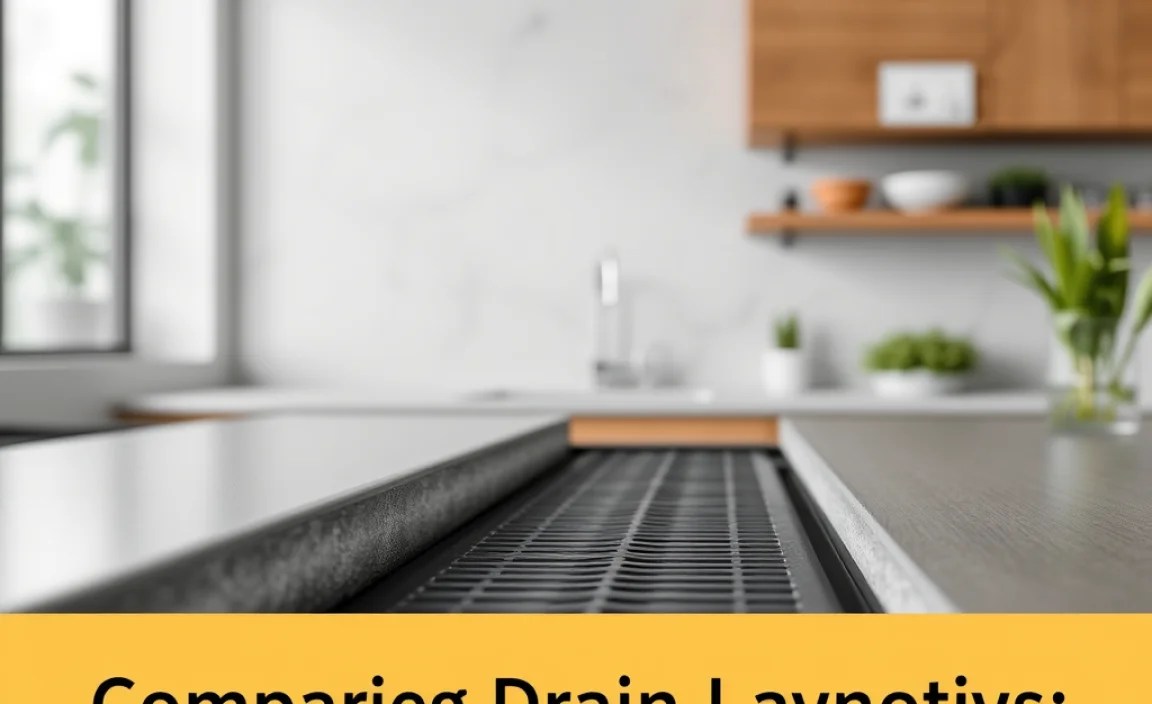
Choosing the right drainage solution can be easier when you have a clear comparison of the most common methods. The following table outlines key features to consider when deciding between a French drain, channel drain, and catch basin system.
| Feature | French Drain | Channel Drain | Surface (Catch Basin) Drain |
|---|---|---|---|
| Primary Use | Groundwater, foundation protection, soggy yards | Surface water on paved areas (driveways, patios) | Targeted collection of surface water in low spots |
| Water Type Handled | Groundwater and surface water | Surface water | Surface water |
| Installation Complexity | Moderate to high (trenching, pipe laying) | Moderate (excavation, channel setting) | Low to moderate (digging a hole, installing basin) |
| Maintenance | Low (occasional grate clearing if applicable, pipe inspection) | Moderate (grate cleaning is crucial) | Moderate (grate and basin cleaning) |
| Aesthetics | Can be hidden under landscaping | Visible grate, can be designed to blend | Visible grate, typically in lawns or landscapes |
| Best For | Preventing basement flooding, drying yards | Driveway runoff, patios, large paved areas | Yard puddles, specific problem spots in landscape |
Beyond these primary types, remember that grading is the fundamental first step for almost any drainage scenario. Consider how these systems can work together. For example, downspouts might feed into a channel drain, which then directs water to a French drain or a dry well.
DIY vs. Professional Installation
For some homeowners, tackling drainage projects themselves can be a rewarding DIY experience. However, for others, especially for larger or more complex systems, hiring a professional is often the wisest choice. Let’s break down when you might consider each.
DIY Considerations:
- Simpler projects: Installing a single catch basin in a small, obvious low spot in your yard can be a manageable DIY task.
- Tools and Time: Ensure you have the necessary tools (shovels, wheelbarrow, level, tamper) and ample time.
- Understanding Principles: A good understanding of gravity flow and proper sloping is crucial.
- Small French Drains: Smaller, shorter French drains might be do-able for experienced DIYers with good physical stamina.
When to Call a Professional:
- Complex Grading: When significant grading is needed to change the land’s slope, professionals have the equipment and expertise.
- Large or Extensive Systems: Installing long French drains, multiple channel drains, or large dry wells often requires excavation equipment and specialized knowledge.
- Underground Utilities: Professionals are trained to identify and avoid underground utility lines, a critical safety and legal concern. Contacting your local utility locating service (like 811 in the US) before any digging is essential, but professionals have experience working around them.
- Diagnosing Persistent Issues: If you have recurring water problems despite previous attempts to fix them, a professional can diagnose the root cause.
- Heavy Clay Soil or High Water Tables: These conditions can make drainage design more complex.
- Permitting Requirements: Some drainage projects, especially those involving dry wells or connection to the municipal system, may require permits. Professionals are familiar with these processes.
A well-designed and installed drainage system is an investment in your home’s longevity and your peace of mind. If in doubt, always lean towards professional consultation.
Frequently Asked Questions (FAQ)
Q1: What’s the most common reason for water problems around my house?
A1: The most common culprit is improper grading – meaning the land around your foundation doesn’t slope away from the house, causing water to pool. Poorly managed rainwater from downspouts is another major factor.
Q2: How do I know if I need a specific type of drain system?
A2: Observe where water collects and how much. Puddles near the foundation suggest grading issues or a need for a French drain. Water pooling on a driveway points to a channel drain. Persistent soggy spots in the lawn might need a catch basin or a French drain.
Q3: Can I just extend my downspouts further away from the house?
A3: Yes, extending downspouts at least 5-10 feet away from your foundation is a crucial first step and can solve.
