
Effortlessly create an eco-friendly bathroom with a minimal style using sustainable products. This guide offers simple swaps and design tips to achieve a clean, green, and beautiful space without the overwhelm. Embrace functionality and natural aesthetics for a serene sanctuary.
Is your bathroom a bit of a cluttered space? Do you find yourself surrounded by plastic bottles and disposable items? It’s easy for bathrooms to become hubs of waste, but achieving a tidy, eco-conscious space doesn’t have to be complicated. Many of us dream of a serene bathroom that feels both clean and calming, a place to truly unwind. The good news is that going green and embracing a minimal aesthetic go hand-in-hand. This guide will walk you through simple, beginner-friendly steps to transform your bathroom into an eco-friendly haven with an effortless minimal style. Get ready to discover how easy it can be!
Why Eco-Friendly Bathroom Products Support Minimal Style

The connection between eco-friendly bathroom products and a minimal style might not be immediately obvious, but it’s a perfect match. Minimalism is all about simplicity, intentionality, and reducing clutter. Eco-friendly products often align with these principles because they are typically:
- Durable and Reusable: Think solid shampoo bars instead of plastic bottles, or reusable cotton rounds instead of disposable ones. This reduces visible waste cluttering your countertops.
- Thoughtfully Packaged (or Unpackaged!): Many eco-brands opt for minimal, recyclable, or compostable packaging. Some even offer products completely without packaging, like bar soaps or bamboo toothbrushes. Less packaging means less visual noise.
- Made from Natural Materials: Products crafted from bamboo, wood, glass, or natural fibers naturally lend themselves to a calm, natural aesthetic that is central to minimal design.
- Multi-functional: Some eco-friendly items serve multiple purposes, further reducing the number of individual items needed.
By choosing products that are better for the planet, you’re naturally simplifying your bathroom’s visual landscape. This creates a more peaceful and organized environment, which is the heart of minimal design. It’s a win-win for your home and the Earth.
Getting Started: Your First Eco-Friendly Bathroom Swaps
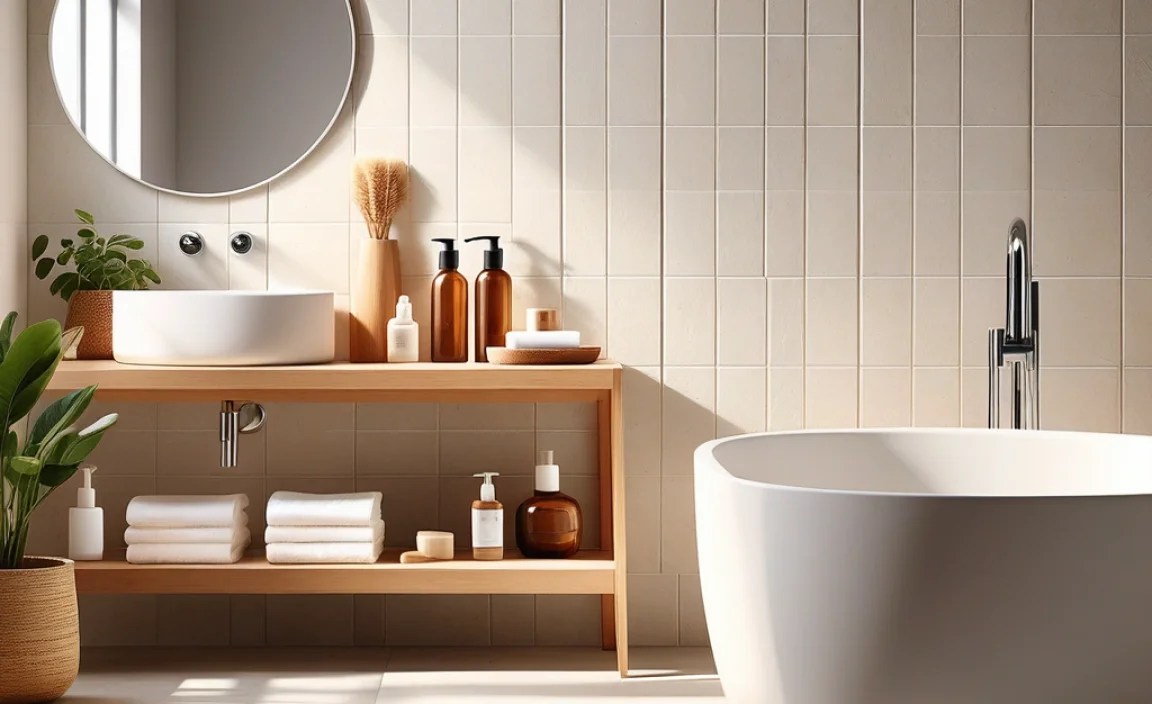
You don’t need to overhaul your entire bathroom overnight. Start with a few simple switches. These are the easiest places to begin your eco-friendly journey and immediately enhance your minimal style.
1. The Soap Situation: Bars Over Bottles
Plastic liquid hand soap and body wash bottles are a major source of bathroom waste. Switching to solid bar soaps is one of the simplest and most impactful changes you can make.
- Why it’s eco-friendly: Drastically reduces plastic waste. Many bar soaps are also made with natural ingredients and come in paper or compostable packaging.
- Minimal Style Impact: A beautiful ceramic soap dish on the counter looks much cleaner and more intentional than a collection of plastic bottles.
- Beginner Tip: Look for artisanal soaps made with natural oils and essential oils. Brands like Dr. Squatch, LUSH, or local makers often have excellent, beautifully crafted options.
2. Toothbrush Transition: Bamboo Power
Every year, billions of plastic toothbrushes end up in landfills. A bamboo toothbrush is a fantastic, sustainable alternative.
- Why it’s eco-friendly: Bamboo is a rapidly renewable resource, and bamboo toothbrushes are biodegradable.
- Minimal Style Impact: A sleek bamboo toothbrush in a simple holder adds a natural, earthy element to your bathroom vanity.
- Beginner Tip: Ensure you choose a bamboo toothbrush with bristles that are also biodegradable or can be removed for proper disposal. Many brands offer soft, medium, or hard bristles to suit your preference.
3. Say Goodbye to Cotton Swabs (Plastic-Tipped)
These little plastic items are a common bathroom staple, but their plastic stems are a problem. Opt for eco-friendly alternatives for small cleaning tasks.
- Why it’s eco-friendly: Eliminates single-use plastic.
- Minimal Style Impact: Store reusable options in a tidy glass jar.
- Beginner Tip:
- Paper-tipped or Bamboo-tipped Cotton Swabs: They look similar but are made with sustainable materials.
- Reusable Silicone Swabs: Designed for cleaning ears and makeup touch-ups, these can be washed and reused multiple times.
- Small Washcloths/Corner of a Towel: For general cleaning, a damp cloth is often all you need.
4. Rethink Your Shower: Solid Shampoo and Conditioner
Those bulky plastic bottles of shampoo and conditioner are a significant source of bathroom waste. Solid bars are a game-changer.
- Why it’s eco-friendly: Eliminates plastic bottles entirely. Solid bars are also often more concentrated, meaning they last longer.
- Minimal Style Impact: Place a solid shampoo bar on a slatted soap dish to allow it to dry. This looks far tidier than a row of bottles.
- Beginner Tip: Brands like Ethique, HiBAR, and J.R. Liggett offer a wide range of bars for different hair types. It might take a little trial and error to find your favorite, but the benefits are huge.
Elevating Your Minimal Style: Beyond the Basics
Once you’ve made a few initial swaps, you can start to refine your bathroom for both eco-friendliness and an even more sophisticated minimal look.
1. Reusable Toilet Paper: The Ultimate Eco-Swap
While it might seem daunting, switching to reusable toilet paper (cloth wipes) is one of the most sustainable choices you can make. This is a significant one, so consider a phased approach if needed.
- Why it’s eco-friendly: Massively reduces paper waste and the resources used to produce it.
- Minimal Style Impact: If you opt for this, the focus shifts to neat storage. A designated bin for used cloths and a stylish, covered bin for clean ones can be discreet.
- Beginner Tip: Start by incorporating reusable cloths for other purposes (like cleaning rags) and gradually introduce them for toilet use. Many families use them alongside conventional toilet paper initially. You’ll need a system for washing and storing them. For more information on sustainable living practices, the U.S. Environmental Protection Agency (EPA) offers excellent foundational information on waste reduction.
2. Choose Sustainable Storage Solutions
Minimalism thrives on organization. Eco-friendly storage is key to maintaining that uncluttered look.
- Materials to Love:
- Bamboo: Lightweight, renewable, and naturally antimicrobial. Great for shelves, drawers, and organizers.
- Recycled Glass: Perfect for containers, jars, and dispensers. Offers a chic, modern look.
- Wood (Sustainably Sourced): Adds warmth and texture. Look for certifications like FSC (Forest Stewardship Council).
- Stainless Steel: Durable, hygienic, and sleek.
- Minimal Style Tip: Opt for simple, clean lines. Avoid excessive decoration. Use matching containers for a cohesive look. Think open shelves with carefully curated items, or drawers with dividers to keep things hidden but organized.
3. Biodegradable or Refillable Cleaning Products
The cleaning products under your sink can also contribute to plastic waste and harsh chemicals. When they’re out of sight, they don’t detract from your minimal style, but making them eco-friendly is a bonus.
- Why it’s eco-friendly: Reduces plastic packaging and the release of harsh chemicals into waterways.
- Minimal Style Impact: Refillable bottles made from glass or metal look far more appealing than a mishmash of brightly colored plastic.
- Beginner Tip:
- Concentrated Cleaning Tablets/Powders: You add water at home, drastically reducing shipping weight and packaging. Brands like Blueland or Grove Co. offer starter kits with reusable bottles.
- DIY Cleaners: Simple recipes using ingredients like vinegar, baking soda, and Castile soap can be stored in attractive glass spray bottles.
For more in-depth information on green cleaning, resources like the EPA’s guide to greener cleaning can be very helpful.
4. Invest in High-Quality, Durable Towels and Linens
While not directly a “product” you use daily in the same way as soap, the quality and material of your towels and other linens significantly impact the feel and long-term sustainability of your bathroom.
- Why it’s eco-friendly: Opting for organic cotton, linen, or hemp means supporting more sustainable farming practices and choosing materials that are often more durable, lasting longer and reducing the need for frequent replacements.
- Minimal Style Impact: High-quality, natural fiber towels in neutral colors (white, beige, gray) instantly elevate the look and feel of a bathroom, contributing to a spa-like, minimal aesthetic.
- Beginner Tip: Look for certifications like GOTS (Global Organic Textile Standard) for organic cotton. Consider lighter, quick-drying materials like linen for a more modern feel.
5. Water-Saving Fixtures and Accessories
Conserving water is a core tenet of eco-friendly living and can also contribute to a streamlined, minimal bathroom design.
- Low-Flow Showerheads: These use significantly less water per minute without sacrificing pressure.
- Water-Saving Faucet Aerators: Reduce water flow from your taps.
- Dual-Flush Toilets: Offer options for liquid or solid waste, saving water.
Minimal Style Impact: Many modern low-flow fixtures have sleek, minimalist designs that complement a clean aesthetic.
- Beginner Tip: Replacing a showerhead or aerator is often a simple DIY project. Most hardware stores carry a good selection. For more complex installations like toilets, consider consulting a plumber. The U.S. Department of Energy provides valuable information on water-saving technologies for homes.
Creating a Cohesive Eco-Minimalist Bathroom: Design Tips

Now that you’re stocking up on eco-friendly products, let’s talk aesthetics. How do we ensure everything ties together for that effortless minimal style?
Embrace Natural Materials
The foundation of a natural, minimal bathroom is the materials you use. Think:
| Material | Why It Works for Eco-Minimalism | Common Bathroom Uses |
|---|---|---|
| Bamboo | Fast-growing, renewable, antibacterial. Adds warmth and texture. | Toothbrush handles, soap dishes, organizers, shelving, bath mats. |
| Wood (FSC Certified) | Durable, natural aesthetic. Can be stained or left natural. | Countertops, shelving, mirror frames, cabinet doors. |
| Glass (Recycled) | Clean, modern, and allows you to see contents. Recycled glass is more sustainable. | Soap dispensers, storage jars, toothbrush holders, light fixtures. |
| Stone (Recycled or Responsibly Sourced) | Adds a touch of luxury and durability. Natural patterns are beautiful. | Countertops, backsplashes, flooring. |
| Natural Fibers (Cotton, Linen, Hemp) | Soft, breathable, sustainable when sourced organically. | Towels, bath mats, shower curtains. |
Neutral Color Palette
Minimalism heavily relies on a restrained color palette. Think whites, creams, grays, beiges, and soft earthy tones. These colors:
- Create a sense of calm and spaciousness.
- Allow the natural textures of materials to shine.
- Make it easy to swap out products without clashing.
Introduce color through natural elements like a potted plant or a simple ceramic accessory.
Declutter Ruthlessly
Minimalism isn’t just about the products you buy; it’s also about what you don’t buy and what you get rid of. Regularly reassess:
- Expired products: Toss anything past its use-by date.
- Unused items: If you haven’t used it in six months, consider donating or discarding it.
- Redundant items: Do you need three different types of face cream, or would one high-quality, natural one suffice?
Use drawer dividers and minimalist containers to keep surfaces clear and organized. The goal is to see only what you need and use.
Focus on Functionality
Every item in an eco-minimalist bathroom should serve a purpose and do it well. This means:
- Choosing products that are effective and high-quality.
- Selecting storage solutions that are practical and fit your needs.
- Ensuring your space is easy to clean and maintain.
When everything is functional and has its place, the space feels calmer and more organized.
DIY Eco-Friendly Bathroom Touches

Want to add a personal, eco-friendly touch? Here are a few simple DIY ideas.
1. Upcycled Glass Jars
Keep old jam jars, pickle jars, or sauce jars. Clean them thoroughly and use them to store cotton balls, swabs, spare soap, or even small plants.
- Materials: Clean glass jars, optional: sandpaper for edges, ribbon, or twine for decoration.
- Steps:
- Wash jars thoroughly. Remove any labels.
- (Optional) Gently sand any sharp edges on the rim if using for open storage.
- Fill with your chosen bathroom items.
- (Optional) Tie a piece of twine or natural ribbon around the neck for a decorative touch.
2. Natural Room Freshener Spray
Ditch the chemical-laden air fresheners. Make your own with essential oils and water.
- Materials: Small glass spray bottle, distilled water, a few drops of your favorite essential oils (e.g., lavender, eucalyptus, lemon, peppermint).
- Steps:
- Fill the glass spray bottle about 3/4 full with distilled water.
- Add 10-15 drops of essential oil.
- Screw on the spray top and shake gently to combine.
- Spray a light mist to refresh the room.
Safety Note: Ensure essential oils are suitable for use in a bathroom environment and not irritating to pets or children if present. Always research the specific oils you use.
3. DIY Exfoliating Scrub
A simple, natural scrub can be made with common kitchen ingredients.
- Materials: Sugar or salt, coconut oil or olive oil, optional: essential oils.
- Steps:
- In a small jar, combine 1 cup of sugar or fine-grained salt with about 1/2 cup of oil.
- Mix well. The consistency should be moist but not dripping oil.
- (Optional) Add a few drops of skin-safe essential oils like lavender or grapefruit.
- Use a small amount as an exfoliating scrub in the shower, then rinse. Store any excess in a sealed container.
Maintaining Your Eco-Minimalist Bathroom
Keeping your bathroom eco-friendly and minimal is an ongoing practice. Here are some tips for long-term success:
- Regular Decluttering: Schedule a quick 15-minute declutter session once a month.
- Deep Cleaning with Eco-Products: Stick to your natural cleaning routine.
- Mindful Purchasing: Before buying anything new, ask yourself if you truly need it and if there’s a more sustainable option.
- Proper Disposal: Ensure you’re recycling or composting appropriately.
- Embrace Imperfection: A truly minimal space doesn’t mean a sterile, perfect one. It means a space that supports your well-being and reflects your values. A slightly used bar of soap or a reusable cloth in use is perfectly in line with the philosophy.
