
Understanding faucet terminology is key. A faucet glossary explains standard parts like aerators, cartridges, and escutcheons. Knowing these terms helps you identify issues, choose replacements, and communicate with pros, making DIY repairs easier and preventing costly mistakes.
Faucet Glossary Vs. Alternative: Your Essential Guide

Ever stared at a leaky faucet or a broken handle and felt lost in a sea of technical terms? You’re not alone! Many homeowners get a bit confused when it’s time to fix a faucet. Words like “escutcheon,” “spout,” or “cartridge” can sound like a foreign language. But understanding what these parts are called is super important. It helps you figure out what’s wrong, what you need to buy, and how to explain it to someone if you need help. This guide will walk you through the most common faucet terms, explain their job, and show you how knowing them makes your DIY projects way easier and more successful. Let’s demystify those faucet parts together!
Why You Need a Faucet Glossary

Think of a faucet glossary like a cheat sheet for your plumbing. When a faucet starts dripping, making strange noises, or just won’t work right, knowing the names of the parts involved is the first step to fixing it. Without this knowledge, you might buy the wrong replacement part, spend more time than necessary trying to figure things out, or even end up calling a plumber for a problem you could have solved yourself. A good glossary empowers you to be confident when talking about your faucet’s needs.
Common Faucet Parts Explained
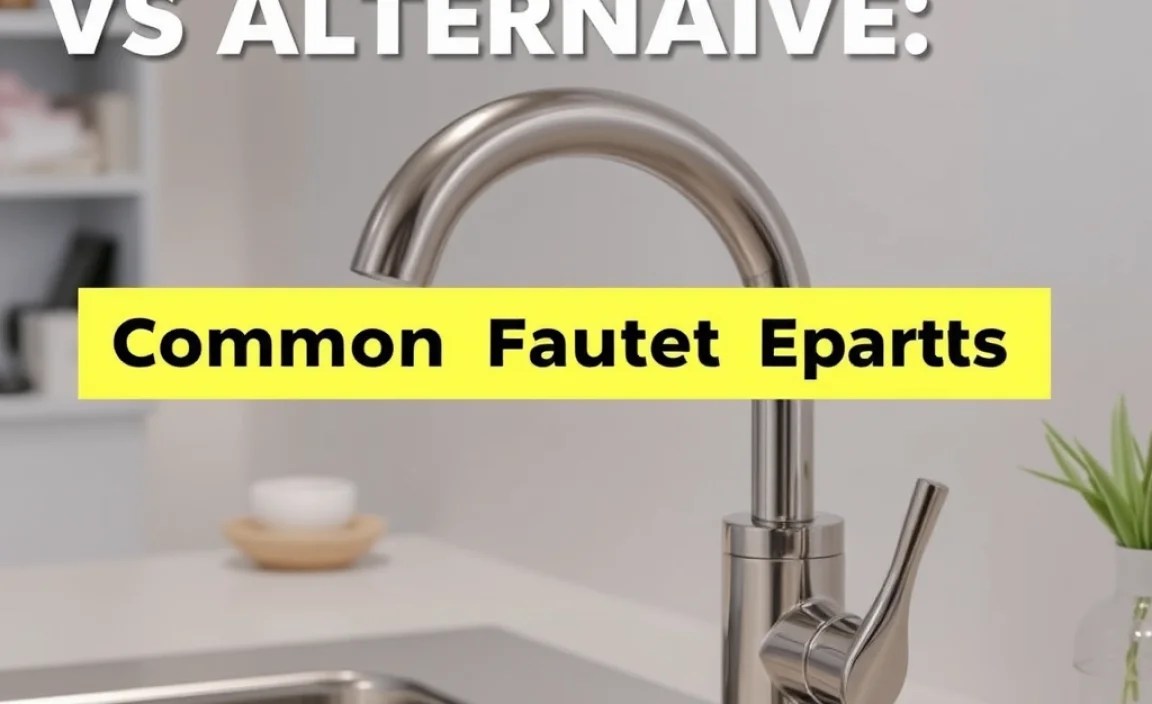
Let’s break down the most common parts of a faucet. Knowing these will make a world of difference when you’re troubleshooting or shopping for replacements.
The Body (or Faucet Body)
This is the main structure of the faucet. It’s the part you see the most, where the spout is attached and where the handles or lever connect. It houses all the internal mechanisms that control water flow.
The Spout
This is the part water actually comes out of. It can be fixed or swivel. The shape and length of the spout can vary greatly depending on the faucet’s style and intended use.
Handles or Lever
These are what you use to turn the water on and off, and to adjust the temperature and flow rate. Faucets can have one or two handles, or a single lever that controls both hot and cold water.
Aerator
This small, often overlooked part is usually found at the very tip of the spout. It’s a screen that mixes air with water. Why? To reduce splashing and create a smoother, more consistent stream of water while also conserving water. If your water pressure seems low or the stream is weak, the aerator is often the first thing to check and clean!
Cartridge
This is one of the most critical internal components. The cartridge is essentially a self-contained valve that controls the flow of hot and cold water. When you turn the handle or lift the lever, you’re moving the cartridge. Different types of faucets use different cartridges (e.g., ceramic disk, ball, compression, cartridge). If your faucet is dripping from the spout when turned off, a faulty cartridge is often the culprit.
Valve Seat
Found in older compression faucets, the valve seat is a metal or plastic part where the valve stem and washer seal to stop water flow. Like the cartridge, worn-out valve seats can cause drips.
Stem
In compression faucets, the stem is the rod that moves up and down, connected to a washer. Turning the handle usually twists the stem, raising and lowering it. The stem contains the mechanism that operates the washer against the valve seat.
For a visual aid and more in-depth understanding of faucet diagrams, you can refer to resources like those provided by the U.S. Environmental Protection Agency’s WaterSense program, which often feature diagrams and explanations of faucet components in their guide to water-efficient products.
Escutcheon (or Flange)
This is the decorative plate or shield that covers the hole where the faucet passes through the sink or mounting surface. It not only looks nice but also helps protect the surface from water damage and conceals any rough edges or holes from the installation.
Bonnet Nut
A nut that holds the faucet stem or cartridge in place. It’s usually located below the handle and above the faucet body. Tightening or loosening it can help access internal parts.
O-Ring
Small rubber rings that create a watertight seal. They are used in various places within a faucet, often around the stem or spout, to prevent leaks. A worn O-ring is a common cause of leaks around handles or at the base of the spout.
Supply Lines
These are the flexible hoses that connect the faucet to the hot and cold water shut-off valves under the sink. They are crucial for delivering water to the faucet.
Here’s a simple table to quickly identify some common parts and their primary function:
| Part Name | Primary Function | Common Issues |
|---|---|---|
| Aerator | Mixes air with water for smooth stream, conserves water. | Clogged with mineral deposits, reduced water flow. |
| Cartridge | Controls water flow and temperature. | Leaking, stiff handle, dripping. |
| O-Ring | Creates watertight seals. | Worn out, causing leaks around handles or spout base. |
| Spout | Directs water from faucet. | Leaking at the base, mineral buildup. |
| Handles/Lever | Operates faucet to control water. | Loose, stiff, or disconnected. |
When to Use a Faucet Glossary: Troubleshooting Common Problems

Knowing faucet parts is incredibly useful when you’re trying to fix a problem. Let’s look at some common faucet issues and how understanding the glossary helps.
The Drip, Drip, Drip Nightmare
This is perhaps the most common faucet ailment. If your faucet drips from the spout even when it’s turned off, the problem usually lies with the internal workings responsible for stopping water. In older faucets, it might be a worn-out washer on the stem or a damaged valve seat. In more modern faucets, a faulty cartridge is often the culprit.
Knowing these terms helps you search for the correct replacement part online or at the hardware store. For instance, if you have a two-handle faucet and it’s dripping, you might search for “replacement cartridge for [faucet brand] two-handle faucet” or “replacement washer and stem for [faucet brand] compression faucet.”
Leaking from the Handle or Base
If you see water seeping out from around the handle or from the base of the spout, the issue is likely with the seals. O-rings are the primary seals for these areas. Over time, these rubber rings can dry out, crack, or become compressed, losing their ability to create a watertight seal. Replacing O-rings is often a straightforward repair once you know what you’re looking for. You’ll need to identify the faucet model to get the right size and type of O-ring.
Low Water Pressure
When the water flow from your faucet feels weak, the first place to check is the aerator. These small screens can easily get clogged with mineral deposits, especially if you have hard water. Unscrewing the aerator, cleaning out the debris, and screwing it back on can instantly restore your water pressure. If the aerator is clean and the pressure is still low, you might have a problem further back in the plumbing, but the aerator is always the easiest fix to try first.
Stiff or Loose Handles
Handles that are difficult to turn or feel wobbly can point to a few issues. A stiff handle might indicate a problem with the cartridge or stem mechanism needing lubrication or replacement. A loose handle might mean a screw underneath the decorative cap is loose, or that the part connecting the handle to the cartridge/stem is damaged. Knowing these terms helps you describe the problem accurately.
Beyond the Glossary: Choosing the Right Alternative Parts

Sometimes phrases like “faucet glossary vs. alternative” come up when people are trying to understand if they can use a different type of part or if there’s flexibility. While some parts are very specific to a faucet model, understanding the type of mechanism your faucet uses is key.
Types of Faucet Mechanisms
Most modern faucets use one of four main types of internal mechanisms. Knowing which type your faucet has is crucial for replacement parts:
- Compression Faucets: These are older and have two separate handles (one for hot, one for cold). They work by using rubber washers that are pressed against a valve seat to stop water flow. They are reliable but can require more frequent washer replacements.
- Ball Faucets: Common in kitchen sinks, these have a single handle that moves over a rounded cap. They use a rotating ball mechanism with slots to control water flow and temperature. They can sometimes be tricky to repair.
- Cartridge Faucets: These can have one or two handles. They use a movable stem or cartridge that slides up and down or rotates within a housing. One-handle models often use a single cartridge, while two-handle models might use two. These are generally easy to repair, often just requiring a cartridge replacement.
- Ceramic Disk Faucets: These are the most durable and modern type, often featuring single levers. They use two hard ceramic disks that slide over each other to control water flow. They are very reliable and less prone to leaks but are typically replaced as a whole unit if damaged.
When looking for replacement parts, you’re often looking for a specific component (like a cartridge) that is designed for your faucet’s mechanism type and often its brand and model. There isn’t usually an “alternative” part that works across all types, but rather the correct part for your specific faucet.
When a Direct Replacement Isn’t Available
Occasionally, finding an exact replacement part for an older or discontinued faucet can be difficult. In these situations, you might find:
- Universal Repair Kits: These kits contain a variety of common parts (washers, O-rings, screws) that can fit multiple faucet brands and models. They are a good option if you’re unsure of the exact part or if the original is obsolete.
- Aftermarket Parts: Some companies manufacture replacement parts that are designed to be compatible with popular faucet brands, even if they aren’t made by the original manufacturer. Quality can vary, so stick to reputable brands.
- Professional Help: A good plumber might have access to specialized parts or know of suitable alternatives that aren’t readily available to consumers.
The National Kitchen & Bath Association (NKBA) offers resources and insights into kitchen and bathroom design and functionality, which can sometimes involve understanding different faucet types and their components.
DIY vs. Professional Help: When to Call in the Experts
Understanding faucet terms and parts is empowering for DIYers. However, it’s also important to know when to step back and call a professional plumber.
DIY-Friendly Tasks
- Replacing an aerator
- Replacing O-rings
- Replacing a faucet cartridge (if you can identify the correct one)
- Tightening loose handles or escutcheons
- Replacing supply lines (if you are comfortable working under the sink)
When to Call a Professional
- If you can’t identify the faucet brand or model for replacement parts.
- If you’ve replaced a part, and the leak persists or worsens.
- If the faucet body itself is cracked or corroded.
- If the problem involves the supply valves under the sink or the pipes within the wall.
- If you’re uncomfortable working with plumbing or unsure about any step—safety first!
- Complex issues like low pressure affecting multiple fixtures.
Using a faucet glossary helps you accurately describe the problem to a plumber, potentially saving you time and money on their diagnostic visit.
Table: Faucet Glossary vs. Alternative Approach
This table summarizes the core idea of using a glossary versus looking for alternatives.
| Aspect | Faucet Glossary Use | Alternative Parts Approach |
|---|---|---|
| Primary Goal | Understanding existing parts, identifying problems. | Finding functional replacements when original parts are unavailable or obsolete. |
| Information Needed | Names and functions of faucet components. | Faucet brand, model, mechanism type, specific part number or dimensions. |
| When It’s Useful | Troubleshooting, initial assessment, communicating with professionals. | When original parts are discontinued, unavailable, or too expensive. |
| Outcome | Informed decision-making, clearer diagnosis. | Restored faucet function, potentially with non-OEM parts. |
| DIY Level | Beginner to Intermediate. | Intermediate to Advanced (requires careful part matching). |
Conclusion
Navigating the world of faucet parts doesn’t have to be intimidating. By familiarizing yourself with common terms found in a faucet glossary, you gain the confidence to tackle minor repairs, make informed purchase decisions, and communicate effectively with professionals.
Whether it’s understanding that a leaky spout often points to a worn-out cartridge or that a weak stream might just need a clean aerator, this knowledge puts you in control. While the idea of “alternatives” might suggest flexibility, in reality, it’s about finding the correct part for your faucet’s specific mechanism and brand. Use this guide as your starting point to become more comfortable and capable with your home’s plumbing. Happy fixing!
Frequently Asked Questions (FAQ)
What is the most common faucet part that fails?
The most common part to fail is usually the cartridge in modern faucets or the washers and valve seats in older compression faucets. These are the primary components that control water flow and are subject to wear and tear, often leading to drips.
Do I need a special tool to remove a faucet cartridge?
It depends on the faucet. Some cartridges can be removed with a simple screwdriver or pliers. Others might require a specific cartridge puller tool, which is designed to grip and extract the cartridge without damaging the faucet body. Always check your faucet’s manual or search for installation videos for your specific model.
What is the difference between a faucet cartridge and a stem?
A cartridge is a self-contained valve unit that controls water flow and temperature in many modern faucets. A stem is typically found in older compression faucets; it’s a rod that moves up and down, often with a washer at the end, to open and close the valve against a valve seat. While both control water, they are different mechanisms.
How do I know which faucet brand and model I have?
Look for a brand name or logo on the faucet body, handles, or spout. Check your home’s purchase records or warranty information. If you can’t find it, take clear photos of the faucet and any parts you remove to a hardware store or show them to a plumber for identification.
Can I use a generic aerator if I lost the original?
Yes, in many cases, a generic aerator can work, especially if you match the thread size and type. Aerators have standard thread patterns. However, for optimal performance and water conservation features, using an aerator from the original faucet manufacturer or one certified by EPA WaterSense is often recommended.
What does “rough-in” mean for faucets?
“Rough-in” refers to the plumbing work and components installed within the wall or under the floor before the finished surfaces (like drywall or tile) are put in place. This includes supply lines, valves, and the basic structure that the visible faucet trim will connect to. It’s the internal, hidden part of the plumbing system.
If my faucet has two handles, one for hot and one for cold, what type of faucet is it likely to be?
Faucets with two separate handles, one for hot and one for cold, are most commonly compression faucets or cartridge faucets. Compression faucets use washers, while cartridge faucets use a movable stem or cartridge mechanism. Newer two-handle faucets are more likely to use cartridges.
