
Understanding Flush Types in Construction: A Beginner’s Guide to Doors and More
Facing confusing terminology in home projects? This guide simplifies flush types in construction, focusing on doors and their common applications. Learn to identify them easily, understand their benefits, and make informed choices for your next DIY project.
Ever stared at a building plan or while shopping for doors and felt lost in a sea of technical terms? You’re not alone! Words like “flush,” “hollow-core,” and “solid-core” can make simple choices feel complicated. But understanding these terms, especially “flush types” in construction, is actually quite straightforward and incredibly useful for homeowners and DIYers. It’s all about how something is made, which tells you a lot about its strength, soundproofing, and cost. This guide is here to clear up any confusion, giving you the confidence to tackle your next project, whether it’s choosing new interior doors or understanding a renovation plan. We’ll break down what a flush construction means, the different kinds you’ll encounter, and why it matters. Let’s dive in and make your home projects easier!
What is Flush Construction?

At its heart, “flush” in construction refers to a surface that is perfectly level or smooth. When we talk about “flush types,” we’re primarily referring to how doors are constructed. A flush door is characterized by its smooth, flat surfaces on both sides. Unlike paneled doors which have inset or raised sections, a flush door has a simple, clean appearance with no decorative grooves or variations on its face. This clean look makes them incredibly versatile, fitting into almost any interior design style.
The construction method behind a flush door is what gives it its name and its characteristics. It’s essentially a sandwich of materials, designed for both simplicity and efficiency. The core of the door is designed to provide structure and insulation, while the skins (the outer layers) create that smooth, flat surface we associate with flush doors. The way this core is filled and the type of skins used are what differentiate the various “flush types” you’ll find in the market.
Why Flush Types Matter

Understanding the different types of flush construction is more than just knowing fancy terms. It directly impacts the performance of the door in your home. Key factors influenced by flush construction include:
- Durability and Strength: How well the door will withstand everyday use and potential impacts.
- Sound Insulation: The ability of the door to block noise from one room to another.
- Weight: Affects installation ease and the hardware needed.
- Cost: Different construction methods have varying material and manufacturing expenses.
- Aesthetics: While all flush doors are smooth, the core and materials can subtly affect their look and feel.
- Fire Resistance: Certain types are designed with fire-retardant properties for safety.
By grasping these distinctions, you can make informed decisions that align with your budget, functional needs, and desired ambiance for your living space. For example, a bedroom door might benefit from better sound insulation, while a closet door may prioritize cost-effectiveness. Let’s explore the most common flush types you’ll encounter.
Common Flush Door Types
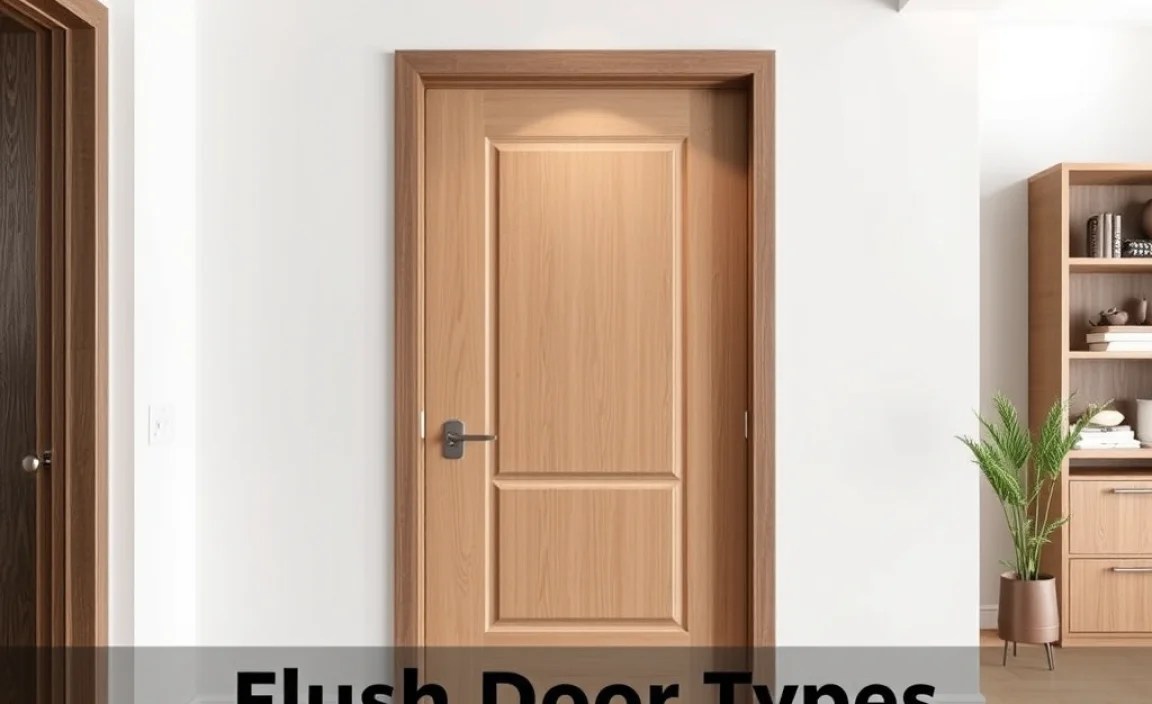
When you hear “flush door,” it’s usually a general term. However, beneath that smooth surface lies a variety of construction methods, each with its own set of benefits. The most common distinction is between hollow-core and solid-core doors. Let’s break these down.
Hollow-Core Flush Doors
Hollow-core flush doors are the most common and budget-friendly option for interior doors in residential construction. They are lightweight and easy to handle, making them a popular choice for standard interior passages.
Construction:
These doors consist of two thin layers of wood veneer (like plywood or hardboard) stretched over a frame. The space between these skins is not solid; instead, it’s filled with a honeycomb-shaped cardboard interior or other lightweight filler material. This honeycomb structure provides some rigidity and helps to maintain the door’s shape, but it leaves large air pockets within the door.
Pros:
- Cost-Effective: Significantly cheaper than solid-core doors.
- Lightweight: Easy for one person to carry and install, reducing labor costs.
- Availability: Widely available in standard sizes and can be found at most home improvement stores.
- Less Stress on Hinges: Their light weight puts less strain on door frames and hinges.
Cons:
- Poor Sound Insulation: The hollow interior allows sound to travel easily between rooms.
- Less Durable: Susceptible to damage from impact, and the veneer can dent or puncture relatively easily.
- Not Fire Rated: Generally do not offer significant fire resistance.
- Can Feel Less Substantial: Some homeowners find their light weight makes them feel less premium.
Best For: Interior doors where soundproofing is not a priority, such as closet doors, utility room doors, or in areas of a home where budget is a primary concern. They are a practical choice for builder-grade homes and quick renovations.
Solid-Core Flush Doors
Solid-core flush doors offer a significant upgrade in terms of quality, durability, and performance compared to their hollow-core counterparts. They are designed to provide a more substantial feel and better functional characteristics.
Construction:
Instead of a hollow interior, solid-core doors are filled with engineered wood composite materials, such as particleboard, composite wood, or a combination of wood fibers and adhesives. This dense filling provides a solid structure from edge to edge. The outer skins can be wood veneer, high-density fiberboard (HDF), or even metal, depending on the specific application and desired properties. The density of the core is what gives these doors their weight and performance.
Pros:
- Excellent Sound Insulation: The dense core effectively blocks sound, creating quieter spaces.
- Greater Durability: Much more resistant to dents, dings, and damage. They feel more robust and premium.
- Improved Insulation: Offers better thermal insulation, potentially contributing to energy efficiency.
- Fire Resistance Options: Many solid-core doors can be manufactured with fire-retardant cores, making them suitable for fire-rated applications.
- Higher Quality Feel: Their weight and solidity contribute to a more luxurious and substantial feel.
Cons:
- Higher Cost: More expensive than hollow-core doors due to materials and manufacturing.
- Heavier: Requires more effort for installation and may necessitate stronger hinges and potentially different door hardware.
- Slightly Less Available: While common, they might not be as universally stocked in basic home improvement stores as hollow-core options.
Best For: Interior doors where sound reduction is important (bedrooms, home offices, bathrooms), exterior doors (though often these are solid wood or specialized materials), and any application where a more premium feel, greater durability, or fire ratings are desired. They are an excellent investment for improving the overall quality and comfort of a home.
Solid-Wood Flush Doors
While often not referred to as generically as “flush doors” by manufacturers, solid-wood doors with a flush surface are the premium end of the spectrum. These are constructed from solid timber throughout.
Construction:
These doors are made entirely from solid pieces of wood, such as oak, pine, mahogany, or other hardwoods and softwoods. They are crafted by joining stiles (vertical frame pieces) and rails (horizontal frame pieces) and then filling the panels or covering the entire structure with solid wood boards or planks. A true “flush” solid wood door would have a perfectly smooth, flat surface without any paneling. However, the term is often used loosely to refer to plain-faced solid wood doors where the construction is entirely from solid lumber with no hollow spaces or composite filling.
Pros:
- Unmatched Aesthetic Appeal: Natural wood grain offers beautiful, unique appearances.
- Highest Durability: Can be repaired, refinished, and are extremely robust.
- Excellent Sound Insulation: Solid wood naturally dampens sound well.
- Highest Value: Adds significant value and a premium feel to a property.
- Customization: Can be easily cut, shaped, and finished to exact specifications.
Cons:
- Most Expensive: The cost of solid lumber and craftsmanship makes these the priciest option.
- Heavy: Requires professional installation and robust hardware.
- Susceptible to Environmental Changes: Solid wood can expand and contract with changes in humidity and temperature, potentially leading to warping or sticking.
- Maintenance: May require regular sealing or finishing to protect the wood.
Best For: Front doors or high-end interior doors where aesthetics, longevity, and a luxurious feel are paramount. They are also chosen for historical renovations where authenticity is key.
Specialty Flush Doors
Beyond the core types, there are specialty flush doors designed for specific purposes:
- Fire-Rated Doors: These are typically solid-core doors constructed with materials rated to resist fire for a specific period (e.g., 20, 45, 60, or 90 minutes). Often used in commercial buildings, stairwells, and apartments for safety. The core contains fire-retardant additives. You can learn more about fire door requirements from the National Fire Protection Association (NFPA).
- Soundproof Doors: While solid-core doors offer good sound insulation, specialized soundproof doors have enhanced core materials and often superior sealing mechanisms to achieve very high Sound Transmission Class (STC) ratings for spaces like recording studios or home theaters.
- Metal Doors: Often seen in commercial settings or as utility doors, these are typically made of steel or aluminum with a flush surface. They can be hollow or filled with insulation for better thermal performance.
Flush vs. Panel Doors: A Comparison
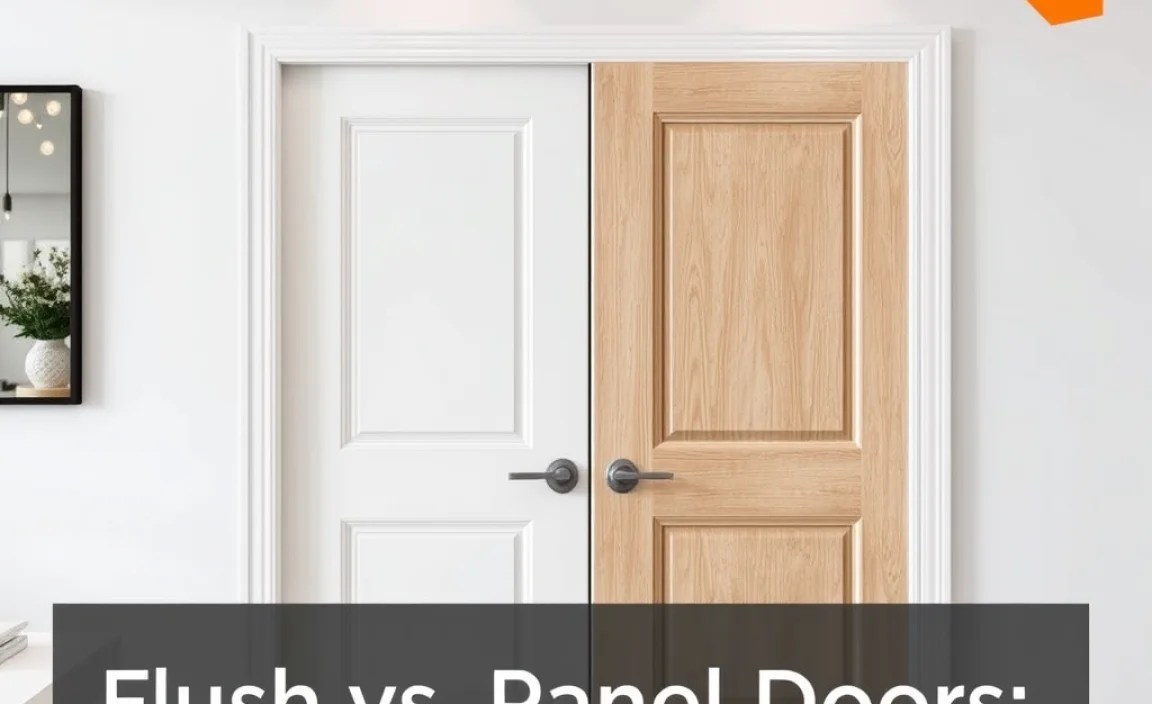
The most common alternative to flush doors is panel doors. Understanding the difference will help you make the best choice for your aesthetic and functional needs.
Panel doors are characterized by their construction, which involves framing members (stiles and rails) that create openings for panels. These panels can be raised or flat and often feature decorative profiles. This construction method creates visual depth and often a more traditional or ornate look.
Here’s a quick comparison:
| Feature | Flush Doors | Panel Doors |
|---|---|---|
| Surface Appearance | Smooth, flat, seamless | Divided into panels, often with decorative moldings; visual depth |
| Construction | Smooth skins over a core (hollow or solid) | Framework (stiles & rails) with inset panels |
| Aesthetic Style | Modern, minimalist, versatile | Traditional, classic, ornate, craftsman |
| Cost Range | Generally lower to mid-range (hollow-core most affordable) | Mid-range to high-end, depending on material and complexity |
| Durability (Varies by core) | Hollow: Less durable; Solid: Very durable | Durability depends heavily on the wood and construction quality; can be very durable |
| Sound Insulation (Varies by core) | Hollow: Poor; Solid: Good | Generally good to excellent, depending on material and panel fit |
| Maintenance | Simple cleaning; veneer can be damaged | Cleaning; decorative elements can collect dust; wood can swell/shrink |
Choosing between flush and panel doors often comes down to the desired style. If you’re aiming for a clean, contemporary look that blends into the background, a flush door is an excellent choice. For a more traditional feel with architectural interest, a panel door might be preferred.
Choosing the Right Flush Door for Your Project

When selecting a flush door for your home, consider these key factors to make sure you get the best fit:
Assess Your Needs
Functionality:
Are you looking for a basic door for a low-traffic area like a closet, or do you need something that can stand up to daily use and provide privacy, like a bedroom door? If soundproofing is important, a solid-core door is a must. For areas where fire safety is a concern, look for fire-rated lumber-core or mineral-core doors. The International Code Council (ICC) provides standards for building materials and safety, so be sure to check local building codes for requirements, especially for fire-rated doors.
Budget:
Hollow-core doors are the most budget-friendly, ideal for temporary solutions or very basic needs. Solid-core doors represent a mid-range to higher investment but offer better performance and longevity. Solid wood doors are typically the most expensive. Determine how much you’re willing to spend, and then explore the options within that range.
Aesthetics:
Flush doors offer a clean, unobstructed surface. This modern look can be painted or stained to match your décor. If you plan to paint the door, a smooth flush surface is ideal. Consider the height and width of the door, as well as the intended finish. Do you want wood veneer, pre-primed for painting, or a smooth laminate? The finish will significantly impact the final look and feel.
Understanding Door Labels and Specs
When shopping, pay attention to the specifications provided by the manufacturer. Look for:
- Core Type: Clearly stated as hollow-core, solid-core (mentioning the filler material like particleboard or composite), or solid wood.
- Fire Rating: If applicable, this will be specified in minutes (e.g., 20-minute fire door).
- STC Rating (Sound Transmission Class): For soundproof doors, this number indicates how well the door blocks sound. Higher numbers mean better sound isolation.
- Construction Details: Information about the skins (veneer, HDF, etc.), edge construction, and frame materials.
- Certifications: Look for certifications from reputable organizations, especially for fire-rated doors.
Measuring and Installation Considerations
Measure Carefully:
Always measure your existing door opening precisely. You’ll need to measure the height, width, and thickness of the rough opening (for new installations) or the existing door slab. Standard interior door heights are often 80 inches (about 6 ft 8 in), and widths can range from 24 to 36 inches. Exterior doors are typically 80 inches tall and 36 inches wide, but can vary.
Installation:
Hollow-core doors are lightweight and easy to install, often a manageable DIY task. Solid-core and solid wood doors are significantly heavier. While installation is conceptually similar (hanging the door in the frame), the weight can make DIY installation challenging and potentially unsafe without proper tools and assistance. You may need a helper and stronger hinges. If you’re unsure about installing heavier doors, it’s best to hire a professional carpenter or handyman.
For more detailed information on door installation, resources from companies like The Home Depot offer helpful guides.
FAQ: Flush Types in Construction
What is the main difference between hollow-core and solid-core doors?
The main difference lies in their interior construction. Hollow-core doors
