
This beginner’s guide decodes common mirror terms, demystifying mirror types, installation jargon, and care instructions. Understand your mirror options and maintenance needs with this essential glossary, empowering confident choices and ensuring your mirrors look their best.
As a homeowner, you’ll encounter mirrors in all sorts of places – from the bathroom to decorative wall pieces. Sometimes, the language used to describe them can sound like a foreign dialect. Don’t worry! This guide is here to make things crystal clear. We’ll break down common mirror terms so you can choose, install, and care for your mirrors with ease and confidence. Get ready to see your home in a whole new light!
Understanding the Basics: Mirror Anatomy and Types

Before we dive into the nitty-gritty, let’s get acquainted with the building blocks of a mirror. It’s more than just a shiny surface!
1. The Reflective Surface
This is the part that does the magic! It’s typically a thin layer of metal, usually silver or aluminum, that is applied to the back of a piece of glass. This metallic layer is what bounces light back, creating the reflection you see.
2. The Glass
The glass provides a smooth, flat surface and protects the delicate reflective layer. Most mirrors use clear, high-quality glass to ensure an undistorted reflection.
3. The Backing
This is the protective layer applied over the reflective coating. It seals and protects the metal from scratches, moisture, and oxidation (which can cause dark spots or fading).
Types of Mirrors and What They Mean for You
Mirrors aren’t one-size-fits-all. Different types are suited for different purposes:
- Plain Mirror (or Standard Mirror): This is your everyday mirror. It’s a flat piece of glass with a reflective coating on the back. Perfect for general use in bathrooms, hallways, or as decorative elements.
- Beveled Mirror: A beveled mirror has a polished, sloping edge. This creates a decorative “frame” effect directly on the glass, adding a touch of elegance. The bevel width (e.g., 1/2 inch bevel) dictates how wide the sloping edge is.
- Framed Mirror: This is a mirror that has a physical frame made of wood, metal, plastic, or another material around its edges. Frames come in endless styles to match your decor.
- Frameless Mirror: As the name suggests, these mirrors have no frame. They often have a polished or beveled edge for a clean, modern look.
- Antique Mirror: These mirrors are designed to look old, often with intentional imperfections, spotting, or a darkened reflective layer. They add character and a vintage feel to a space.
- Two-Way Mirror (or One-Way Mirror): This is a fascinating type of mirror that appears reflective from one side and transparent from the other. This effect is achieved through a special thin, semi-reflective coating. They are often used in security or observation settings, not typically for home decor. For more on how these work, check out resources from institutions like the National Institute of Standards and Technology (NIST), which often publishes research on materials science.
- Vanity Mirror: Usually found in bathrooms, these are often smaller mirrors designed for close-up tasks like applying makeup or shaving. They can be wall-mounted, tabletop, or magnifying.
- Magnifying Mirror: These mirrors have a reflective surface that is curved to enlarge your reflection, making detail work easier. They are common in bathrooms or dressing areas.
- Safety Mirror: These mirrors often have a protective film on the back that holds the glass together if it breaks, reducing the risk of shards scattering.
Mirror Installation & Mounting Terms
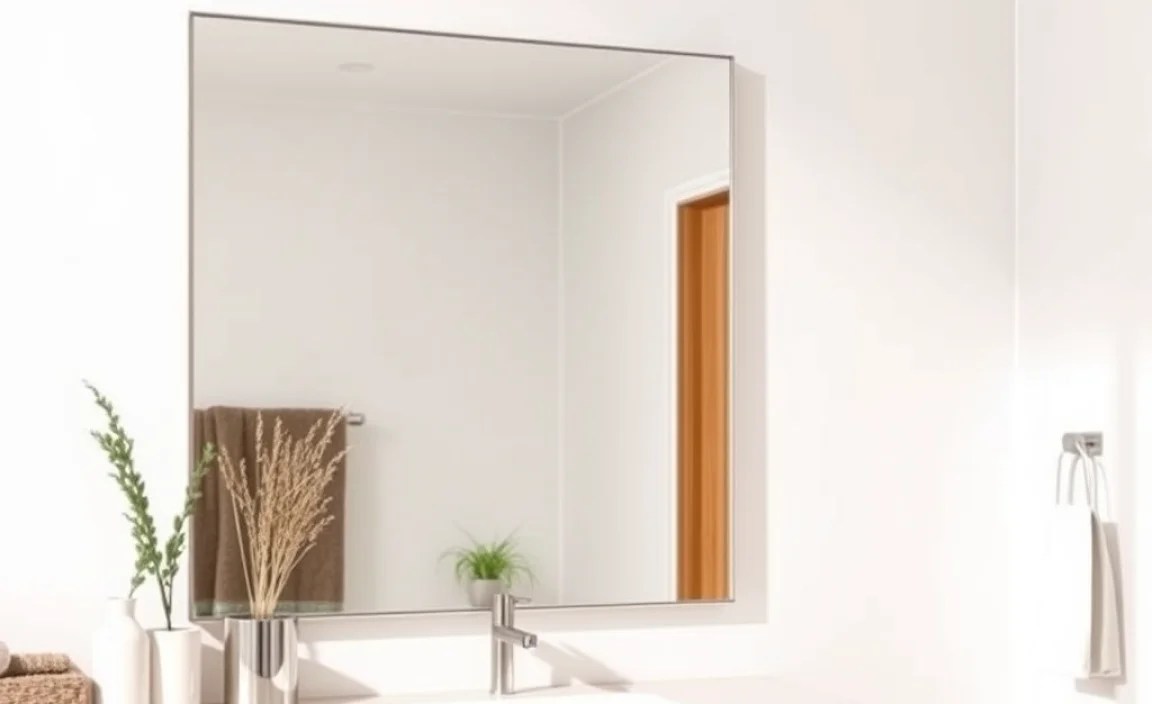
Putting up a mirror involves more than just sticking it on the wall. Understanding these terms will make the process smoother and safer.
1. Mounting Hardware
This is the collective term for all the screws, brackets, anchors, and wire used to hang a mirror securely to the wall.
2. Adhesives
For lighter mirrors or to supplement hardware, strong adhesives (like mirror mastic or double-sided tape specifically designed for mirrors) can be used. Always ensure the adhesive is rated for the weight of the mirror and is compatible with your wall surface.
3. Anchors
These are devicesinserted into a wall to provide a secure point for screws when the wall material (like drywall) isn’t strong enough on its own. Common types include:
- Drywall Anchors: Designed for hollow walls.
- Toggle Bolts: Have a spring-loaded “wing” that opens behind the drywall for strong support.
- Stud Finder: While not hardware itself, a stud finder is crucial! It locates the wooden studs inside your wall. Mounting directly into a stud is the most secure method for heavy items like mirrors.
4. Picture Wire/Hanging Wire
A strong wire attached to the back of a framed mirror, typically looped around D-rings or eye screws. This wire then rests on a hook or nail on the wall. Ensure the wire’s weight rating exceeds the mirror’s weight.
5. D-Rings and Eye Screws
D-rings are U-shaped metal loops attached to the back of the mirror frame, facilitating the attachment of hanging wire. Eye screws are screws with a loop at one end; they can be screwed into the frame or wall to serve as attachment points for wire or hooks.
6. Z-Clips (French Cleat System)
A popular mounting system for heavier or larger mirrors. It consists of two interlocking, angled metal pieces. One piece attaches to the back of the mirror frame, and the other attaches to the wall. When joined, they create a very secure, flush mount. They distribute weight evenly and are often used for floating shelves and heavy artwork too.
7. Mirror Clips
Small U-shaped or angled brackets that hold the edge of a frameless mirror against the wall. They are often decorative and come in various finishes (chrome, brushed nickel, etc.).
8. Direct Mount
This refers to installing a mirror directly onto a surface using appropriate adhesives or specialized mounting systems, with no frame or visible hardware. This is common for large wall mirrors or in wet areas like shower enclosures, where specific waterproof mastics are used.
9. Wall Type Considerations
Knowing your wall type is key. Is it drywall, plaster, tile, or concrete? Each requires different mounting methods and hardware for secure installation. Consulting resources from organizations like the International Code Council (ICC) can help you understand wall construction standards.
Mirror Care and Maintenance Terms

Keeping your mirrors looking their best involves understanding how to clean and maintain them properly.
1. Spotting or Pitting
This refers to small dark spots or imperfections that can appear on the reflective surface of a mirror. They are often caused by moisture or chemicals attacking the silvering over time, especially if the protective backing is damaged or compromised.
2. Oxidation
Similar to spotting, oxidation is the chemical breakdown of the reflective metal coating. It can lead to discoloration, fogging, or a dull appearance.
3. Tarnish
While less common with modern mirrors due to better backing, older or lower-quality mirrors might experience tarnish, where the reflective surface loses its shine due to a chemical reaction with the air.
4. Mirror Mastic
A special type of adhesive specifically formulated for attaching mirrors to walls. It’s designed to be strong and flexible, accommodating the slight expansion and contraction of the mirror and wall. It’s crucial to use mastic specifically approved for mirror installation, as standard construction adhesives can damage the reflective backing.
5. Streak-Free Cleaning
The goal of cleaning a mirror! This means wiping it clean without leaving behind residue or lines. Using the right cleaning solution and tools is key. Avoid abrasive cleaners that can scratch the glass or damage the backing.
6. Microfiber Cloth
A highly recommended tool for cleaning mirrors. Microfiber cloths are excellent at trapping dirt and moisture and buffing glass to a streak-free shine without scratching.
7. Ammonia-Free Cleaner
While many glass cleaners contain ammonia, some people prefer to avoid it due to its strong fumes or potential to damage certain surfaces. Ammonia-free options are widely available and effective for most mirror cleaning tasks.
8. Sealant/Edge Sealant
For mirrors installed in high-moisture areas like bathrooms or showers, applying a clear sealant around the edges can help prevent moisture from seeping behind the mirror and damaging the reflective backing, thus preventing premature spotting.
Mirror Quality and Types of Defects

Not all mirrors are created equal. Here’s what to look for and what to avoid.
1. Silvering Quality
This refers to how evenly and perfectly the reflective metal layer has been applied to the glass. Higher quality mirrors have uniform silvering without imperfections.
2. Distortion
A poorly made mirror might not be perfectly flat, leading to a slightly warped or distorted reflection. For most home applications, this is a sign of low quality.
3. Scratches
Visible marks on the glass surface. These are usually cosmetic defects that cannot be repaired and will be noticeable in the reflection.
4. Chips
Small pieces of glass missing from the edges or corners. These can be a safety hazard and compromise the mirror’s integrity.
5. Dark Spots/Fogging
These are signs of the reflective layer degrading, often due to moisture or age. As mentioned earlier, this is a common problem if the backing is compromised.
Common Mirror Uses and Related Terms

Mirrors serve many purposes in a home, and certain terms are associated with these uses.
1. Backsplash Mirror
A mirror installed as a backsplash, often in a kitchen or bathroom, to add light, depth, and a decorative element.
2. Accent Mirror
A smaller, often decorative mirror used to add visual interest or highlight a specific area, like above a console table or fireplace.
3. Full-Length Mirror
A mirror tall enough to reflect a person from head to toe. Essential for checking outfits before heading out the door!
4. Vanity Mirror
Positioned above a vanity or sink, typically in a bathroom, for grooming tasks. Can be a single mirror, a triptych (three-panel), or come with integrated lighting.
5. Mirrored Furniture
Furniture with mirrored surfaces on drawers, doors, or tabletops. These pieces can make a room feel larger and more glamorous.
6. Mirrored Wardrobe Doors
Large, often sliding doors on closets or wardrobes that are entirely or partially mirrored. They serve as full-length mirrors and make the room feel more spacious.
Summarizing Mirror Materials and Finishes
The materials and finishes of a mirror impact its look, durability, and cost.
1. Glass Thickness
The thickness of the glass is measured in millimeters (mm) or fractions of an inch. Thicker glass (e.g., 1/4 inch or 6mm) is generally more durable and less prone to breaking or warping than thinner glass (e.g., 1/8 inch or 3mm). For larger or heavier mirrors, thicker glass is essential for safety and stability.
2. Frame Materials
Mirrors can be framed with a variety of materials, each offering a different aesthetic:
- Solid Wood: Offers classic beauty, durability, and can be stained or painted.
- MDF (Medium-Density Fibreboard): A composite wood product that is less expensive than solid wood and can be veneered or painted for a similar look.
- Metal: Such as steel, aluminum, or brass; offers modern, industrial, or minimalist styles.
- Plastic/Resin: Lightweight, versatile, and can mimic the look of other materials at a lower cost.
3. Edge Finishes
Beyond standard flat edges, mirrors can have various finishes:
- Polished Edge: The edge is smoothed and polished to a high sheen, offering a clean, finished look for frameless mirrors.
- Beveled Edge: As discussed, a sloped, polished edge that adds a decorative element.
- Pencil Polished Edge: A narrow, rounded polished edge.
- Seamed Edge: The sharp edge is lightly ground off for safety, without a high polish.
4. Coatings and Treatments
Special treatments can enhance mirror functionality:
- Anti-fog coating: Applied to bathroom mirrors to prevent condensation buildup during steamy showers.
- UV-resistant coating: Protects the reflective layer from degradation caused by ultraviolet light, important for mirrors placed in direct sunlight.
- Safety backing: A film applied to the back to hold glass fragments if the mirror breaks.
Conclusion
Understanding mirror terminology might seem daunting at first, but as you can see, it’s all about knowing the parts, how they’re put together, and how to keep them looking their best. From the reflective silvering to the mounting hardware and cleaning solutions, each term plays a role in the longevity and appearance of your mirrors. By familiarizing yourself with this glossary, you’re equipped to make informed decisions, whether you’re buying a new decorative mirror, installing one yourself, or simply trying to keep your existing ones sparkling clean. So go ahead, embrace the shine, and let well-understood mirrors enhance your home’s beauty and functionality!
FAQs about Mirrors for Beginners
Here are some common questions beginners have about mirrors:
Q1: What is the best way to clean a mirror without leaving streaks?
Use a microfiber cloth and a good quality glass cleaner. Spray the cleaner onto the cloth, not directly onto the mirror, to prevent drips. Wipe in a consistent pattern (e.g., horizontal, then vertical) or in a figure-eight motion. For stubborn spots, try a cotton ball dipped in rubbing alcohol before your main cleaning.
Q2: How do I know if my mirror is safe to hang and what hardware should I use?
Always check the weight of your mirror. For heavier mirrors, locate wall studs using a stud finder and mount hardware directly into them. For lighter mirrors, use appropriate drywall anchors. If you’re unsure, consult the mirror’s manufacturer instructions or a professional.
Q3: Can I use any adhesive to stick a mirror to the wall?
No! You must use adhesives specifically designed for mirrors, like mirror mastic. Regular glues or construction adhesives can damage the silvering and cause the mirror to yellow or develop spots over time.
Q4: What does “beveled edge” mean on a mirror?
A beveled edge is a decorative, sloping edge that is polished to a shine. It’s cut at an angle into the glass itself, creating a frame-like effect without a separate material frame.
Q5: How can I prevent my bathroom mirror from fogging up?
Use a mirror with an anti-fog coating, or apply an anti-fog spray or solution. Wiping the mirror with a thin layer of shaving cream and then buffing it off can also create a temporary barrier against fog.
Q6: What causes dark spots on my mirror?
Dark spots, also known as spotting or pitting, are usually caused by moisture or cleaning chemicals seeping through damage or wear on the protective backing of the mirror, which then corrodes the silvering beneath.
Q7: Is it better to buy a framed or frameless mirror?
It depends on your style and needs. Framed mirrors can add a decorative element to a room and protect the mirror’s edges. Frameless mirrors offer a clean, modern look and can make a space feel larger.
