
Understanding different sink types in plumbing is key to choosing the right one for your needs, whether for a kitchen, bathroom, or utility room. This guide breaks down common sink styles, materials, and installation methods, helping you make an informed decision for a functional and stylish upgrade.
Hey everyone, Bryan Lee here! Ever stared at a sink and wondered about all the different styles out there? It’s easy to get lost in the plumbing aisle, but choosing the right sink is a pretty big deal for your home. It’s not just about looks; it’s about how you’ll use it every single day. Whether you’re washing dishes, prepping food, or just washing your hands, the sink is a workhorse. Don’t worry, though! We’re going to break down all the common sink types in plumbing so you can pick the perfect fit for your kitchen, bathroom, or laundry room. We’ll keep it simple, just the way we like it.
Why Knowing Your Sink Types Matters

Picking the right sink might seem like a small detail, but it can significantly impact your home’s functionality and aesthetics. A well-chosen sink is durable, easy to clean, and perfectly suited to its intended task. On the other hand, a sink that’s not quite right can lead to frustrations, from splashing water everywhere to not having enough space for a big pot. Understanding the various sink types available helps you avoid these common pitfalls. It empowers you to make a smart choice that enhances your daily routine and adds value to your home. Plus, when you know what you’re looking for, shopping becomes a lot less overwhelming!
Materials: The Heart of Your Sink

The material of a sink plays a huge role in its durability, look, and maintenance. Different materials offer unique benefits and drawbacks, making the choice a balance between your budget, style, and how you plan to use the sink.
Stainless Steel
This is the go-to for many kitchens, and for good reason! Stainless steel is incredibly durable, resistant to heat and stains, and easy to clean. It gives a sleek, modern look.
- Pros: Extremely durable, heat-resistant, stain-resistant, easy to sanitize, relatively affordable, lightweight.
- Cons: Can scratch and dent, can be noisy from running water or dishwashing, some people dislike the industrial look.
When choosing stainless steel, look at the gauge. A lower gauge number (like 18) means thicker steel and better quality. The most common gauge is 18.
Porcelain/Ceramic
These sinks offer a classic, timeless look, often seen in farmhouse or traditional kitchens and bathrooms. They are made from a base of cast iron or steel coated with a thick porcelain enamel. They’re beautiful and easy to clean but can be heavy and prone to chipping if something heavy is dropped on them.
- Pros: Beautiful, glossy finish, easy to clean, resistant to scratching, available in many colors.
- Cons: Heavy (especially cast iron bases), can chip or crack if heavy objects are dropped, enamel can wear down over time.
Cast Iron
Cast iron sinks are incredibly robust and heavy, offering exceptional durability. They are typically coated in a thick layer of enamel, giving them a glossy and elegant finish. They maintain a classic, substantial look that many homeowners love.
- Pros: Extremely durable and long-lasting, beautiful glossy finish, excellent heat resistance.
- Cons: Very heavy, can be prone to chipping of the enamel if struck hard, can be more expensive.
Composite
Composite sinks are made from a blend of materials, often stone particles (like granite or quartz) mixed with resin. They are known for their durability, resistance to scratches and stains, and a more matte, sophisticated appearance. They come in various colors to match your decor.
- Pros: Very durable, resistant to scratches, stains, and heat, quiet (less sound from running water), available in many colors and finishes.
- Cons: Can be more expensive than stainless steel, some lower-quality composites can fade over time.
Natural Stone (Granite, Marble, Soapstone)
For a truly unique and luxurious feel, natural stone sinks are an excellent choice. Each sink is one-of-a-kind. Granite and marble are hard and beautiful but require sealing to prevent stains. Soapstone is softer, naturally stain-resistant, and develops a beautiful patina over time.
- Pros: Stunning, unique appearance, highly durable (granite/marble), naturally stain-resistant (soapstone), can add significant value.
- Cons: Very expensive, heavy, porous (require sealing, except soapstone), can chip or stain (depending on stone type), requires specialized care.
Fireclay
Similar in appearance to ceramic, fireclay sinks are made by molding clay and then firing it at very high temperatures, resulting in an incredibly hard and durable material. They are non-porous, stain-resistant, and offer a beautiful, smooth finish often seen in farmhouse-style sinks.
- Pros: Extremely durable, non-porous, stain and scratch-resistant, smooth and easy to clean, classic aesthetic.
- Cons: Can be heavy, more expensive than stainless steel, can chip if subjected to extreme impact.
Kitchen Sink Types: The Heart of the Home
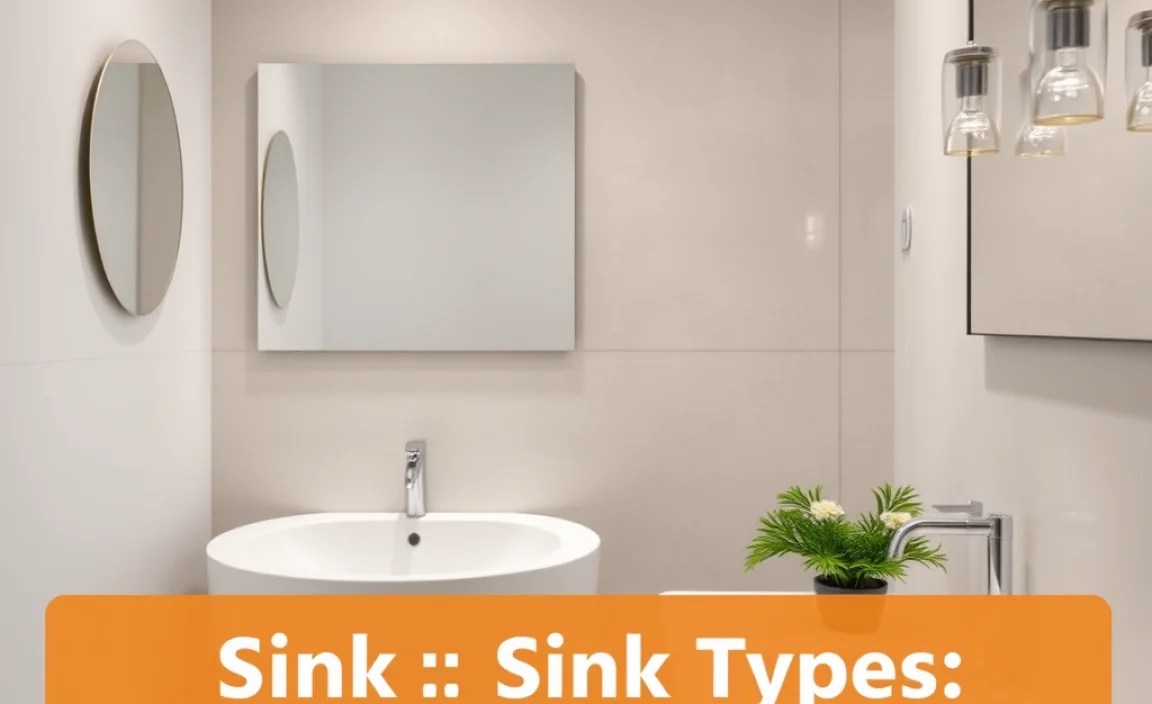
The kitchen sink is arguably the most used fixture in the house. It needs to handle everything from washing delicate produce to scrubbing stubborn pots and pans. Here’s a look at the most common kitchen sink configurations and styles.
Drop-In (Top-Mount) Sinks
These are the most common and easiest to install. The sink rim sits on top of the countertop, creating a “lip” that supports the sink. This makes installation simpler, as you don’t need to secure the sink from underneath.
- Pros: Easy to install, affordable, suitable for almost any countertop material, rim helps contain messes.
- Cons: The rim can trap dirt and grime, making cleaning around the edges a bit more work.
Undermount Sinks
Undermount sinks are installed beneath the countertop. This provides a seamless look, allowing you to wipe crumbs and water directly from the counter into the sink. They are popular in solid surface countertops like granite, quartz, or marble.
- Pros: Sleek, modern look, easy to wipe countertops clean, maximizes counter space visually.
- Cons: More difficult and expensive to install, not suitable for all countertop materials (like laminate), requires professional installation for best results.
Farmhouse (Apron-Front) Sinks
These sinks are a statement piece, featuring an “apron” that extends down the front of the cabinet. They are typically deep and spacious, perfect for washing large items. Farmhouse sinks can be installed as drop-in or undermount, with many variations available.
- Pros: Large capacity, striking visual appeal, comfortable to use (less leaning forward).
- Cons: Can be expensive, installation can be more complex and may require cabinet modification, potential for water splashing on the cabinet front.
Integrated Sinks
An integrated sink is made from the same material as the countertop, creating a completely seamless unit. This offers a minimalist and super easy-to-clean surface. Materials like solid surface, quartz, and stainless steel can be used for integrated sinks.
- Pros: Utterly seamless, very easy to clean, modern and sleek appearance.
- Cons: Can be very expensive, if the sink is damaged, the entire countertop may need replacement, limited material options.
Workstation Sinks
These are relatively new to the scene and are designed for maximum functionality. Workstation sinks come with built-in accessories like cutting boards, drying racks, colanders, and bowls, turning your sink into a prep hub.
- Pros: Maximizes kitchen efficiency, keeps counters clear, highly customizable with accessories.
- Cons: Can be expensive, requires ample counter space, accessories need storage.
Configurable Sink Bowls: Single, Double, or Triple?
Beyond the installation and style, the number and configuration of bowls are crucial.
Single Bowl Sinks
These feature one large basin. They are ideal for washing large pots, pans, and cookie sheets easily. Many people prefer a single bowl for its simplicity and ample workspace.
Double Bowl Sinks
These have two basins, often of equal size, or one larger and one smaller one. This configuration is practical for multitasking: wash dishes in one basin while rinsing in the other, or use one for dirty dishes and the other for prepping food.
Triple Bowl Sinks
Less common, triple bowl sinks have three distinct basins. Typically, the two outer bowls are standard size, and the smaller center bowl is perfect for rinsing or sanitizing. This offers ultimate versatility but requires a larger sink base cabinet.
Bathroom Sink Types: Style Meets Function

Bathroom sinks are primarily about hygiene and aesthetics. They come in various shapes and sizes to fit different vanity options and bathroom layouts.
Pedestal Sinks
A classic choice, pedestal sinks consist of a basin supported by a narrow pedestal base. They are great for small bathrooms or powder rooms where space is limited. They offer a vintage charm but provide no counter space or storage underneath.
- Pros: Space-saving, elegant vintage look, relatively easy to install, hides plumbing.
- Cons: No counter space, no storage underneath, can be fragile (some ceramic models).
Wall-Mount Sinks
These sinks are mounted directly to the wall, leaving the floor space clear. This creates an open, airy feel and is excellent for small bathrooms or for easy cleaning accessibility. Plumbing is often exposed, which can be a design element or require a decorative trap cover.
- Pros: Great for small spaces, makes cleaning easy, can have a modern or industrial look, good for accessibility.
- Cons: Requires strong wall support, plumbing is often exposed, limited counter space.
Console Sinks
Console sinks are a stylish option that combines a basin with legs (usually two or four). They offer a lighter, more open feel than a vanity and can provide some surface area for toiletries. They’re a good middle ground between a pedestal and a full vanity.
- Pros: Stylish and airy, provides some surface area, good for various decor styles, plumbing is somewhat hidden by legs.
- Cons: Limited storage, can be less stable than other types, may require professional installation.
Drop-In (Top-Mount) Bathroom Sinks
Just like their kitchen counterparts, drop-in sinks are set into a hole in a countertop or vanity. They are easy to install and are a common, budget-friendly option for bathrooms.
- Pros: Easy installation, affordable, good for most bathroom vanity setups.
- Cons: Rim can collect grime, less sleek than undermount.
Undermount Bathroom Sinks
These are installed beneath the countertop in a bathroom vanity. They offer a clean, seamless look, making counter cleanup a breeze. They pair beautifully with stone or solid surface countertops.
- Pros: Sleek and modern, super easy to clean countertops, maximizes counter feel.
- Cons: More complex installation, not ideal for all countertop materials.
Vessel Sinks
Vessel sinks are bowl-shaped basins that sit entirely on top of the countertop. They are a major design statement, adding a sculptural element to the bathroom. While beautiful, they can be tricky to clean around the base and may splash more.
- Pros: Unique, artistic style statement, available in many materials and designs.
- Cons: Can be expensive, can splash water, require specific faucet heights, cleaning around the base can be challenging.
All-in-One (Self-Rimming) Sinks
These sinks have a built-in rim that supports the sink and overlaps the cutout in the countertop. They are essentially a type of drop-in sink designed for seamless integration. They are simple to install and maintain.
- Pros: Easy installation, contained design, good for DIYers.
- Cons: Rim can trap dirt, less visually appealing than undermount or vessel sinks.
Utility and Laundry Room Sinks: Built for Work
Utility sinks, often found in laundry rooms, garages, or basements, are designed for heavy-duty tasks. Think washing muddy boots, soaking stained clothes, or even giving a pet a bath.
Utility Sinks (Mop Sinks)
These are deep, utilitarian basins, often made from durable materials like polypropylene, porcelain-coated steel, or cast iron. They are designed for functionality rather than aesthetics, often mounted on legs or directly to the wall.
- Pros: Very durable, large capacity for soaking and washing, easy to clean, can withstand rough use.
- Cons: Utilitarian appearance, plumbing can be more exposed, typically not as visually appealing as kitchen or bathroom sinks.
What About Faucets? They’re Part of the Sink System!
While this guide focuses on the sink itself, it’s worth noting that faucet compatibility is crucial. Different sinks might require different faucet mounting styles (e.g., single-hole, widespread, wall-mount) or heights, especially with vessel or high-arc faucets. Always consider the faucet when selecting your sink!
Choosing the Right Sink for You: Key Considerations
Making the final decision involves balancing several factors. Here’s a quick checklist to guide you:
- Your Budget: Sinks and their installation can range from a few hundred to several thousand dollars.
- Countertop Material: Some sinks are best suited for specific countertop types (e.g., undermount for granite, drop-in for laminate).
- Space Available: Measure your cabinet base and surrounding counter space carefully.
- Intended Use: How will you primarily use the sink? (e.g., heavy cooking, quick handwashing, cleaning large items).
- Maintenance & Cleaning: How much time and effort are you willing to put into cleaning and upkeep?
- Style and Aesthetics: What look are you going for? Modern, traditional, farmhouse, minimalist?
FAQ: Your Sink Questions, Answered!
Q1: What is the most durable sink material?
A1: Materials like cast iron, fireclay, and high-quality composite sinks are among the most durable and long-lasting. Stainless steel is also very durable but can scratch and dent.
Q2: Which type of sink is easiest to clean?
A2: Undermount sinks are generally considered the easiest to clean because you can wipe crumbs and spills directly from the countertop into the basin. Integrated sinks made from solid surface materials are also incredibly easy to wipe down.
Q3: Can I put an undermount sink in a laminate countertop?
A3: It’s generally not recommended. Laminate countertops are not as waterproof as solid surfaces, and the exposed edge of the laminate can eventually delaminate or swell if it gets wet from water seeping under the sink lip. Undermount sinks are best suited for granite, quartz, marble, and solid surface countertops.
Q4: What is the difference between a farmhouse sink and an apron-front sink?
A4: There often isn’t a significant difference; the terms are frequently used interchangeably. Both refer to sinks with a front panel that is exposed, resembling the sinks in old farmhouses. They are characterized by their large size and distinctive appearance.
Q5: Are vessel sinks practical for everyday use?
A5: Vessel sinks are practical for lighter use or as a stylistic statement. They can be prone to splashing and require specific faucet types. If you have a very busy bathroom or need a sink for heavy daily use, you might consider a more traditional style like an undermount or drop-in.
Q6: What is the most affordable sink type?
A6: Drop-in (top-mount) stainless steel sinks are often the most budget-friendly option, especially for kitchens. For bathrooms, basic ceramic drop-in or pedestal sinks are usually the most affordable.
Q7: Do I need a special cabinet for a farmhouse sink?
A7: Yes, often you do. Because of their size and the exposed apron front, farmhouse sinks typically require a specific “sink base cabinet” that is designed to accommodate their dimensions and often allows for easier cutting of the countertop for installation. Modified standard cabinets can sometimes work, but it’s best to check with your cabinet supplier or installer.
