
Patch bathroom ceiling imperfections yourself with this straightforward guide. From minor water stains to small cracks and holes, learning to patch bathroom ceiling areas is a valuable DIY skill that can save you time and money, all while restoring the pristine look of your bathroom. This process, while seeming daunting, is surprisingly accessible to homeowners of all skill levels, requiring just a few basic tools and a little patience.
Identifying the Cause of the Damage

Before you grab your spackle, it’s crucial to understand why your bathroom ceiling needs repair. Common culprits include:
Water Leaks: This is the most frequent reason for ceiling damage in bathrooms. Leaks can stem from plumbing within the floor above, a faulty shower or tub seal, or even an overflowing toilet. Addressing the source of the leak is paramount; otherwise, your patch job will be temporary.
Condensation: Poor ventilation in the bathroom can lead to excess moisture buildup. Over time, this condensation can weaken the drywall and paint, causing discoloration and sagging.
Age and Wear: Like any part of your home, finishes on ceilings can degrade over time. Small hairline cracks can appear due to the natural settling of the house.
Impact Damage: While less common in bathrooms, accidents can happen. A dropped object or a bump from moving furniture into an adjacent room could cause a dent or hole.
Once you’ve identified and rectified the underlying problem, you’re ready to learn how to effectively patch bathroom ceiling areas.
Gathering Your Supplies

To successfully patch your bathroom ceiling, you’ll need a few essential items:
Spackle or Joint Compound: For small dents and cracks, lightweight spackle is ideal. For larger holes or more significant damage, a heavier-duty joint compound might be preferable. Consider a lightweight, quick-drying compound for faster completion.
Putty Knife or Taping Knife: A flexible metal knife is best for applying and smoothing spackle. For larger areas, a wider knife (6-inch or larger) will be more efficient.
Sandpaper or Sanding Sponge: Medium-grit (around 100-150 grit) is usually sufficient for initial sanding, followed by fine-grit (around 220 grit) for a smoother finish.
Primer: A good quality primer is essential for sealing the repaired area and ensuring a uniform finish when you paint. Opt for a stain-blocking primer if the damage was caused by water.
Paint: Match the existing ceiling paint color and finish as closely as possible.
Drop Cloth or Plastic Sheeting: To protect your bathroom floor and fixtures from dust and paint.
Tack Cloth or Damp Rag: To clean away dust after sanding.
Ladder or Step Stool: To safely reach the ceiling.
Optional: Drywall Patch Kit: For larger or more structural holes, a self-adhesive mesh patch or a metal-backed patch can provide extra support before applying compound.
Step-by-Step Guide to Patch Bathroom Ceiling Repairs
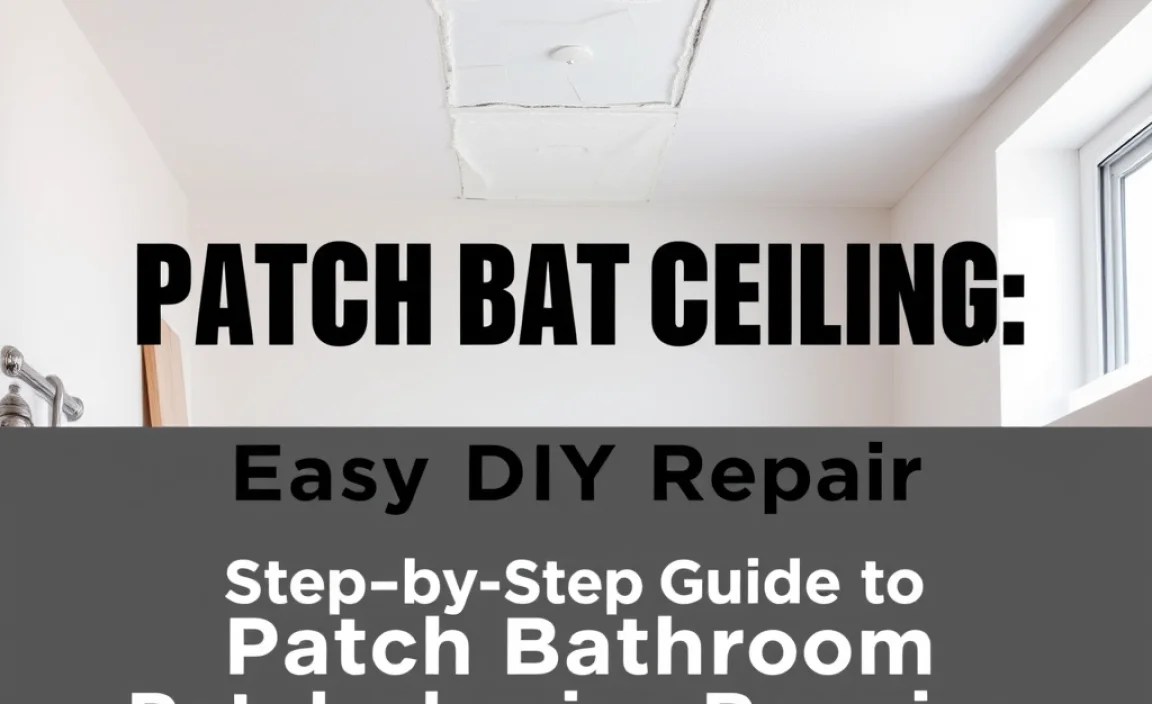
Now that you have your materials, let’s get started on repairing your ceiling.
For Small Cracks and Dents:
1. Clean the Area: Wipe the damaged area with a damp cloth to remove any dust or debris. If there’s loose paint around a crack, gently scrape it away with your putty knife to create a cleaner surface.
2. Apply Spackle: Using your putty knife, scoop a small amount of spackle and apply it directly to the crack or dent. Press the spackle into the imperfection, ensuring it’s filled completely.
3. Smooth the Surface: Hold the putty knife at a slight angle and gently scrape across the spackled area, removing any excess material and feathering the edges out onto the surrounding ceiling. The goal is to create a smooth transition. For deeper dents, you may need to apply spackle in thin layers, allowing each layer to dry before applying the next.
4. Allow to Dry: Let the spackle dry completely. Drying times can vary depending on the product and humidity, but it typically takes a few hours. The spackle will usually turn white when it’s dry.
5. Sand Smooth: Once dry, lightly sand the patched area with your medium-grit sandpaper until it’s flush with the surrounding ceiling. Follow up with fine-grit sandpaper for a super smooth finish. Remove all dust with a tack cloth or damp rag.
6. Prime and Paint: Apply a thin coat of primer over the repaired area. Let it dry according to the manufacturer’s instructions. Then, apply your matching ceiling paint. You may need two coats for full coverage.
For Larger Holes:
If your damage is a hole larger than a quarter, you’ll need a bit more reinforcement.
1. Prepare the Hole: Clean out any loose debris. If the edges of the hole are jagged, trim them with a utility knife for a cleaner shape.
2. Apply a Patch (if needed): For holes up to about 4 inches, a self-adhesive mesh patch is a great option. Center the patch over the hole and press it firmly onto the ceiling.
3. Apply Joint Compound: Using your wider taping knife, apply a thin, even coat of joint compound over the mesh patch, extending it about 2-3 inches beyond the edges of the patch. Try to make the compound as smooth as possible.
4. Allow to Dry: Let the first coat of joint compound dry completely. This might take several hours or overnight.
5. Second Coat: Once dry, apply a second, slightly wider coat of joint compound, feathering the edges even further. This will help to camouflage the patch. If you notice any dips or imperfections, a third thin coat may be necessary.
6. Sand Smooth: After the final coat of joint compound has dried thoroughly, sand the entire patched area smooth using medium and then fine-grit sandpaper. Clean away all dust.
7. Prime and Paint: Apply primer, let it dry, and then apply your matching ceiling paint, just as you would for smaller repairs.
Tips for a Flawless Finish

Work in Thin Layers: It’s always better to apply multiple thin coats of spackle or joint compound than one thick one. Thick applications can crack as they dry.
Feather the Edges: This means gradually thinning the compound towards the edges so that it blends seamlessly with the existing ceiling.
Check for Smoothness: Run your hand over the dried and sanded area. If you feel any bumps or ridges, give it another light sanding.
Ventilation is Key: Ensure good ventilation in your bathroom while you work to help the materials dry faster and to clear away dust.
Lighting is Your Friend: Be sure to work under good lighting. This will help you see imperfections you might otherwise miss.
Learning to patch bathroom ceiling issues is a rewarding DIY project. By following these simple steps, you can effectively repair minor damage and maintain the attractive appearance of your bathroom ceiling, giving you confidence in your home maintenance abilities.
