
Discovering a patch leaking bathroom ceiling is never a welcome sight. That tell-tale discolored spot, the subtle drip, or even a more dramatic cascade of water can send a wave of panic. However, before you resign yourself to a costly renovation, it’s essential to understand that many bathroom ceiling leaks, especially those appearing as a patch, can be addressed with relatively quick and effective fixes. This guide will walk you through identifying the source of the leak, temporary solutions, and more permanent repairs to get your bathroom back to its dry, comfortable state.
Pinpointing the Source: Where is the Leak Really Coming From?

The first and most crucial step in addressing a patch leaking bathroom ceiling is to accurately identify the source of the water. A patch on your ceiling is often a symptom, not the root cause, of the problem. Here are the most common culprits:
Plumbing Issues Above: The most frequent cause of bathroom ceiling leaks is faulty plumbing in the room directly above. This could be pipes that have corroded, developed pinhole leaks, or loose fittings in showers, bathtubs, or toilets. Even a dripping faucet in a sink upstairs can eventually find its way down. Pay close attention to the location of the ceiling patch and try to correlate it with fixtures in the room above. Is it directly beneath a shower drain? A toilet tank? A bathtub overflow?
Roof Leaks (Less Common for Internal Patches): While less likely to manifest as a localized patch within the bathroom itself unless it’s a very specific point of entry, a compromised roof can also lead to water ingress. This is more probable if you’re seeing water stains near exterior walls or if the patch appears after heavy rain.
Condensation: In humid bathrooms, especially those with poor ventilation, condensation can build up on pipes and ductwork. Over time, this moisture can drip and create water stains on the ceiling. This is often more of a damp patch than a direct leak but can still cause damage.
HVAC System Issues: Leaks from air conditioning units or heating ducts that run through the ceiling space can also be the culprit. Look for any signs of water pooling or dripping near these installations.
Immediate Action: Containing the Damage from Your Patch Leaking Bathroom Ceiling

Once you’ve identified a potential leak, immediate action is key to preventing further damage. This staging doesn’t fix the underlying problem but buys you time and minimizes destruction.
1. Contain the Water: Place buckets, towels, or tarps directly beneath the leaking area to catch dripping water. If the leak is significant, you might need to create a temporary overflow system to direct water to a larger container.
2. Relieve Pressure (If Applicable): If you suspect a burst pipe or a major plumbing failure, locate your main water shut-off valve and turn off the water supply to your home. This is a more extreme measure but can prevent catastrophic flooding.
3. Ventilate: Open windows and doors to improve air circulation, especially if you suspect condensation is a factor. Using a fan can also help dry the area.
4. Document the Damage: Take photos or videos of the leak and any water damage. This will be crucial for insurance claims if necessary.
Temporary Fixes for a Patch Leaking Bathroom Ceiling: What to Do Right Now

While you’re waiting for a permanent repair or assessing the situation, there are short-term solutions to manage the appearance and prevent further immediate damage to the plaster.
The Bucket and Towel Method: This is the most basic but essential temporary fix. Continuously empty buckets and replace damp towels to prevent water from pooling and spreading.
Creating an Opening (Use with Caution): If the drywall is bulging or looks severely saturated, it may be beneficial to carefully puncture a small hole in the center of the affected area. This allows trapped water to drain more freely, reducing the pressure on the surrounding ceiling material and potentially preventing a larger collapse. Place a bucket beneath this opening to catch the drips. This should only be done if you are sure it will not damage anything crucial above and if you are prepared for the mess.
Absorbent Materials: In less severe cases, thick layers of absorbent material like old towels or newspapers can be strategically placed to soak up minor drips, especially if you’re monitoring the situation closely.
Addressing the Root Cause: Permanent Repairs for Your Leaking Bathroom Ceiling

Once the immediate water is managed and you have identified the source, it’s time to tackle the permanent fix. The approach here will depend entirely on what you discovered during your investigation.
Repairing Plumbing Issues Above
This is arguably the most common and potentially complex solution.
Leaking Pipes: If you’ve found a leaking pipe, a plumber will likely need to repair or replace the damaged section. This could involve soldering new pipe, tightening fittings, or replacing an entire length of pipe.
Faulty Drains or Seals: Leaks around shower drains, bathtub overflows, or toilet seals are also common. These often require either re-sealing or replacing the faulty component.
Waterproofing Failures: In shower areas, the waterproofing membrane behind the tiles might have failed. This is a more involved repair that could require removing tiles to address the underlying issue.
Fixing Roof or Exterior Leaks
If your investigation points to the roof:
Roof Repair: This will involve identifying the specific point of entry, such as damaged shingles, flashing issues around vents or chimneys, or cracks in the roofing material. A professional roofer will be needed for this.
Gutter and Downspout Cleaning: Clogged gutters can cause water to back up and seep into the roof structure, eventually finding its way to the ceiling.
Dealing with Condensation
For condensation-related leaks:
Improve Ventilation: Ensure your bathroom has an adequate exhaust fan that is used consistently during and after showers. You might also consider installing a more powerful fan or a timer.
Insulate Pipes: Insulating exposed pipes in unheated areas can reduce condensation.
Repairing the Damaged Ceiling Patch
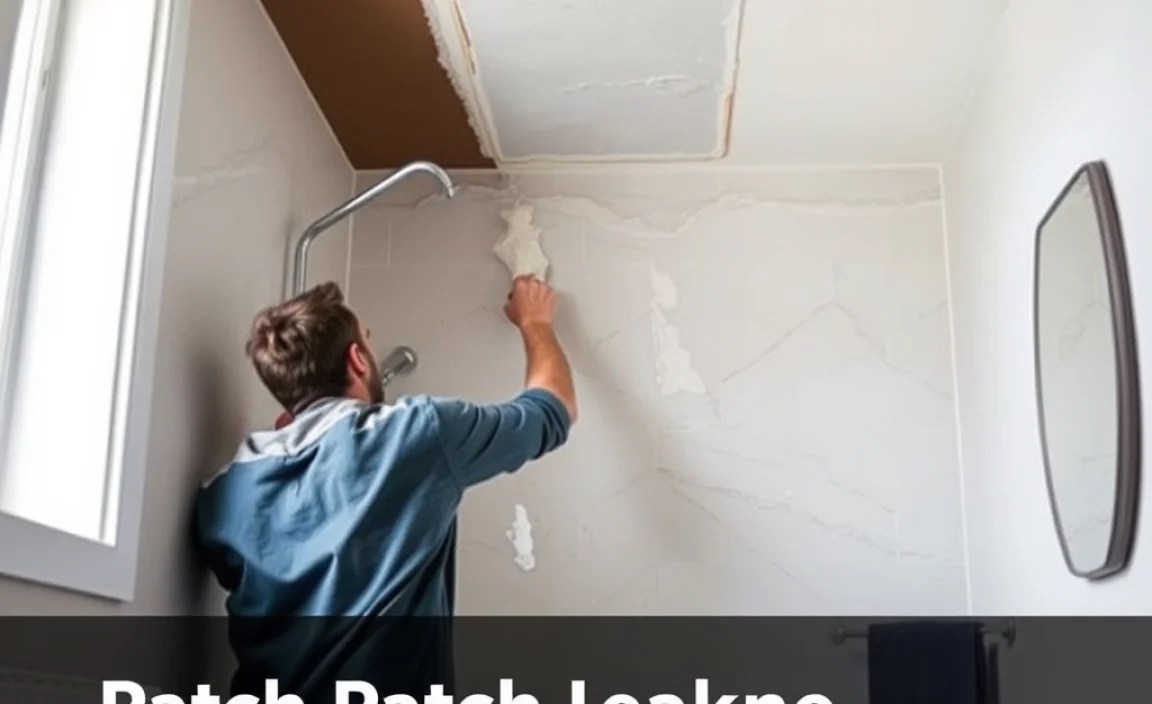
After the original leak has been fixed, you’ll be left with the tell-tale signs: water stains, sagging drywall, or even holes.
1. Drying: Ensure the ceiling is completely dry before you begin repair work. This can take days, and in some cases, a dehumidifier may be necessary.
2. Removing Damaged Material: If the drywall is stained or soft, cut away the damaged sections using a utility knife. Be careful not to cut into electrical wires or plumbing.
3. Applying a Stain Blocker: Before repainting, it’s essential to use a quality stain-blocking primer specifically designed for water-damaged areas. This will prevent the old stains from bleeding through your new paint.
4. Patching and Repairing: For minor holes, you can use drywall joint compound and drywall tape. For larger areas, you might need to cut out a section of drywall and install a new piece. Sand smooth when dry.
5. Repainting: Once the patched area is smooth and primed, repaint the ceiling to match the surrounding area. You may need to paint the entire ceiling for a uniform finish.
When to Call a Professional
While some minor leaks and subsequent ceiling patches can be handled by a DIY enthusiast, there are instances where professional help is essential:
Uncertainty About the Source: If you cannot confidently identify the source of the leak, it’s best to consult a plumber or a water damage restoration professional.
Significant Water Damage: If there’s extensive water damage, sagging ceilings, or potential structural issues, a professional will have the expertise and equipment to address it safely and effectively.
Plumbing or Roof Issues: Repairs involving the main plumbing system or the roof are typically best left to licensed professionals.
Mold Concerns: If you see any signs of mold growth, contact a mold remediation specialist immediately.
A patch leaking bathroom ceiling can be a stressful experience, but by acting quickly, systematically identifying the cause, and employing the right repair methods, you can effectively restore your bathroom and prevent future water-related woes. Remember, proactive maintenance and prompt attention to leaks are your best defense against costly and extensive damage.
