
To replace a drain leak, identify the source of the leak, gather your tools and materials, shut off water supply, disassemble the old fixture, clean the area, install the new fixture with plumber’s putty or tape, reassemble, and test for leaks. This DIY guide makes replacing a drain leak simple and effective.
Drip, drip, drip. That little sound can quickly turn into a big headache and a costly water bill. A leaky drain isn’t just annoying; it can cause water damage to your cabinets, floors, and even your foundation if left untreated. But don’t worry! Fixing a drain leak yourself is often a straightforward DIY project that can save you time and money. You don’t need to be a plumbing expert to tackle this. We’ll walk you through the entire process, step by step, making it easy to understand and execute safely.
By the end of this guide, you’ll have the confidence and the knowledge to replace that pesky drain leak, keeping your home dry and your mind at ease. Let’s get started on making your drains leak-free!
Understanding Drain Leaks: What You Need to Know

A drain leak can happen for various reasons, but they all stem from a faulty seal or a damaged component. Common culprits include loose connections, worn-out rubber washers, cracked pipes, or improper sealing during installation. Knowing where the leak is coming from is the first crucial step to a successful fix. You might see water pooling around the base of your sink, under the cabinet, or even on the ceiling below a bathroom. Don’t ignore these signs – a small leak can escalate into major water damage.
This guide will equip you with the skills to identify the problem areas and confidently replace the leaking parts yourself. We’ll demystify the process, from gathering the right tools to the final leak test.
Essential Tools and Materials for Replacing a Drain Leak

Before you dive in, gather everything you’ll need. Having all your supplies ready makes the job much smoother and prevents frustrating interruptions.
Tools You’ll Need:
- Adjustable wrench (or pipe wrench)
- Pliers (slip-joint or channel-lock)
- Bucket or container
- Old towels or rags
- Screwdriver (flathead and Phillips, depending on your fixture)
- Safety glasses
- Work gloves
- Flashlight or headlamp
- Plumber’s putty or plumber’s tape (PTFE tape)
- Wire brush (optional, for cleaning threads)
- Replacement drain assembly (ensure it matches your existing one)
Materials to Have on Hand:
- A new drain assembly kit (tailpiece, strainer, and nut)
- Replacement rubber gaskets or washers (if not part of the kit)
- Cleaner for PVC or metal pipes (if necessary)
Step-by-Step Guide to Replacing a Drain Leak

Follow these steps carefully to successfully replace your leaking drain. Safety first!
Step 1: Identify the Source of the Leak
Get a good look at your drain assembly. Start by placing a bucket or container directly underneath the drain pipe and trap. Gently run water into the sink, and observe from where the water is seeping or dripping. Pay close attention to the following areas:
- Sink strainer: The part where water goes down the drain at the sink basin. Leaks here often come from a faulty seal between the strainer and the sink.
- Tailpiece connections: The vertical pipe that connects the sink strainer to the P-trap. Check the nuts and washers at both ends.
- P-trap: The U-shaped pipe designed to hold water and prevent sewer gases from entering your home. Leaks can occur at the connections where the trap meets the tailpiece and the wall pipe.
- Wall pipe connection: The pipe that connects the P-trap to your home’s drainage system.
Sometimes, a leak might appear to be coming from one spot but is actually a bit higher up and traveling down the pipe. Use your flashlight to trace the water back as far as you can.
Step 2: Shut Off the Water Supply
This is a critical safety step. For sinks, you can usually shut off the water supply using the shut-off valves located underneath the sink, typically on the hot and cold water lines going to your faucet. Turn these valves clockwise until they are snug. If you don’t have shut-off valves under your sink, or if they are old and don’t work, you’ll need to shut off the main water supply to your entire house. The main shut-off valve is usually located where the water pipe enters your home, often in the basement, garage, or utility room. Open a faucet on the lowest level of your house to drain any remaining water from the pipes.
Step 3: Disassemble the Old Drain Assembly
With the water supply off and a bucket in place to catch residual water, it’s time to take apart the old drain. Place your bucket directly under the trap. Using your adjustable wrench or pliers, loosen the slip nuts connecting the tailpiece to the P-trap and the P-trap to the wall pipe. These nuts are usually made of plastic or metal. Turn them counter-clockwise to loosen. Be prepared for some water to drain into the bucket.
Once the slip nuts are loose, you should be able to detach the P-trap. Next, focus on the sink strainer. Look underneath the sink where the strainer meets the tailpiece. There will be a large nut holding the strainer in place. Use your wrench to loosen and remove this nut. You may need to hold the strainer from above with your hand or a tool to prevent it from spinning. Once the nut is off, the old tailpiece and strainer should come free.
Step 4: Clean the Area and Prepare for Installation
This is a good time to clean up any grime, old putty, or mineral buildup. Use a rag to wipe down the pipes and the area where the new drain assembly will sit. If there’s significant gunk, a wire brush can help clean pipe threads. Ensure the surfaces are dry for a proper seal.
Step 5: Install the New Sink Strainer
Take your new sink strainer assembly. If it comes with a rubber gasket and a thick fiber or plastic washer, identify them. Apply a generous amount of plumber’s putty around the underside rim of the new strainer flange – the part that sits inside the sink basin. Some modern kits might use a thick rubber gasket instead of putty; follow the manufacturer’s instructions. For putty, ensure it creates a continuous ring. Insert the strainer through the sink drain hole from the top.
From underneath, slide the rubber gasket (if applicable) onto the strainer’s threaded shank, followed by the fiber or plastic washer, and then the large mounting nut. Hand-tighten the nut as much as possible. Then, use your wrench to tighten it another quarter to half turn. Be careful not to overtighten, as this can crack your sink. Wipe away any excess plumber’s putty that squeezes out around the strainer flange in the sink basin. A putty knife or your finger can do this.
Step 6: Assemble the New Tailpiece and P-Trap
Attach the new tailpiece to the bottom of the sink strainer shank. You might need to cut the tailpiece to the correct length using a hacksaw; measure carefully before cutting so it aligns properly with your P-trap. Slide a slip nut and a washer onto the tailpiece, then connect it to the strainer shank. Tighten the nut by hand first, then give it a slight turn with the wrench.
Now, connect the P-trap. Ensure the washers and nuts are correctly positioned on both ends of the P-trap where it connects to the tailpiece and the wall pipe. Hand-tighten the slip nuts on both sides of the P-trap. Position the trap so it fits snugly. Tighten these nuts by hand, then use your wrench for about a quarter turn. Again, avoid overtightening.
Step 7: Test for Leaks
This is the moment of truth! Close the sink stopper and fill the sink with a few inches of water. Let it sit for a minute or two to allow any potential leaks to show themselves. Then, release the stopper and let the water drain. Carefully inspect all the connections you tightened – the sink strainer nut, the tailpiece connection, and both ends of the P-trap. Look and feel for any drips or moisture.
If you see any leaks, gently tighten the corresponding nut a little more. Sometimes, a leak is due to a missed bit of old putty or a misaligned washer. If tightening doesn’t help, you may need to disassemble that section again, check the washer or gasket for damage, and reapply plumber’s putty or tape if needed. Repeat the filling and draining test until you are confident there are no leaks. For more detailed plumbing guidance, resources like CPSC’s guide on water damage prevention can offer valuable insights.
Troubleshooting Common Drain Leak Issues
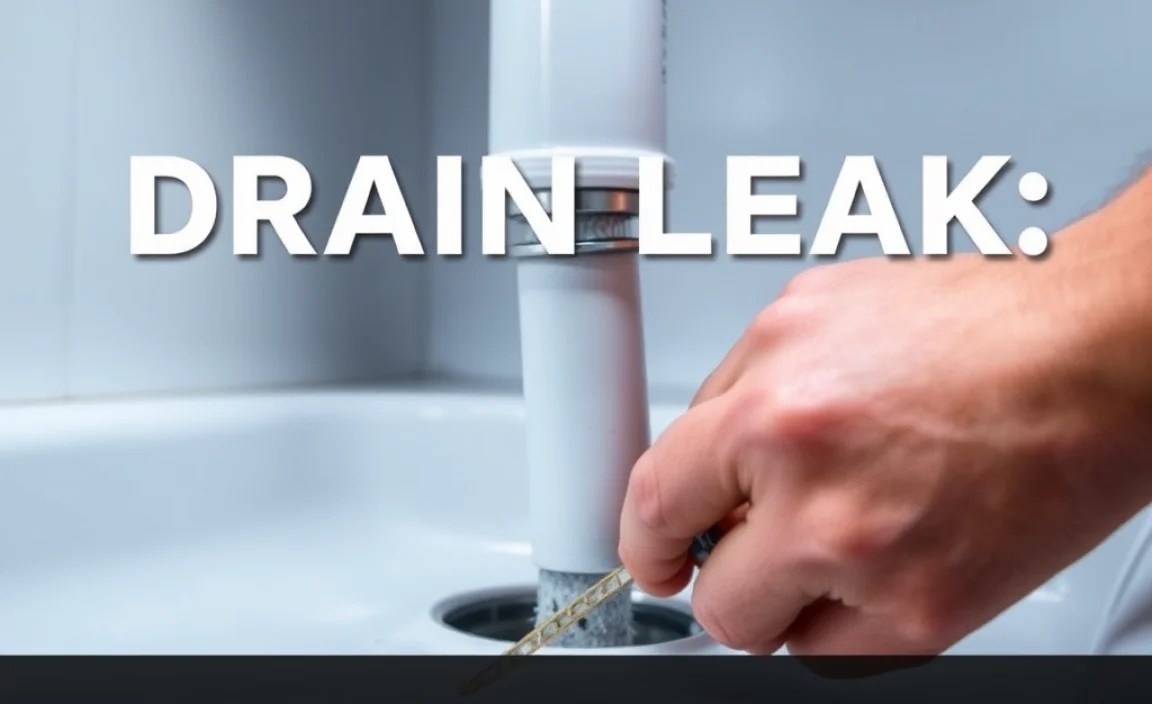
Even with careful work, you might encounter a hiccup. Here are some common problems and how to solve them:
Table: Common Drain Leak Problems and Solutions
| Problem | Possible Cause | Solution |
|---|---|---|
| Leak at sink strainer base | Improperly applied plumber’s putty or cracked gasket | Remove strainer, clean off old putty, ensure a continuous, even bead of new putty or proper gasket placement, and re-tighten. |
| Dripping from P-trap slip nut connection | Loose nut, missing or damaged washer, or cross-threaded nut | Tighten nut. If still leaking, loosen and re-seat the washer/gasket. Ensure threads are clean and not stripped before re-tightening. |
| Water pooling around tailpiece | Loose connection at tailpiece or a crack in the tailpiece itself | Tighten the connection nut. If the tailpiece is cracked, it needs to be replaced. |
| Persistent leak after tightening | Damaged pipe threads, warped fitting, or a crack elsewhere | Disassemble the section, carefully inspect all components for damage or warping. Consider replacing the faulty fitting or pipe section. |
| Leak from wall pipe connection | Compromised seal or damaged connection | This connection can be trickier. It might involve a compression fitting or a union. Ensure the fitting and seal are intact and properly seated. If damaged, the fitting may need replacement. Refer to specialized plumbing resources if uncertain. |
Types of Drain Assemblies and Their Features

Understanding the components of your drain assembly can help you choose the right replacement parts. Most common kitchen and bathroom sinks use a combination of:
- Sink Strainer/Flange: This is the visible part at the bottom of your sink basin. It often comes with a basket to catch food debris or hair.
- Tailpiece: A straight pipe that connects the sink strainer assembly to the P-trap. It can be fixed length or adjustable (telescoping).
- P-trap: The bent pipe that holds water to block sewer gases. It’s essential for sanitation and odor control.
- Coupling Nuts and Washers: These are used to create watertight seals at the connection points between the tailpiece and P-trap, and the P-trap and the wall pipe.
Materials for Drain Components:
Drain components can be made from various materials, each with its pros and cons:
Table: Drain Assembly Material Comparison
| Material | Pros | Cons |
|---|---|---|
| PVC (Polyvinyl Chloride) | Affordable, lightweight, easy to cut and install, corrosion-resistant | Can become brittle over time with extreme temperature fluctuations, some aesthetic limitations |
| ABS (Acrylonitrile Butadiene Styrene) | Similar to PVC, tough and impact-resistant, often black in color | Can be less resistant to certain solvents than PVC |
| Brass (often Chrome-Plated) | Durable, aesthetically pleasing, can be more resistant to heat | More expensive, heavier, can corrode over time if plating is damaged |
| Stainless Steel | Extremely durable, highly resistant to corrosion and heat, modern look | Most expensive option, can be heavier |
When purchasing a replacement, ensure it’s compatible with your sink type (e.g., stainless steel, porcelain, granite composite) and your existing plumbing configuration. Your local hardware store or plumbing supply shop can be a great resource for selecting the correct parts.
When to Call a Professional Plumber
While this DIY guide covers common drain leak fixes, there are situations where it’s best to call in a professional. If you encounter any of the following, don’t hesitate to contact a licensed plumber:
- Extensive Water Damage: If you suspect widespread damage to cabinets, subflooring, or walls, a pro can assess and repair effectively.
- Recurring Leaks: If you’ve fixed a leak multiple times and it keeps recurring, there might be a larger issue with your plumbing system.
- Difficult Access: If the leak is in a hard-to-reach area, or if you lack the proper tools and confidence to tackle it.
- Visible Pipe Damage: If you notice cracks or significant corrosion in the main drain pipes leading from the wall.
- Unsure of the Cause: If you’ve tried our steps and can’t pinpoint the leak source, a professional has specialized tools for diagnosis.
Plumbers have the expertise and equipment to handle complex plumbing issues safely and efficiently. For instance, understanding complex drainage systems might require resources from organizations like the EPA’s WaterSense program on detecting and preventing leaks.
Conclusion
Successfully replacing a drain leak is a rewarding DIY accomplishment. By following these detailed steps, gathering the right tools, and paying attention to each connection, you can ensure your home stays dry and free from the damage a persistent leak can cause. Remember to always shut off the water supply before starting and test your work thoroughly before considering the job complete.
Don’t let a small drip escalate into a major problem. With this guide, you’re well-equipped to tackle drain leaks head-on, saving yourself money and gaining valuable home maintenance.
Frequently Asked Questions (FAQ) About Replacing Drain Leaks
Here are some common questions beginners have about fixing drain leaks:
Q1: How tight should I make the drain nuts?
You should tighten them until they are snug and the connection feels secure, then add about a quarter turn more. Overtightening can strip threads or crack plastic fittings, causing more problems. Focus on creating a firm, even seal.
Q2: What is plumber’s putty, and do I always need it?
Plumber’s putty is a soft, dough-like compound used to create a watertight seal around fixtures like sink strainers. Many new drain kits come with specific rubber gaskets or instructions that may not require putty. Always check the manufacturer’s instructions for your new part.
Q3: Can I use plumber’s tape on all drain connections?
Plumber’s tape (PTFE tape) is typically used on threaded pipe connections (like those found in HVAC or water supply lines) to seal gaps. For most sink drain assemblies, the seals are made by gaskets, rubber washers, and plumber’s putty compressed by nuts, not by tape.
Q4: My sink drain still drips after I replaced it. What could be wrong?
This usually means a connection wasn’t tightened enough, a washer is missing or misaligned, or the plumber’s putty wasn’t applied correctly. Double-check all the nuts and ensure washers are seated properly. Re-apply putty if necessary.
Q5: How do I know if I have a P-trap leak or a wall pipe leak?
To differentiate, look closely at the U-shaped section (P-trap) and the pipes connected to it. If the drip is clearly coming from the nuts on the P-trap itself or where the tailpiece connects to the P-trap, it’s a trap leak. If the leak is at the point where the P-trap connects to the pipe coming out of the wall, it’s a wall pipe connection leak.
Q6: Do I need to replace the whole drain assembly if just one part is leaking?
Often, you can replace just the faulty component, like a worn-out washer or gasket. However, drain assembly kits are relatively inexpensive and include all the necessary parts (strainer, tailpiece, P-trap if it’s a kit), making it often easier and more cost-effective to replace the entire assembly for a guaranteed good seal.
