
Static pile composting is a straightforward method for turning organic waste into nutrient-rich compost without frequent turning. It’s proven essential for creating healthy soil efficiently, making it ideal for beginners and busy homeowners.
Tired of seeing your kitchen scraps and yard waste pile up, wondering how to transform it into something useful? You’re not alone! Many of us want to be more eco-friendly and enrich our gardens, but the thought of composting can seem complicated. The good news is, there’s a method that’s as simple as it is effective: static pile composting. We’re going to break down this proven essential process, showing you exactly how to achieve fantastic compost with minimal fuss. Get ready to turn your waste into garden gold!
Static Pile Composting: Your New Gardening Secret Weapon

Static pile composting, sometimes called passive composting, is a method where you build a large pile of organic materials and let nature do most of the work. Unlike other composting methods that require regular turning and active management, static piles rely on the pile’s size and careful material balancing to generate heat and break down waste. This makes it incredibly beginner-friendly and perfect for those who don’t have a lot of time for daily compost chores. It’s an essential tool in sustainable living, reducing landfill waste while creating a valuable resource for your garden.
Why Static Pile Composting is Essential
- Simplicity: It’s the easiest composting method to start. Just pile it up and let it go!
- Efficiency: While it takes longer than actively managed piles, the ‘set it and forget it’ nature means you’re still making great compost with less effort.
- Volume: Static piles are great for handling larger amounts of organic material, perfect for homeowners with substantial yard waste.
- Nutrient-Rich Compost: Properly managed, static piles produce high-quality compost that improves soil health, water retention, and plant growth.
- Environmental Benefit: Diverts waste from landfills, reducing methane gas emissions and creating a valuable soil amendment.
Understanding the Science: What Makes Static Piles Work?
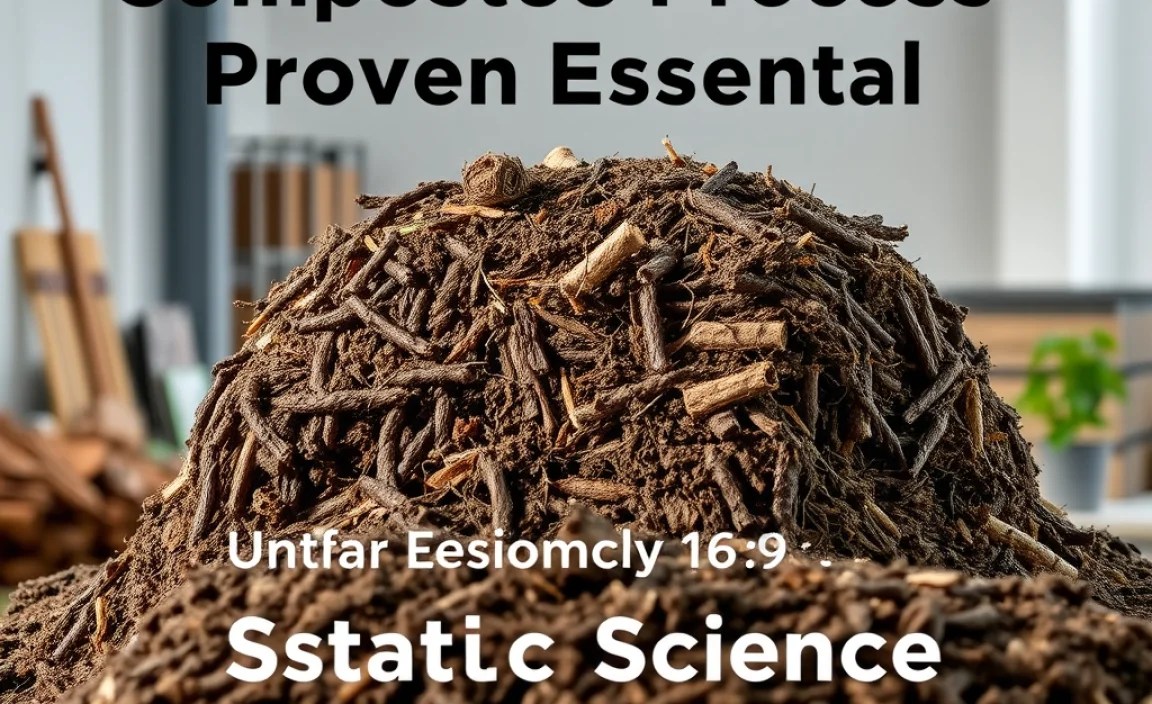
The magic of static pile composting happens thanks to tiny organisms like bacteria and fungi. These microbes feast on your organic materials. As they eat, they release energy in the form of heat. A well-built static pile is large enough to trap this heat, creating a warm environment that speeds up decomposition. This heat is crucial; it helps break down materials faster and can also kill weed seeds and pathogens. The process requires a careful balance of two key ingredients: carbon-rich “browns” and nitrogen-rich “greens.”
The Crucial Ingredient Ratio: Browns and Greens
Think of browns and greens as the fuel for your compost pile. Browns are dry and carbon-heavy, while greens are moist and nitrogen-heavy. Getting this balance right is key to a successful static pile. A good starting point is a ratio of approximately 25-30 parts carbon (browns) to 1 part nitrogen (greens) by weight. Don’t worry too much about exact measurements; it’s more about understanding the types of materials and aiming for a good mix.
What are “Browns”? (Carbon-Rich Materials)
These materials are typically dry and woody. They provide the carbon that microbes need for energy and help create air pockets in the pile, preventing it from becoming too dense and soggy.
- Dry leaves
- Straw and hay
- Shredded newspaper and cardboard (avoid glossy paper)
- Wood chips and sawdust (use in moderation, as they break down slowly)
- Twigs and small branches (chopped or shredded)
- Pine needles
What are “Greens”? (Nitrogen-Rich Materials)
Greens are often moist and provide the nitrogen that microbes need to grow and reproduce. They are essential for heating up the pile.
- Fruit and vegetable scraps (kitchen waste)
- Grass clippings (in thin layers to prevent matting)
- Coffee grounds and tea bags
- Manure from herbivores (like cows, horses, chickens, rabbits)
- Garden trimmings (non-woody parts)
- Plant trimmings
Materials to Avoid
While many organic materials are great for composting, some should be avoided to prevent attracting pests, creating odors, or introducing harmful pathogens:
- Meat, fish, and bones
- Dairy products
- Oily or greasy foods
- Diseased plants
- Weeds that have gone to seed
- Pet waste (from dogs and cats)
- Treated wood or sawdust
- Coal ash or charcoal briquettes
Building Your Static Pile: A Step-by-Step Guide

Ready to get started? Building a static pile is surprisingly simple. The key is to create a large, well-aerated structure with a good mix of materials. Here’s how to do it:
Step 1: Choose Your Location
Select a spot that is:
- Well-drained: You don’t want your pile sitting in a puddle.
- Partially shaded: Direct sun can dry out the pile too quickly, while full shade can keep it too wet. A little dappled shade is ideal.
- Accessible: You’ll need to gather materials and eventually remove the finished compost.
- Away from your house: While a well-managed pile shouldn’t smell, it’s good practice to keep it a reasonable distance from living areas.
Step 2: Define Your Pile’s Dimensions
For effective heating, static piles need to be a minimum of 3 feet by 3 feet by 3 feet (a cubic yard). Larger piles (4x4x10 feet is a common recommendation) tend to hold heat better and decompose faster. A larger pile insulates itself, which is essential for the microbial activity.
Step 3: Create a Base Layer
Start with a layer of coarse, woody material like small branches or twigs at the bottom. This helps with aeration from below and drainage, preventing the bottom from becoming waterlogged.
Step 4: Layer Your Materials
Begin layering your “browns” and “greens.” Think of it like making a lasagna. Alternate layers of brown and green materials. Shredding or chopping larger materials will help them break down faster. Don’t worry about perfect layers; a good mix is more important. For example, a layer of dry leaves, followed by a layer of kitchen scraps, then some grass clippings, and so on.
Pro Tip: If you have a lot of grass clippings, make sure to mix them with plenty of dry brown material. Grass clippings alone can compact easily and become slimy, hindering airflow and causing odors.
Step 5: Add Water
As you build the pile, moisten each layer. The ideal moisture level is like a wrung-out sponge – damp but not dripping wet. Too dry, and the microbes won’t have enough moisture to thrive. Too wet, and you risk anaerobic conditions (lack of air), which leads to foul odors. You can use a hose with a spray nozzle or a watering can.
Step 6: Consider Aeration (Optional but Recommended for Faster Results)
While static piles are “static,” a little initial aeration can kickstart the process and ensure more even decomposition. You can achieve this by:
- Forcing Air: Burying perforated pipes or vent tubes within the pile as you build it can help air circulate.
- Initial Turning (for faster compost): Some people do one or two turns early in the composting process to ensure all materials get exposed to the right conditions, then let it sit. However, for a truly “static” pile, this is skipped.
Step 7: Cover Your Pile
Once built, cover the pile with a layer of straw, leaves, or a tarp. This helps retain moisture and heat, and also prevents excessive rain from waterlogging the pile. It can also deter pests.
What Happens Next? Patience is Key
Once your static pile is built, the real work begins: waiting. The microbes get to work, and the pile will start to heat up, often reaching temperatures between 130-160°F (55-70°C) in the center. This internal heating is a good sign that decomposition is happening effectively.
You won’t need to turn a true static pile. The decomposition process will occur slowly and steadily over several months, typically 6 months to a year, depending on the materials used, the climate, and the size of the pile.
Monitoring Your Pile
While you don’t turn it, it’s still a good idea to monitor your pile periodically:
- Moisture: Occasionally check the moisture level by digging into the center. If it feels dry, gently water it. If it’s too wet, you might need to add more brown materials or improve drainage.
- Temperature: If you have a compost thermometer, you can check the internal temperature. A hot pile indicates active decomposition. If it cools down significantly, it might need more nitrogen (greens) or moisture.
- Settling: The pile will naturally settle and shrink as materials break down.
When is My Compost Ready?
Finished compost will be dark, crumbly, and should smell earthy and pleasant, like a forest floor. You shouldn’t be able to distinguish the original materials. You might still see some recognizable bits of tougher materials like twigs or eggshells, which is perfectly normal. The key indicators are the texture, color, and smell.
Using Your Homemade Compost
Once your compost is ready, you can strain out any larger, uncomposted pieces to start a new pile or add them back into your active compost. Then, it’s time to reap the rewards!
- Soil Amendment: Mix compost into your garden beds before planting. It improves soil structure, aeration, and drainage.
- Mulch: Apply a layer of compost around plants. It helps retain soil moisture, suppress weeds, and provides slow-release nutrients.
- Potting Mix: Mix compost with other ingredients like perlite or coir to create a rich potting mix for containers.
- Lawn Dressing: Spread a thin layer of compost over your lawn in the spring or fall to revitalize it.
Pros and Cons of Static Pile Composting
Like any method, static pile composting has its advantages and disadvantages. Understanding these can help you decide if it’s the right fit for your needs.
| Pros | Cons |
|---|---|
| Extremely easy to set up and maintain. | Can take a long time to produce finished compost (6 months to 1 year+). |
| Requires minimal physical effort (no turning). | Requires a larger initial volume of material to start effectively (minimum 3x3x3 ft). |
| Handles large volumes of organic waste efficiently. | Heat generation might be less consistent than actively managed piles, potentially meaning slower decomposition in cooler weather. |
| Produces high-quality compost. | Can be slower to kill weed seeds and pathogens if the pile doesn’t reach and maintain high temperatures. |
| Cost-effective, as it uses readily available materials. | Requires consistent moisture management to prevent it from drying out or becoming too wet. |
Troubleshooting Common Static Pile Issues
Even with a simple method, things can sometimes go wrong. Here’s how to fix common problems:
Problem: The pile isn’t heating up.
Cause: Lacks nitrogen, insufficient moisture, or the pile is too small.
Solution: Add more “green” materials (kitchen scraps, grass clippings, manure). Check moisture levels and water if dry. If the pile is too small, consider adding more material or combining it with another pile.
Problem: The pile smells bad (rotten eggs or ammonia).
Cause: Too much nitrogen (ammonia) or too wet and not enough air (rotten eggs – anaerobic conditions).
Solution: Add more “brown” materials (leaves, cardboard, straw) to balance the nitrogen and absorb excess moisture. Ensure the pile is not compacted. If it’s compacted, you may need to gently aerate it by poking holes if it’s very wet and smelly, or add more bulky browns.
Problem: The pile is attracting pests (rodents, flies).
Cause: Exposed food scraps, too wet, or wrong materials being added.
Solution: Always bury fresh food scraps under a layer of brown material. Ensure the pile isn’t too wet. Avoid adding meat, dairy, or oily foods. Covering the pile with a layer of straw or a tarp can help deter pests.
Problem: The pile is too dry.
Cause: Not enough watering during construction or during the decomposition phase, hot weather.
Solution: Water the pile thoroughly. You may need to carefully inject water into the core of the pile if it’s very large and dry. Try to maintain moisture as it breaks down.
External Resources for Composting
For further in-depth knowledge and scientific backing, consider these excellent resources:
- EPA’s Composting Basics: The U.S. Environmental Protection Agency offers extensive information on composting, including various methods and best practices. You can find it on their website.
- University Extension Offices: Many university extension programs, like those associated with University of California Agriculture and Natural Resources, provide excellent, localized guides on composting tailored to specific climates and conditions.
Conclusion
Static pile composting stands out as an essential, approachable method for transforming organic waste into a gardener’s treasure. Its simplicity means anyone can get started, and its “set it and forget it” nature appeals to even the busiest homeowner. By understanding the balance of browns and greens, building a sufficiently large pile, and allowing nature to take its course, you can consistently produce nutrient-rich compost that will boost your garden’s health and vitality. While it requires patience, the rewards of reduced waste and improved soil are well worth the wait. So, gather your materials, build your pile, and embark on a rewarding journey towards a more sustainable and fertile garden!
Frequently Asked Questions (FAQ)
What is the main benefit of static pile composting for beginners?
The main benefit is its simplicity. You build the pile once and don’t need to turn it, making it less labor-intensive and easier to manage for newcomers to composting.
How long does it typically take for a static pile to become usable compost?
It usually takes anywhere from 6 months to a year or even longer, depending on the size of the pile, the materials used, and your climate. Patience is key!
What is the ideal size for a static compost pile?
A minimum size of 3 feet x 3 feet x 3 feet (a cubic yard) is recommended to generate and retain enough heat. Larger piles, around 4x4x10 feet, tend to perform even better.
Can I compost everything from my kitchen?
No. While you can compost most fruit and vegetable scraps, coffee grounds, and tea bags, you should avoid meat, fish, bones, dairy products, and oily or greasy foods, as these can attract pests and cause odors.
My static pile smells bad. What could be wrong?
A bad smell usually means the pile is too wet and lacks air (anaerobic), or it has too much nitrogen. Try adding more “brown” materials like dry leaves or shredded cardboard to absorb moisture and balance the nitrogen. Ensure the pile isn’t compacted.
How do I know when my compost is ready to use?
Finished compost will be dark brown, crumbly, and have an earthy, pleasant smell. You shouldn’t be able to recognize the original food or yard waste materials in it.
Do I need to add special activators to my static pile?
Generally, no. A good balance of green and brown materials, along with adequate moisture, provides all the necessary food for the microorganisms to start and sustain the composting process. Nature provides the activators!
